Shadow Sovereign of the Kelp Forest: The New Zealand Black Angelfish
Introduction Along the rugged coastlines of New Zealand, where volcanic rock meets the surge of the South Pacific, lives one of the…
Introduction
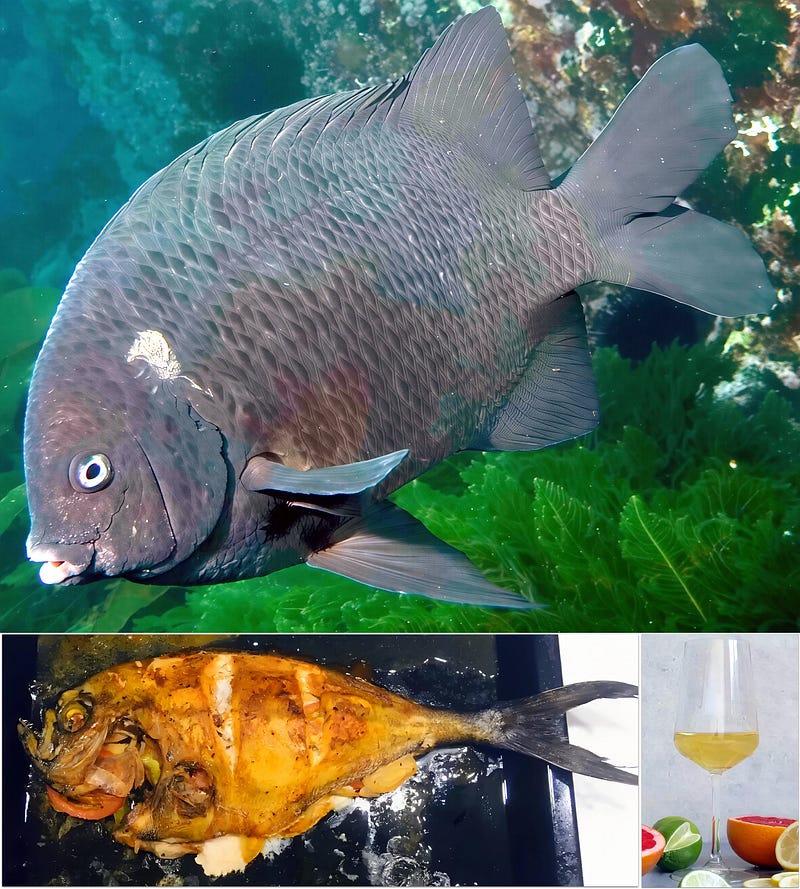
Along the rugged coastlines of New Zealand, where volcanic rock meets the surge of the South Pacific, lives one of the region’s most charismatic reef dwellers — the New Zealand black angelfish (Parma alboscapularis). Often overlooked by casual divers in favor of brighter tropical species, this damselfish commands quiet authority within its habitat. It embodies the resilience and ecological balance of New Zealand’s temperate reefs, where cold currents and kelp forests define the marine landscape. Though small in size, it is a keystone of territorial order, reef maintenance, and biodiversity preservation — a dark jewel in a cold-water world.
Taxonomy
The New Zealand black angelfish (Parma alboscapularis) belongs to the family Pomacentridae, a group that includes damselfishes and clownfishes known for their territorial instincts and algae-grazing behavior. Its taxonomic hierarchy is: Kingdom Animalia, Phylum Chordata, Class Actinopterygii, Order Perciformes, Family Pomacentridae, Genus Parma, Species P. alboscapularis.
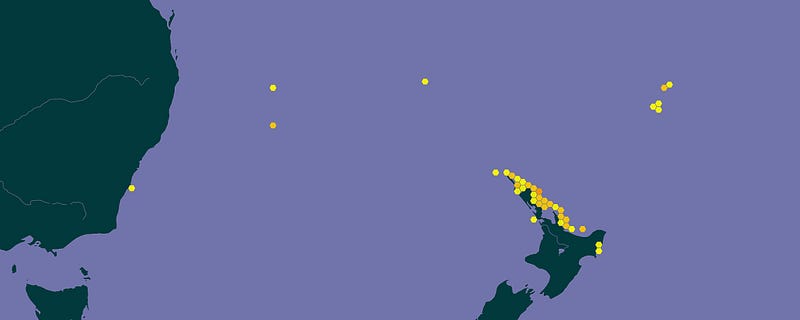
This species is endemic to New Zealand, found nowhere else on Earth. It inhabits rocky coastal reefs and kelp forests from the Poor Knights Islands to the Chatham Islands, typically between 3 m (9.8 ft) and 20 m (65.6 ft) depth. The fish’s English common name — New Zealand black angelfish — derives from its dark, dignified coloration rather than any relation to the true marine angelfishes of the family Pomacanthidae.
In Māori, it is sometimes referred to as “kōura kākāriki o te pari,” meaning “greenish-black guardian of the reef,” reflecting both its appearance and its defensive nature. No recognized subspecies exist, and the species is monotypic within its genus’s temperate representatives.
Closely related species include the white-ear Parma (Parma microlepis) of Australia and the black-spot Parma (Parma melanochroa), with which it shares territorial habits and a preference for kelp-dominated reefs. Genetic analyses suggest moderate divergence from its Australian relatives, indicating long-term geographic isolation following the separation of New Zealand’s reef systems.
Among marine biologists, P. alboscapularis is considered a temperate analog to the tropical damselfish, a lineage adapted to cooler, nutrient-rich waters — a small but vital emblem of New Zealand’s unique marine biogeography.
Biology
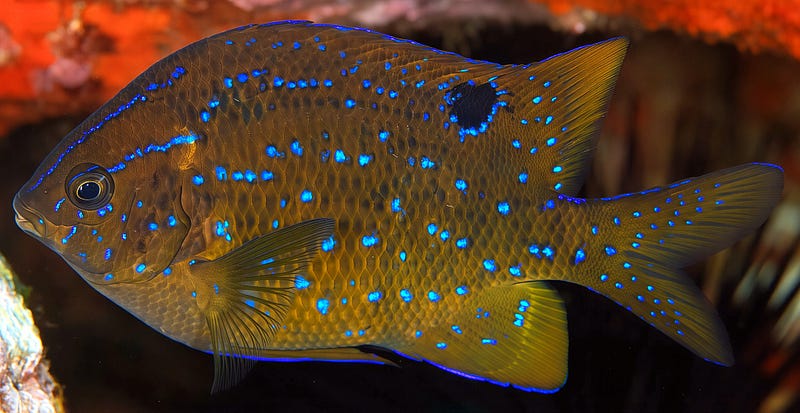
The New Zealand black angelfish reaches up to 25 cm (9.8 in) in length. Its deep-bodied, oval profile is accentuated by a dark slate coloration with a distinct white patch near the pectoral fin base — its defining mark. Juveniles are more vividly colored, with bright yellow tails and fins that fade as they mature.
This fish is highly territorial, with males maintaining and defending patches of reef algae as both feeding grounds and nesting areas. During breeding season, females lay adhesive eggs that males guard vigorously until hatching — an example of strong paternal investment uncommon among many reef fish. The species primarily grazes on filamentous algae, making it an essential agent in regulating algal overgrowth and promoting coral and kelp health.
Ecology
Endemic to temperate rocky reefs, P. alboscapularis thrives in zones dominated by Ecklonia radiata kelp. It occupies shallow coastal ecosystems where wave energy is moderate, feeding on epilithic algae and small invertebrates. This diet places it within a mid-trophic level, linking primary producers with higher predators like wrasses and small sharks.
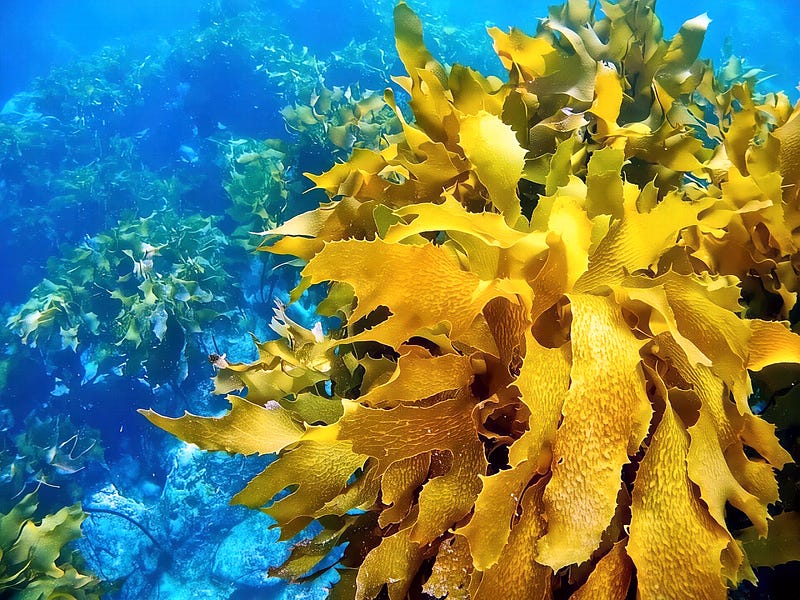
Its ecological role extends to maintaining biodiversity. Cropping algae prevents dominance by fast-growing species, allowing sessile organisms like sponges and bryozoans to thrive. The species also contributes indirectly to carbon sequestration by promoting kelp growth, which absorbs CO₂ at an estimated rate of 1.8 kg (4 lb) per square meter annually.
Although not commercially fished, the species faces localized threats from habitat degradation and sedimentation. Conservation assessments classify it as “Least Concern,” yet its habitat dependence on kelp forests makes it vulnerable to warming waters and coastal pollution.
Uses
The New Zealand black angelfish is not a common food fish but occasionally appears in artisanal catches or as bycatch. Its flesh is firm, white, and lean, with a mild marine flavor. When prepared fresh, it offers approximately 95 kcal per 100 g (3.5 oz), with 20 g (0.7 oz) of protein and less than 2 g (0.07 oz) of fat.
Edible parts include the fillet and skin. Optimal preparation involves pan-searing or steaming to retain its delicate texture. In coastal communities, small specimens are grilled whole with native herbs such as kawakawa leaves, producing a subtle peppery aroma.
Processing requires gutting and scaling, followed by chilling at 0°C (32°F) to maintain quality. Commercial-scale use remains minimal, though the species is valued ornamentally in public aquaria for its territorial behavior and aesthetic contrast.
No anti-nutritional or toxicity issues are known. As feed, ground carcasses provide a protein content of 18–22%, suitable for aquaculture use. Silage conversion yields stable protein for fishmeal with a calorific value of 5.8 kcal/g (24.3 kJ/g).
The fish has no known medicinal uses, though marine extracts from the related Pomacentridae family show potential bioactive peptides with antioxidant properties.
Environmental services include habitat maintenance, biodiversity support, and carbon retention. Restoration projects in the Hauraki Gulf include translocation trials to reestablish balance in kelp-dominated reefs where invasive urchins have disrupted native fish populations.
Market value remains limited to the aquarium trade, with individual specimens selling for about USD 40–60 (NZD 67–100). There are no specific certification schemes or food safety limits beyond standard marine guidelines, and the species is not under commercial harvest pressure.
Culinary Aspects
When prepared properly, the New Zealand black angelfish offers a clean, mineral-driven flavor with subtle oceanic sweetness. Its texture is dense yet tender, comparable to snapper. The aroma is mild and briny, with a faint hint of iodine that dissipates quickly under heat.
Mouthfeel is smooth and cohesive, balancing firmness with juiciness. The flavor complexity increases when seared over charcoal or cooked en papillote with citrus and sea herbs. The finish is crisp and clean, leaving a saline aftertaste reminiscent of freshly shucked shellfish.
In fusion cuisine, chefs have paired it with miso or wakame to highlight its umami base. Its appearance — charcoal-black skin with snow-white flesh — creates striking plate contrast, a favorite in modern sustainable gastronomy.
Wine Pairings
Pairing wine with the New Zealand black angelfish requires precision. Its flesh is lean, subtly sweet, and mineral-driven, so wines must balance salinity and texture rather than overpower with fruit or oak.
A Margaret River Chenin Blanc offers crisp acidity, quince notes, and faint lanolin that harmonize with the fish’s briny finish when pan-seared in olive oil. The slight residual sugar rounds the saline edge without muting it.
A Central Otago dry Riesling provides razor-sharp citrus and slate tones that cut through richer butter sauces or miso glazes. Its wet-stone minerality mirrors the cold-water habitat of the species.
A Basque Txakolina — lightly effervescent and saline — matches ceviche or sashimi preparations, amplifying freshness and chemesthetic brightness. The subtle spritz resets the palate between bites.
For charcoal-grilled or herb-crusted preparations, a Sicilian Grillo delivers phenolic grip, white-pepper lift, and herbal resonance that echo kawakawa or native sea parsley marinades.
A final, unexpected partner is a Nelson Albariño, grown on New Zealand’s own coastal soils. Its high acidity and savory stone-fruit core integrate seamlessly with steamed or en papillote dishes, producing sensory continuity between ocean, plate, and glass.
Each of these wines respects the angelfish’s restrained flavor architecture, reinforcing balance rather than dominance — precision over power.
Conclusion
The New Zealand black angelfish exemplifies how small, unassuming species can anchor entire ecosystems. Its dark elegance reflects the quiet strength of New Zealand’s coastal ecology, where biodiversity thrives through balance rather than abundance. Though it will never headline seafood markets, its ecological importance and understated beauty make it a symbol of restraint and respect in the human relationship with the sea — a reminder that sustainability begins not with exploitation but with observation.