Silver Ghost of the Surf: Exploring the Atlantic Crevalle Jack (Caranx hippos)
Introduction In the foaming surf and restless current of the Atlantic, a silver torpedo cuts through the waves — aggressive, tireless, and…
Introduction
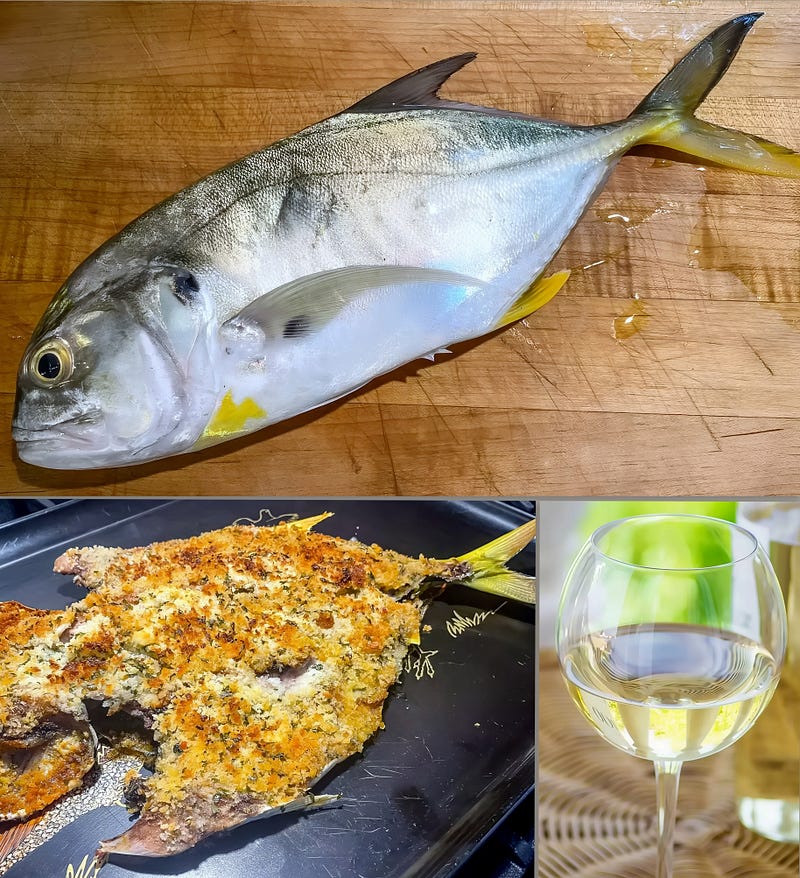
In the foaming surf and restless current of the Atlantic, a silver torpedo cuts through the waves — aggressive, tireless, and gleaming in the sun. This is Caranx hippos, the Atlantic crevalle jack, a fish as muscular as it is misunderstood. To anglers, it’s a prize; to chefs, a puzzle; to ecosystems, a cornerstone. It’s a species forged by motion, thriving in the liminal space between estuary and open sea. Beyond its brawn lies a fascinating biological tale that intersects with human economies, culinary traditions, and environmental ethics. This is the story of a predator that refuses to be tamed.
Taxonomy
Caranx hippos belongs to the family Carangidae, which includes jacks, pompanos, and trevallies. Known commonly as the crevalle jack, it also bears regional names like “cavally,” “jack crevalle,” or simply “jack.” No recognized subspecies exist; however, populations in the Gulf of Mexico, Caribbean, and West Africa exhibit slight morphological variation based on habitat conditions. Not typically bred or farmed, this species is primarily caught in the wild, a fact that amplifies both its mystique and ecological importance.
Biology
This fish is the embodiment of velocity and force. Crevalle jacks are streamlined, with deep bodies, blunt heads, and powerful forked tails that propel them in short, explosive bursts. Adults commonly measure 24 to 36 inches — roughly 61 to 91 cm — with some reaching over 48 inches or 122 cm. Their weight can exceed 30 pounds or 13.6 kg. The species is metallic blue to green on the back, fading to a brassy silver belly, and often marked by a distinctive black spot on the gill cover and pectoral fin.
These fish mature quickly and spawn in offshore waters, releasing millions of eggs during the warmer months. Larvae drift into estuaries where juvenile jacks grow rapidly, feeding on small fish and crustaceans. Their life cycle is a relentless pursuit of energy: eat, grow, chase, and repeat.
Ecology
Crevalle jacks are found in tropical and subtropical waters on both sides of the Atlantic. In the western hemisphere, they range from Nova Scotia down to Uruguay, frequently venturing into brackish estuaries and coastal lagoons. These jacks are apex mid-level predators, meaning they control populations of baitfish like mullet and sardines, but are themselves preyed upon by sharks and larger pelagic species.
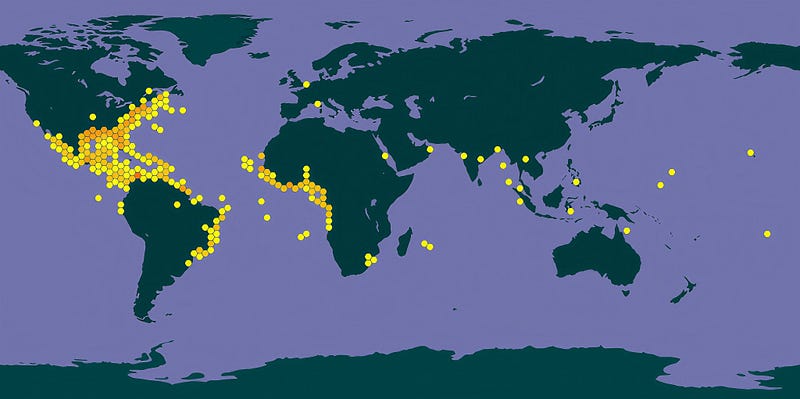
As migratory animals, they serve as biological barometers for environmental health. When pollution chokes an estuary or algal blooms rob oxygen from the water, jacks disappear — fast. Their absence signals a larger unraveling. Conversely, their presence marks a thriving coastal ecosystem. Because of their reliance on diverse habitats, crevalle jacks are deeply affected by overfishing, habitat destruction, and rising ocean temperatures. In many regions, they are considered “of least concern” by conservation status, but that label belies the delicate dance they must perform in a world of encroaching human industry.
Uses
Economically, the crevalle jack is paradoxical. To recreational anglers, it’s a hero species. Known for brutal fights on the line, it tests tackle, patience, and physical endurance. Many describe the battle with a large jack as arm-numbing, unforgettable, and addictive.
Commercially, however, it’s underutilized. The flesh is dark, oily, and often too strong for general palates, leading to lower market demand. Still, in coastal communities from Senegal to South Florida, crevalle jack is salted, smoked, or turned into fishmeal, fish sauce, or bait. These uses keep the species economically relevant, especially in artisanal markets. Its resistance to aquaculture makes wild stocks all the more important — and all the more vulnerable to unchecked harvest.
Culinary Aspects
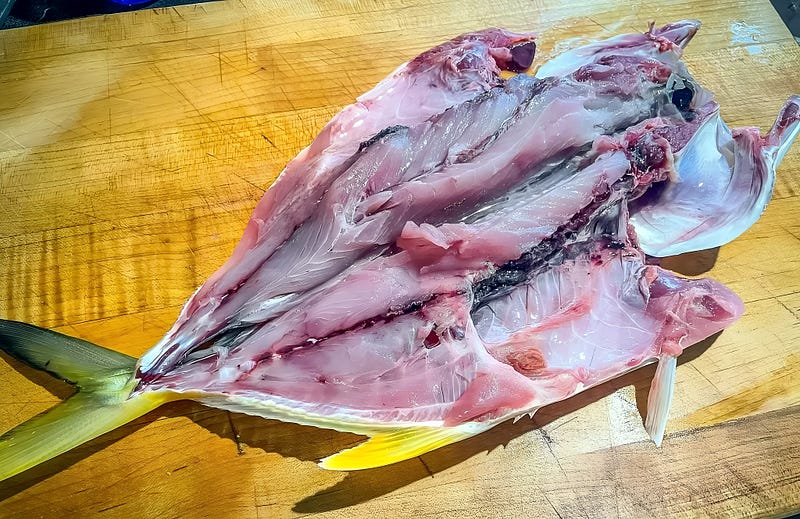
Let’s not mince words: crevalle jack has an assertive flavor. The meat is coarse-grained, deeply red, and rich in oil, similar in texture to mackerel or bluefish. Improperly handled, it turns pungent fast, which has tarnished its culinary reputation. But when treated with care — bled immediately, chilled quickly, and cooked fresh — it can shine.
Caribbean cooks marinate jack in citrus and chilies, then grill it whole over charcoal. West African recipes involve deep-frying in palm oil and serving with jollof rice or spicy cassava. Some chefs embrace its robustness by smoking fillets over hardwoods or incorporating it into rich stews. The flavor is bold, almost defiant, requiring bold seasonings to match — garlic, tamarind, fermented sauces.
Nutritionally, it’s high in protein, omega-3 fatty acids, and B vitamins. A typical 6 oz or 170 g portion delivers more than 30 g of protein and over 1 g of omega-3s, but it can also contain higher mercury levels, making moderation essential.
Wine Pairings
This is not a fish for delicate whites. To balance its oily character and bold taste, one must pair wisely. A chilled glass of Grüner Veltliner with its peppery snap can cut through the richness. A dry rosé from Provence or Navarra — served at around 50°F or 10°C — adds a refreshing contrast without overwhelming. For grilled preparations, a cool-climate Syrah or a lightly chilled Gamay, served at 55°F or 13°C, can stand up to its muscle.
Conclusion
Caranx hippos is a species of contradiction: loved by sportsmen, ignored by gourmets, vital to marine health, yet often overlooked in policy. It roams vast distances, thriving in habitats that many other fish avoid. As we look to more sustainable relationships with our oceans, the crevalle jack may be less of a mystery and more of a mirror. Its survival depends not on its ferocity, but on our ability to respect the ecosystems that sustain it. To fish for jack is to touch something wild, urgent, and enduring. And that’s a flavor the modern world desperately needs to preserve.