Silver Lightning: The Life, Lore, and Luxury of the Narrow-barred Spanish Mackerel
Introduction Beneath the sun-glinted waves of the Indo-Pacific swims a torpedo-shaped fish cloaked in stripes like a Roman gladiator. The…
Introduction
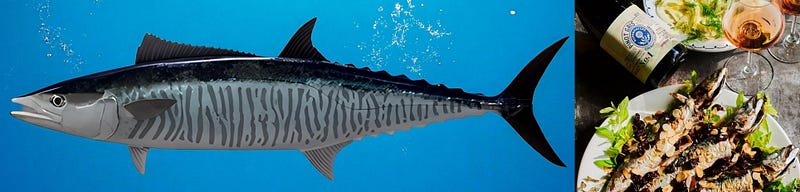
Beneath the sun-glinted waves of the Indo-Pacific swims a torpedo-shaped fish cloaked in stripes like a Roman gladiator. The Narrow-barred Spanish mackerel — Scomberomorus commerson — is not merely a fast-swimming predator. It’s a prized catch, a delicacy on plates from Mumbai to Melbourne, and a species that dances at the intersection of biology, cuisine, and commerce. Its story, shimmering with evolutionary triumph and culinary seduction, beckons us to dive deep into a creature both ancient and astonishingly modern.
Taxonomy
The Narrow-barred Spanish mackerel belongs to the family Scombridae, which includes tunas, bonitos, and other swift, pelagic fish. Its genus, Scomberomorus, is home to roughly 18 species known for speed, migratory behavior, and commercial value. Scomberomorus commerson — also known regionally as king mackerel, seer fish, or kingfish — is distinct for its elongated body and striking vertical bars along its silver flanks. Closely related species include Scomberomorus cavalla and Scomberomorus maculatus, both of which inhabit the Atlantic but lack the same extensive Indo-Pacific range or culinary reputation.
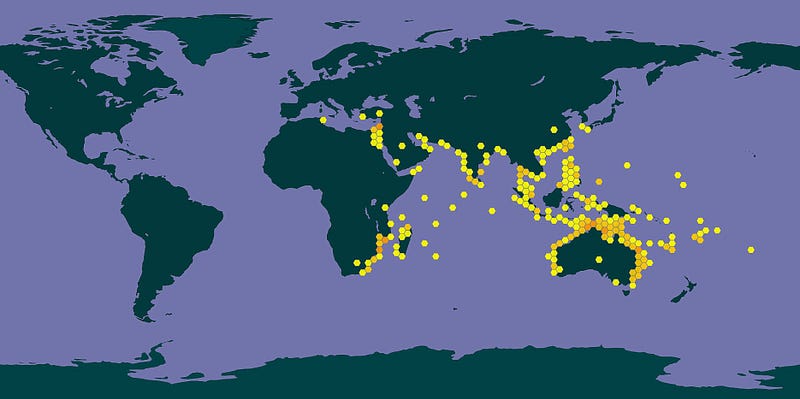
Despite regional variations in naming and preparation, the true S. commerson reigns supreme in South Asia, the Arabian Gulf, Southeast Asia, and northern Australia. Its edibility and market status transcend borders, making it a central figure in regional seafood economies.
Biology
At first glance, the Narrow-barred Spanish mackerel looks built for speed — and it is. Reaching lengths up to 7.5 ft (2.3 m) and weighing as much as 154 lb (70 kg), it slices through warm ocean waters with a hydrodynamic elegance few fish can rival. A deeply forked tail and muscular, streamlined frame provide propulsion; small, sharp teeth signal its predatory lifestyle.
This species matures quickly — typically by its second year — and lives for about 12 years in the wild. Spawning occurs in coastal waters where females release hundreds of thousands of eggs, which drift freely until hatching. The larvae grow rapidly, feeding on plankton before transitioning to small fish and squid. Adults hunt in schools or alone, using their speed to ambush prey.
What sets S. commerson apart is its versatility — adapted to a broad temperature range, salinity levels, and migratory corridors. Its survival hinges on speed, camouflage, and impeccable timing.
Ecology
The Narrow-barred Spanish mackerel prefers coastal habitats, reef edges, and continental shelf drop-offs, thriving in waters between 68°F and 86°F (20°C to 30°C). Found from the eastern coast of Africa to the shores of Papua New Guinea, it plays a pivotal role in marine food webs as both predator and prey.
However, this species is under increasing pressure. High demand, combined with unregulated fishing practices, has led to overexploitation in several regions. In some locales, particularly around the Arabian Peninsula and parts of India, stocks are declining due to excessive gillnetting and a lack of seasonal restrictions.
Sustainability efforts, such as seasonal bans, gear restrictions, and marine protected areas, are being tested but inconsistently enforced. As with so many commercially desirable fish, the path forward demands international cooperation and consumer awareness.
Uses
Economically, S. commerson is a cornerstone species. It’s the linchpin of artisanal and commercial fisheries across the Indo-Pacific, sold fresh, smoked, salted, or frozen. In Sri Lanka, it’s a staple; in the Gulf states, a delicacy; in Australia, a weekend sportfishing prize.
A whole fish can fetch prices upwards of $20 per kg (around $9 per lb), making it a lucrative catch. However, its popularity comes with environmental costs. Longlines and gillnets often catch juveniles or non-target species, raising questions about bycatch and sustainable yield. Fish farming attempts have been explored, but S. commerson’s migratory behavior and complex spawning habits make aquaculture a limited option — for now.
Culinary Aspects
If biology built this fish for speed, culture has built it into a legend. The firm, white flesh of the Narrow-barred Spanish mackerel is richly flavored without being oily, and has a clean, meaty texture that holds up to a variety of preparations.
In coastal India, thick steaks of “seer fish” are marinated in turmeric and chili before hitting the skillet. In Malaysia, it appears in spicy laksa. In the Middle East, it’s grilled whole with lemon, olive oil, and sumac. In Australia, where it’s often called “Spanish mackerel,” fillets are battered, pan-seared, or cured into sashimi-like slices.
A 3.5 oz (100 g) serving delivers roughly 160 calories, 21 g of protein, and high levels of omega-3 fatty acids — beneficial for cardiovascular health and brain function. It’s also a good source of vitamin D and B12, though it can accumulate mercury, especially in larger specimens. As with all predatory fish, moderation and sourcing from trusted fisheries is wise.
Wine Pairings
Pairing wine with mackerel requires a touch of culinary intuition. This fish, robust yet refined, benefits from wines that cleanse the palate while accentuating the brine-kissed richness.
A crisp Assyrtiko from Santorini — with its saline finish and citrus backbone — elevates grilled mackerel with lemon. A South African Chenin Blanc, especially unoaked, works beautifully with spiced or fried preparations, cutting through oil without overwhelming the fish. For those seeking a red, a lightly chilled Gamay or Pinot Noir brings berry brightness to smoked or barbecued fillets.
If you’re looking for a delicious seafood pairing, try roasted mackerel with agrodolce and Supernature Skin Contact Pinot Gris. The Pinot Gris is an “orange wine” with skin contact, giving it complexity to pair well with the rich and flavorful mackerel.
The rule of thumb? Acidity over weight, minerality over sweetness. The mackerel’s bold character calls for a confident partner in the glass.
Conclusion
The Narrow-barred Spanish mackerel is more than a shimmering flash in the ocean — it is a living testament to nature’s design, a cultural treasure on dinner plates, and a test case for modern sustainability. From reef edges to regional markets, from tangled nets to wine-splashed tables, Scomberomorus commerson swims at the confluence of science, survival, and sensory pleasure.
As stewards of the sea, we are faced with a choice: cherish this creature, manage it wisely, and honor its legacy — or net it into obscurity. The silver lightning bolt of the Indo-Pacific deserves a future as bright as its scales.