The Observer State of Palestine
The State of Palestine is a non-member observer state at the United Nations, a status it was granted on November 29, 2012, by a vote in the…
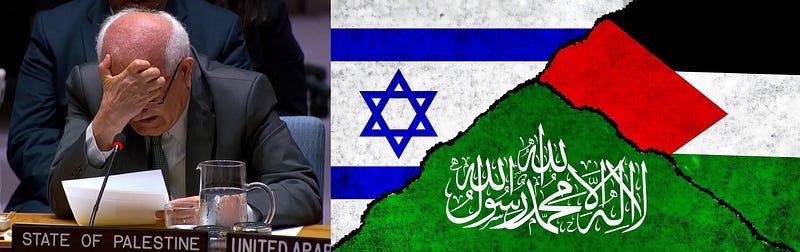
The State of Palestine is a non-member observer state at the United Nations, a status it was granted on November 29, 2012, by a vote in the UN General Assembly. This status allows Palestine to participate in most UN proceedings, though it does not grant voting rights.
The State of Palestine is a political entity claiming the West Bank and the Gaza Strip as its territory, with Jerusalem as its designated capital. It is recognized as a sovereign state by a significant number of United Nations member states and holds the status of a non-member observer state at the UN. The following encyclopedic entry provides an overview of its history, governance, and current status.
Etymology and Historical Background
The name “Palestine” is derived from the Greek term Palaistinē and the Latin Syria Palaestina, which were used in antiquity to describe the region between the Mediterranean Sea and the Jordan River. This name was revived in the 20th century during the British Mandate for Palestine.
The modern history of the State of Palestine is deeply intertwined with the Arab-Israeli conflict. Following the dissolution of the Ottoman Empire, the League of Nations granted Britain the mandate to administer Palestine. The mandate period saw increasing tensions between the indigenous Arab population and Jewish immigrants, leading to the 1947 UN Partition Plan, which proposed separate Jewish and Arab states. The plan was accepted by Jewish leaders but rejected by Arab leaders. The subsequent declaration of the State of Israel in 1948 and the first Arab-Israeli war resulted in the displacement of a large portion of the Arab Palestinian population, an event known as the Nakba (catastrophe).
The Palestine Liberation Organization (PLO) was established in 1964 to represent the Palestinian people. In 1988, the PLO’s Palestinian National Council declared the establishment of the State of Palestine. This was followed by the signing of the Oslo Accords in the 1990s, which led to the creation of the Palestinian Authority (PA) as an interim administrative body with limited self-governance in parts of the West Bank and Gaza Strip.
Governance and Politics
The State of Palestine operates under a provisional framework. The Palestinian Authority, led by a president and a prime minister, exercises limited self-rule in areas of the West Bank. However, the political landscape is deeply divided. Since 2007, the Gaza Strip has been under the control of Hamas, an Islamist political and military organization, following a brief civil conflict with Fatah, the dominant party within the PLO.
The Palestinian Legislative Council (PLC) is the unicameral legislative body, but it has been largely inactive since the political schism between Fatah and Hamas. Multiple attempts at reconciliation and holding general elections have failed, leaving the governance structure fragmented.
International Recognition and Status
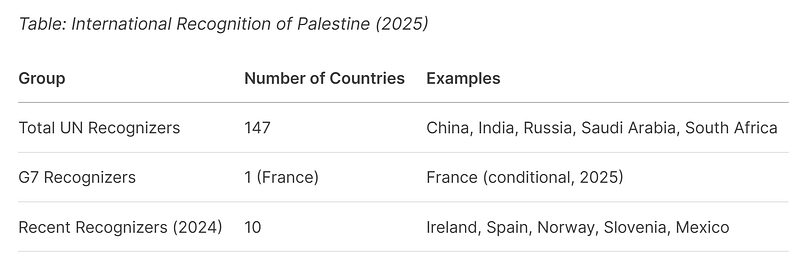
The State of Palestine has been recognized by numerous countries and international organizations. In 2012, the United Nations General Assembly upgraded Palestine’s status to a “non-member observer state,” allowing it to participate in UN proceedings but without voting rights. This move was a significant diplomatic achievement, though full UN membership remains elusive due to opposition from certain members of the UN Security Council.
In recent years, several additional countries have announced their recognition of Palestine, reflecting a growing international consensus. However, other major powers maintain that recognition should follow a negotiated two-state solution with Israel.
Geography
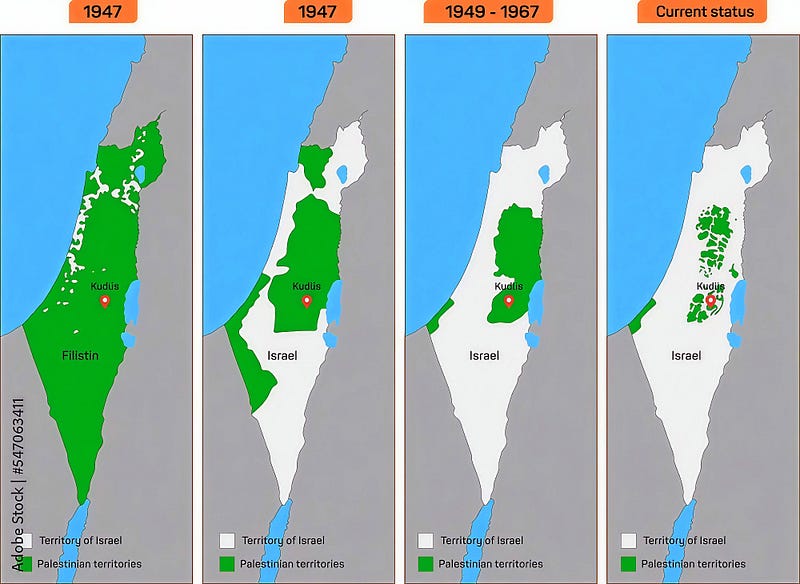
The territory claimed by the State of Palestine consists of two distinct regions: the West Bank and the Gaza Strip.
The West Bank is a landlocked territory bordered by Israel to the north, south, and west, and by Jordan to the east. Its terrain is varied, featuring mountainous areas, fertile valleys, and arid zones. East Jerusalem, which Palestinians claim as their capital, is located within the West Bank but has been annexed by Israel, a move not recognized by the international community.
The Gaza Strip is a small coastal enclave on the Mediterranean Sea, bordering Israel and Egypt. It is one of the most densely populated areas in the world. The region has been under a stringent land, air, and sea blockade imposed by Israel and Egypt since 2007, which has had a profound impact on its economy and humanitarian situation.
Both territories are fragmented by Israeli settlements, military checkpoints, and the separation barrier, which significantly impact the daily lives of Palestinians and the contiguity of a potential state.
Demographics
The Palestinian population is predominantly Arab and Muslim, with a small Christian minority. A significant Palestinian diaspora exists worldwide, a result of displacement from the 1948 and 1967 wars.
Arabic is the official language. The population is relatively young, with a high growth rate. However, living conditions vary greatly between the West Bank and the Gaza Strip, with the latter facing severe economic and humanitarian challenges due to the long-standing blockade and repeated military conflicts.
Economy
The economy of the Palestinian territories is constrained by the ongoing occupation and restrictions on the movement of people and goods. It is heavily dependent on international aid and remittances from Palestinians working abroad. Key sectors include agriculture, services, and small-scale manufacturing.
The economy of the Gaza Strip has been devastated by the blockade and repeated military operations, leading to extremely high unemployment and poverty rates. The West Bank economy is more stable but remains fragile and subject to Israeli security and administrative controls.
Culture
Palestinian culture is rich and deeply rooted in history, with contributions to literature, art, music, and cuisine. The Palestinian narrative often emphasizes themes of identity, resilience, and the right of return for refugees. Traditional embroidery (tatriz), poetry, and music are important cultural expressions. Palestinian cuisine, featuring dishes like maqluba and musakhan, is a central part of its cultural heritage.
Conclusion
The State of Palestine remains a central subject in international politics and the quest for peace in the Middle East. While it has achieved a degree of international recognition, its path to full sovereignty, economic stability, and political unity is fraught with challenges stemming from the ongoing conflict with Israel and internal divisions. The future of the state is contingent upon a comprehensive and just resolution to the Israeli-Palestinian conflict.