Sunfish of the Open Sea: The Mola mola’s Strangely Elegant World
Introduction
Introduction
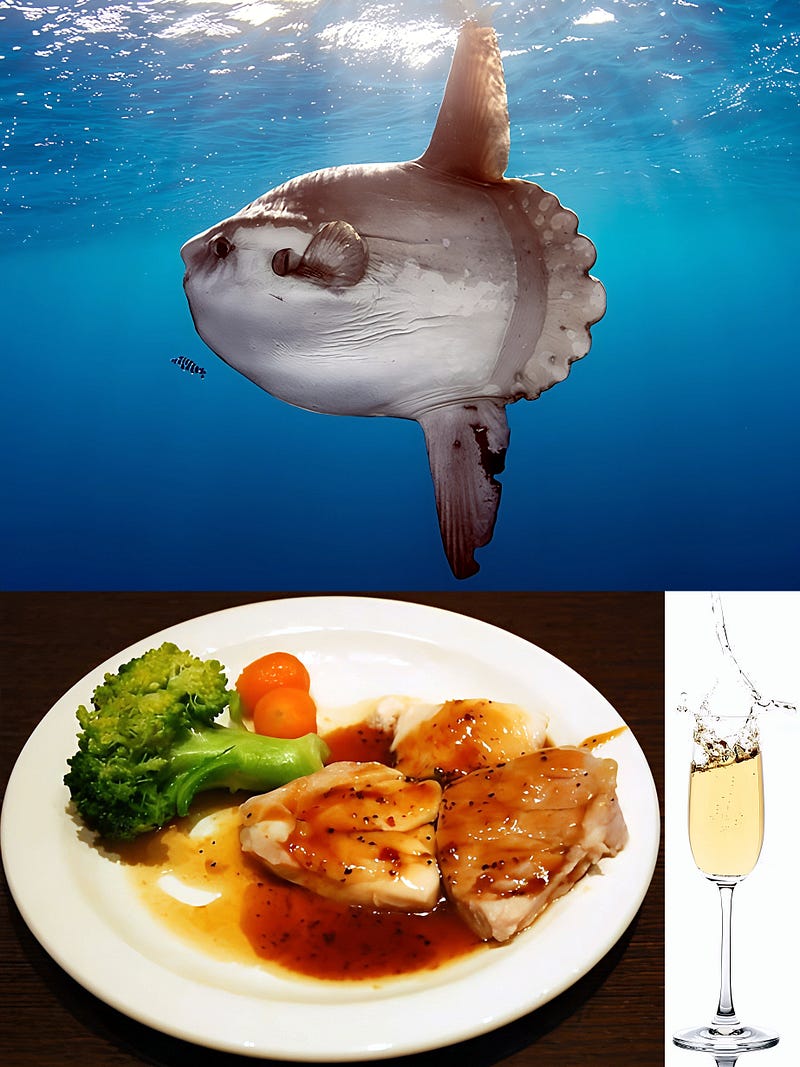
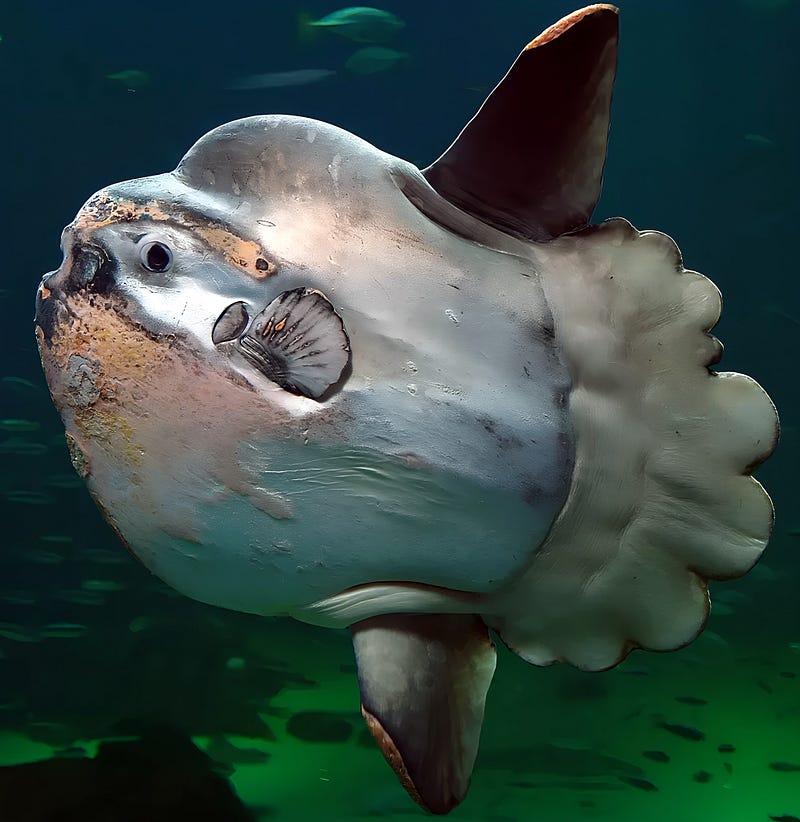
Few creatures inspire the same blend of fascination and disbelief as the ocean sunfish, known to science as Mola mola. Drifting like a massive coin cut loose in the sea, this fish defies expectations at every turn. It is the heaviest bony fish in existence, a creature that can stretch over 11 ft (3.3 m) from fin to fin and tip the scales at more than 4,400 lb (2,000 kg). At once awkward and majestic, it commands attention from divers, chefs, and conservationists alike. To know the Mola mola is to enter a world where biology challenges imagination and culture wrestles with sustainability.
Taxonomy
The ocean sunfish belongs to the family Molidae, a group of oddly shaped fishes that include close relatives like Mola alexandrini and Mola tecta. The name “mola” comes from the Latin word for “millstone,” a nod to its rounded, flat form. Known commonly as sunfish in English, poisson lune in French, and manbo in Japanese, this species carries a reputation that shifts between scientific marvel and culinary delicacy. Unlike salmon or tuna, there are no commercially cultivated varieties — each one encountered at market or in the wild carries the singular essence of the genus.
Biology
Biologically, the Mola mola is a masterclass in extremes. Its body lacks a true tail, replaced instead by a stiff lobe called the clavus. Despite its bulk, it feeds primarily on jellyfish, supplementing with squid, crustaceans, and small fish. To satisfy its nutritional needs, a single individual may consume hundreds of pounds of gelatinous prey daily. This giant has the reproductive potential of a paradox: a female can release as many as 300 million eggs at once, more than any other known vertebrate. Yet mortality is staggeringly high, with only a fraction surviving to adulthood. The creature’s physiology is equally strange — its skin can measure nearly 3 in (7.5 cm) thick, a living shield against predators and parasites alike.
Ecology
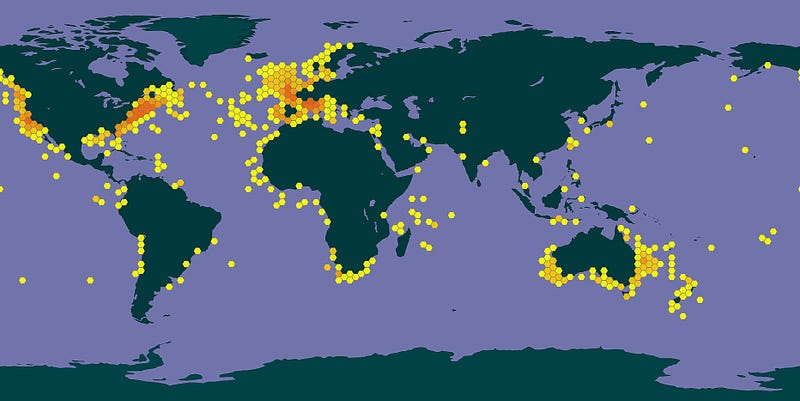
Sunfish roam temperate and tropical oceans worldwide, from the Gulf Stream to the waters off South Africa, from the Pacific coasts of Japan to the shores of California.
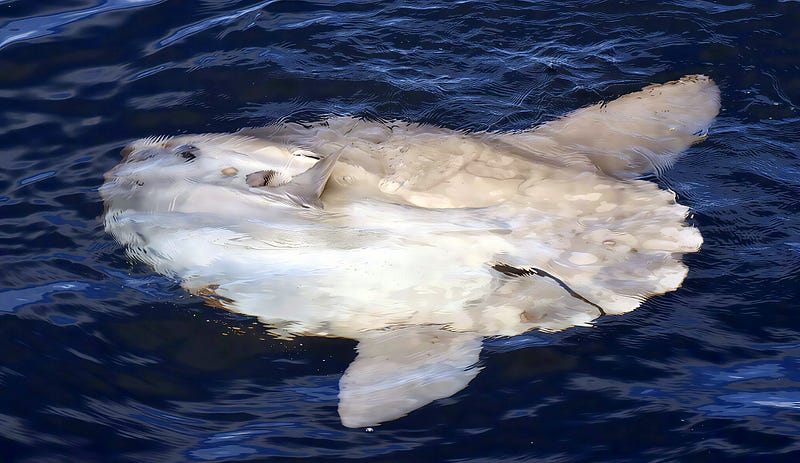
They often bask near the surface, turning on their sides to soak in sunlight, a behavior that inspired their common name.
Ecologically, they play a vital role in controlling jellyfish populations, which are increasingly abundant as climate change warms oceans and overfishing disrupts the balance. But sunfish themselves face threats: accidental entanglement in drift nets, boat strikes, and plastic ingestion. A fish that can weigh more than 4,400 lb (2,000 kg) is not invincible against modern industry.
Uses
Though rarely targeted by large-scale fisheries, Mola mola does enter human economies. In parts of Asia, particularly Japan, Taiwan, and historically in China, sunfish meat and organs have been consumed, sometimes sold in wet markets as a rare delicacy. In Europe and the United States, its use is restricted, often discouraged by both cultural preference and sustainability laws. Beyond the plate, the species contributes to eco-tourism: divers in Bali, Monterey Bay, and the Azores flock to witness these floating giants in their natural setting. Economically, the sunfish straddles a line between curiosity and commodity.
Culinary Aspects
Culturally, Mola mola has long been prepared in stews, grilled slices, or simmered in miso broth. Its flesh is described as mild, with a texture somewhere between pork and halibut. Nearly every part of the animal has been used in traditional dishes, from skin to organs. However, sustainability questions shadow its culinary reputation. Because populations are vulnerable to bycatch, advocates urge caution in promoting sunfish as an edible luxury. The conversation now leans toward conservation rather than consumption, echoing broader debates about sharks, whales, and bluefin tuna.
Wine Pairings
For those who do encounter sunfish on the table, a thoughtful wine can lift its subtle character. The mild, slightly gelatinous texture calls for crisp whites with bright acidity. A Chablis from Burgundy, with its mineral backbone, balances richness without overpowering. From the New World, a dry Riesling from Washington or Clare Valley layers citrus and green apple notes that cut through any fattiness. Should the dish lean toward soy and miso, a light sake or even a sparkling Prosecco matches well, offering a celebratory contrast to a rare experience.
Conclusion
The ocean sunfish is a paradox made flesh: the heaviest of bony fishes yet a gentle drifter, a reproductive powerhouse yet ecologically vulnerable, a delicacy in some kitchens yet increasingly a symbol of fragile ocean ecosystems. Its sheer oddity commands respect, while its ecological role makes conservation essential. To encounter a Mola mola — whether in the water or in culinary lore — is to face a living riddle, a reminder of how much of the sea remains strange, vital, and worth protecting.