The Analytic and Applied Philosophy of Human Rights: Foundations, Contradictions, and Real-World…
The philosophy of human rights represents one of the most profound and contested domains in contemporary moral, legal, and political…
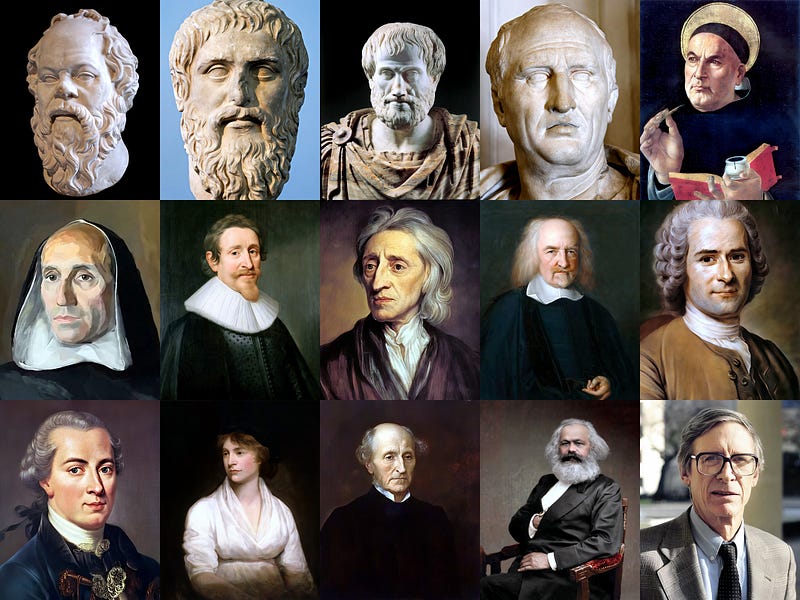
The Analytic and Applied Philosophy of Human Rights: Foundations, Contradictions, and Real-World Imperatives
The philosophy of human rights represents one of the most profound and contested domains in contemporary moral, legal, and political thought. It straddles the abstract realm of ethical justification and the urgent demands of practical implementation, navigating between idealistic aspirations and the gritty realities of global politics. The analytic tradition dissects the conceptual architecture of human rights — probing their existence, grounds, and validity — while applied philosophy confronts their operationalization in law, policy, and everyday practice. This masterclass examines the intricate tapestry of human rights philosophy, tracing its historical evolution, unpacking its theoretical tensions, and evaluating its concrete applications in a world riddled with both promises and paradoxes.
Historical Background and Foundational Principles
The concept of human rights did not emerge ex nihilo in the modern era but evolved through centuries of philosophical reflection, political struggle, and cultural exchange. Ancient traditions, such as the Babylonian Code of Hammurabi, the Hindu Vedas, and the teachings of Confucius, articulated early notions of duties, justice, and proper conduct. A pivotal moment occurred in 539 BCE when Cyrus the Great, upon conquering Babylon, decreed the liberation of slaves and established principles of racial equality and religious freedom. These edicts, inscribed on the Cyrus Cylinder, represent one of the earliest charters of human rights and inspired the first articles of the Universal Declaration of Human Rights.

In the West, the evolution continued through Greek and Roman natural law theories, which posited that certain unwritten laws derived from human nature or reason should govern positive law. Aristotle and the Stoics developed ideas of natural justice, suggesting that moral standards transcend human enactment. This tradition was later integrated into Christian theology by figures like Thomas Aquinas, who argued that natural law participates in divine eternal law. The Magna Carta of 1215 marked a turning point by curbing monarchical power and establishing rudimentary principles of due process and equality before the law. The English Bill of Rights (1689), the American Declaration of Independence (1776), and the French Declaration of the Rights of Man and of the Citizen (1789) further codified individual liberties and popular sovereignty, though often excluding women, racial minorities, and other marginalized groups. The atrocities of World War II catalyzed the modern human rights movement, leading to the adoption of the Universal Declaration of Human Rights in 1948. Drafted by a diverse committee chaired by Eleanor Roosevelt, the UDHR proclaimed a common standard of achievement for all nations, blending civil and political rights with economic, social, and cultural rights. It asserted that all human beings are born free and equal in dignity and rights, and it recognized that the inherent dignity of the human person is the foundation of freedom, justice, and peace. The UDHR, along with the International Covenants on Civil and Political Rights and Economic, Social, and Cultural Rights, formed the International Bill of Human Rights, which has since been supplemented by numerous conventions addressing specific abuses and protecting vulnerable populations.
Fundamentally, human rights are characterized by their universality, inalienability, indivisibility, and high priority. They are universal because they apply to all persons by virtue of their humanity, independent of cultural or legal recognition. They are inalienable in the sense that they cannot be permanently forfeited or voluntarily surrendered, though they may be subject to limitations in exceptional circumstances. They are indivisible and interdependent, meaning that civil, political, economic, social, and cultural rights are equally essential and mutually reinforcing. Finally, they possess high priority, functioning as trumps against utilitarian calculations or state interests, though they are seldom absolute and must often be balanced against competing claims.
Underlying Assumptions and Inconsistencies
The philosophy of human rights rests on several contentious assumptions, each susceptible to critique and reinterpretation. Foremost among these is the premise of human dignity, which serves as the moral bedrock for rights claims. The UDHR grounds human rights in the inherent dignity and equal worth of all persons, but this notion remains notoriously nebulous. Is dignity an objective property inherent to human beings, or is it a socially constructed value that varies across cultures? Philosophers like Thomas Nagel have argued that moral reasons, including those underpinning human rights, are both objective and person-dependent, emerging from the concerns of rational beings rather than existing in a Platonic realm. This tension between realism and constructivism pervades justificatory theories. Natural law approaches assert that human rights reflect timeless moral truths, while interest theories view them as protections for fundamental human interests, and will theories tie them to autonomy and agency. Each theory struggles to account for the full range of rights without resorting to ad hoc explanations.
Another assumption is the universality of human rights, which has been challenged by cultural relativists who argue that moral standards are culture-specific. The Western emphasis on individualism, for instance, may conflict with communitarian values prevalent in other societies. Critics point to the historical exclusion of non-Western groups from early rights documents and the colonial imposition of Western norms. Conversely, proponents of universality contend that human rights respond to universal human experiences, such as suffering and oppression, and that cultural practices violating basic dignity, like slavery or torture, are indefensible regardless of context. The analytic philosophy of human rights also grapples with the ontological status of rights. Are human rights primarily moral norms existing independently of legal recognition, or are they legal constructs endowed by treaties and constitutions? Legal positivists emphasize enactment and enforcement, while moral realists insist on their pre-legal existence. This duality leads to practical inconsistencies, as states may ratify human rights treaties without internalizing their norms, leading to compliance gaps and hypocrisy.
Moreover, the prioritization of rights is fraught with bias. Classical liberal theories often privilege civil and political rights over economic and social rights, reflecting capitalist ideologies. The former are framed as negative rights requiring non-interference, while the latter demand positive provision, raising questions about feasibility and resource allocation. Yet the indivisibility principle insists that both categories are equally imperative, and their separation undermines human dignity. The high-priority status of human rights is another source of tension. While rights like life and freedom from torture are widely accepted as paramount, others, such as the right to leisure or periodic holidays with pay, may be dismissed as aspirational. This selectivity reveals biases in what counts as a fundamental right, often influenced by geopolitical power and economic interests.
Competing Perspectives and Counterarguments
The philosophy of human rights encompasses a rich diversity of perspectives, each offering distinct rationales and critiques. Natural law theorists, drawing from Aquinas and Locke, argue that human rights are derived from a moral order inherent in nature or divine will. They provide a robust foundation for universality but risk metaphysical baggage and cultural insensitivity. Social contract theories, advanced by Hobbes, Locke, and Rousseau, ground rights in hypothetical agreements among rational individuals seeking security and cooperation. This approach links rights to citizenship and state authority but may exclude non-citizens and stateless persons. Utilitarians like Bentham dismiss natural rights as nonsense upon stilts, advocating instead for rights as useful fictions that promote overall welfare. This consequentialist framing offers pragmatic flexibility but risks sacrificing individual rights for collective gains, as seen in debates over torture or surveillance.
In the twentieth century, interest theory and will theory emerged as dominant analytic frameworks. Interest theory, associated with Joseph Raz, holds that rights protect fundamental human interests, such as well-being and autonomy. It explains why certain interests merit duty-bearing obligations but struggles to specify which interests qualify and why. Will theory, influenced by Kant, emphasizes the rightholder’s autonomy and control over others’ duties. It captures the empowering aspect of rights but fails to account for rights held by non-autonomous beings, like children or the cognitively disabled. Communitarian critics like Michael Sandel argue that human rights presuppose an atomistic self, ignoring the embeddedness of individuals in communities. They advocate for a politics of the common good over individual rights, though this may risk majoritarian oppression. Feminist theorists highlight the gender biases in traditional rights discourses, which often neglect issues like reproductive rights or domestic violence. They call for a reconception of rights that addresses structural patriarchy and private sphere violations.
Postcolonial scholars challenge the Eurocentric origins of human rights, arguing that they serve as tools of Western hegemony. They point to double standards in enforcement, where powerful states violate rights with impunity while sanctioning weaker nations. For example, the United States has criticized human rights abuses in Bangladesh’s Rapid Action Battalion while overlooking alleged violations by Israel’s Defense Forces, including the killings of Palestinian-American journalist Shireen Abu Akleh and a three-year-old child. This selective application undermines the credibility of human rights as universal norms. Marxist critiques reject human rights as a bourgeois ideology that masks class exploitation. They argue that political equality is hollow without economic equality and that rights discourse individualizes structural problems. Conversely, capabilities theorists like Amartya Sen and Martha Nussbaum propose a focus on human capabilities and functionings, which they argue better capture the conditions for a dignified life.
Broader Implications and Meanings
The philosophical debates surrounding human rights have profound implications for global governance, moral progress, and the future of human dignity. The institutionalization of human rights through international law has transformed sovereignty by making state treatment of citizens a matter of legitimate global concern. This shift challenges the traditional Westphalian model and empowers transnational activism, though it also sparks backlash from states asserting cultural sovereignty. The proliferation of human rights treaties has created a complex ecosystem of monitoring and enforcement mechanisms, from the International Criminal Court to regional human rights courts. Yet effectiveness varies widely, hampered by geopolitical power imbalances and lack of ratification by key states like the United States.
The concept of moral progress, central to human rights advocacy, is itself philosophically fraught. Thomas Nagel suggests that some moral truths, such as the wrongness of slavery, become accessible only through historical development and reflective equilibrium. This view allows for cultural learning but raises questions about moral realism: were past practices always wrong, or did they become wrong through evolving recognition? Nagel’s person-dependent realism offers a middle ground, where reasons exist objectively but only insofar as they are graspable by rational beings. This perspective informs the adaptive interpretation of human rights, as seen in the emergence of third-generation solidarity rights (e.g., to development, peace, and a healthy environment) and fourth-generation digital rights. Technology poses new challenges, from biometric surveillance to algorithmic discrimination, demanding a rethinking of privacy and equality. The fusion of material, biological, and digital technologies raises existential questions about what it means to be human and how to protect dignity in a post-human world.
Human rights also shape broader discourses in ethics, politics, and law. They provide a lingua franca for moral claims, empowering social movements from civil rights to LGBTQ+ advocacy. Yet the inflation of rights language risks dilution, where every desirable good becomes a right, weakening their urgency. The balancing of competing rights is a perennial challenge, as seen in cases where religious freedom clashes with equality rights, or free speech with hate speech prohibitions. Courts and tribunals often resort to proportionality tests, but these require contextual judgment and may reflect societal biases. Ultimately, human rights represent an ongoing project of moral imagination, striving to articulate and realize conditions for a life worthy of human dignity in a rapidly changing world.
Real-World Applications
The applied philosophy of human rights examines how theoretical concepts are operationalized across diverse domains, from law and politics to technology and business. In legal systems, human rights are embodied in constitutions, statutes, and judicial decisions. For example, the Canadian Charter of Rights and Freedoms gives primacy to human rights, enabling courts to strike down incompatible laws. Similarly, the European Convention on Human Rights allows individuals to petition the Strasbourg Court, which has addressed issues ranging from torture to fair trials. However, legalization can also lead to juridification, where complex moral issues are reduced to technical legalism. In conflict zones, international humanitarian law integrates human rights principles to protect civilians and combatants, though violations remain rampant, as in Palestine, where Israeli forces have been accused of excessive force and arbitrary detention.
In corporate governance, human rights are increasingly framed as business responsibilities. The United Nations Guiding Principles on Business and Human Rights require companies to respect rights through due diligence and remediation. This applies to supply chains, where issues like child labor and unsafe conditions persist. Tech companies face scrutiny over data privacy and censorship, as seen in debates about Facebook’s role in hate speech or Amazon’s worker surveillance. Engineering and design fields incorporate human rights by design, such as in ethical AI frameworks that prioritize fairness and accountability. Social work and education use rights-based approaches to empower marginalized groups, emphasizing participation and non-discrimination. For instance, the Convention on the Rights of the Child mandates that children’s voices be heard in matters affecting them.
In arts and culture, human rights inspire creative expression and critique. Artists like Ai Weiwei use their work to protest oppression, while museums memorialize atrocities to promote transitional justice. Local governments adopt human cities initiatives, ensuring that urban planning guarantees housing, transportation, and public space for all. Public health crises, like the COVID-19 pandemic, reveal tensions between collective security and individual rights, such as in vaccine mandates and quarantine measures. These applications demonstrate that human rights are not merely legal instruments but lived practices that require interdisciplinary collaboration and contextual sensitivity. They highlight the gap between formal recognition and effective realization, urging continuous vigilance and adaptation.
Conclusion
The analytic and applied philosophy of human rights is a dynamic field that bridges abstract theorizing and concrete action. Its historical roots reveal a long struggle to articulate human dignity against oppressive power, while its theoretical tensions reflect the complexity of justifying universal norms in a pluralistic world. Competing perspectives enrich the discourse, though they also expose biases and inconsistencies. The broader implications underscore the transformative potential of human rights in shaping global order and moral progress, while real-world applications reveal both achievements and shortcomings. As technology, globalization, and social change present new challenges, the philosophy of human rights must continue to evolve, striving for a world where every person can live with dignity, freedom, and equality.