The Bandan Sharp-Mouth Barb: A Hidden Jewel of Southeast Asia’s Rivers
The Bandan sharp‑mouth barb anchors Mekong ecosystems and traditions, feeding communities and sustaining culture. Protecting it safeguards biodiversity and the livelihoods woven through the river, proving that what seems ordinary can be ecologically extraordinary.
Introduction
Beneath the muddy currents of Southeast Asia’s great rivers lives a little-known but remarkable fish: the Bandan sharp-mouth barb (Scaphognathops bandanensis). At first glance, this species may seem ordinary — small, silver, and streamlined — but its cultural, ecological, and culinary significance makes it a subject worthy of closer attention. For centuries, it has been a quiet companion to riverside communities, shaping diets, economies, and local traditions. Today, as development and overfishing challenge the sustainability of inland waters, this unassuming fish has become a symbol of both heritage and conservation.
Taxonomy
The Bandan sharp-mouth barb belongs to the family Cyprinidae, a vast group of freshwater fishes that includes carps, minnows, and barbs. Its full classification places it within the genus Scaphognathops, distinguished by a protruding and somewhat sharpened mouth adapted for bottom feeding. The species bandanensis was first described from the Mekong Basin, its name tied to the Ban Dan district of Thailand, where it was initially observed. Locally, it is known by a variety of vernacular names across Laos, Cambodia, and Thailand, often linked to its sharp-snouted appearance. Unlike domesticated carp species, there are no recognized subspecies or aquaculture-bred varieties, making its wild populations all the more valuable to regional biodiversity.
Biology
The Bandan sharp-mouth barb rarely exceeds 7.9 inches (20 cm) in length, with adults typically weighing less than 0.5 pounds (225 g). Its slender, silvery body reflects light like polished steel, camouflaging it against the shifting waters. The sharp, downturned mouth is its defining trait, perfectly designed for grazing on algae, detritus, and small invertebrates along riverbeds. Spawning typically occurs during the rainy season, when swollen rivers create temporary floodplains. These flooded forests and rice paddies serve as nurseries, allowing young fish to thrive in nutrient-rich waters before returning to the main channels. This life cycle closely links the species to the seasonal rhythms of the Mekong, one of the world’s most biologically productive rivers.
Ecology
Ecologically, the Bandan sharp-mouth barb is both a grazer and a prey species. By feeding on algae and detritus, it helps maintain water clarity and nutrient balance in rivers. In turn, it is a crucial food source for larger fish, birds, and even mammals that depend on the floodplain ecosystem. Its distribution spans the Mekong and its tributaries, from northern Thailand to Cambodia and Laos. However, modern threats loom large: dam construction alters migratory routes, sand mining disrupts spawning grounds, and overfishing reduces stocks before they can replenish. Conservationists now recognize the barb as an indicator species — its abundance a measure of river health.

Uses
For riverine communities, the Bandan sharp-mouth barb is not just a fish but a livelihood. It appears frequently in local wet markets, sold fresh, dried, or fermented. Though individually small, its abundance makes it an important catch for subsistence and small-scale commercial fishing. Unlike high-value export species such as catfish or giant river carp, S. bandanensis has traditionally been consumed locally, ensuring food security in rural areas. With growing recognition of its role in sustaining communities, there is a push toward more sustainable harvest practices, including regulated seasonal fishing that aligns with spawning cycles.
Culinary Aspects
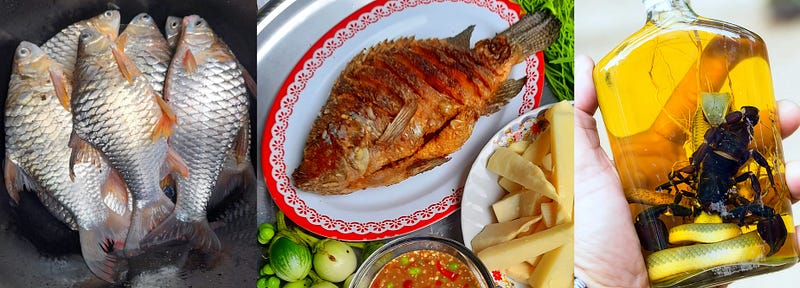
In the kitchen, the Bandan sharp-mouth barb is prized for its delicate, slightly sweet flesh. Its bones are fine and numerous, but traditional preparations turn this potential inconvenience into a strength. In northeastern Thailand, it is often grilled over charcoal and eaten whole, the crisped bones adding texture. In Laos and Cambodia, it is fermented into pungent fish pastes or pickled with herbs, extending its shelf life in hot climates. When fried until golden, its flavor is mild yet savory, pairing well with sticky rice, chili dips, and fresh vegetables. Nutritionally, it is rich in protein, omega-3 fatty acids, and micronutrients, making it an efficient source of nourishment in regions where diets lean heavily on riverine fish.
Wine Pairings
Pairing wine with river fish may seem unconventional in Southeast Asia, where beer and rice spirits dominate. Laos’ Mekong River Eel Wine is a distinctive liquor, made from fermented rice, eels, and ginseng. Other exotic alcohols in Southeast Asia feature venomous creatures like cobras and scorpions, primarily consumed by the bold or inebriated. For a safer option, Thais often prefer Sang Som whisky or Tiger and Carlsberg beers in Malaysia.
But, for global palates, the exercise is both intriguing and rewarding. The light, flaky texture of the Bandan sharp-mouth barb calls for crisp whites such as Sauvignon Blanc or Grüner Veltliner, whose herbal notes echo the grassy undertones of floodplain diets. When grilled, the smokiness complements a Chardonnay aged lightly in oak, while fried preparations find harmony with sparkling wines like Prosecco, which cut through the oiliness and refresh the palate. Fermented fish pastes, with their bold umami, demand something equally assertive — a dry Riesling or even a chilled sake can provide the necessary balance.
Conclusion
The Bandan sharp-mouth barb is far more than a small fish in a big river. It is a thread in the intricate fabric of Mekong life — supporting ecosystems, nourishing communities, and carrying centuries of culinary tradition. As the Mekong faces unprecedented ecological pressures, ensuring the survival of species like Scaphognathops bandanensis is not simply about saving biodiversity; it is about preserving culture and sustenance for millions. In this humble barb lies a lesson: sustainability begins with valuing what seems ordinary, for in the ordinary we often find the extraordinary.