The Bitter Tree of Healing: Quassia amara’s Legacy in Nature and Cuisine
Introduction
Introduction
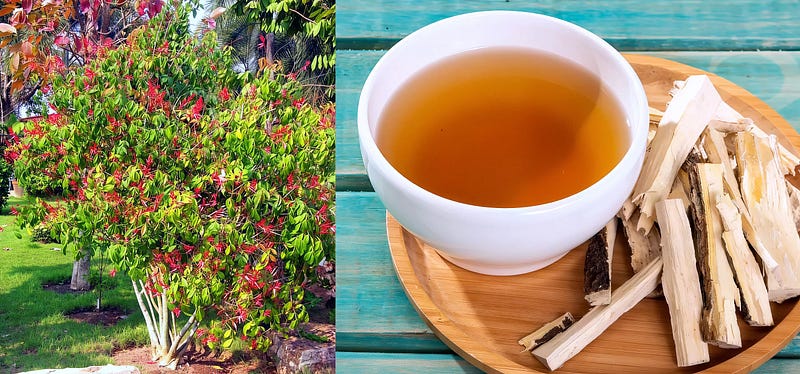
In the forests of Central and South America, a small tree with scarlet blossoms and a taste sharper than firewater has long stood as both remedy and riddle. Quassia amara, often simply called quassia (pronounced: kwaa·see·uh), is a plant whose bitterness defines it — so potent that a shaving of its wood can flavor gallons of liquid. It has been brewed into tonics, infused into liqueurs, and harnessed in medicine and agriculture alike. Yet beyond its acrid bite lies a story of resilience, cultural memory, and the delicate balance between human use and ecological preservation.
Taxonomy
Quassia amara belongs to the family Simaroubaceae, a lineage of plants known for their bitter compounds. Its scientific classification is as follows: Kingdom Plantae, Order Sapindales, Family Simaroubaceae, Genus Quassia, Species Quassia amara. Common names vary from “bitterwood” and “amara” to “pau-amargo” in Brazil and “quassiawood” in the Caribbean. While Quassia amara is the most well-known edible representative, related species such as Picrasma excelsa (Jamaica quassia) share similar uses and reputation. These plants are united by their quassinoids, intensely bitter compounds that have set them apart in both medicine and gastronomy.
Biology
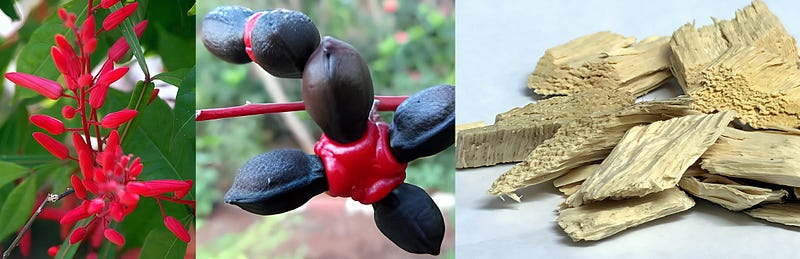
Quassia amara is a small, evergreen tree that typically grows 6–10 ft (about 1.8–3 m) tall, though in some environments it may reach up to 26 ft (8 m). Its leaves are alternate and pinnate, with a glossy green surface, while its flowers are a striking crimson, standing out against the foliage like embers in the shade. The plant produces small, black drupes, but it is the pale wood and bark that contain the highest concentration of its famed bitterness. Quassia reproduces both through seed and vegetative propagation, and its perennial nature ensures that it endures for decades once established. Adaptations such as chemical defenses make it unpalatable to many herbivores, safeguarding its survival in biodiverse yet competitive ecosystems.
Ecology
Native to tropical forests stretching from Costa Rica to the Amazon basin, Quassia amara thrives in humid, shaded understories. Its role is quiet yet critical: providing nectar to pollinators such as hummingbirds and insects while contributing to the intricate balance of rainforest plant communities. Unlike timber giants, quassia is rarely harvested for bulk wood, reducing pressure on its populations. However, its medicinal and commercial value has led to localized overharvesting in certain regions. Sustainable cultivation projects, particularly in Brazil and Suriname, now seek to protect wild stocks while meeting growing demand for their extracts in pharmaceuticals and herbal remedies.

Uses
Quassia’s value lies in its chemistry. Quassinoids derived from its bark and wood have been employed as natural insecticides, especially against agricultural pests. Farmers steep wood chips in water to create a spray that protects crops without resorting to synthetic chemicals. In medicine, quassia extracts have been used as tonics for digestive ailments, appetite stimulation, and even as an antiparasitic treatment. Historically, its bitter compounds were believed to cleanse the body, a belief that persists in modern herbalism. Economically, quassia is exported as dried wood, liquid extracts, or powders, with industries ranging from agriculture to pharmaceuticals drawing upon its potency.
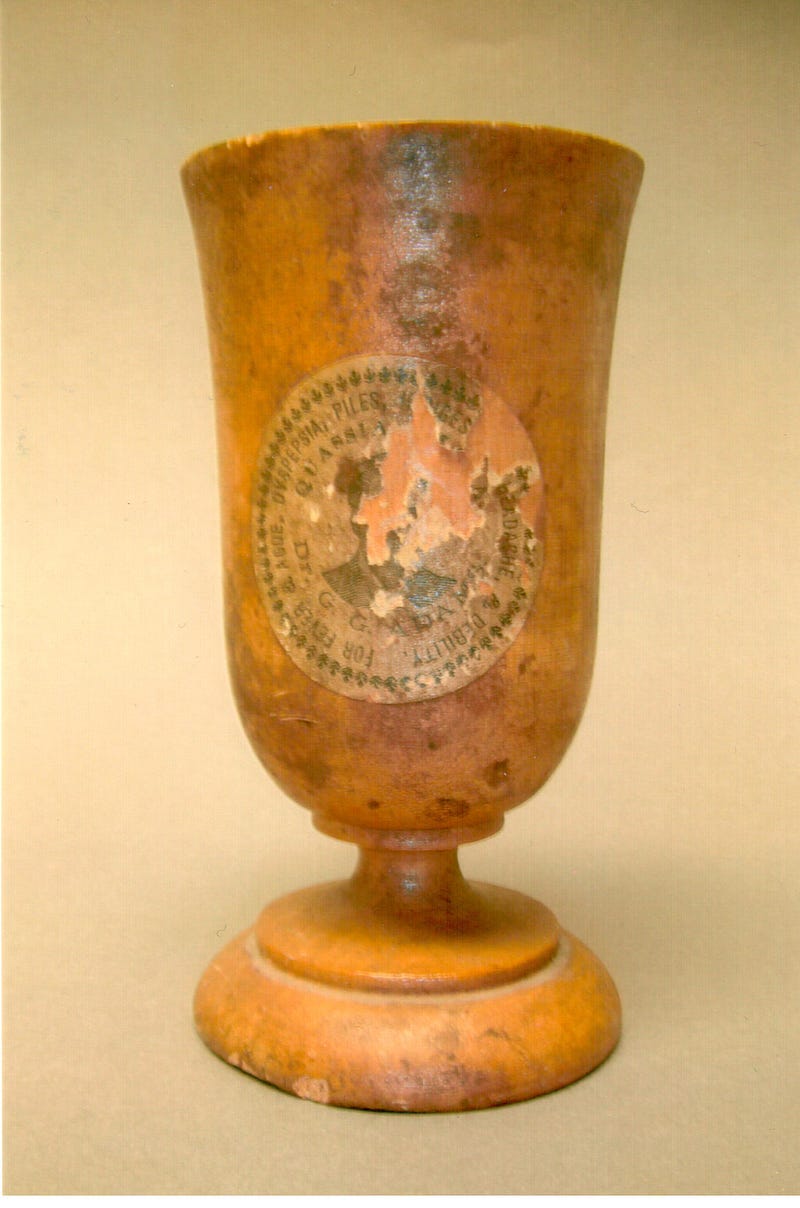
A quassia cup is a small goblet carved from the wood of the Quassia tree, traditionally used to create a bitter medicinal tonic. By filling the cup with water and letting it infuse overnight, the wood’s properties would leach out into the liquid. This bitter tonic was historically consumed to stimulate appetite, aid digestion, reduce fevers, and expel intestinal worms.
Culinary Aspects
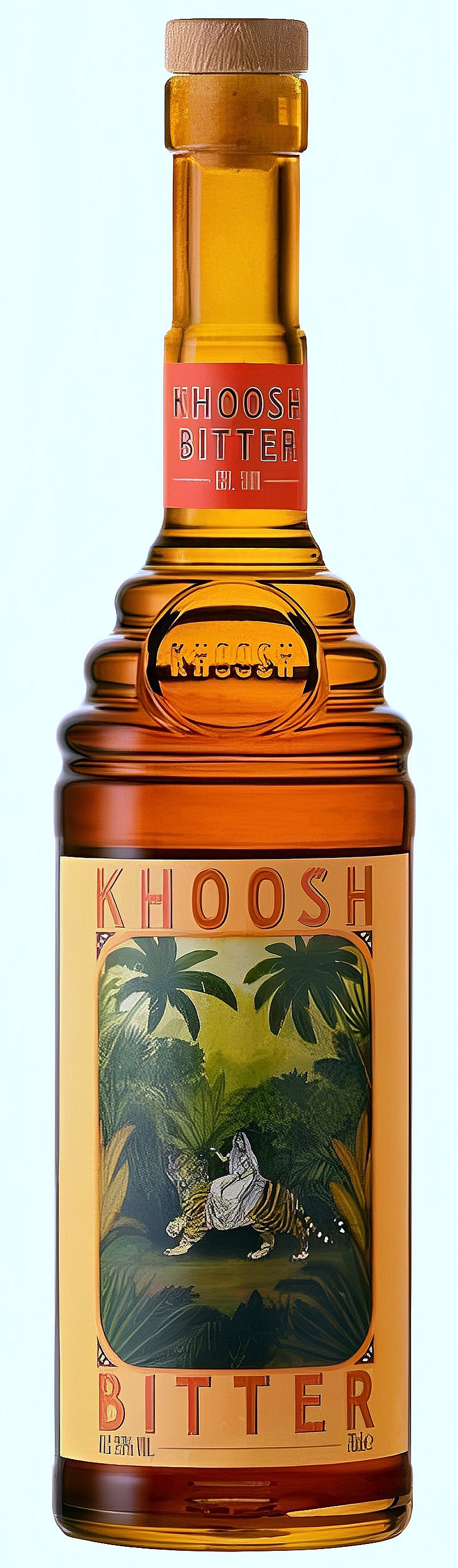
To speak of quassia in cuisine is to speak of restraint. Its flavor is not mild but overwhelmingly bitter — so much so that a single shaving can infuse quarts of liquid. Traditional herbal bitters, aperitifs, and vermouths have long relied on quassia as a key ingredient. In Suriname, small amounts of quassia bark are infused into water as a household digestive tonic. It has also been employed as a hops substitute in brewing, imparting bitterness to beer without the floral undertones. Nutritionally, quassia does not contribute calories or macronutrients in significant amounts, but it carries bioactive compounds that support digestion, making it as much a medicinal agent as a flavoring.
Wine Pairings
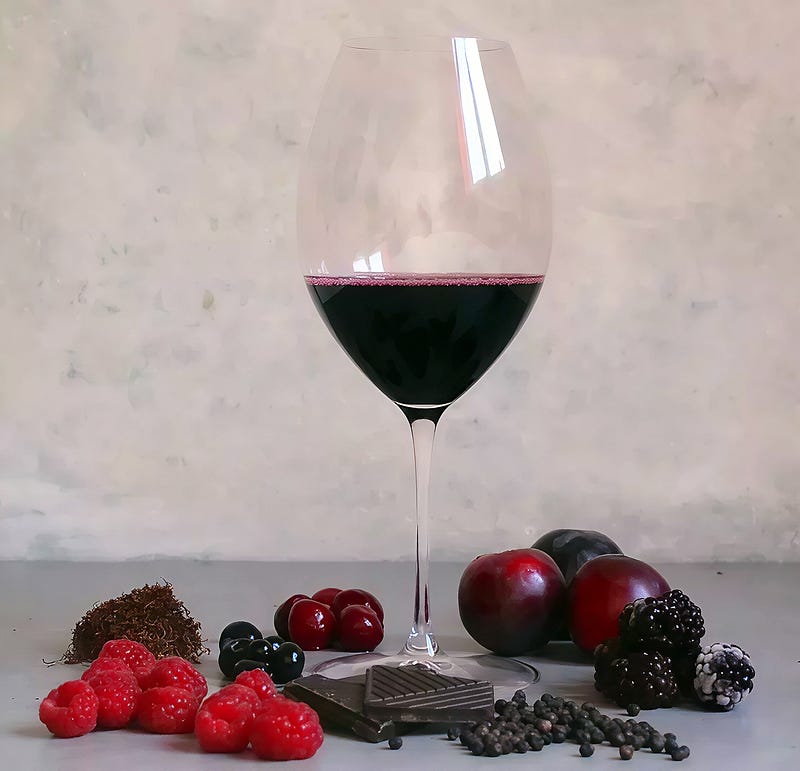
Pairing wine with quassia-infused preparations requires careful balance. The wood’s bitterness demands companions with body and fruit-forward richness. A late-harvest Riesling, with its honeyed sweetness, provides contrast, softening the sharp edge of bitterness. Similarly, a Malbec with deep plum and blackberry notes can meet quassia’s acrid tone head-on, creating a bold interplay. For lighter aperitifs or cocktails that use quassia bitters, a sparkling Prosecco offers effervescence and citrus undertones that temper and refresh, allowing bitterness to become a subtle complexity rather than an overwhelming force.
Conclusion
Quassia amara is a paradox: a tree small in stature but immense in influence, despised by some for its biting taste and revered by others for its healing and protective powers. It reminds us that bitterness itself has value — that what challenges the palate may strengthen the body, and what resists consumption may secure survival. In an age where sustainability and tradition increasingly intersect, quassia endures as a symbol of nature’s difficult gifts: potent, demanding, and unforgettable.