Wings of Flavor and Heritage: The Story of Wild Anas Ducks
Wild Anas ducks remind us that nature is not separate from human history — it is woven into it. They feed us, inspire us, and warn us of the fragility of wetlands and migratory pathways that sustain life on Earth.
Introduction
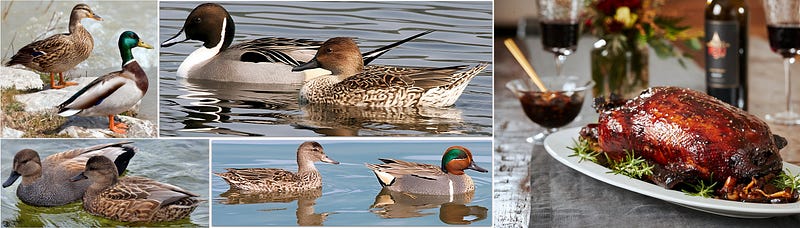
Across wetlands, marshes, and riverbanks, the genus Anas has flourished as one of the most widespread and culturally significant groups of ducks. From the mallard that drifts across North American ponds to the teal and pintail of Eurasian flyways, Anas ducks are more than just waterfowl — they are ecological engineers, culinary treasures, and timeless icons in art and folklore. To explore them is to journey through science, sustainability, and the enduring relationship between humans and the wild.
Taxonomy
The genus Anas belongs to the family Anatidae, a diverse group that includes swans and geese. Within Anas, familiar species include the mallard (Anas platyrhynchos), the northern pintail (Anas acuta), the gadwall (Anas strepera), and the Eurasian teal (Anas crecca). Many domesticated ducks trace their lineage directly to the mallard, while others remain prized in their wild form for hunting and gastronomy. Their wide distribution across continents and their ability to hybridize make them both a taxonomist’s puzzle and a symbol of adaptability.

Biology
Wild Anas ducks share a characteristic body plan: compact and buoyant, with webbed feet for swimming and strong wings for long-distance migration. Most weigh between 1.5 and 3 pounds (0.7–1.4 kg), with wingspans reaching 28 to 39 inches (71–99 cm). Males often boast vivid breeding plumage — iridescent greens, chestnut browns, and striking speculum patches on their wings — while females wear mottled camouflage that protects them as they nest in reeds or grasslands. Their life cycle follows the rhythm of the seasons, with courtship displays in spring, nesting in early summer, and southward migrations in autumn that cover thousands of miles.
Ecology
Anas ducks are an ecological keystone. By grazing on aquatic plants, invertebrates, and seeds, they help regulate wetland ecosystems. Their droppings fertilize waterways, while their foraging stirs sediments that release nutrients. Many species serve as prey for raptors, foxes, and humans alike. Yet their habitats are under threat from wetland drainage, pesticide runoff, and climate change. Conservation initiatives, such as protected flyways and sustainable hunting quotas, remind us that preserving Anas ducks means preserving entire landscapes of biodiversity.
Uses
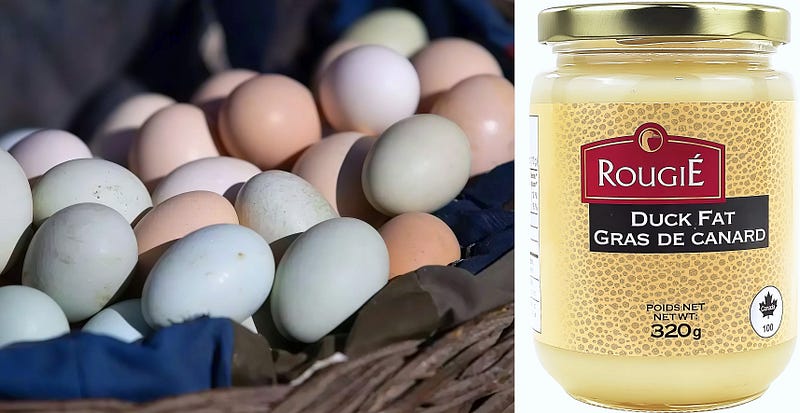
For centuries, Anas ducks have been intertwined with human economies. Hunting wild ducks remains both a cultural tradition and a regulated industry, generating revenue through permits and eco-tourism. Feathers were once used in bedding and garments, and in some regions, duck fat is still prized as a sustainable cooking oil. Beyond direct use, their ecological services — controlling insects, dispersing seeds, and maintaining wetlands — are invaluable to farmers and fishers alike. Responsible management ensures these resources remain renewable rather than exhausted.
Culinary Aspects
Few meats rival the depth of flavor offered by wild duck. Unlike domesticated breeds, which tend toward fattiness, Anas ducks have lean, dark meat with a rich, gamey intensity. A roasted teal, weighing just 12 ounces (340 g), provides a delicate portion of concentrated flavor, while a mallard can yield hearty cuts ideal for confit or pan-searing. In French cuisine, wild duck appears in dishes like canard à l’orange, while in East Asia, it is braised with spices such as star anise and ginger. Nutritionally, wild duck offers high protein and iron content, with less fat than beef or pork — making it both indulgent and nourishing.
Wine Pairings
Pairing wine with wild duck requires balancing its robust flavor and lean texture. A mallard roasted with herbs pairs beautifully with a Pinot Noir, whose earthy cherry notes echo the duck’s richness without overpowering it. Teal, lighter and more delicate, shines alongside a Loire Valley Cabernet Franc, where bright acidity cuts through its intensity. For spiced Asian preparations, a Gewürztraminer or Riesling provides aromatic sweetness that harmonizes with heat and game. These pairings are not mere indulgence — they highlight how duck has long occupied the nexus of culture, cuisine, and craft.
Conclusion
Wild Anas ducks remind us that nature is not separate from human history — it is woven into it. They feed us, inspire us, and warn us of the fragility of wetlands and migratory pathways that sustain life on Earth. To honor them is to recognize our duty: to balance appreciation with protection, to savor without depleting, and to see in every wingbeat not just a bird, but a bond stretching back through centuries of human culture.