The C.L.E.A.R.
Chapter One: The Foundational Crisis: A Systematic Deconstruction of Legacy Interrogation Models
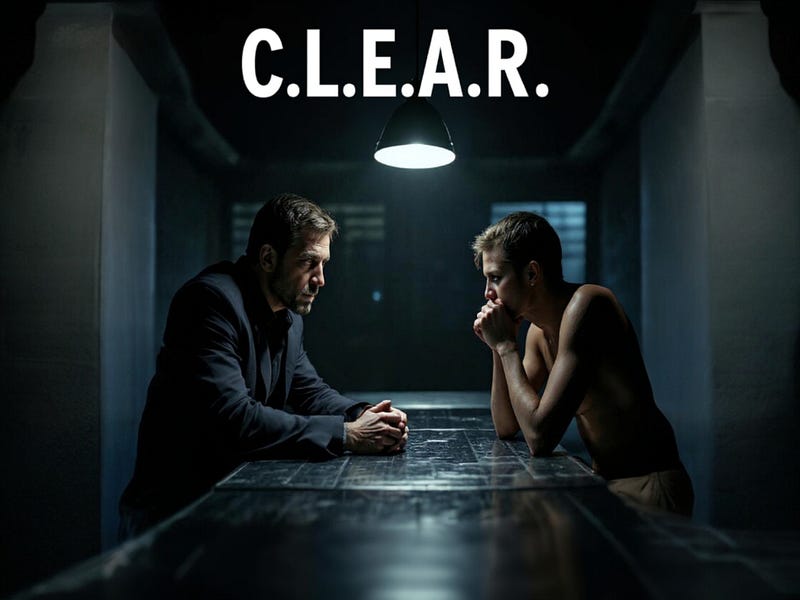
The C.L.E.A.R. Path: A New Paradigm for Precision, Efficiency, and Ethics in Investigative Elicitation
Chapter One: The Foundational Crisis: A Systematic Deconstruction of Legacy Interrogation Models
The contemporary practice of investigative interviewing is mired in a crisis of efficacy and ethics, a direct consequence of its reliance on paradigmatic frameworks built upon flawed or incomplete understandings of human psychology. For much of the twentieth century, the dominant model in North America has been the Reid Technique, a confrontational, confession-oriented methodology. Its underlying philosophy is one of behavioral symptom analysis, a process wherein an investigator is trained to interpret nonverbal and verbal cues to form a presumption of guilt, which then justifies a transition into a multi-staged, psychologically coercive interrogation. This process systematically employs tactics such as thematic presentation — offering moral justifications for the crime — and the strategic use of false evidence ploys, wherein an investigator may fabricate proof of the suspect’s involvement. The psychological mechanism at play is the induction of a state of learned helplessness and memory distrust syndrome, where the suspect, isolated and under immense pressure, comes to see confession as the only viable escape route. The empirical evidence of this model’s failure is overwhelming and tragic. A comprehensive analysis of proven false confession cases reveals that the Reid Technique’s signature tactics are disproportionately present. Research consistently demonstrates that professional lie-detection accuracy rarely exceeds chance levels, hovering around 54%, debunking the very foundation of the behavioral analysis interview. Furthermore, the Innocence Project reports that in over 25% of DNA exoneration cases, false confessions were a contributing factor, with a significant portion of these involving vulnerable populations such as juveniles and the cognitively impaired, who are particularly susceptible to coercive influence. Confessions obtained under such duress are often forensically sterile; they lack the rich, contextual, and novel details of genuine memories and are instead contaminated by the interviewer’s leading questions and implied narratives, rendering them both unreliable and unjust.
In response to these documented harms, alternative models emerged, most notably the PEACE model, developed in the United Kingdom as a direct corrective to Reid’s excesses. PEACE, an acronym for Planning and Preparation, Engage and Explain, Account, Closure, and Evaluate, represents a philosophical shift from confession extraction to information gathering. It rightly emphasizes the importance of rapport, open-ended questioning, and a non-accusatorial stance, aligning more closely with established principles of procedural justice. However, a critical analysis reveals that the PEACE model, while ethically superior, suffers from a critical operational deficiency: passivity. Its framework provides a robust ethical superstructure but offers limited, non-prescriptive tactical tools for effectively escalating an interview with a deliberately deceptive or recalcitrant subject. Its reliance on the concept of “rapport” is problematic; rapport is intrinsically unquantifiable, easily feigned by both parties, and intensely culturally dependent, where a gesture intended to build trust in one culture may be perceived as disrespectful in another. The “Challenge” phase within the “Account” stage is often its weakest link, lacking a structured, non-adversarial protocol for resolving contradictions, which can lead interviewers to either “agree to disagree” fruitlessly or, under pressure, regress to the very accusatory behaviors the model was designed to prevent. The fundamental flaw shared by both the Reid and PEACE models is their inadequate engagement with the modern science of human memory and cognition. Memory is not a forensic recording but a dynamic, reconstructive process that is highly susceptible to distortion from post-event information, social pressure, and the interviewer’s own confirmation bias. The justice system has thus been presented with a false and unacceptable dichotomy: choose between a coercive model that is effective at securing admissions but generates an unacceptable risk of false confessions, or an ethical model that protects against coercion but may lack the tactical precision to effectively uncover the truth in complex, high-stakes scenarios. This book argues that this dichotomy is a fallacy and that a new, synthesized paradigm is not only possible but urgently required.
Chapter Two: The Pillars of a New Paradigm: The C.L.E.A.R. Design Philosophy
In response to the systemic failures of legacy models, we propose the C.L.E.A.R. Interrogation Framework, a comprehensive architecture engineered from first principles to harmonize ethical imperatives with operational effectiveness. The acronym C.L.E.A.R. signifies the model’s foundational commitment to transparency and denotes its five core operational components: Comprehensive Preparation, Legal-Ethical Conduct, Engagement, Adaptive Tactics, and Resolution/Review. The model’s design philosophy is built upon three interdependent pillars that collectively address the shortcomings of its predecessors. The first pillar is Precision, which fundamentally redefines the objective of an investigative interview. The goal is no longer the procurement of a low-information, high-risk confession statement such as “I did it.” Instead, the objective is the elicitation of verifiable, actionable truth. A confession is merely a starting point; the true measure of success is the acquisition of specific, testable data points that can be independently corroborated or refuted. For example, a precise finding would be a statement such as, “I entered through the unlocked back door, which had a broken pane of glass, and I knocked over a red bicycle that was leaning against the wall to the left.” This level of detail provides tangible investigative leverage, allows for forensic verification, and produces a statement that is profoundly more resilient to legal challenge and retraction. The model is designed to surgically extract this information through structured processes, moving beyond the scattergun approach of accusatory questioning.
The second pillar is Efficiency, conceived through the lens of cognitive resource management. The model acknowledges that the mental capital of both the interviewer and the subject is a finite resource that is rapidly depleted under stress and fatigue. Traditional marathon interrogations, some of which are documented to exceed sixteen hours, are not only ethically questionable but also cognitively counterproductive, dramatically increasing the risk of memory errors and false confessions. The C.L.E.A.R. framework is structurally engineered to maximize the yield of accurate information per unit of time and cognitive energy. This is achieved through the implementation of time-boxed interview cycles, mandatory breaks, and a strict prohibition on sessions exceeding a scientifically justified duration, thereby preventing cognitive exhaustion that corrupts the information-gathering process. The third and most critical pillar is Ethical Fidelity. In the C.L.E.A.R. framework, ethical practice is not a peripheral concern managed by a checklist of prohibitions; it is the intrinsic and non-negotiable core of the model’s architecture. Safeguards are not overlaid onto the process but are embedded within its very mechanisms. The model’s foundational prohibition on investigator deception about evidence, coupled with principles like the Externalization of Conflict — where contradictions are framed as objective puzzles rather than personal accusations — are themselves primary ethical instruments. This approach is deeply aligned with the well-established principles of procedural justice, which posit that an individual’s perception of the fairness, transparency, and respectfulness of a process is a primary determinant of their willingness to accept its outcomes, thereby bolstering the legitimacy and moral authority of the entire justice system. The C.L.E.A.R. model, through this integrated triad of precision, efficiency, and ethical fidelity, presents a coherent and robust alternative that refuses to sacrifice truth for speed or justice for expediency.
Chapter Three: The Cognitive Architecture: Principles of Memory and Deception
The C.L.E.A.R. model is grounded in a sophisticated understanding of human cognition, moving beyond folk psychology to embrace an evidence-based architecture of memory and deception. The central organizing metaphor of the framework is that of the investigator as a “Cognitive Cartographer.” Within this construct, the subject’s memory is not a video library but a dynamic, incomplete, and often distorted “information map” of a past event. A multitude of forces continuously reshapes this cognitive map: self-serving bias, which tends to portray the subject’s own actions in a favorable light; confirmation bias, which selectively recalls details that fit a pre-existing narrative; the fragmenting effect of emotional trauma; and the natural degradation and resequencing caused by the passage of time. The interviewer’s role, therefore, is not that of a miner extracting a static resource but of a skilled cartographer who facilitates the subject in drawing their map, identifying its salient features, and then collaboratively validating those features against a separate, objective map composed of known evidence. This collaborative, problem-solving dynamic is fundamental to the model’s efficacy and ethical stance.
This metaphor is operationalized through several key psychological principles. First is the recognition of the reconstructive nature of memory. Every act of recall is an active process of reconstruction, not a passive retrieval of a stored file. The C.L.E.A.R. model works with this reality by employing specific, evidence-based retrieval cues. Techniques such as sensory questioning (“What did the gravel sound like under your feet?”) and context reinstatement are used to help the subject access the original, perceptual source memory, thereby helping to isolate authentic data from later, contaminated or confabulated narrative “patches” that may have been incorporated from other sources, such as media reports or the interviewer’s own leading questions. Second, the model strategically leverages the cognitive architecture of deception. Lying is a cognitively demanding task. A truthful subject is primarily engaged in the single, albeit complex, process of memory retrieval. A deceptive subject, by contrast, must simultaneously manage a punishing cognitive load involving at least four parallel processes: the continuous invention of a plausible alternative narrative, the active suppression of the veridical memory, constant monitoring of the interviewer’s reactions for signs of disbelief, and the ongoing self-correction required to maintain internal consistency within the fabricated story. The C.L.E.A.R. model’s tactical toolkit, including techniques such as reverse-order narration and intensive, granular questioning, is designed to strategically increase cognitive load in a controlled manner, testing the structural integrity of a lie until it becomes untenable, without resorting to the uncontrolled, coercive pressure that characterizes accusatory models. A core innovation that emerges from this architecture is the principle of Externalization of Conflict. In this model, confrontation is never personal (“You are a liar”). It is always objective and procedural (“This statement you provided conflicts with this piece of physical evidence; let’s work together to resolve this puzzle”). This reframing shifts the dynamic from a stressful, adversarial “me versus you” encounter to a collaborative “us versus the problem” exercise. It effectively bypasses the subject’s ego-defense mechanisms by allowing them to “correct the record” without the profound psychological cost of admitting to being a liar, thereby facilitating a pathway to the truth that preserves the subject’s dignity and the integrity of the process.
Chapter Four: The Operational Blueprint: The Four Phases of a C.L.E.A.R. Interview
The theoretical principles of the C.L.E.A.R. model are translated into practice through a structured yet flexible four-phase operational blueprint, providing a clear roadmap for investigators while allowing for necessary adaptation to the unique dynamics of each encounter. The first phase, Comprehensive Preparation, constitutes the critical foundation upon which the entire interview is built. It is an active, analytical process that moves far beyond a perfunctory review of the case file. Investigators engage in a meticulous exercise known as Fact-Evidence-Inference (FEI) Sorting, a disciplined protocol designed to purge the case of cognitive biases and unfounded assumptions. In this triage, a “Fact” is defined as an unassailable piece of information (e.g., “The victim died of a single gunshot wound”); “Evidence” is the source of that fact (e.g., “The Medical Examiner’s autopsy report”); and an “Inference” is a logical but testable assumption based on facts (e.g., inferring the victim was alive at the time of a text message, when the only fact is that the message was sent from their phone). This process forces investigators to distinguish between what is known and what is merely suspected. The primary output of this phase is the “Delta-Zero” Contradiction Grid, a dynamic matrix prepared before any contact with the subject. This grid visually maps all known facts and evidence against anticipated topics of discussion, clearly highlighting “Known Unknowns” — critical information gaps — and any pre-existing contradictions within the evidence itself. This grid becomes the investigator’s strategic command center for the interview. Furthermore, the interview environment is deliberately arranged not for artificial comfort or overt intimidation, but to facilitate cognitive focus and a collaborative tone, often employing a round table and a shared digital screen to display the evolving grid, physically embodying the “us versus the puzzle” dynamic.
The second phase, Structured Engagement, is dedicated to obtaining the subject’s initial, uninterrupted narrative while establishing a calibrated baseline of behavioral and communicative responses. This phase begins with a formal “contract” or procedural briefing, where the interviewer clearly outlines their role as an objective fact-finder, explains the purpose of the recording, and sets the expectation that the process will involve collaboratively resolving any conflicts that arise between the subject’s account and the objective evidence. The interviewer then uses a single, broad, open-ended prompt (e.g., “Please tell me everything you did from the moment you woke up that day to the moment you went to sleep”) and then practices disciplined, active listening, trained to tolerate long, potentially uncomfortable pauses that represent crucial cognitive “retrieval time” for the subject. During this phase, the interviewer’s primary task is not lie detection but baseline calibration, meticulously annotating the Contradiction Grid with the subject’s key statements, temporal markers, emotional signposts, and linguistic patterns (e.g., use of passive voice or verbal distancing) to build a robust, individualized profile of the subject’s truthful communicative style.
The third phase, Adaptive Exploration, forms the core analytical engine of the model. It replaces the linear, chronological questioning of traditional models with an iterative, diagnostic process built on Time-Boxed Sprints. These are short, intensive segments, typically 15–25 minutes in duration, each with a single, declared strategic goal (e.g., “Sprint 1: Map the subject’s timeline between 8:00 PM and 10:00 PM”). Each sprint is followed by a mandatory 3–5 minute break, serving as a cognitive reset for both parties and providing the interviewer a crucial window for strategic analysis and plan adjustment. Within each sprint, the interviewer employs an Adaptive Questioning framework. This dynamic decision matrix dictates the type of question to deploy based on the subject’s real-time responses and the state of the Contradiction Grid. This toolkit includes: Expansion Questions to build detail; Sensory Questions to probe the richness and source of a memory; Temporal and Sequential Questions to anchor the narrative in time; Reverse-Order Questions to stress-test the structural integrity of a rehearsed story; and intensely Granular Questions to force specificity on objects, locations, and actions. The Contradiction Grid is updated in real-time throughout this phase, transforming it from a static preparation tool into a live, shared workspace where discrepancies (“deltas”) between the subject’s map and the evidence map become visually and objectively apparent, guiding the direction of the interview with precision.
The fourth and final phase, Strategic Resolution, redefines the concept of a successful outcome. In the C.L.E.A.R. model, a confession is the beginning of this phase, not its end. The ultimate goal is to produce a verifiable, detailed, and comprehensive final account that resolves all material discrepancies on the grid. The interviewer employs advanced verification techniques such as Motor-Spatial Mapping, where the subject is asked to physically draw the scene or demonstrate actions, thereby accessing procedural and spatial memory systems that are extremely difficult to fabricate coherently. Another key technique is the “Novel Information” Check. In this reverse holdback, the subject provides verifiable details of the crime that were previously unknown to the investigation, offering irrefutable proof of the account’s authenticity. The process concludes with the collaborative construction and formalization of a “Final Map” — a detailed, resolved narrative that the subject confirms and signs. This document, backed by the complete audit trail of the Contradiction Grid, is exceptionally resilient to legal challenge. The interview concludes with a professional closure, regardless of the outcome, that preserves the subject’s dignity, informs them of next steps without making unauthorized promises, and leaves the door open for future cooperation, thereby upholding the ethical standards of the model from beginning to end.
Chapter Five: Cultivating Expertise: The C.L.E.A.R. Training and Certification Program
The successful implementation of the C.L.E.A.R. framework is entirely contingent upon a radical transformation in the skill set and, more importantly, the mindset of its practitioners. This requires a departure from the traditional, brief training courses on interrogation tactics toward a comprehensive, multi-tiered educational program designed to forge “investigative cognitive architects.” The guiding philosophy of this curriculum is “train as you fight,” emphasizing immersive, realistic, scenario-based training that prepares officers for the psychological and ethical complexities of high-stakes interviews. A foundational element of this training is a rigorous, evidence-based deconstruction of legacy models. Trainees do not simply hear that the Reid Technique is problematic; they are guided through a detailed analysis of specific, documented false confession cases, such as the Central Park Five or the Norfolk Four, where they must identify the exact coercive tactics — be it the false evidence ploy, minimization, or exhaustion — that directly led to the miscarriage of justice. This is powerfully contrasted with the presentation of robust empirical evidence, including meta-analyses such as the 2024 systematic review by Vrij et al., which conclusively demonstrates that information-gathering methods produce superior outcomes in terms of both accurate information yield and the radical reduction of false confessions. Understanding this scientific and ethical imperative is critical for fostering deep-seated officer buy-in and ensuring faithful adherence to the protocol when under pressure.
The curriculum itself is structured around four progressive pillars of mastery, typically delivered over an intensive multi-week program. Pillar I, Foundational Sciences, provides the essential theoretical bedrock, encompassing dozens of hours on cognitive psychology (memory formation, reconstructive processes, cognitive biases), neuroscience fundamentals (the effects of stress, fatigue, and deception on the HPA axis and executive function), forensic linguistics (pragmatics, presupposition, statement analysis), and a thorough grounding in the legal and ethical frameworks that constitute the C.L.E.A.R. Safeguards Protocol. Pillar II, Model Architecture and Tools, transitions to practical application, offering a deep dive into the four phases of C.L.E.A.R. Trainees engage in hands-on workshops to master the construction and use of the Contradiction Grid, practice Fact-Evidence-Inference Triage on complex, multi-volume case files, and engage in structured role-playing to develop fluency in Adaptive Questioning and the discipline of Neutral Validation. Pillar III, Simulation and Practical Application, is the crucible where knowledge is forged into skill. This involves over eighty hours of tiered, realistic simulations. Tier 1 consists of scripted scenarios to practice individual components, such as running a single time-boxed sprint. Tier 2 introduces complex, multi-phase scenarios with ambiguous evidence and professional role-players trained in deception. Tier 3 involves full-scale, immersive simulations in realistic environments — such as mock crime scenes and station houses — under significant time pressure and psychological stress, often enhanced by technology like the ECHOMIND AI-driven avatar platform, which provides real-time, objective feedback on the trainee’s questioning technique and adherence to the model. The final pillar, Pillar IV: Capstone and Certification, represents the culmination of the evaluation. Trainees must navigate a complex, unscripted capstone scenario from initial case file review to final resolution, while being observed and scored by a panel of expert evaluators. A rigorous written examination accompanies this on the model’s theory, legal basis, and ethical principles.
Evaluation within the C.L.E.A.R. system is fundamentally reoriented. The binary metric of a confession obtained does not measure success. Instead, a sophisticated set of metrics is employed. The primary metric is the Information Accuracy Score (IAS), where the information elicited is quantitatively and qualitatively scored post-interview based on its verifiability and correlation with ground truth. The Efficiency Metric calculates the Data Density per Hour — the number of unique, verifiable data points elicited. The Process Metric scores the trainee’s adherence to the C.L.E.A.R. structure and protocols. Most critically, the Ethical Metric acts as a strict gatekeeper; any violation of core safeguards (e.g., the use of deception, leading questions, coercion) results in the immediate failure of the exercise, regardless of the information yield. Certification is tiered (Practitioner, Specialist, Instructor) and requires periodic re-certification to incorporate the latest research. This commitment to excellence extends beyond the academy through structured mentorship programs, peer-led debriefs of real-world cases akin to medical morbidity and mortality conferences, and periodic refresher courses, fostering a culture of continuous professional improvement and collective accountability.
Chapter Six: Operational Deployment: From Theory to Practice in the Field
The ultimate validation of the C.L.E.A.R. model lies in its practical and faithful application within the unpredictable and high-stakes environment of real-world investigations. Operational deployment requires the seamless integration of the model’s phases into the standard workflows of a law enforcement agency. For suspect interrogations, this process begins with a formal pre-interrogation briefing. During this collaborative session, the lead interviewer, a second monitoring officer, and the case investigator review the prepared Contradiction Grid, assign specific roles (e.g., primary questioner, grid manager, legal monitor), and establish a clear strategic plan for the interview, including the sequencing of evidence disclosure and the objectives for the initial time-boxed sprints. The Engagement phase commences with a transparent and respectful establishment of the “rules of the road.” The interviewer, after administering legally required warnings, might add a statement such as, “We want to hear your side of the story. You have my word that we will treat you fairly and will not mislead you or deceive you about the evidence. In turn, I ask that you take this process seriously.” This explicit no-deception pledge, often surprising to suspects accustomed to the tropes of deceptive police interrogations in popular culture, immediately establishes a tone of procedural justice and can fundamentally alter the dynamic of the interaction.
During the critical Adaptive Exploration phase, several field-tested tactical protocols emerge. A cardinal rule is to persistently explore the suspect’s explanation before presenting contrary evidence. For instance, if the investigation has video evidence placing the suspect at a location they have omitted, the interviewer will not immediately confront them with this evidence. Instead, they will use open-ended and temporal questions to probe that period: “You mentioned you drove straight home. Please walk me through that drive. Did you stop anywhere at all, even for a moment?” If the suspect consciously omits or lies about the location, the investigator, after giving them a final opportunity to correct the record, can then reveal the evidence: “I ask because we have video from the gas station on 3rd Street that shows you there at 8:45 p.m.” This method often catches the suspect in a deception without the investigator ever resorting to deceit, preserving the integrity of the process and the potential for future rapport.
A principal strength of the C.L.E.A.R. framework is its universal adaptability across the spectrum of investigative interviews. When applied to witnesses and victims, especially those who have experienced trauma, the model’s focus shifts from testing credibility to memory enhancement and trauma-informed care. The Contradiction Grid is used gently as a “memory aid” or “timeline clarifier” to help the witness organize their recollections without introducing contaminating details from the interviewer. The time-boxed sprints are significantly shortened to manage cognitive load and prevent re-traumatization, and the interviewer consciously cedes control over the pacing to the subject. For vulnerable populations such as juveniles or individuals with mental or psychiatric impairments, the model’s intrinsic ethical safeguards are paramount and are enhanced by specific protocols. These mandates include the mandatory presence of an appropriate adult or advocate, sessions that are drastically shorter in total duration, the use of simplified, developmentally appropriate language, and the representation of the Contradiction Grid using pictures or simple icons. In these contexts, the advocate is actively integrated into the process, viewing the objective Grid alongside the subject, which transforms their role from a purely adversarial observer into a participant in a structured, transparent fact-finding process. This flexibility ensures that the core C.L.E.A.R. principles of precision, efficiency, and ethics are consistently maintained, whether the subject is a hostile suspect, a traumatized victim, or a vulnerable child.
Chapter Seven: Technological Synergy and Systemic Safeguards: Ensuring Accountability and Advancing Practice
The C.L.E.A.R. model is conceived not as a static manual of procedures but as a living framework that actively integrates with and leverages modern technology to enhance its precision, efficiency, and accountability, while ensuring that human judgment remains the ultimate arbiter. This digital synergy operates across multiple layers of the investigative process. The advent of sophisticated real-time transcription and natural language processing software enables the live conversion of interview dialogue into searchable text. This feed can be monitored by a secondary team of investigators who can instantly flag inconsistencies, identify new leads, and cross-reference names, locations, or objects mentioned by the subject against vast investigative databases in real-time, providing the primary interviewer with actionable intelligence during break periods.
Perhaps the most transformative integration is the use of artificial intelligence as a decision-support tool or “cognitive co-pilot” for the interviewer. A secure, ethically vetted AI system can analyze the multimodal data stream of the interview — audio for vocal stress and linguistic patterns, video for non-verbal micro-expressions and body language — and provide discreet, real-time prompts to the interviewer via a private earpiece or tablet. For example, the AI might suggest, “Subject’s narrative became less detailed and more repetitive when discussing the financial motive; consider deploying a Granular Questioning Ladder on that topic,” or provide a crucial process check: “Warning: You have used two leading questions in this sprint; reset to open-ended prompts.” It is essential to emphasize that such AI is strictly an assistant that prompts further human analysis and investigation; its “conclusions” are treated as hypotheses to be tested, not as definitive determinations. The ethical and legal implications of AI in interrogations are significant, and its use must be governed by strict protocols, potentially including disclosure to defense counsel, to prevent claims of undue psychological influence.
These advanced technological tools are bolstered by a deeply embedded system of procedural and systemic safeguards that are intrinsic to the C.L.E.A.R. architecture. The Contradiction Grid itself serves as a robust legal and ethical instrument. Its continuous documentation provides a complete, auditable trail for the courts, empirically demonstrating what evidence was presented to the subject, when it was given, and how the subject’s narrative evolved in response. This renders any subsequent defense claim of coercion, evidence tampering, or contamination objectively testable, thereby transforming a typical “swearing contest” into an evidence-based review. The mandatory breaks inherent in the time-boxed sprint structure serve as a vital physiological and psychological safeguard against interrogation fatigue, a well-documented driver of false compliance and memory distortion. A formal “no lone wolf” rule for severe cases ensures collaborative oversight and prevents investigative isolation. The non-negotiable policy of complete, continuous audio-video recording of all custodial interrogations creates an objective record that protects the rights of the suspect, provides a definitive account for judicial review, and shields officers from false allegations of misconduct. Furthermore, the model’s foundational and absolute prohibition on investigator deception about evidence or promises pre-empts a primary cause of false confessions. It aligns the practice of law enforcement with evolving legal standards and societal expectations of integrity. Together, these integrated technologies and intrinsic safeguards create a system that is not only more effective and precise in its truth-seeking function but is also transparent, accountable, and resilient to legal, ethical, and scientific challenges.
Chapter Eight: Comparative Validation and Future Evolution: Positioning C.L.E.A.R. within the Global Context
A rigorous, systematic comparison is essential to validate the C.L.E.A.R. model’s position as a synthesizing and superior paradigm within the global landscape of investigative interviewing. When contrasted with the Reid Technique, the differences are foundational and profound, representing a clash of philosophies. Reid is, at its core, a confession-focused, accusatorial model that explicitly permits tactical deception and operates on a presumption of guilt following a non-validated behavioral analysis. This creates a high-risk environment for false confessions. This risk is catastrophically amplified when applied to vulnerable populations such as juveniles, whose developing brains are particularly susceptible to pressure and suggestion. In stark contrast, C.L.E.A.R. is an information-gathering, analytical model that categorically forbids deception and maintains a disciplined, hypothesis-testing stance focused on verifying the suspect’s account against a pre-established body of evidence. While the Reid Technique might appear to offer swift resolutions in some instances, it often devolves into inefficient, lengthy, and psychologically damaging stalemates when suspects resist, wasting investigative resources and entrenching resistance. The C.L.E.A.R. framework, with its structured cycles and strategic pacing, ensures that every interview session yields a tangible outcome: either verifiable information, clearly identified inconsistencies for further investigation, or a professionally managed conclusion that preserves future investigative opportunities.
The comparison with the PEACE model is more nuanced, as both share a fundamental commitment to an information-gathering philosophy and ethical conduct. However, C.L.E.A.R. systematically extends and operationalizes the PEACE framework by providing a more rigorous, prescriptive, and technologically-forward architecture. PEACE’s “Challenge” phase, situated within the “Account” stage, is often its most vulnerable component, frequently described in vague terms and carrying an inherent risk of degenerating into counterproductive accusation if not skillfully managed. C.L.E.A.R. formalizes and objectifies this challenge through the non-adversarial, transparent tool of the Contradiction Grid and the structured process of Adaptive Exploration within time-boxed sprints. Furthermore, C.L.E.A.R. explicitly integrates cognitive load management through its sprint structure and is designed from the ground up to be compatible with and enhanced by advancements in AI and data analytics, positioning it as a next-generation evolution of the PEACE philosophy rather than a simple rebranding. The empirical evidence solidly supports the superiority of the information-gathering approach. Comprehensive meta-analyses, such as the work of Vrij et al., have conclusively demonstrated that these methods yield statistically significant improvements in the acquisition of accurate information and a substantial reduction in the rate of false confessions compared to accusatorial models. The C.L.E.A.R. framework, with its added layers of structural precision, technological synergy, and rigorous evaluative metrics, is designed to build upon this already superior evidential track record.
Looking toward the horizon, the C.L.E.A.R. model is conceived as an evolving standard, capable of integrating future advancements in science and technology. Prospective developments include the ethical incorporation of neuroscientific tools, such as non-invasive, portable biomarkers of cognitive load (e.g., via eye-tracking or simplified EEG), to provide interviewers with additional, real-time insights into a subject’s mental state, guiding questioning strategies rather than serving as a lie detector. The training landscape will be revolutionized by immersive virtual reality platforms, allowing practitioners to hone their skills in hyper-realistic, emotionally compelling scenarios that are impossible to replicate in traditional role-playing. As law enforcement agencies build secure, anonymized databases of C.L.E.A.R. interviews, big data analytics and machine learning can be applied to identify patterns and refine best practices, creating a continuously improving, evidence-based science of investigative elicitation. The core principles of the model are universally applicable and demonstrate significant potential for translation beyond traditional policing, finding valuable use in corporate internal investigations, intelligence debriefings, high-stakes journalistic inquiry, and even clinical diagnostic interviews where collaboratively mapping subjective symptoms against objective data is crucial. In conclusion, the C.L.E.A.R. Interrogation Framework represents a necessary and evidence-based paradigm shift. It moves the discipline from a dark art of coercion or a passive art of conversation to a transparent, principled science of cognitive cartography. By wholly committing to this path, the global justice community can finally affirm that the ends of justice do not justify any means; rather, the means we choose — those that are precise, efficient, and intrinsically ethical — can themselves become the most powerful and enduring agents of justice.
References
Appleby, S. C., & Kassin, S. M. (2016). When self-report trumps science: The effect of confessions on DNA evidence. Law and Human Behavior, 40(3), 238–247.
Costanzo, M., & Krauss, D. (2021). Forensic and Legal Psychology: Psychological Science Applied to Law (4th ed.). Worth Publishers.
Gudjonsson, G. H. (2018). The Psychology of Interrogations and Confessions: A Handbook. Wiley.
HIG. (2016). Interrogation: A Review of the Science. FBI High-Value Detainee Interrogation Group Report.
Inbau, F. E., Reid, J. E., Buckley, J. P., & Jayne, B. C. (2013). Criminal Interrogation and Confessions (5th ed.). Jones & Bartlett Learning.
Kassin, S. M., Drizin, S. A., Grisso, T., Gudjonsson, G. H., Leo, R. A., & Redlich, A. D. (2010). Police-induced confessions: Risk factors and recommendations. Law and Human Behavior, 34(1), 3–38.
Meissner, C. A., Redlich, A. D., Michael, S. W., Evans, J. R., Camilletti, C. R., Bhatt, S., & Brandon, S. (2012). Accusatorial and information-gathering interrogation methods and their effects on true and false confessions: A meta-analytic review. Journal of Experimental Criminology, 8, 1–25.
Nothing But The Truth. (2016, May 24). The Marshall Project. https://www.themarshallproject.org/2016/05/24/nothing-but-the-truth
PEACE Model. (n.d.). 12 Key Interview Techniques for Investigators. Second Sight Training Systems. https://www.secondsight-ts.com/threat-assessment-blog/interview-techniques
Snook, B., Luther, K., Quinlan, H., & Milne, R. (2012). Let ’em talk! A field study of police questioning practices of suspects and accused persons. Criminal Justice and Behavior, 39(10), 1328–1339.
Summers Rufolo & Rodgers. (n.d.). Study: Long interrogations and exhaustion may promote false confessions. https://www.summersfirm.com/articles/study-long-interrogations-and-exhaustion-may-promote-false-confessions/
Vrij, A., Fisher, R. P., & Blank, H. (2024). Interview and interrogation methods and their effects on true and false confessions: A systematic review update and extension. PMC. https://pmc.ncbi.nlm.nih.gov/articles/PMC11465838/
Williamson, T. (2006). Towards greater professionalism: Minimizing miscarriages of justice. In T. Williamson (Ed.), Investigative Interviewing: Rights, Research, Regulation. Willan Publishing.