The Cabezon: Pacific Guardian of Stone and Flavor
Along the jagged Pacific coastline of North America, the cabezon (Scorpaenichthys marmoratus) stands as both sentinel and…

Introduction
Along the jagged Pacific coastline of North America, the cabezon (Scorpaenichthys marmoratus) stands as both sentinel and sustenance. This hulking, stone-perched fish, often mistaken for a sculpin, is a master of camouflage and resilience. Revered by anglers for its power and by chefs for its dense, flavorful flesh, the cabezon bridges two worlds — ecological stability and coastal gastronomy. Its cultural and culinary significance runs deep from Alaska’s rocky fjords to Baja’s surf breaks, where its unique biology and taste profile continue to fascinate scientists and seafood connoisseurs alike.
Taxonomy
The cabezon belongs to the family Cottidae and is the sole species in the genus Scorpaenichthys. The scientific name derives from Greek roots meaning “scorpion fish,” though it lacks the venomous spines of its relatives. Common English names include “cabezon,” meaning “big head” in Spanish, widely used along the U.S. West Coast. In Mexican Spanish, coastal fishermen refer to it as pez piedra (stone fish) due to its affinity for rocky substrates. Indigenous coastal peoples, such as the Coast Salish of British Columbia, have long recognized it under names translating to “rock watcher,” referencing its still, observant posture near tide pools. The species reaches lengths up to 99 cm (39 in) and weights exceeding 6.8 kg (15 lb).
Biology
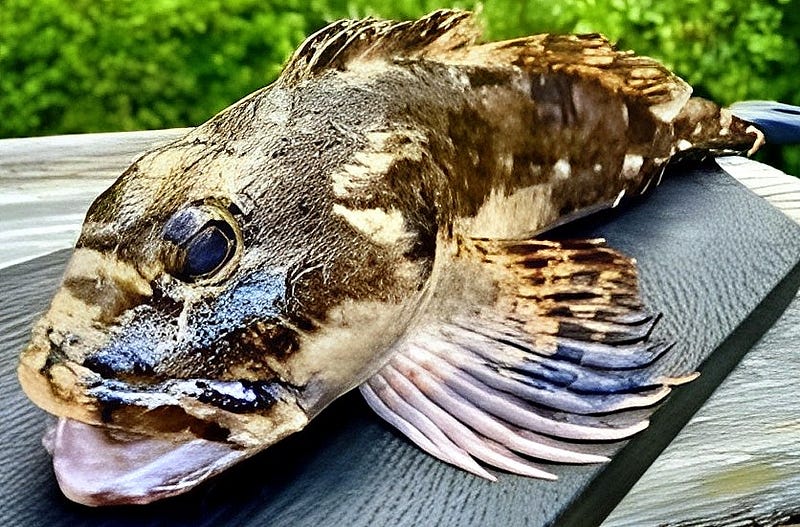
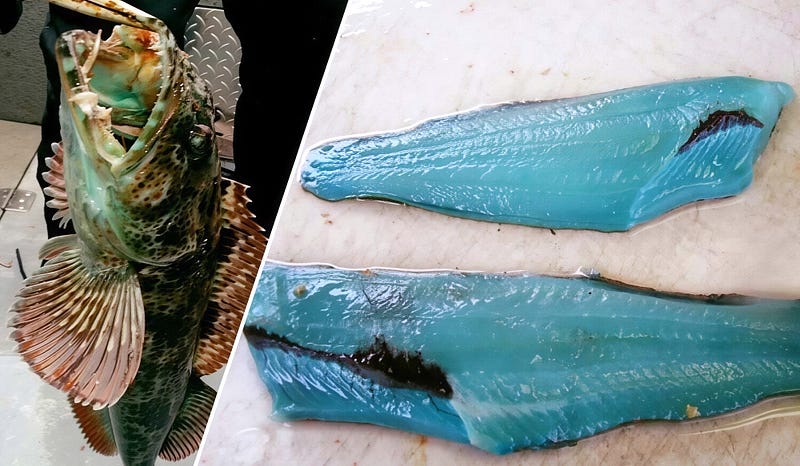
The cabezon’s body is broad, muscular, and mottled with brown, green, and reddish hues that mimic kelp and stone. Its head is massive, with fleshy cirri that break up its outline against rock and algae. Females lay demersal eggs in rocky crevices, which males guard aggressively for several weeks. Unlike many Pacific fish, the cabezon’s flesh can be green or blue when raw due to bile pigments that fade during cooking. This biological oddity often surprises new consumers but poses no toxicity. Adapted to intertidal life, cabezon possess large pectoral fins for stability in surge zones and a powerful tail for short, explosive bursts of movement.
Ecology
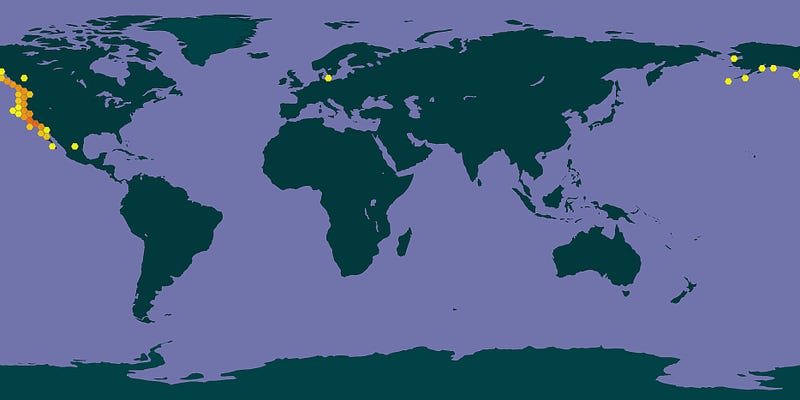
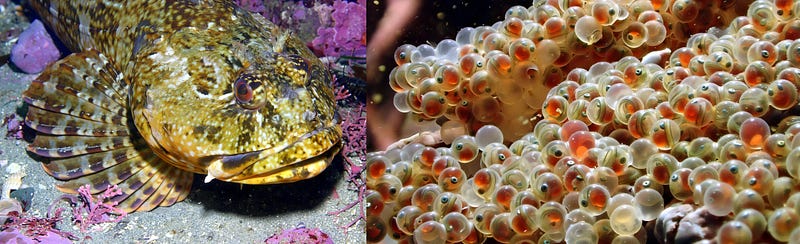
The cabezon thrives from Alaska to Baja California, inhabiting kelp forests, rocky reefs, and tide pools from surface shallows down to 76 m (250 ft). It serves as both predator and prey, feeding on crustaceans, mollusks, and smaller fish while supporting larger predators, such as sea lions and lingcod. Its sedentary habits make it a reliable indicator of the health of coastal ecosystems. Overfishing in certain regions has led to the implementation of management regulations, including size limits and seasonal closures, to mitigate the impact. Sustainable practices now emphasize selective hook-and-line harvests and habitat preservation, particularly within marine protected areas. Cabezon eggs, however, are toxic to humans and other mammals — a critical ecological defense mechanism that protects the next generation.
Uses
Cabezon meat is dense, lean, and white, with yields averaging 45% of body weight. In commercial contexts, one hectare (2.47 acres) of rocky reef habitat can sustain about 150 kg (330 lb) of harvestable biomass under sustainable regimes. The edible portion contains about 96 kcal per 100 g (3.5 oz), rich in protein, selenium, and omega-3 fatty acids. Anti-nutritional or toxic factors are primarily limited to the roe, which contains ichthyotoxins that can cause gastrointestinal distress if consumed. Processing requires standard filleting and refrigeration at a temperature of 4°C (39°F) or below to maintain freshness. Cabezon is rarely sold in industrial quantities, with a price range of $10–$16 per kg (4.5–7.3 USD per lb), depending on the locality and season.
Taste and aroma are clean and marine, with subtle undertones of shellfish. The texture is firm, almost monkfish-like, and holds well under heat. Best cooking methods include grilling, steaming, or pan-searing with clarified butter or olive oil. Flavor stability remains high across temperatures up to 200°C (392°F). Cabezon cheeks, though small, are prized for their delicate sweetness. In traditional cuisine, it appears in Pacific fish stews or is lightly cured with citrus, such as ceviche de piedra.
From a sustainability perspective, cabezon represents low ecological risk when harvested responsibly. It provides carbon sequestration indirectly by stabilizing kelp bed ecosystems through the balance of predation. Its byproducts, including bones and skin, are helpful in gelatin production and as an organic fertilizer. No large-scale aquaculture exists, but small-scale mariculture trials indicate potential for sustainable growth using shellfish co-culture systems. Cabezon silage shows good feed value for poultry, with 17% crude protein and high palatability. It holds minor craft value, with scales and bone structures used ornamentally by Indigenous artisans. There are no known medicinal uses, and the roe’s toxicity restricts pharmacological applications.
Culinary Aspects
Cooked cabezon has a sweet, oceanic flavor reminiscent of halibut, but it is more robust. Its mouthfeel is dense and succulent, with fine flake separation. The aroma is clean and briny, free of the muddiness sometimes found in nearshore species. When seared, the Maillard crust adds a nutty complexity balanced by the fish’s natural sweetness. The finish is long and mineral-driven. Cabezon pairs well with umami-forward sauces, such as miso glaze, browned butter with capers, or reduced white soy sauce with mirin. Texturally, its chewiness suits both fine-dining presentations and rustic seafood stews. Cultural importance is high in coastal communities of Oregon and California, where it marks the seasonal transition between rockfish and lingcod fisheries.
Wine Pairings
A seared cabezon fillet with lemon and herbs finds ideal balance with Albariño from Rías Baixas, whose saline acidity mirrors the fish’s briny depth. A richer preparation with browned butter and thyme aligns beautifully with a Marsanne from the northern Rhône, its stone-fruit notes amplifying the sweetness of the cabezon. At the same time, its low acidity softens the mouthfeel. For Asian-inspired dishes — ginger, soy, and sesame — try a dry Koshu from Japan; its subtle citrus and mineral tones enhance umami without overpowering the dish. When grilled whole over charcoal, cabezon pairs well with an Assyrtiko from Santorini, whose volcanic minerality cuts through the char. For ceviche or cold salads, a Verdejo from Rueda offers crisp, herbaceous lift.
Conclusion
The cabezon is more than a coastal oddity; it embodies the adaptive genius of the Pacific intertidal world and the culinary potential of sustainable seafood. From its stone-perched vigil to its firm, clean flesh, this fish tells a story of ecological resilience and cultural continuity. As fisheries shift toward traceable, community-based management, the cabezon serves as a model for balancing human appetite with marine stewardship — a compelling argument for the wisdom of restraint in the modern seafood economy.