The Clash of Eagles and Dragons: The Russo-Japanese War That Reshaped the World
The Russo-Japanese War, fought between 1904 and 1905, was a monumental conflict born from the colliding imperial ambitions of the Russian…
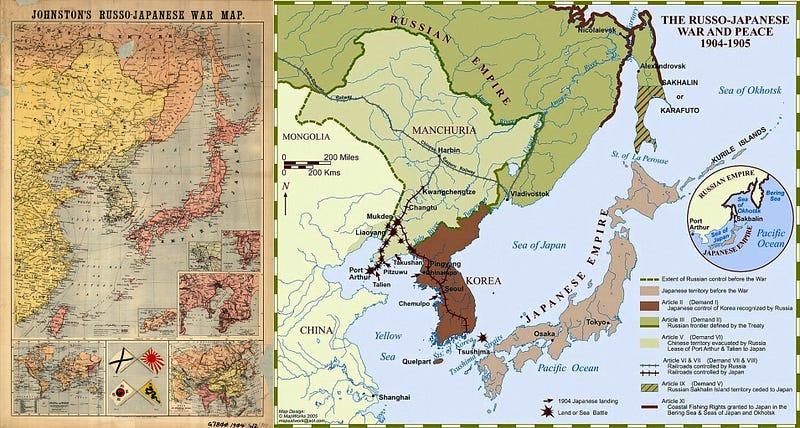
The Russo-Japanese War, fought between 1904 and 1905, was a monumental conflict born from the colliding imperial ambitions of the Russian Empire and the Empire of Japan. Both nations sought dominance in Northeast Asia, specifically in the regions of Manchuria and Korea. For Japan, the Meiji Restoration had sparked a rapid modernization and a desire for an empire, with Korea seen as a vital strategic buffer and sphere of influence. Russia, under Tsar Nicholas II, was driven eastward by its desire for a warm-water Pacific port and the expansion of its influence, facilitated by the newly built Trans-Siberian Railway. Tensions escalated dramatically after the First Sino-Japanese War, when Japan was forced by Russia and others to return the Liaodong Peninsula to China, only for Russia to then lease that very territory shortly thereafter. Further Russian provocations, including a refusal to withdraw troops from Manchuria after the Boxer Rebellion, led to failed diplomacy. Japan, feeling cornered and underestimating Russian resolve, chose military action.
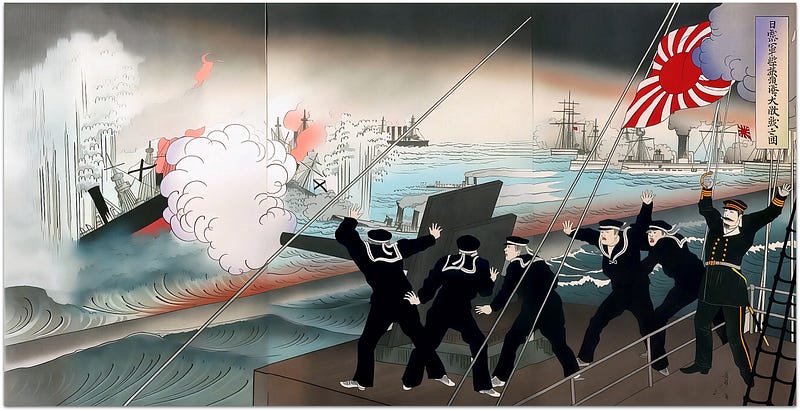
The war began with a surprise Japanese naval attack on the Russian Pacific Fleet at Port Arthur in February 1904, a preemptive strike before a formal declaration of war. This act set the tone for a conflict characterized by stunning Japanese victories against a larger European power. On land, the fighting was brutal and foreshadowed the trench warfare of World War I. Key engagements included the Battle of the Yalu River, which allowed the Japanese army to advance into Manchuria, and the protracted, bloody Siege of Port Arthur that ended with a Russian surrender after immense casualties. The colossal Battle of Mukden, involving over 600,000 men, became the largest land battle in history to that date and resulted in a costly but decisive Japanese victory that exhausted both armies.
At sea, the conflict reached its decisive climax. The Russian Baltic Fleet embarked on an epic, 18,000-mile journey to relieve their forces, only to be utterly annihilated by the Japanese navy under Admiral Tōgō Heihachirō in the Battle of Tsushima Strait. This naval masterpiece destroyed Russian naval power in the East and cemented Japan’s control of the seas.
By mid-1905, both nations were exhausted. Japan was militarily victorious but financially drained, while Russia’s defeat fueled the burgeoning 1905 Revolution at home. U.S. President Theodore Roosevelt mediated the peace negotiations in Portsmouth, New Hampshire. The resulting Treaty of Portsmouth forced Russia to recognize Japan’s paramount interests in Korea and to cede the Liaodong Peninsula lease, the South Manchurian Railway, and the southern half of Sakhalin Island to Japan. Both powers agreed to evacuate Manchuria. The refusal of Russia to pay a cash indemnity caused outrage in Japan, but the terms were a clear acknowledgment of Japan’s victory.
The significance of the war was profound and global. It shattered the long-held myth of European invincibility, announcing Japan’s arrival as a first-rate world power and a major imperial force. For Russia, the humiliating defeat exposed the corruption and incompetence of the Tsarist regime, directly contributing to the revolutionary unrest that would eventually culminate in the 1917 revolutions. The conflict altered the global balance of power, setting the stage for future tensions in the Pacific and serving as a deadly preview of the industrialized warfare that would define the coming century.