The Emu: Australia’s Towering Nomad of the Outback
Introduction Across the sunburnt plains of Australia, where eucalyptus shadows stretch over ochre earth, strides a bird that is equal parts…
Introduction
Across the sunburnt plains of Australia, where eucalyptus shadows stretch over ochre earth, strides a bird that is equal parts ancient survivor and modern agricultural asset. The emu, Dromaius novaehollandiae, is the world’s second-largest bird, standing up to 6 ft 2 in (1.88 m) tall and weighing as much as 132 lb (60 kg). Its history stretches back tens of millions of years, yet it thrives in the present as a symbol of resilience, adaptability, and — perhaps surprisingly — culinary potential. The emu’s story is a fascinating blend of biology, ecology, and culture, with roots deep in Indigenous traditions and branches reaching into sustainable farming and gastronomy.
Taxonomy
The emu belongs to the family Casuariidae, making it a close relative of the cassowary, though far less reclusive and dangerous. Its sole living species is Dromaius novaehollandiae, but historical records describe smaller, now-extinct island subspecies from Tasmania and King Island. Known simply as the “emu” in English, its name originates from early European explorers who adapted the Portuguese word “ema,” meaning large bird. In Aboriginal languages, names vary across regions, reflecting the deep integration of the emu into Australia’s cultural tapestry.

Biology
An emu’s physiology is engineered for survival in harsh, open landscapes. Its long, muscular legs can propel it at speeds of up to 31 mph (50 km/h), and each stride can cover more than 9 ft (2.7 m). Covered in shaggy, brown-grey plumage that insulates against temperature extremes — from sweltering 104°F (40°C) afternoons to near-freezing dawns — the bird is remarkably climate-tolerant. Emus have small vestigial wings, yet their powerful legs and three-toed feet make them formidable runners and capable defenders against predators.
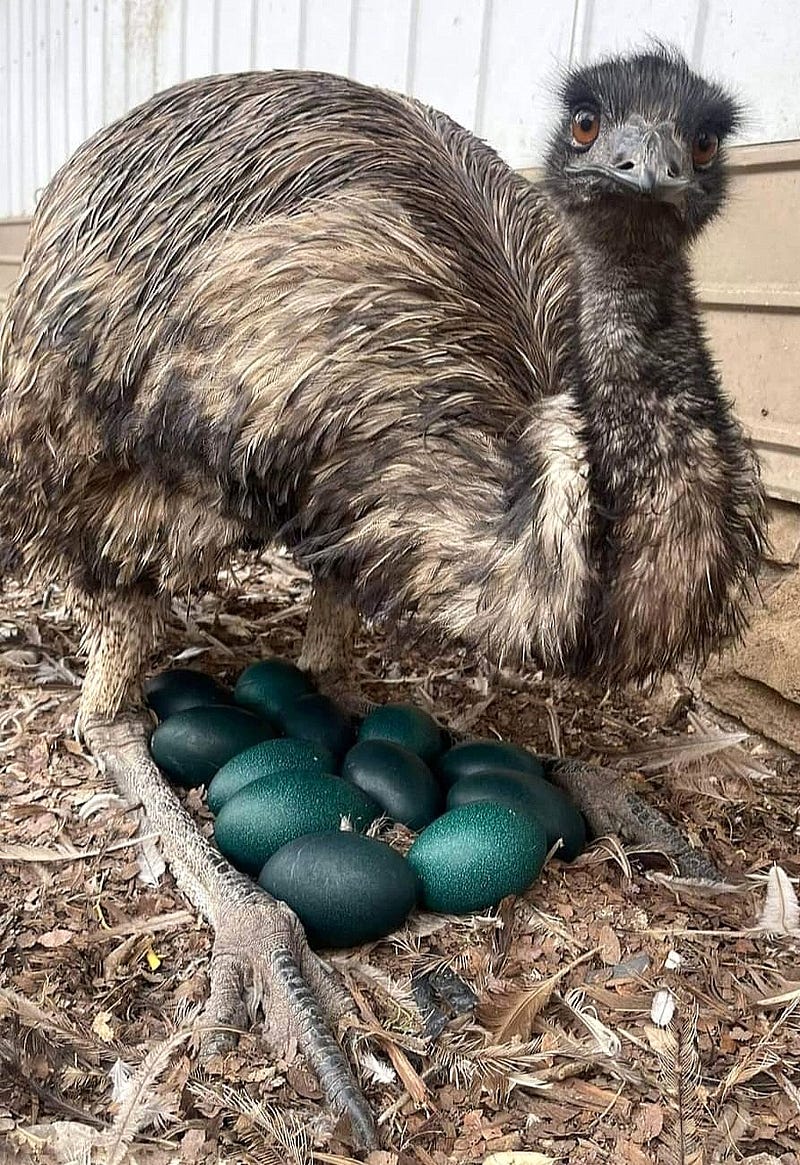
The breeding season brings one of the more unusual avian parental arrangements: females lay eggs — dark green, weighing about 1.1 lb (0.5 kg) each — and then leave. Males incubate the clutch for approximately 56 days without eating, drinking, or leaving the nest, relying on stored body fat and rainwater from feathers to sustain them. Chicks emerge striped, blending with grassland patterns to avoid predators.
Ecology
Emus inhabit a wide range of Australian environments, from arid interior deserts to coastal scrublands, though they avoid dense rainforests. They are nomadic, following seasonal rains and food availability, consuming seeds, fruits, flowers, insects, and small vertebrates. In doing so, they serve as crucial agents of seed dispersal, helping regenerate vegetation across vast tracts of land. Despite their resilience, emus face threats from vehicle collisions, habitat fragmentation, and climate variability. Yet their population remains stable, thanks in part to protective legislation and the adaptability that has allowed them to coexist with farmland.
Uses
For Indigenous Australians, the emu has been a source of food, clothing, and cultural symbolism for thousands of years. In modern Australia, emu farming has emerged as an industry producing lean red meat, nutrient-rich oil, leather, and feathers. Emu oil, extracted from a thick layer of subcutaneous fat, is prized for its anti-inflammatory and moisturizing properties. The birds require relatively low feed inputs and can thrive in marginal grazing areas, making them a sustainable option for diversified agriculture.
Culinary Aspects
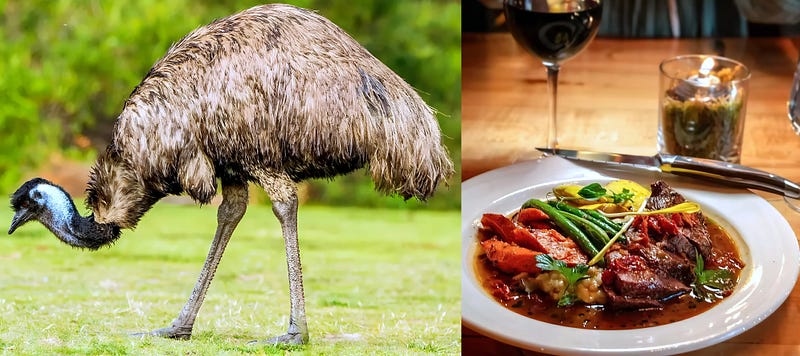
Emu meat, deep burgundy in color, offers a surprising twist — it is a red meat more akin to beef than poultry, with a mild, slightly sweet flavor. It is exceptionally lean, containing less than 2% fat, and rich in iron, vitamin B12, and protein. Cuts from the thigh are tender and well-suited to quick cooking methods like grilling, searing, or roasting to medium-rare, ensuring moisture retention. In traditional Aboriginal cooking, emu meat was often wrapped in paperbark and slow-cooked in earth ovens, infusing it with smoky, herbaceous notes. Today, chefs pair emu steaks with native spices like wattleseed and pepperberry, or incorporate them into gourmet burgers and carpaccio.

Wine Pairings
Given its lean yet rich character, emu pairs beautifully with medium-bodied red wines that complement without overwhelming. A Shiraz from Australia’s Barossa Valley offers ripe plum and pepper notes that mirror the meat’s natural sweetness, while a Pinot Noir from Tasmania provides bright acidity and red berry flavors to cut through its richness. For a more adventurous pairing, a well-aged Cabernet Sauvignon can lend earthy tannins that echo the emu’s game-like depth.
Conclusion
The emu is more than a towering bird on the Australian horizon — it is a living link to prehistoric landscapes, a keystone ecological player, and a growing presence in sustainable agriculture and fine dining. Its resilience reminds us that adaptation is as much about movement and curiosity as it is about endurance. In the kitchen, the emu invites us to think beyond conventional meats, exploring flavors and textures rooted in a continent’s natural heritage. To know the emu is to see a bird not simply as a curiosity, but as a partner in both conservation and culinary innovation.