The Engineering Behind the Professional Football Helmet: A Comprehensive Analysis of Design…
Executive Summary
The Engineering Behind the Professional Football Helmet: A Comprehensive Analysis of Design, Materials, and Injury Mitigation
Executive Summary
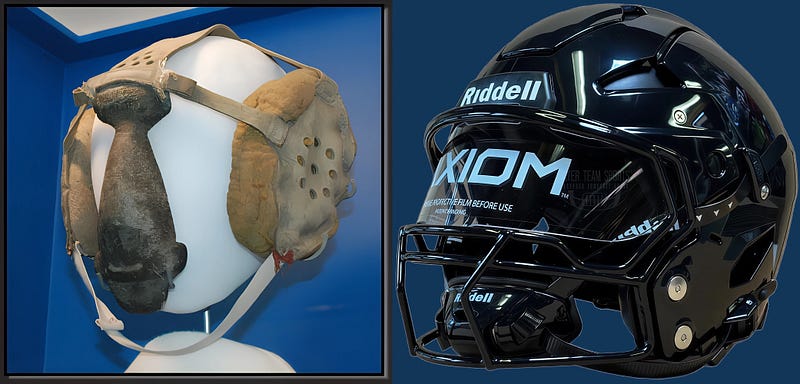
The professional football helmet stands as a testament to over a century of engineering evolution, transforming from rudimentary leather caps to highly sophisticated, multi-component protective systems. This report provides a comprehensive analysis of this progression, highlighting the pivotal role of materials science and biomechanics in enhancing player safety. Early helmet designs primarily focused on preventing severe traumatic brain injuries (TBIs) and skull fractures, largely caused by direct, linear impacts. Significant advancements in materials and structural design have virtually eliminated skull fractures in football, marking a remarkable success in this domain.
However, this success has concurrently illuminated a complex challenge: the persistent difficulty in preventing concussions, which are mild TBIs predominantly caused by rotational acceleration and the resulting shear strain within brain tissue. The engineering challenge has thus evolved from simply protecting the skull’s integrity to mitigating the intricate biomechanical responses of the brain itself. This necessitates a fundamental reevaluation of design principles, moving beyond solely linear impact absorption to explicitly address rotational forces and internal brain deformation, which represents a significantly more complex problem.
Modern helmets incorporate advanced impact absorption mechanisms, and their performance is rigorously evaluated through evolving testing protocols and safety standards, such as those set by the National Operating Committee on Standards for Athletic Equipment (NOCSAE) and the more nuanced Virginia Tech Helmet Ratings. The future of head protection in football is being shaped by cutting-edge innovations, including smart helmet technologies for real-time impact monitoring, the development of advanced materials, and personalized fit systems, all aimed at pushing the boundaries of athlete safety.
1. Introduction: The Evolution of Football Helmet Design
1.1 A Century of Innovation: From Rudimentary Leather to Advanced Composites
The trajectory of football helmet development spans over a century, marked by incremental yet transformative changes that have fundamentally redefined player protection. In the early 1900s, football helmets were rudimentary, consisting of soft leather caps primarily designed to reduce bruising rather than provide substantial protection against severe head injuries. It was not until 1943 that the National Football League (NFL) even mandated the wearing of such protective equipment.
A pivotal shift occurred in the mid-20th century with the introduction of plastic shells, which replaced the less protective leather. This era also saw the crucial addition of face bars and masks, significantly enhancing facial protection. The 1960s and 1970s brought the integration of foam padding into helmet construction, marking a significant step towards internal energy absorption. Further material science advancements in the 1980s led to polycarbonate shells replacing fiberglass, offering superior impact resistance and durability.
Today’s football helmets are complex, multi-layered systems. They typically feature a polycarbonate outer shell, multi-density foam padding, and robust face masks made of stainless steel or titanium. Beyond these core components, modern designs incorporate advanced features such as smart sensors and energy-absorbing liners, reflecting a continuous drive towards enhanced player safety.
The historical narrative of helmet evolution describes a series of distinct additions and material upgrades. Each major technological advancement appears to be a direct response to identified deficiencies in protection or a growing understanding of specific injury mechanisms. For instance, the transition from soft leather to more rigid plastic and then polycarbonate directly addressed the need for better impact resistance and durability against blunt forces. The subsequent addition of foam padding was a response to the need for internal shock absorption to cushion the head. This pattern suggests that helmet engineering has largely been a reactive process, driven by observed injuries, evolving medical understanding of head trauma, and subsequent regulatory pressures. This creates a continuous feedback loop where injury data informs research, which in turn spurs material and design innovations to mitigate previously unaddressed risks. While highly effective in improving safety over time, this reactive cycle implies that helmet technology often lags behind the full scientific understanding of complex injury biomechanics, particularly for subtle injuries like concussions. It underscores the ongoing challenge of anticipating and preventing injuries that are not immediately obvious or well-understood, pushing the industry towards more proactive, data-driven research and development.
1.2 Key Milestones in Safety and Technological Advancements
Critical junctures and specific technological breakthroughs have punctuated the development of the modern football helmet. While rudimentary leather caps characterized the late 1800s and early 1900s, a significant shift occurred in 1939 when helmets became mandatory in college football. In the same year, Riddell pioneered the first plastic web-suspension helmet, a design so effective that its internal suspension system was later adopted by the U.S. Army for the M1 helmet used in World War II. The NFL officially mandated helmet use for its players in 1943.
The 1950s saw the crucial integration of face masks and internal padding, marking a significant enhancement in protecting the jaw and head. A landmark year for helmet safety was 1973, with the establishment of the National Operating Committee on Standards for Athletic Equipment (NOCSAE), which introduced the first drop-test-based standard for helmet characterization. Riddell’s PAC-3 helmet was among the first to meet these new industry performance standards. The 1980s solidified polycarbonate shells as the industry standard, replacing fiberglass due to their superior impact resistance and lighter weight.
Further refinements continued into the 1990s, with Riddell introducing the VSR-4 helmet in 1993, featuring the first air-fitted liner system, which improved both fit and comfort for players. The early 2000s marked a more explicit focus on concussion mitigation: in 2002, Riddell launched the Revolution helmet, specifically designed with the intent to reduce concussion risk through features like side shell extensions and an increased distance from the shell to the head. A year later, the introduction of Riddell’s Sideline Response System (SRS) represented a significant leap, being the first helmet system to monitor and report impacts in real-time. This system has since collected millions of data points, which have been instrumental in informing rule changes and new helmet designs.
Contemporary innovations continue to push the boundaries of helmet technology. Today’s helmets incorporate cutting-edge features such as advanced impact testing, energy-absorbing liners, sophisticated smart sensors, custom 3D-printed fits, flexible outer shells, and even liquid shock absorbers. Beyond physical protection, the adoption of coach-to-player communication systems in college football in 2024 exemplifies the integration of technology to streamline play-calling and minimize sign stealing, further enhancing the competitive experience.
The key milestones in helmet development are not isolated technological breakthroughs but often coincide with regulatory mandates, the establishment of safety standards, and a deepening scientific understanding of head injury biomechanics. This demonstrates a synergistic relationship where regulatory bodies and scientific research drive the demand for improved safety, which in turn spurs technological innovation by manufacturers. The NOCSAE standard, despite its initial limitations in fully capturing biomechanical complexities, was a crucial step towards defining helmet performance based on function rather than just design. The introduction of real-time impact monitoring systems, such as Riddell SRS, further closes this loop by providing empirical data to inform both research and future design iterations. This dynamic interplay accelerates the development cycle, pushing helmets beyond basic protection towards more sophisticated injury mitigation. The future of helmet safety will continue to be shaped by this interconnected ecosystem. As biomechanical insights into concussions become more refined and as regulatory bodies adapt their standards, manufacturers will be compelled to develop even more advanced solutions. This implies that “safety” is not a static achievement but a continually evolving benchmark, requiring ongoing collaboration across diverse fields.
2. Core Engineering Principles and Material Science
2.1 The Outer Shell: Design, Materials, and Impact Distribution
The outermost protective layer of a professional football helmet is a critical component, and its design and material composition are central to its efficacy. The vast majority of modern professional football helmets utilize polycarbonate for their outer shell. This material is favored for its exceptional balance of properties: it is lightweight, highly impact-resistant, and remarkably durable. Polycarbonate can withstand significant blunt forces without cracking, ensuring the helmet’s integrity through multiple impacts. Furthermore, it retains its properties effectively in cold temperatures, a crucial feature for teams playing in diverse climates, and is amenable to injection molding and painting.
The outer shell’s fundamental role is to distribute impact forces over a larger surface area, thereby minimizing the concentration of stress at the point of impact and reducing the risk of localized injury, such as skull fractures. It also acts as a barrier against penetration from external objects. This represents a significant advancement over older materials like soft leather, which offered minimal protection, and brittle fiberglass, which was prone to cracking upon impact.
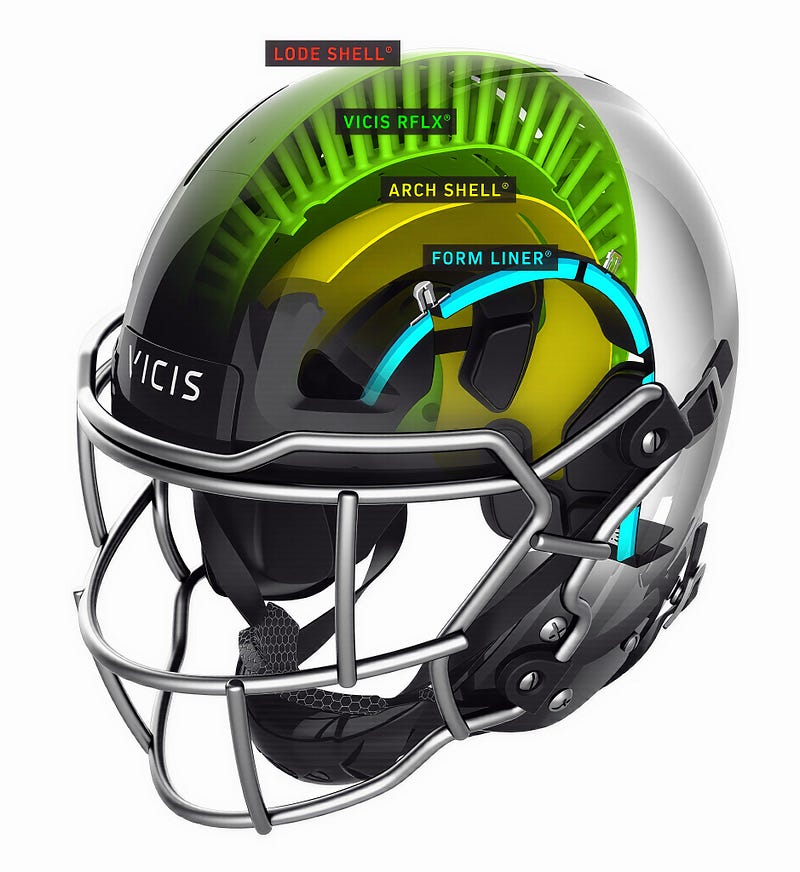
While polycarbonate remains dominant, emerging and alternative materials and designs are continuously explored. Some less expensive helmets may incorporate acrylonitrile-butadiene-styrene (ABS) copolymer, another impact-resistant material. More innovative designs, such as the Vicis Zero 1, employ a more flexible thermoplastic for the shell. This flexibility is designed to allow the shell to flex upon impact, reducing the direct force transferred to the skull and potentially aiding in energy absorption. The SG helmet, for instance, utilizes a composite weave for its shell construction. Certain helmet designs also feature hexagonal-shaped cutouts near the forehead, functioning as a cantilever system intended to absorb a portion of the impact force. Similarly, vent holes in Xenith helmets have shown localized increases in impact attenuation, though concerns about cracking at vent corners after testing have been noted.
External soft shell add-ons, such as the Guardian Cap NXT and ProTech Helmet Cap, are designed to augment existing helmet performance by adding soft padding to the exterior. The principle behind these is to increase the overall padding thickness, thereby extending the distance over which force can be absorbed and lowering head accelerations. However, studies have yielded mixed results, with some instances of worsening performance or increasing the risk of cervical spine injury due to restricted tangential head motion. Conversely, SAFR helmet covers have shown promising results, with a significant reduction in concussions in high school football, suggesting their potential to enhance protection.
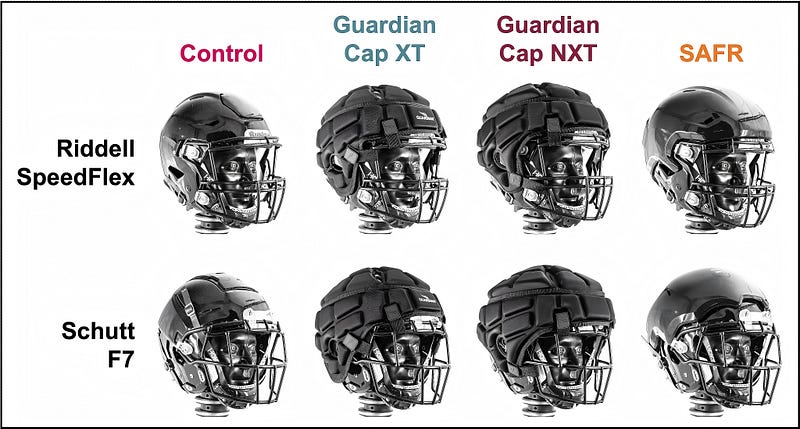
The choice of shell material and design reflects a dynamic tension between rigidity and flexibility. Traditional rigid shells, primarily polycarbonate, excel at distributing linear impact forces and preventing skull fractures. This design approach focuses on deflecting and spreading the energy of a direct blow across a wide area. However, the limitation of this rigid approach becomes apparent when considering rotational forces, which are now understood to be a primary driver of concussions. A rigid shell, by its very nature, tends to transmit rotational energy more directly to the head. Newer designs, particularly those from Vicis, that incorporate flexible thermoplastics or external soft shells, aim to address this by allowing the shell to deform and flex upon impact. This flexibility is intended to absorb more energy and potentially mitigate rotational forces by allowing some relative movement between the outer shell and the inner head. The challenge for engineers is to optimize for both. A helmet must be rigid enough to prevent penetration and distribute linear forces effectively, yet flexible enough to manage rotational impacts and the resulting shear strains on the brain. This ongoing development illustrates the evolving understanding of head injury mechanisms, pushing helmet design towards a more nuanced approach that balances these seemingly contradictory requirements to provide comprehensive protection.
2.2 Inner Padding Systems: Multi-Density Foams, Air Bladders, and Deformable Structures for Energy Absorption
The inner padding system of a professional football helmet plays a vital role in shock absorption, cushioning the player’s head, and reducing excessive head movement during impacts. A variety of materials are employed for this purpose, including vinyl nitrile, EVA foam, nitrile-based foam, and polyethylene foam. The effectiveness of these foams is highly dependent on their viscoelastic response, which is influenced by factors such as pore size and chemical composition. Proper testing, often involving dynamic mechanical analysis, is essential to ensure these materials perform optimally under impact loads. Many padding systems utilize multi-layer configurations, with a stiffer foam layer closest to the shell for initial energy attenuation and a more malleable foam layer closer to the athlete’s head for comfort.
Beyond traditional foams, air bladders have been integrated into helmet designs, notably by Riddell and Xenith. These systems allow for a customizable and snug fit through inflatable or deflatable air pockets, which contribute to linear cushioning by adapting to the player’s head shape.
A significant advancement in energy absorption comes from deformable structures. The Vicis Zero 1 helmet, for instance, utilizes an innovative system of columnar elements positioned between an internal hard shell and an external soft shell. These elements are designed to deform non-linearly through buckling and bending mechanisms upon impact, dissipating a larger portion of energy and significantly decreasing the peak impact force transmitted to the head. This flexibility allows the outer shell to move relative to the inner shell, further contributing to energy absorption. Similarly, Carbon’s 3D-printed lattice structures, integrated into Vicis’s ZERO2 MATRIX helmets, utilize a hexahedron unit cell geometry that offers a combination of initial stiffness and controlled buckling, optimized for impact damping.
Other advanced padding technologies include Xenith’s Aware-Flow™ shock absorbers, which are designed to adapt to both high and low-level impacts, controlling energy more efficiently than traditional air bladders or dense foam. This technology also works by separating the head from the shell, helping to redirect and reduce both linear and rotational forces. Schutt helmets incorporate D3O, a “smart material” that is flexible but instantly hardens upon impact, dissipating forces. Schutt also employs Tektonic Plates, a multi-layered system within the helmet shell designed for controlled and efficient energy transfer upon impact, providing improved protection against rotational forces. Recent research from the University of Wisconsin-Madison has even introduced a vertically aligned carbon nanotube foam that is 30 times better at absorbing energy in shear than current military helmet foams, demonstrating exceptional rotational kinetic energy dissipation and thermal conductivity.
The evolution of helmet padding reflects a fundamental shift from simple bulk absorption to tuned energy management. Early foam padding primarily aimed to cushion direct blows and increase the impact duration to reduce peak forces. However, as the understanding of brain injury mechanisms deepened, particularly concerning rotational forces and shear strain, the design goals for padding became far more sophisticated. Modern padding systems are engineered to be adaptive, responding differently to varying impact velocities and types, and to actively manage both linear and rotational energy. This is achieved through multi-density foams with specific viscoelastic properties, air bladders that provide adjustable linear cushioning, and innovative deformable structures like columnar elements and 3D-printed lattices that buckle and bend in a controlled manner. The aim is no longer just to absorb energy, but to dissipate it efficiently across different impact scenarios and directions, particularly addressing the complex shear forces that cause concussions. This progression underscores a deeper understanding of brain injury mechanisms and a proactive approach to mitigating them through advanced material science and structural engineering.
2.3 Retention Systems: Face Masks and Chin Straps
Beyond the shell and internal padding, the helmet’s retention systems — specifically the face mask and chin strap — are critical for ensuring the overall protective system functions as intended.
Face masks are designed to protect the player’s face while maintaining clear vision. These are typically crafted from robust materials such as stainless steel or titanium. Stainless steel is a common choice due to its affordability and strength, while titanium offers comparable strength at a lighter weight, making it a premium option. The engineering focus for face masks is on their ability to withstand strong impacts without bending or breaking, thereby safeguarding the player’s facial structure. Some players also opt for polycarbonate visors for additional eye protection from debris, sunlight, and impacts, which are designed to be scratch-resistant and shatterproof.
The chin strap, made from durable synthetic materials like polypropylene, serves the crucial purpose of keeping the helmet securely in place during rapid movements and impacts. A snug and secure chin strap is paramount, as a loose helmet can compromise its protective capabilities and potentially exacerbate injuries by allowing excessive movement of the head and neck within the helmet. Traditionally, chin straps have been fastened to the outer shell of the helmet. However, some innovative designs, such as a patented system, propose fastening the chin strap to an inner head cap rather than the outer shell. This modification aims to prevent the chin strap from compromising the helmet’s circumferential compliance, which is a key factor in mitigating rotational forces by allowing the outer shell to move independently of the head during an impact.
The criticality of fit and stability in mitigating injury cannot be overstated. The most advanced materials and energy-absorbing systems within a helmet are rendered less effective if the helmet is not securely fitted to the player’s head. The face mask and chin strap are the primary mechanisms that ensure the helmet maintains its intended position relative to the head and skull throughout dynamic play and impacts. A properly fitted helmet, secured by a snug chin strap, minimizes internal head movement, allowing the padding and shell to optimally absorb and dissipate impact forces.
Conversely, a helmet that fits poorly or is not held firmly in place can lead to secondary impacts between the head and the helmet’s interior, or even allow the helmet to shift and become a lever, potentially increasing rotational forces on the neck and brain. This highlights that the engineering of individual components, while sophisticated, must always be considered within the context of the entire system’s ability to maintain a stable and protective interface with the athlete’s head.
3. Biomechanical Considerations and Injury Mitigation
3.1 Understanding Brain Injury Mechanisms: Linear vs. Rotational Acceleration
The engineering of professional football helmets is fundamentally driven by the evolving understanding of brain injury mechanisms during impacts. Historically, research and helmet design primarily focused on linear acceleration, which is associated with direct impacts and the resulting gross structural damage to the skull, such as fractures, and severe traumatic brain injuries. Traditional helmet designs, with their rigid outer shells and thick padding, have proven highly effective in mitigating these linear forces, leading to a significant reduction in skull fractures in football.
However, a critical paradigm shift in concussion biomechanics has occurred. It is now widely understood that rotational acceleration, rather than purely linear forces, is the predominant cause of concussions (mild TBIs) and diffuse axonal injuries (DAI). Rotational impacts induce shear strain and tensile strain within the brain tissue, causing the brain to twist and deform relative to the skull. This can be conceptualized with the “bowl of soup” analogy: spinning a bowl of soup (rotational force) will cause the liquid inside to swirl and distort more readily than simply pushing the bowl linearly. This internal shearing and stretching of brain tissue and blood vessels is what leads to the complex symptoms of a concussion, even without a skull fracture.
Traditional helmet designs, optimized for linear impact absorption, are inherently less effective against rotational forces because they often lack sufficient circumferential compliance. By keeping the head snugly in place relative to the helmet shell, they can inadvertently transmit rotational motion directly to the brain, rather than allowing for decoupling or dissipation of these forces. This fundamental difference in injury mechanism has necessitated a re-evaluation of helmet design goals, moving from simple impact absorption to complex shear strain mitigation. The evolving understanding from linear to rotational acceleration as the primary cause of concussion has fundamentally reshaped helmet design goals, moving from simple impact absorption to complex shear strain mitigation. This requires engineers to develop innovative solutions that can specifically address the twisting and shearing forces that damage brain tissue, representing a significant leap in biomechanical engineering applications.
3.2 Engineering Strategies to Mitigate Forces on the Brain
Modern helmet engineering employs a diverse array of strategies to absorb and dissipate impact forces, with an increasing focus on mitigating the rotational accelerations that cause concussions.
Energy Absorption and Dissipation:
A primary goal is to increase the duration of the impact pulse, thereby decreasing the peak mechanical load transmitted to the brain. This is achieved by distributing force over a larger area, as the outer shell does. Innovative designs incorporate flexible outer shells and internal columnar or lattice structures that deform elastically, buckle, and bend upon impact, allowing for relative movement between the helmet’s layers and dissipating energy more effectively. Multi-density foams, with their carefully tuned viscoelastic properties, compress and rebound to absorb and manage impact energy across different force levels. Liquid shock absorbers represent another adaptive technology, capable of responding to varying impact velocities more consistently than traditional foams. Furthermore, cutting-edge materials like vertically aligned carbon nanotube foam show promise, demonstrating 30 times greater shear energy absorption than conventional foams and even improving performance under compression, without relying on problematic sliding layers.
Rotational Force Mitigation Specifics:
Addressing rotational forces requires specialized mechanisms. The Multidirectional Impact Protection System (MIPS), for instance, incorporates a low-friction plastic layer that allows the outer shell to rotate independently upon impact, keeping the head relatively stationary and mimicking the brain’s natural cerebrospinal fluid protection. The Vicis Zero 1 helmet employs a flexible outer shell coupled with an internal hard shell and a unique columnar interface. These columnar elements deform non-linearly through buckling and bending, significantly reducing rotational forces and peak impact forces. Schutt’s Tektonic Plates technology utilizes a multi-layered system within the helmet shell to facilitate controlled energy transfer, specifically designed to protect against rotational forces. Similarly, Xenith’s proprietary rate-dependent impact cells are engineered to provide an optimal response to rotational forces across a dynamic range of impact forces.
Beyond direct head protection, researchers are also exploring integrated helmet-shoulder pad designs to further dissipate impact loads by transferring them from the head down into the body, distributing the energy across a larger anatomical area.
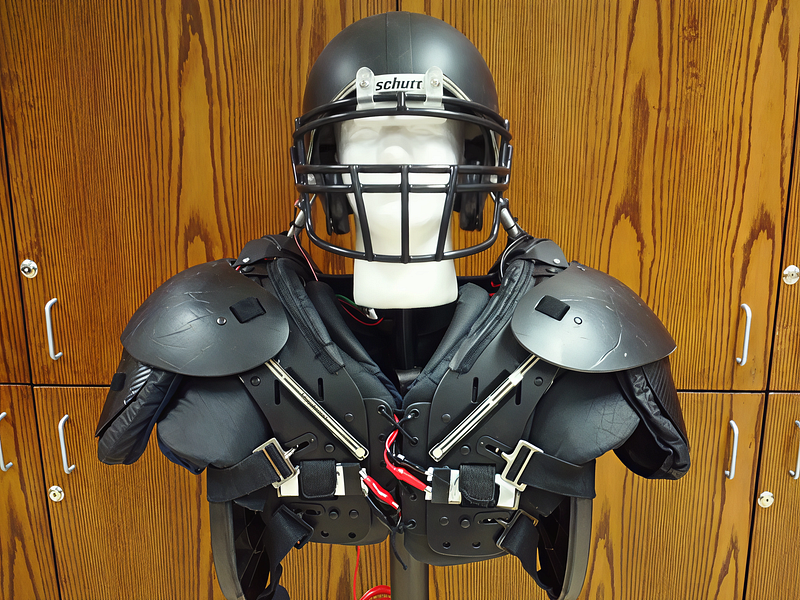
The engineering imperative has shifted beyond simply linear to comprehensive rotational attenuation. This signifies a profound change in design goals, moving from merely absorbing impacts to actively managing complex rotational forces and shear strains on the brain. This requires the development of multi-layered, adaptive, and deformable structures that can decouple the head’s motion from the helmet’s outer shell during oblique impacts. The focus is now on intricate biomechanical responses, demanding materials, and designs that can deform, buckle, and slide in controlled ways to minimize the internal strain on brain tissue. This sophisticated approach represents the forefront of helmet engineering, aiming to provide more complete protection against the full spectrum of forces experienced in contact sports.
4. Testing Protocols and Safety Standards
4.1 The Role of NOCSAE and Virginia Tech Helmet Ratings
The safety and performance of professional football helmets are governed by rigorous testing protocols and safety standards established by key organizations.
NOCSAE (National Operating Committee on Standards for Athletic Equipment):
NOCSAE sets minimum safety requirements that all helmets sold in the United States must meet, operating on a pass/fail basis. Historically, NOCSAE standards have primarily focused on mitigating linear acceleration, which is a known predictor of skull fracture risk and severe traumatic brain injuries. Their standard drop-test method involves mounting a helmet on a synthetic head model and dropping it multiple times (e.g., 16 times from a height of 60 inches) onto a firm rubber pad at various locations and temperatures. Shock measurements are taken to determine if the helmet meets an established Severity Index for concussion tolerance, though NOCSAE explicitly states that its helmet standard is not a concussion standard, and no helmet can prevent all concussions, even those certified to their standard. The certification process involves manufacturers entering a license agreement with NOCSAE, maintaining detailed quality control and quality assurance programs, and then having their models certified by the Safety Equipment Institute (SEI) for compliance. Helmets are typically required to undergo recertification and reconditioning after every two seasons, which includes impact testing of randomly selected samples.
Virginia Tech Helmet Ratings (STAR testing system):
The Virginia Tech Helmet Ratings provide an independent and objective assessment of helmet performance, free from manufacturer influence. Unlike NOCSAE’s pass/fail system, Virginia Tech rates helmets on a 5-star scale, with more stars indicating a lower concussion risk. This system is particularly significant because it assesses a helmet’s ability to reduce both linear and rotational head acceleration from impact scenarios representative of those experienced in football.
The methodology involves 48 impact tests conducted in their laboratory using a pendulum designed to match helmet-to-helmet characteristics in football. Helmets are tested at various locations (front, front boss, side, and back) and low, medium, and high impact energies, representing common impacts up to those most commonly resulting in concussions. Each lab impact is weighted based on how often a football player might experience a similar impact. Concussion risk is then computed from measured peak linear and rotational accelerations, and these risks are summed to calculate an overall STAR score. A lower STAR score indicates better helmet performance. Virginia Tech also emphasizes that “no helmet is concussion-proof” and that helmets are only one part of a broader strategy to minimize concussion risk.
The evolving landscape of safety assessment is demonstrated by the progression from basic pass/fail standards to more nuanced, performance-based ratings. NOCSAE standards, while crucial for establishing a baseline and virtually eliminating severe skull fractures, were primarily designed around linear impact absorption and did not fully account for the complexities of rotational forces that cause concussions. The Virginia Tech Helmet Ratings represent a more sophisticated approach, recognizing the importance of both linear and rotational accelerations in brain injury. This shift reflects a more refined scientific understanding of how concussions occur and the need for testing protocols that can differentiate helmet performance in mitigating these complex forces. The development of such independent rating systems provides consumers and organizations with more granular data, pushing manufacturers to innovate beyond minimum compliance towards superior protection against the full spectrum of impact types. This highlights the continuous refinement required in safety assessment as scientific knowledge advances.
4.2 Limitations and Ongoing Challenges in Helmet Efficacy
Despite significant advancements in engineering and materials science, professional football helmets face persistent limitations and challenges, particularly in the realm of concussion prevention.
A fundamental limitation is that while helmets are highly effective against skull fractures and severe traumatic brain injuries, they have limited efficacy against concussions. Helmets cannot entirely stop the movement of the brain inside the skull — its acceleration, deceleration, and rotation — which is the primary cause of concussive injury. Historically, the inability to accurately measure rotational acceleration in testing contributed to the limited decrease in concussion incidence despite changes in helmet design.
Furthermore, helmets might inadvertently contribute to a false sense of security, potentially encouraging more aggressive play where athletes “lead with their heads,” perceiving themselves to be fully protected. This behavioral aspect complicates injury prevention efforts. The efficacy of helmets can also degrade over time; a helmet older than two years may lose its capacity to absorb force effectively. Crucially, improper fit or a loose chin strap can worsen injuries by allowing excessive head and neck movement within the helmet, undermining the engineered protective features.
Studies evaluating helmet effectiveness also face inherent limitations, including a lack of standardized definitions for concussion, inconsistent methods for examining helmet effectiveness, small sample sizes, and the absence of control groups without helmets. Moreover, current helmet designs do not offer universal protection against all impact types, with varying effectiveness against linear versus rotational forces, and high versus low-energy impacts. Compounding these issues is the significant problem of underreporting of concussions by athletes, often due to fear of being removed from play, which obscures the true incidence of injuries and complicates data collection for design improvement. (The underreporting of self-reported symptoms following sports-related concussion, Meier, Timothy B. et al. Journal of Science and Medicine in Sport, Volume 18, Issue 5, 507–511.)
The persistent gap in concussion prevention highlights the fundamental challenge that helmets, while preventing gross structural injuries, cannot fully prevent the intricate internal brain dynamics that cause concussions. This is because concussions are primarily a result of the brain’s rapid acceleration and deceleration, particularly rotational motion, which causes shear and tensile strains within the soft brain tissue. No helmet, regardless of its design, can completely immobilize the brain within the skull. This physical reality means that some degree of brain movement and subsequent injury risk will always remain. This challenge is compounded by behavioral factors, such as players’ potential over-reliance on helmets leading to riskier play, and by data collection difficulties, including underreporting of injuries and the inherent variability in concussion diagnosis. These factors collectively complicate the development and assessment of truly “concussion-proof” helmets, underscoring that helmet technology is a critical but not singular solution to player safety.
5. Current Research and Development Trends
5.1 Smart Helmet Technologies and Sensor Integration
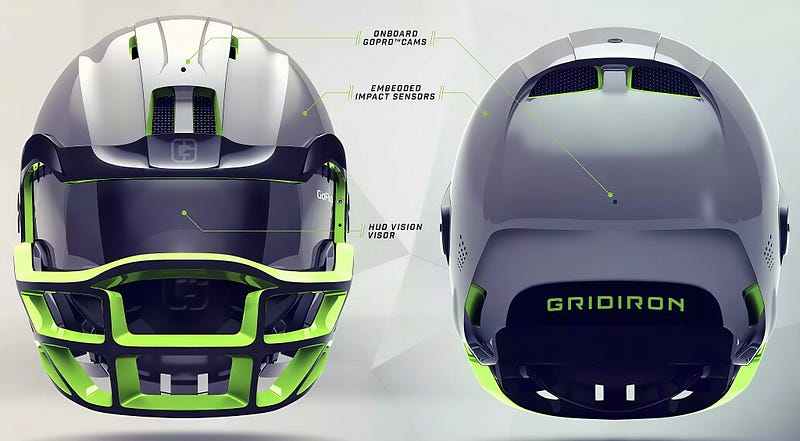
Current research and development in professional football helmets are heavily focused on integrating advanced technologies to enhance player safety and performance. A significant trend is the incorporation of smart helmet technologies and sensor integration. The primary purpose of these integrated sensors is to measure impact forces in real-time, providing immediate data to coaches and medical staff. This allows for continuous monitoring of athletes for potential head injuries and enables informed decisions, such as preventing players from continuing to play after a high-impact hit, thereby reducing the risk of concussions.
Pioneering examples include Riddell’s Sideline Response System (SRS) and InSite Impact Response System, which, along with their IQ platform, have collected over two million impacts across various levels of football. This vast dataset is invaluable for understanding real-world impact dynamics and informing subsequent helmet design improvements.
Beyond football, the broader trend in “smart helmets” as a form of the Internet of Things (IoT) extends to various fields, integrating communication systems, video cameras, contactless temperature measurement, and Bluetooth connectivity. Future innovations in football helmets are anticipated to include augmented reality (AR) displays for enhanced situational awareness and integrated data systems for real-time health monitoring, such as hydration levels and heart rate.
The impact of advanced helmet technology also extends to coaching and strategy. In 2024, college football adopted helmet communication systems, allowing coaches to verbally relay play calls to players on the field via a helmet speaker. This innovation streamlines play-calling, minimizes sign stealing, and enhances the overall competitive experience.
The integration of sensors transforms helmet design from a static protective shell into a dynamic data collection and communication platform, representing the data-driven future of player safety. This shift enables real-time monitoring of impact forces, providing immediate, objective data that can inform critical sideline decisions regarding player well-being. Furthermore, the aggregation of millions of impact data points from instrumented helmets provides an unprecedented empirical foundation for biomechanical research. This continuous feedback loop allows engineers to refine helmet designs based on actual on-field impact profiles, leading to more effective energy management systems. Beyond safety, the integration of communication technologies streamlines game operations, demonstrating how technological advancements can simultaneously enhance player protection and strategic performance. This evolution signifies a proactive approach, moving beyond reactive injury response to preventative, data-informed interventions.
5.2 Advanced Materials and Personalized Fit
The pursuit of enhanced protection and comfort in professional football helmets is driving significant innovation in advanced materials and personalized fit technologies.
Advanced Materials:
A key development is the use of 3D-printed liners and lattice structures, which enable customized fits and superior force absorption. Riddell’s Precision-Fit Diamond helmets, for instance, leverage Carbon’s Digital Light Synthesis™ technology to create high-performance, impact-absorbent lattice components that can be locally tuned for specific impact attenuation. Similarly, Vicis’s ZERO2 MATRIX helmets incorporate Carbon’s latest impact-damping EPU 45 elastomer within a 3D-printed hexahedron unit cell geometry, utilizing a volumetric fill strategy to maintain uniformity in complex curved interiors. These 3D-printed structures offer initial stiffness combined with controlled buckling, critical for energy absorption. Future possibilities include the integration of graphene and nano-engineered polymers for even superior safety features, and the promising vertically aligned carbon nanotube foam, which demonstrates exceptional shear energy dissipation and thermal conductivity, making it highly effective against rotational brain injury. Additionally, microlattice materials are being developed to absorb impact energy rather than just distribute it, offering breathability, lightness, and potential sensor capabilities.
Personalized Fit:
The concept of a truly personalized helmet fit is revolutionizing comfort and safety. This is primarily achieved through 3D scanning techniques, which capture precise imaging of a player’s head to build a completely custom-fitting helmet. This data-driven approach allows for the selection of optimal shell sizes and energy management components, generating a unique build configuration for each athlete.
Beyond initial customization, helmets are becoming increasingly adjustable and reconfigurable. Riddell’s VSR-4 introduced the first air-fitted liner system, while Schutt’s SUREFIT Air Liner and Xenith’s Adaptive Fit System allow players to adjust the helmet for a secure and custom fit. Systems like Schutt’s F7 UR1 boast an astonishing 3.6 quadrillion potential fit configurations, enabling re-configuration for the same player or even for different players in subsequent seasons. Vicis employs a hybrid system, combining data-driven customization from head scans with user feedback to create an adaptable platform that ensures long-term helmet stability and comfort.
The convergence of customization and material science for enhanced protection represents a proactive approach to injury prevention. Personalized fit, achieved through precise 3D scanning and adjustable or reconfigurable liner systems, ensures that the helmet’s protective elements are optimally positioned and perform as intended for each player. This moves beyond a “one-size-fits-all” approach, recognizing that anatomical variations influence how impact forces are transmitted. When combined with advanced materials like 3D-printed lattices and novel foams, this personalization allows for highly optimized energy management tailored to individual biomechanics. These materials, with their tunable properties and superior energy dissipation capabilities, can be precisely engineered to interact with a player’s unique head shape and respond to specific impact profiles. This holistic approach maximizes the helmet’s ability to absorb and dissipate forces, particularly rotational ones, thereby reducing the risk of brain injury by creating a more secure and biomechanically efficient protective interface.
6. Conclusion
The engineering of professional football helmets has undergone a profound transformation, driven by an unwavering commitment to player safety and a continually deepening understanding of brain injury biomechanics. From rudimentary leather caps to today’s multi-layered, technologically advanced systems, the evolution is stark. Materials science has been paramount, with the adoption of polycarbonate for outer shells and sophisticated multi-density foams, air bladders, and deformable structures for internal padding, all designed to absorb and dissipate impact forces effectively.
A critical shift in focus has occurred from primarily mitigating linear impacts, which cause skull fractures and severe brain injuries, to addressing the more insidious threat of rotational acceleration, the primary cause of concussions. While helmets have been remarkably successful in virtually eliminating skull fractures, the challenge of preventing concussions remains complex due to the brain’s inherent susceptibility to shear forces during rotational movements. No helmet can entirely prevent the brain from moving within the skull, meaning a degree of concussion risk will always persist.
Rigorous testing protocols, such as NOCSAE standards and the more comprehensive Virginia Tech Helmet Ratings, play a crucial role in evaluating helmet performance, particularly in assessing their ability to reduce both linear and rotational accelerations. These evolving standards push manufacturers to innovate further.
The future of football helmet engineering is characterized by a convergence of cutting-edge technologies. Smart helmets with integrated sensors are transforming player safety by providing real-time impact data, enabling immediate medical assessment, and informing long-term design improvements. The advent of advanced materials, including 3D-printed lattices, graphene, and novel foams, promises superior energy absorption and lighter, more breathable designs. Concurrently, personalized fit technologies, utilizing 3D scanning and reconfigurable liners, ensure optimal helmet performance tailored to individual player anatomy.
Ultimately, while the engineering behind professional football helmets continues to advance at a rapid pace, it is crucial to acknowledge that no helmet is “concussion-proof.” Helmet technology represents one vital component within a broader ecosystem of player safety, which also includes critical elements such as rule changes, proper tackling techniques, and comprehensive player education regarding concussion symptoms and reporting. The ongoing engineering challenge lies in continually pushing the boundaries of protective design while integrating these innovations into a holistic approach to minimize head injury risk in the demanding sport of football.