Velvet of the Deep: The Sablefish’s Journey from Abyss to Table
Introduction In the cold, black waters of the North Pacific, far below the reach of sunlight, dwells a fish whose flesh has earned the…
Introduction
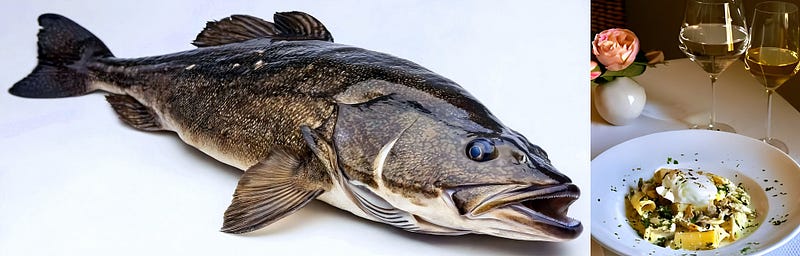
In the cold, black waters of the North Pacific, far below the reach of sunlight, dwells a fish whose flesh has earned the nickname “butterfish” among chefs and diners alike. The sablefish, or Anoplopoma fimbria, is neither a cod nor a bass, though it is sometimes marketed as “black cod” to appeal to seafood buyers unfamiliar with its scientific name. It is a species prized for its silken texture, rich flavor, and remarkable resilience in a demanding marine world. Its story is one of deep-water survival, global culinary prestige, and a growing role in sustainable fisheries.
Taxonomy
The sablefish belongs to the family Anoplopomatidae, making it unique as the sole member of its genus. While sometimes compared to true cods of the family Gadidae, its lineage is distinct, a testament to its evolutionary path in the icy depths of the Pacific. Its range spans from northern Mexico to the Bering Sea and across to Japan. Common names such as “black cod,” “blue cod,” and “butterfish” are frequently used in markets, though these labels can be misleading. For culinary purposes, no subspecies are formally recognized, but regional variations in size, fat content, and flavor are well known among fishers and chefs.
Biology
Sablefish are masters of the deep, living at depths between 300 m and 1,500 m (984 ft to 4,921 ft), where the pressure is immense and temperatures hover just above freezing. They possess long, sleek bodies, typically reaching 60 cm (24 in) but capable of growing over 1 m (39 in) in exceptional cases, with a maximum recorded weight of nearly 25 kg (55 lb). Their skin is a dark, inky gray to black, with a subtly iridescent sheen that vanishes in the dim light of their habitat. Sablefish can live more than 90 years, an unusually long lifespan for a fish, thanks to a slow metabolism adapted to the frigid depths. They are voracious predators, feeding on squid, euphausiids, and smaller fish, using acute sensory organs to detect movement in the darkness.
Ecology
These fish occupy a vital role in deep benthic ecosystems, linking the upper pelagic layers with the abyssal food web. They migrate seasonally, spawning in winter when deepwater currents disperse their eggs. Juveniles drift toward shallower waters before descending as they mature, ensuring a broad distribution of young across the continental shelf. Sablefish populations have historically faced pressure from industrial trawling, but modern quota systems, selective gear, and marine stewardship certifications have improved their sustainability outlook. Well-managed sablefish fisheries in Alaska are now considered among the most sustainable in the world, with careful stock assessments ensuring that deep-sea ecosystems remain balanced.
Uses
Economically, sablefish are a premium catch. Their high oil content makes them particularly well-suited for freezing and long transport without losing texture or flavor, allowing them to command top prices in Japan, where they are often marinated in miso and broiled to perfection. In North America, their reputation has surged thanks to fine-dining menus, especially in Pacific coastal cities. Fishermen prize them not only for their value but also for their role in diversified fishing operations, often pairing sablefish harvests with halibut and other coldwater species to stabilize seasonal incomes.
Culinary Aspects
The flesh of sablefish is ivory white, with a texture so soft it seems to melt on the tongue, hence its “butterfish” nickname. Its flavor is rich but clean, with a depth that stands up to assertive seasonings while still shining in minimalist preparations. In Japanese cuisine, “Gindara” sablefish is frequently marinated in a mixture of white miso, sake, and sugar, then grilled until the exterior caramelizes into a golden crust. In Western kitchens, it may be roasted with fresh herbs, smoked over alderwood, or poached gently in olive oil. Nutritionally, it is a powerhouse of omega-3 fatty acids, surpassing even salmon in concentration, making it a heart-healthy choice with a luxurious appeal.
Wine Pairings
Sablefish’s luxurious fat content calls for wines with both acidity and aromatic complexity. A chilled 2019 Chablis, with its crisp minerality, can cut through the richness while enhancing the fish’s natural sweetness. For those seeking a more aromatic approach, a late-harvest Riesling with a slight residual sugar pairs beautifully with miso-glazed sablefish, balancing the umami depth with fruit-driven brightness. Sparkling wines, especially brut styles, also serve as refreshing counterpoints, making them excellent companions for smoked sablefish appetizers.
Conclusion
The sablefish embodies a rare intersection of biology, gastronomy, and sustainability. From the lightless depths to the luminous plates of Michelin-starred restaurants, it tells a story of endurance and refinement. As consumers become more conscious of where their seafood comes from, the sablefish stands as a model of what a responsibly managed deep-sea species can represent: a living bridge between ecological stewardship and culinary excellence. For those who have never tasted it, the journey from ocean floor to dinner table is one worth savoring — preferably with a glass of well-chosen wine in hand.