The Fragrant Leaf of the Himalayas: Cinnamomum tamala and the Ancient Art of Flavor and Healing
Introduction Cinnamomum tamala, commonly known as Indian bay leaf, is more than a spice; it is a living remnant of South Asia’s intertwined…
Introduction
Cinnamomum tamala, commonly known as Indian bay leaf, is more than a spice; it is a living remnant of South Asia’s intertwined botanical and culinary history. Indigenous to the Himalayan foothills, this evergreen tree has seasoned kitchens, temples, and apothecaries for millennia. Its leaves perfume biryanis and curries from Nepal to Sri Lanka while anchoring traditional Ayurvedic and Unani medicine. In an age preoccupied with industrial agriculture and synthetic additives, the tamala leaf remains a model of bio-based sustainability — a leaf that nourishes both body and soil.
Taxonomy
Cinnamomum tamala belongs to the Lauraceae family, the same lineage as Cinnamomum verum (true cinnamon) and Cinnamomum cassia. Its full classification is: Kingdom Plantae, Division Magnoliophyta, Class Magnoliopsida, Order Laurales, Family Lauraceae, Genus Cinnamomum, Species C. tamala. In English, it is called Indian bay leaf or Malabar leaf. In Hindi, it is tejpatta; in Nepali, tej pat; in Bengali, tejpata; in Sinhala, kurundu kola; and in Burmese, thitkado. In Tamil, it is ilaavangappattai ilai, referencing its aromatic kinship with cinnamon bark. The vernacular diversity reflects its broad trade history across the Indian subcontinent and Southeast Asia. There are minor regional varieties, particularly in Nepal and northern India, differing subtly in oil content and leaf thickness, with the Nepalese variant prized for its sharper, camphoraceous aroma.
Biology
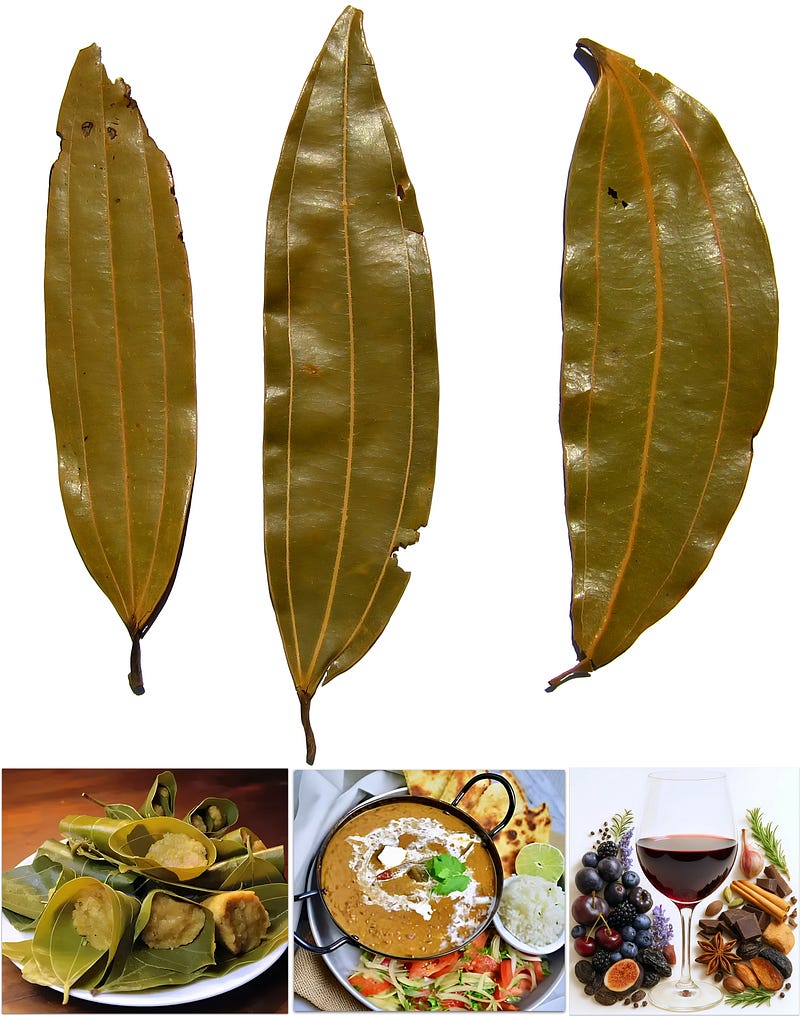
A medium-sized evergreen tree reaching 8–12 m (26–39 ft) in height, Cinnamomum tamala bears elliptic, leathery leaves measuring 10–20 cm (3.9–7.9 in) long and 4–8 cm (1.6–3.1 in) wide, with three prominent veins — a signature of Lauraceae species. The leaves emit a sweet, clove-like scent due to high cinnamaldehyde and eugenol concentrations. Flowering occurs from March to May, with small pale-yellow blossoms yielding berry-like drupes that ripen by October. The species propagates through seeds or stem cuttings and thrives best in humid subtropical to temperate climates at elevations between 900 and 2,400 m (2,950–7,875 ft). The tree’s dense canopy and persistent leaf litter enrich the soil, promoting microfaunal diversity.

Ecology
Native to the mid-hills of the Himalayas — stretching from eastern Nepal through northern India to Bhutan and Myanmar — Cinnamomum tamala favors well-drained loamy soils with annual rainfall between 1,000 and 2,500 mm (39–98 in). It plays a dual ecological role: stabilizing slopes prone to erosion and offering nectar to pollinators such as honeybees and hoverflies. The species is often integrated into agroforestry systems alongside cardamom, turmeric, and citrus. Its root structure enhances soil carbon sequestration by an estimated 2.3 metric tons per hectare (2,100 lb per acre) annually under managed cultivation. Though not invasive, it requires moisture conservation and shade regulation to maintain yield stability. Sustainable harvesting practices — cutting mature leaves only twice a year — are essential to prevent stress-induced leaf drop.

Uses
The primary edible part is the mature dried leaf, harvested after 10–12 months of growth. Annual yield averages 2.5–3.5 metric tons per hectare (2,230–3,120 lb per acre) under semi-managed conditions. Each 100 g (3.5 oz) of leaf powder provides roughly 335 kcal, containing 10–12 g of dietary fiber, 8–10 g of protein, and volatile oils rich in cinnamaldehyde, eugenol, and β-caryophyllene. Anti-nutritional factors are minimal; trace tannins contribute mild astringency but no toxicity. Steam distillation extracts essential oils at yields of 1–1.5%, which are utilized in perfumery and natural insecticides. The leaves exhibit antimicrobial and antifungal activity and are used in traditional medicine for digestive support, glycemic regulation, and respiratory relief. Modern studies suggest possible antihyperglycemic effects, though evidence remains preliminary. Decoctions and oil infusions are standard dosage forms, while powdered leaf tablets appear in Ayurvedic pharmacopeias. Adverse effects are rare; contraindications apply to pregnancy and concurrent anticoagulant use.
As feed material, the leaves are rarely used due to their strong aroma, but in low concentrations, they may enhance palatability in goat fodder, improving rumen function. Industrially, the essential oil serves as a natural preservative and fragrance agent in soaps and cosmetics, where it is labeled under ISO 4728 standards. In agro-ecological terms, it functions as a shade tree for cardamom and coffee plantations and contributes leaf litter that improves soil nitrogen. Carbon sequestration and pollinator support position C. tamala as a low-impact crop with restorative potential.
In trade, dried leaves fetch between $1,200 and $1,800 per metric ton (1.1–1.6 tons) on the international market, with major producers including India, Nepal, and Bhutan. Certified organic tejpatta from the Himalayan belt commands a price premium under fair-trade labeling. Export regulations are light but require phytosanitary certificates and harvest permits in Nepal and India. Community-managed forests maintain traceability programs and leaf-drying cooperatives to preserve local rights and ensure equitable value distribution.
Culinary Aspects
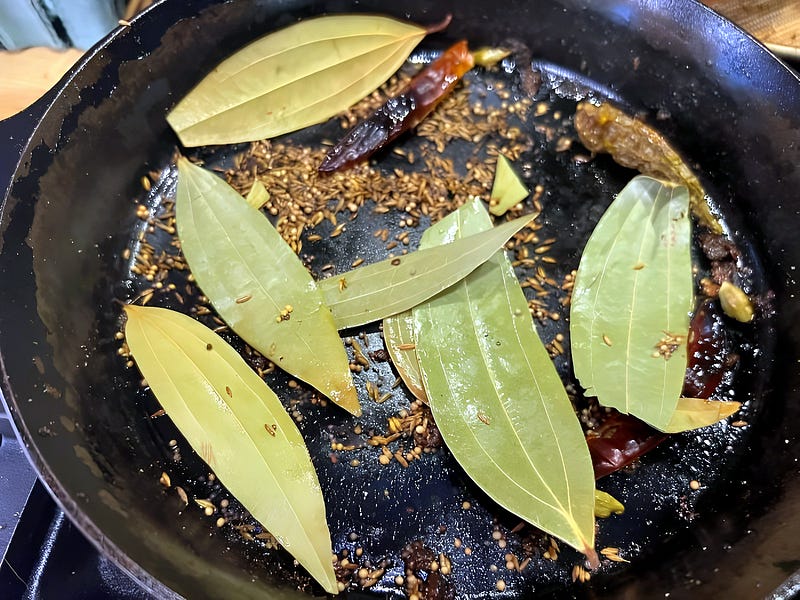
Cinnamomum tamala’s sensory identity is distinctive: its flavor is less sharp than the Mediterranean bay (Laurus nobilis), with a sweet, warm, and faintly spicy edge reminiscent of clove and cinnamon bark. The aroma develops fully when the leaf is roasted or fried in oil, releasing volatile phenols that perfume entire kitchens. Texture-wise, the dried leaf remains leathery but softens after prolonged simmering, imparting color and body to sauces. In South Asian cuisine, it is indispensable in garam masala, biryani, and dal makhani, providing a depth of flavor that balances fat and acidity. Its chemesthetic warmth lingers subtly on the palate without bitterness. The flavor compounds remain stable up to 190°C (374°F) and degrade only beyond 220°C (428°F), making it suitable for slow braising. In Nepal, fresh leaves are also brewed into herbal tea, offering a camphor-like finish that clears the sinuses and complements high-altitude diets.
Wine Pairings
The leaf’s sweet-spicy resonance aligns best with medium-bodied reds or aromatic whites that accentuate its clove and cinnamon notes. A Syrah from India’s Nashik Valley complements lamb biryani by matching spice warmth with black-pepper undertones. For vegetarian dals, an Alsace Gewürztraminer harmonizes its lychee and rose aromas with the tamala’s eugenol sweetness. A dry Fiano di Avellino from southern Italy, with its waxy mouthfeel and citrus acidity, elegantly cuts through creamy curries. Less conventional yet effective is Mavrud from Bulgaria, whose plum-tannin structure heightens the spice complexity of tamala-infused stews. In cold preparations like spiced rice salads, a Godello from Spain’s Valdeorras region introduces mineral crispness that refines the dish’s aromatic density. These pairings succeed by aligning volatile profiles — phenolic spice with floral or stone-fruit aromatics — without overpowering the herbal base.
Conclusion
Cinnamomum tamala stands at the nexus of flavor, medicine, and ecology. From Himalayan forests to global spice racks, it symbolizes how ancient agroforestry wisdom can sustain modern palates and livelihoods alike. Its cultivation encourages biodiversity, its leaves enrich both cuisine and pharmacology, and its trade sustains mountain communities. In every simmering pot of biryani or fragrant tea infusion, the tamala leaf reasserts the enduring balance between taste and terrain — a reminder that sustainable indulgence begins with understanding the plants that flavor our lives.