The Garish Hind: A Jewel of the Coral Seas and the Culinary World
Introduction
Introduction
Beneath the coral reefs of the Indo-Pacific swims a fish of startling beauty and quiet power: the garish hind (Cephalopholis igarashiensis). With its vibrant coloration and ecological significance, this species has earned attention from divers, biologists, and chefs alike. To some, it is an emblem of reef health; to others, it is a delicacy with delicate flavors and cultural resonance. The story of the garish hind brings together biology, gastronomy, and the urgent question of sustainability.
Taxonomy
The garish hind belongs to the family Serranidae, the groupers and sea basses, under the genus Cephalopholis. Its scientific name is Cephalopholis igarashiensis, though it is sometimes called the garish grouper. Unlike some other groupers, there are no recognized subspecies or varieties, but it shares lineage with related edible species such as the duskytail grouper (Cephalopholis nigripinnis) and the coral hind (Cephalopholis miniata). Its classification underscores its role in the reef as both predator and prey, tying it closely to the ecological web of tropical seas.
Biology
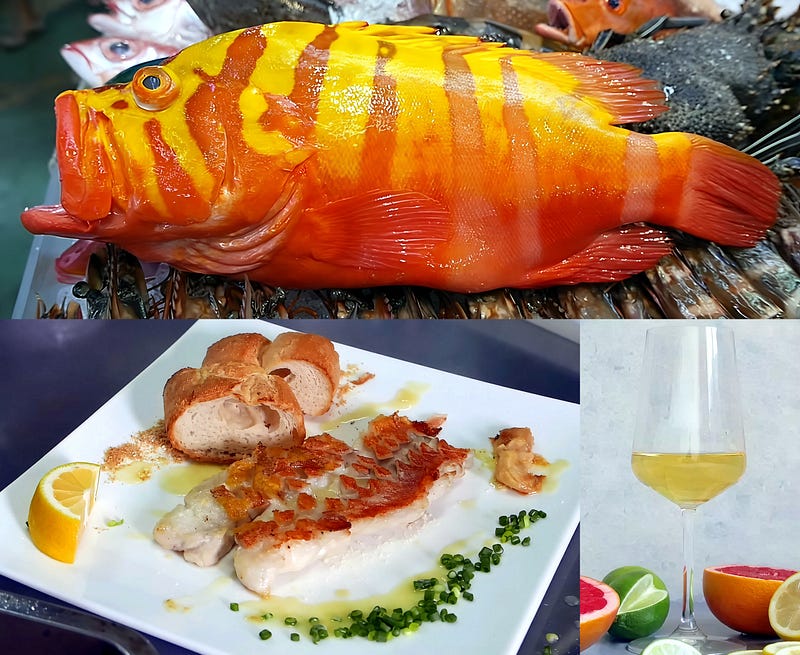
The garish hind can reach lengths of about 40 cm (15.7 in), though most individuals are slightly smaller. Its body is striking, covered in a deep reddish hue accented by lighter blotches, making it appear almost painted. Like other groupers, it possesses a robust body, a large mouth, and a powerful gill structure, enabling it to ambush smaller reef fish and crustaceans. It is protogynous hermaphroditic — females can transition to males when dominant males are absent — a reproductive adaptation common in serranids that maintains population resilience.
Ecology
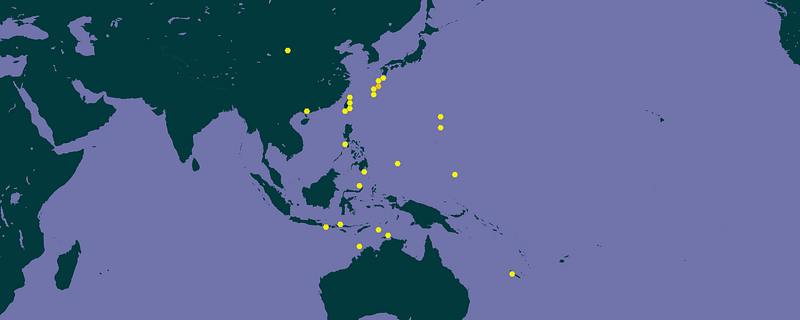
The species is distributed across the Indo-Pacific, from Japan’s southern islands to parts of Micronesia and the Philippines. It thrives in coral reef ecosystems, often at depths of 10 to 40 m (33 to 131 ft). Its presence indicates reef health, as it requires intact habitats and abundant prey. Overfishing, coral bleaching, and habitat loss pose threats to its stability. While not globally endangered, localized declines have been reported, making sustainable fishing practices essential. Marine protected areas and seasonal catch restrictions have been key tools for conservation.
Uses
The garish hind holds cultural and economic value in Asian markets, especially in Japan, where reef fish command high prices in specialty cuisine. It is sought for its tender flesh and delicate flavor, often sold fresh at fish markets rather than frozen. However, as with many groupers, its economic importance can lead to overexploitation. Its relatively slow growth and late maturity make it vulnerable to heavy fishing pressure. Efforts to manage catch sizes and implement aquaculture trials are being explored to balance demand with sustainability.
Culinary Aspects
The flesh of the garish hind is firm yet yielding, with a clean, slightly sweet flavor. Its taste profile is mild but nuanced, offering hints of shellfish-like umami. The aroma is fresh and oceanic rather than strongly fishy. Its mouthfeel is smooth, with a fine-grained texture that flakes gently when cooked. Properly prepared, the balance is light and delicate rather than fatty or heavy, with subtle complexity that lingers in a soft aftertaste. The finish is clean and refreshing, leaving little palate fatigue.
Visually, its fillets are white to off-white, with a faint translucence that becomes opaque when cooked. In Japanese cuisine, it may be served as sashimi or lightly grilled with minimal seasoning, allowing the natural flavor to dominate. In Pacific Island traditions, it may be steamed with ginger and scallions or baked in banana leaves. Nutritionally, it is rich in lean protein, omega-3 fatty acids, and micronutrients such as selenium and vitamin B12, making it both healthful and flavorful.
Wine Pairings
Pairing wine with garish hind requires subtlety to match its delicate, lightly sweet profile. A Vermentino from Sardinia offers crisp acidity and saline minerality that harmonize with sashimi or ceviche preparations. A Chasselas from Switzerland complements steamed or poached hind, its restrained fruit and soft texture mirroring the fish’s mildness. For grilled preparations with ginger or soy accents, an Austrian Grüner Veltliner provides peppery brightness and a clean finish that balances the umami depth. If the dish leans toward tropical seasonings such as coconut milk or lemongrass, an Albariño from Galicia layers citrus, floral notes, and a briny edge for seamless alignment. Each pairing respects the fish’s gentle complexity without overpowering it.
Conclusion
The garish hind embodies the convergence of natural beauty, culinary refinement, and ecological responsibility. Its striking appearance makes it a diver’s delight, while its mild yet nuanced flavor ensures a prized place in gastronomy. Yet, its vulnerability to overfishing reminds us that appreciation must go hand in hand with stewardship. The garish hind is more than a delicacy — it is a symbol of the reef’s fragility and a call for mindful consumption. Preserving its place in both ocean and kitchen depends on choices made today, by fishers, regulators, and consumers alike.