The Golden Croaker: A Journey Through Biology, Culture, and Cuisine
Introduction
Introduction
The seas of East Asia hum with life, and among the shimmering shoals swims a fish that has carried both ecological importance and culinary prestige for centuries: the yellow croaker (Larimichthys polyactis). Known for its distinctive golden sheen and gentle croaking sound produced by its swim bladder, this species has captured the attention of biologists, fishers, and chefs alike. It is at once a keystone of marine ecosystems, a cornerstone of regional economies, and a centerpiece of dining tables from Seoul to Shanghai. The story of the yellow croaker blends biology, culture, and sustainability into a single thread that continues to bind humans to the sea.
Taxonomy
The yellow croaker belongs to the family Sciaenidae, a group often called “drums” or “croakers” because of their unique sound-producing ability. Its scientific name is Larimichthys polyactis. Historically, it has also been referred to under Pseudosciaena polyactis, reflecting a taxonomic shuffle common in ichthyology. Its common names vary across regions: in China, it is called “huanghua,” in Korea, “jogi,” and in Japan, “ishimochi.” While there are related croaker species, the yellow croaker stands out as the most commercially and culturally significant, long harvested both as a delicacy and as a traditional preserved food.
Biology
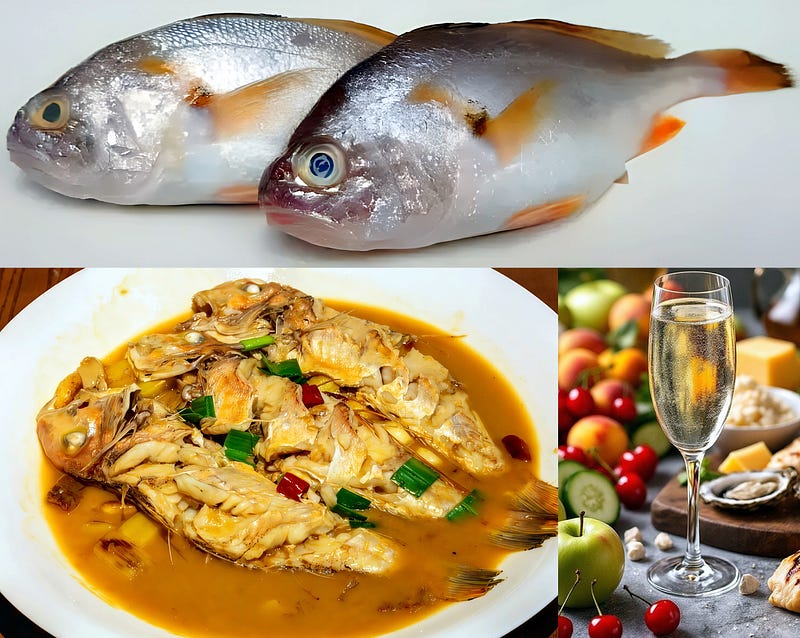
The yellow croaker is a medium-sized fish, usually reaching 30 cm (11.8 in) but occasionally growing to 40 cm (15.7 in). Its scales shimmer with golden and silvery hues, and its streamlined body is built for active schooling in coastal waters. The croaking noise is produced by specialized muscles vibrating the swim bladder, a trait used both in mating calls and group communication. These fish spawn in shallow seas during spring and early summer, releasing millions of eggs that drift with the currents. Their life cycle is relatively short, with most individuals maturing within two years, making them vulnerable to overfishing but capable of recovery under careful management.
Ecology
Yellow croakers inhabit the temperate coastal waters of the Yellow Sea, East China Sea, and Bohai Sea. They prefer sandy or muddy bottoms where they feed on shrimp, small fish, and planktonic organisms. As mid-level predators, they play a critical role in balancing populations of smaller species while providing food for larger fish, marine mammals, and humans. Seasonal migrations take them closer to shore for spawning and back to deeper waters for feeding. Overfishing and habitat degradation, however, have placed heavy pressure on their populations. Once abundant, wild stocks have declined sharply, leading to greater reliance on aquaculture and stricter management of natural fisheries.

Uses
The yellow croaker has long been one of the most valuable commercial fish in East Asia. Its economic importance is immense: in China alone, it supports a thriving aquaculture industry, with millions of tons produced annually. Wild catches, though restricted, still contribute to local markets. Dried and salted croakers are staples of Korean and Chinese cuisines, while fresh fish command high prices in markets, especially during festival seasons. Sustainability is an ongoing challenge. Aquaculture offers a partial solution, though it raises concerns about environmental impact, feed sources, and genetic diversity. Market demand shows no sign of fading, ensuring the species remains central to both coastal economies and global seafood trade.
Culinary Aspects
On the plate, the yellow croaker is a study in delicacy. Its flesh is tender and flaky, with a mild, slightly sweet flavor that avoids overpowering the palate. The aroma is clean, carrying subtle marine notes rather than heavy fishiness. Its mouthfeel is soft yet cohesive, with fine, moist flakes that dissolve easily. When grilled or pan-fried, the skin crisps into a golden finish, providing contrast to the tender flesh. Balance and complexity emerge in preserved forms: salted croaker deepens into umami-rich layers, while dried croaker develops nutty, concentrated flavors.
The aftertaste is clean, leaving only a hint of sweetness. In appearance, the cooked flesh is bright white with a translucent sheen, while the raw fish gleams with golden scales. Traditional Korean jogi-gui (grilled croaker) celebrates its simplicity, while Chinese recipes often feature steamed croaker with ginger and scallion, enhancing its natural sweetness. Nutritionally, yellow croaker offers lean protein, omega-3 fatty acids, and essential minerals such as selenium and iodine. A 100 g (3.5 oz) serving provides roughly 100 calories, making it both nourishing and light.
Wine Pairings
Pairing wine with yellow croaker requires delicacy, as the fish’s subtle flavors demand balance rather than dominance. A crisp Sauvignon Blanc from the Loire Valley, with citrus and grassy notes, complements steamed preparations, echoing freshness without overshadowing the flesh. For grilled croaker, a dry Riesling from Germany works beautifully, its acidity cutting through the slight oiliness while highlighting the fish’s sweetness. In Korean meals where croaker is salted or fermented, a sparkling wine such as Champagne or Cava refreshes the palate and lifts the savory intensity. These pairings demonstrate how a fish rooted in East Asian tradition harmonizes with global viticulture.
Conclusion
The yellow croaker is more than just a fish. It is a cultural symbol, an ecological player, and a culinary treasure whose story reflects the delicate relationship between humans and the sea. From its golden shimmer in the water to its elegant presence on the plate, it embodies both fragility and resilience. Safeguarding its future requires sustainable practices and responsible consumer choices, ensuring that generations to come will still hear its croak echoing beneath the waves and savor its gentle sweetness at the table.