
The Great American Charade: A Shutdown by Any Other Name Would Smell as Sweet
Another year, another government shutdown. The headlines blare, the politicians posture, and the American public is asked, once again, to…
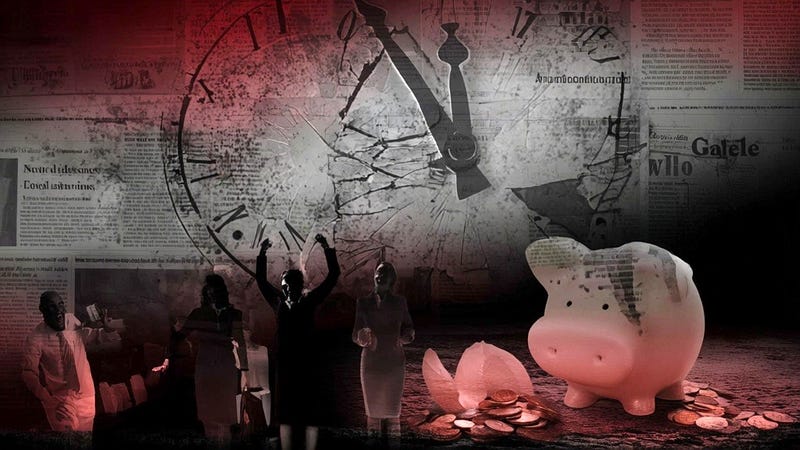
Another year, another government shutdown. The headlines blare, the politicians posture, and the American public is asked, once again, to feign shock at this breathtaking display of institutional failure. But let’s be honest: who really cares? This meticulously choreographed crisis has all the suspense of a rerun, a tired political theater performed for an audience that has long since left the building. To believe it has any real significance is to miss the brilliant, cynical genius of the whole affair.
Consider the magnificent display of consequences. The government “shuts down,” yet the world stubbornly refuses to end. The mail, in its profound wisdom, continues to arrive, a testament to the fact that some services are apparently too important to be funded by the clowns in Congress. Social Security checks still go out; the military still stands guard. It’s almost as if the essential business of the state is designed to continue, making the entire shutdown a performative exercise in what we can apparently live without. National parks become thrilling experiments in anarchic tourism, offering visitors the unique opportunity to litter without consequence and vandalize historical sites without a ranger to spoil the fun. It’s a bold new vision for public lands: do-it-yourself preservation.
Then there are the true heroes of the farce: the federal workforce. Nearly a million people are suddenly told they are “non-essential,” a wonderfully demeaning label handed down in the midst of a political squabble. They are sent home without pay, transformed into pawns in a high-stakes game they didn’t choose to play. But fear not! They will be paid retroactively, because nothing says “fiscal responsibility” like writing a massive check for work that was never performed. This is a masterclass in budgeting, a bold demonstration that time and labor are merely abstract concepts in the hallowed halls of Washington. For those asked to work without pay, like air traffic controllers guiding millions through the skies, it’s a thrilling exercise in motivation, a test of how long one can focus on public safety while wondering how to cover the mortgage.
The political dance that leads to this point is a spectacle of pure, unadulterated performance art. The crisis is always “imminent,” the disagreements are always “fundamental.” Each side digs in, not for the noble principles they proclaim on television, but for the sheer thrill of the blame game. They are like actors in a play where the script is written anew each time, but the plot is eternally the same. They will grandstand, they will point fingers, and they will ensure that the one branch of government that remains fully funded is, of course, Congress itself. The people’s work, it seems, is far too essential to be interrupted by a failure to fund the people’s government.
Let us not forget the economic “impact,” a term economists use with a straight face. We are told a shutdown could cost billions. Growth could be reduced by a tiny fraction of a percentage point. The stock market might even shrug. The true beauty is that this cost is not a one-time fee for failure; it is a recurring subscription service. We pay for the planning, we pay for the shutdown itself, and we pay again to clean up the mess, all while being assured of the system’s robust health. It is a perfect, self-justifying economic loop that would make any satirist proud.
So, the next time the clock strikes midnight and the government officially shuts down, do not be alarmed. Do not panic. Simply appreciate the sheer bureaucratic artistry on display. This is not a breakdown; it is a feature. It is a carefully designed pressure valve, a ritual that allows our leaders to simulate conflict without ever forcing a real resolution. It is a show of absolute significance and profound effect, designed to convince you that something momentous is happening, while ensuring that for most, life simply, mercifully, goes on. The genius of the American system is that it can fail so spectacularly, so regularly, and yet demand that we all pretend it matters.