The Greenland Turbot: Arctic Precision in Motion and on the Plate
Introduction In the cold, silent depths of the Arctic and subarctic seas, the Greenland turbot (Reinhardtius hippoglossoides) reigns as one…
Introduction
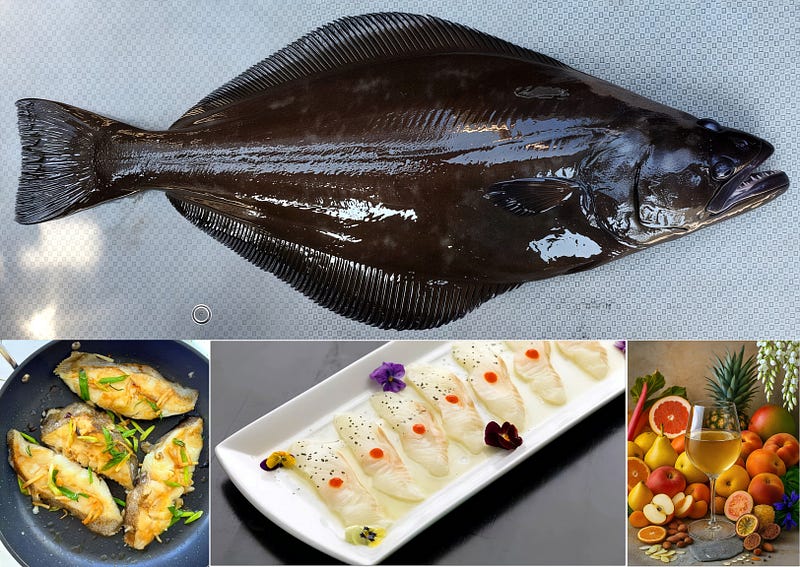
In the cold, silent depths of the Arctic and subarctic seas, the Greenland turbot (Reinhardtius hippoglossoides) reigns as one of the North Atlantic’s most resilient and economically vital flatfish. Its sleek, asymmetric body and predatory efficiency are matched only by its significance to northern economies and cuisines. From the fishing fleets of Greenland and Canada to the sashimi counters of Japan, this species connects ecological endurance with global culinary demand, embodying the precarious balance between nature’s bounty and human appetite.
Taxonomy
The Greenland turbot belongs to the family Pleuronectidae, the right-eye flounders, within the order Pleuronectiformes. Its full classification is: Kingdom Animalia, Phylum Chordata, Class Actinopterygii, Order Pleuronectiformes, Family Pleuronectidae, Genus Reinhardtius, Species R. hippoglossoides.
Common names reflect its wide distribution: “Greenland halibut” (English, Greenland and Canada), “flemming” (Danish, Greenland), “grønlandsk hellefisk” (Norwegian, Norway), “turbot du Groenland” (French, France and Canada), “halibut du Groenland” (French, France), and “karafuto-garei” (Japanese, Japan). Though sometimes marketed as “halibut,” it is distinct from Hippoglossus hippoglossus, the true Atlantic halibut, both biologically and texturally.
Biology
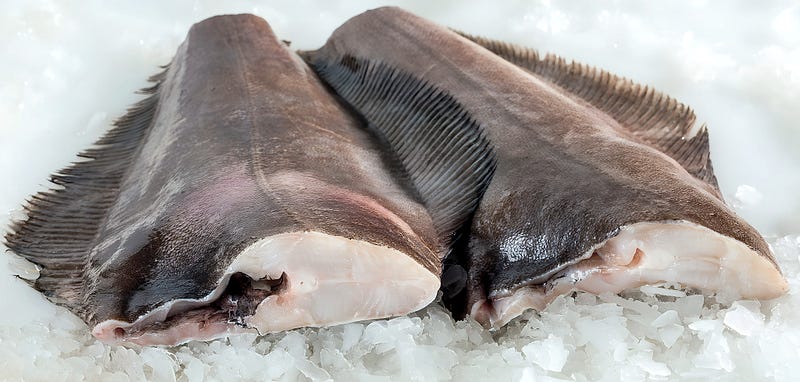
Reaching lengths of up to 120 cm (47 in) and weights approaching 25 kg (55 lb), the Greenland turbot is built for stealth and endurance. Its body is laterally compressed, with both eyes migrating to the right side during development — a hallmark of flatfish evolution. The dorsal coloration is dark brown to nearly black, camouflaging against the seafloor, while the underside remains pale.
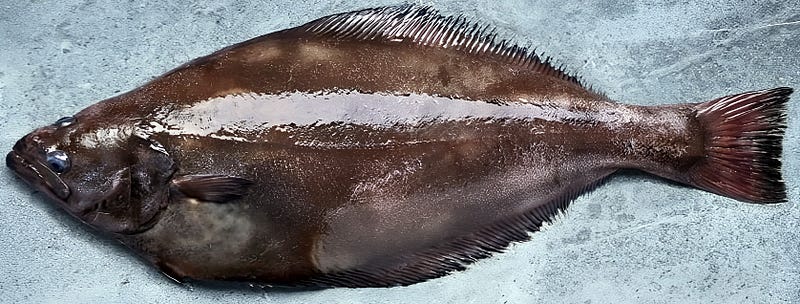
It thrives in waters between 200 m and 1,600 m (656 ft to 5,250 ft), favoring temperatures near 0°C (32°F). Reproduction occurs from March to May, with females releasing up to 60,000 eggs. Juveniles drift in shallower zones before descending to the depths as adults. The species’ slow growth and late maturity — often not spawning until 10 years of age — make it particularly vulnerable to overexploitation.
Ecology
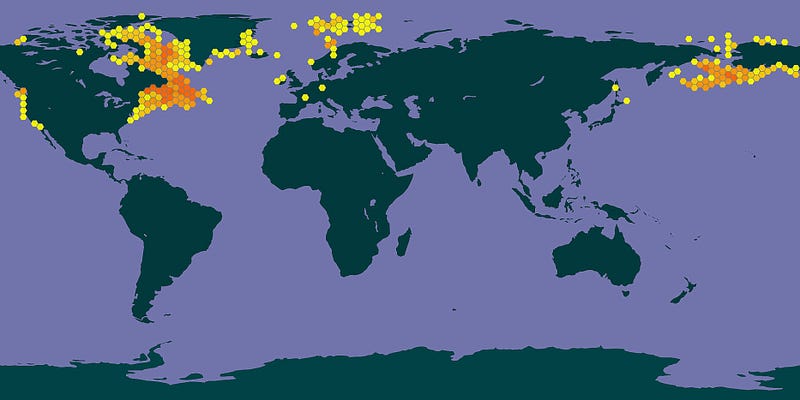
The Greenland turbot occupies deep benthic zones across the North Atlantic, from the Barents Sea to the Davis Strait and as far south as the Gulf of Maine. Its ecological role as a mid-level predator sustains balance in Arctic food webs, feeding primarily on cod, redfish, squid, and crustaceans while serving as prey for seals and toothed whales.
Commercially, it underpins northern fisheries in Greenland, Canada, Norway, and Russia, often caught by longline or trawl. Sustainable management remains challenging. Quotas and seasonal closures are enforced through frameworks like NAFO (Northwest Atlantic Fisheries Organization) to mitigate overfishing and bycatch of vulnerable species. Climate change introduces further stress, as warming currents alter prey availability and distribution patterns.
Uses
All edible parts come from the white, firm muscle tissue, prized for its delicate flake and mild flavor. Preparation forms include fillets, steaks, and dried or smoked variants. Typical dishes include baked Greenland turbot with dill and butter (Scandinavia), steamed turbot in soy-mirin sauce (Japan), and pan-seared fillets with lemon cream reduction (Europe).
The species is available year-round but peaks in quality during the colder months (November to March). Average yield per hectare in controlled fisheries approximates 1,200 kg/ha (1,070 lb/ac). Each 100 g (3.5 oz) portion provides about 105 kcal, with 22 g (0.78 oz) protein, 1.5 g (0.05 oz) fat, and negligible carbohydrates. It is rich in omega-3 fatty acids (EPA and DHA), selenium, and vitamin D, while low in mercury relative to other deep-sea species.
There are no known antinutrients or toxicity concerns under regulated consumption. Commercially, it appears as frozen fillets, smoked slices, or sushi-grade cuts. The taste is clean and faintly nutty, the aroma subtle and marine, the texture firm yet yielding. Best cooking methods include steaming, poaching, or searing in butter, which preserves moisture and flavor stability.
Byproducts like skin, bones, and viscera are processed into fishmeal, oil, and collagen. Fishmeal retains high feed nutritional value, approximately 68% protein and 12% lipid, with strong palatability in aquafeeds. Residual biomass contributes to silage production and soil amendments, enhancing carbon sequestration and nutrient cycling.
Environmental emissions from longline fishing are lower than trawling, averaging 1.2 kg CO₂ per kg product (1.2 lb CO₂/lb), but monitoring remains essential. Certified sustainable fisheries (e.g., Marine Stewardship Council) maintain strict traceability and community rights frameworks, supporting local economies while protecting Arctic ecosystems.
Culinary Aspects
The Greenland turbot delivers a sensory profile distinguished by balance and subtlety. The taste is mild, slightly sweet, and oceanic. The flavor profile deepens with butter or cream-based sauces, emphasizing its umami core. The aroma evokes clean brine with faint earthy undertones. Mouthfeel is firm yet tender, with medium flake cohesion and a smooth finish. The aftertaste is pure, with minimal oiliness and no fishy residue.
When roasted at 180°C (356°F) for 15 minutes, the skin crisps beautifully while the interior retains succulence. When steamed, it yields a more delicate structure suited to aromatic infusions such as lemongrass, ginger, or fennel. Cold preparations — like gravlax-style curing — intensify the fish’s minerality and lend a translucent aesthetic.
Culturally, it symbolizes Arctic abundance and endurance, often featured in Greenlandic celebrations and Inuit subsistence diets. Its culinary value lies in restraint: the less done to it, the more it reveals.
Wine Pairings
For lightly poached or steamed Greenland turbot, pair with Albariño from Rías Baixas, Spain. Its saline acidity complements the fish’s subtle sweetness and enhances textural clarity.
When grilled or roasted with butter and herbs, a Swiss Petite Arvine from Valais delivers ideal contrast — crisp minerality with a citrus backbone aligning with the fish’s buttery depth.
For richer preparations, such as smoked or cream-based sauces, consider a Hungarian Furmint. Its layered acidity and stone fruit notes cut through fat without overpowering the fish’s refinement.
A Japanese Koshu pairs gracefully with sashimi or minimalist presentations, offering restrained acidity and delicate umami resonance.
Finally, for cured or gravlax-style turbot, try a Loire Valley Chenin Blanc from Savennières. Its subtle oxidation and chalky finish accentuate both salt and sweetness in equal measure.
Conclusion
The Greenland turbot exemplifies the intersection of resilience, restraint, and refinement. It is both a survivor of Arctic extremes and a barometer of marine sustainability. Its story extends beyond cuisine into questions of ecological stewardship and cultural continuity. In every bite lies a lesson from the depths — about endurance, adaptation, and the shared responsibility of savoring without squandering.