The Immortal Vine: Exploring Jiaogulan, the Herb of Longevity
Introduction
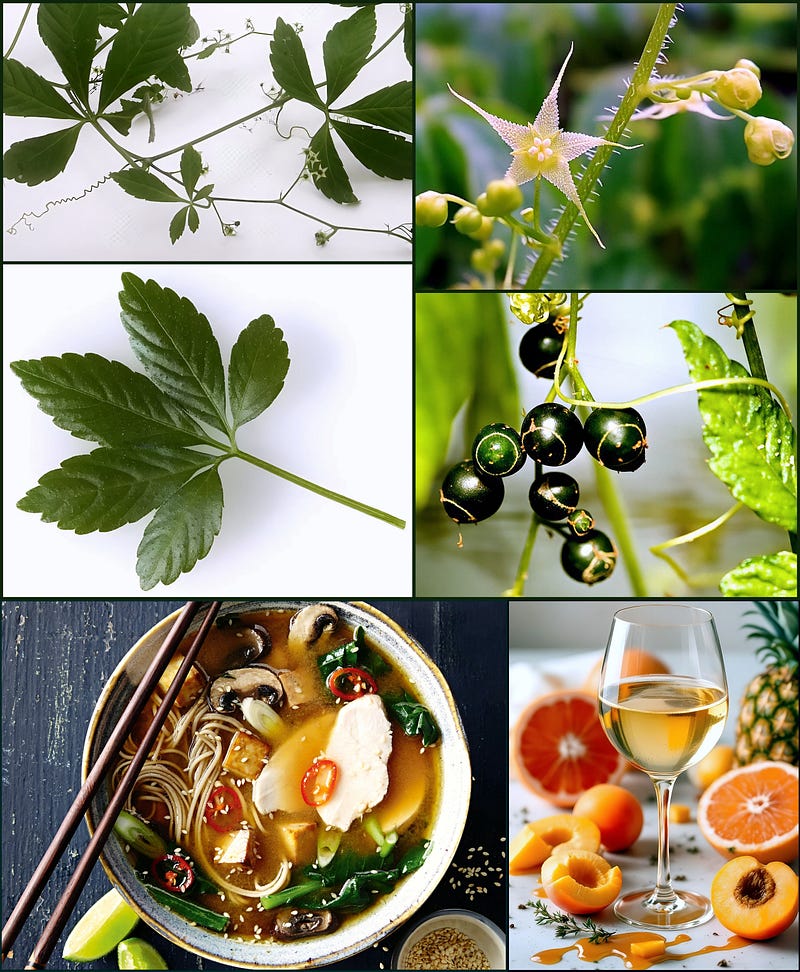
In the misty highlands of southern China and northern Vietnam, villagers have long brewed a tea from a climbing vine called Jiaogulan, or Gynostemma pentaphyllum. Revered as the “Herb of Immortality,” it carries both folklore and science in its leaves. Known for its adaptogenic properties and sweet, slightly grassy taste, Jiaogulan bridges the worlds of traditional herbalism, culinary practice, and modern sustainability. Its story speaks to biodiversity, cultural resilience, and the search for balance between health and environment.
Taxonomy
Jiaogulan belongs to the Cucurbitaceae, the gourd family, alongside cucumbers, melons, and pumpkins. Its full classification is: Kingdom Plantae, Order Cucurbitales, Family Cucurbitaceae, Genus Gynostemma, Species G. pentaphyllum. Common names include Jiaogulan in Chinese, Amachazuru in Japanese, and Southern Ginseng in English. Though not a true ginseng, it is prized for similar rejuvenating properties. Several wild varieties grow across East and Southeast Asia, but the cultivated edible forms — particularly those adapted for tea — are most valued for their high concentration of gypenosides, compounds similar to ginsenosides in Panax ginseng.
Biology
This perennial, climbing vine bears delicate tendrils that latch onto nearby supports. Its leaves appear in distinctive clusters of five — hence pentaphyllum — sometimes seven under wild variation. Small greenish-white flowers bloom in summer, followed by tiny black berries. The plant thrives in humid, subtropical conditions, often in elevations ranging from 1,600 feet to 5,200 feet (500 m to 1,600 m). Its adaptability lies in its ability to propagate from both seeds and cuttings, making it resilient to shifting environments and suitable for sustainable cultivation.
Ecology
Native to the mountainous regions of southern China, Thailand, and Vietnam, Jiaogulan favors shaded forest edges, damp soils, and moderate climates. In traditional agroforestry, it is intercropped with tea or bamboo, enriching local biodiversity. Its presence helps stabilize soil and conserve moisture, acting as a natural ally in sustainable farming systems. Conservationists emphasize cultivation over wild harvesting to protect natural populations from overexploitation, ensuring that cultural demand does not threaten ecological stability.

Uses
Jiaogulan’s most famous use is as a tonic tea, consumed for endurance, blood pressure regulation, and metabolic support. Beyond herbal medicine, it is gaining global traction as a functional food ingredient. Powdered leaves appear in smoothies, capsules, and energy blends marketed for stress reduction and vitality. Economically, the plant offers smallholder farmers in rural Asia a sustainable cash crop, as its cultivation requires limited chemical inputs and thrives under low-intensity farming systems. As global markets pivot toward adaptogenic superfoods, Jiaogulan stands positioned as a culturally rooted yet exportable commodity.
Culinary Aspects
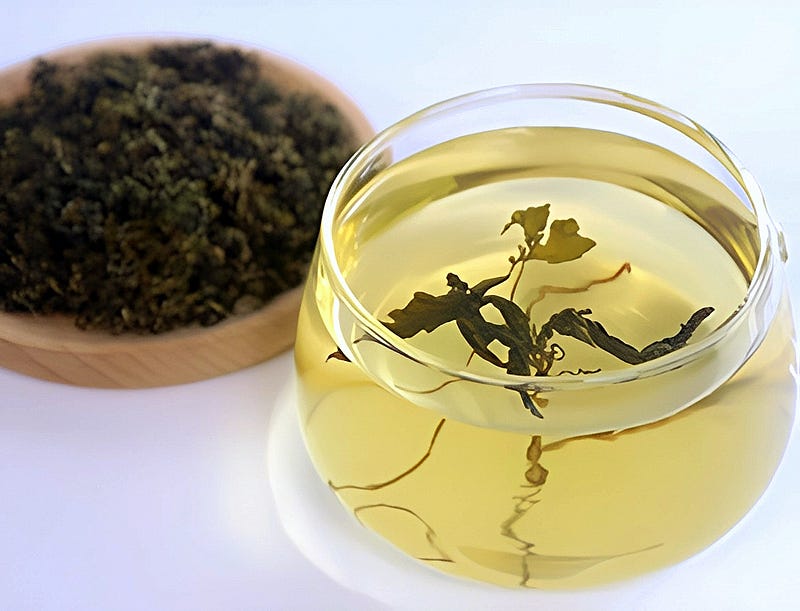
Fresh Jiaogulan leaves offer a faintly bitter start, followed by a lingering sweetness that builds on the tongue. The flavor profile is herbaceous and slightly licorice-like, with an aroma reminiscent of green tea crossed with fresh hay. When brewed, the infusion is golden-green, smooth in mouthfeel, and balanced in complexity — bitterness quickly giving way to a honeyed finish. Texture is delicate when eaten raw in salads or lightly sautéed, with a subtle cooling chemesthetic effect that refreshes the palate. In local cuisines, leaves are steeped as tea, incorporated into soups, or blended with other herbs to balance flavors. Nutritionally, Jiaogulan is rich in antioxidants, amino acids, and saponins, which contribute to its adaptogenic reputation and cardiovascular benefits.
Wine Pairings
Pairing wine with Jiaogulan tea or leaf-based dishes requires nuance, as its bitterness-sweetness spectrum demands balance rather than dominance.
- Grüner Veltliner from Austria: Its peppery brightness and crisp acidity echo the herbal top notes while cutting through bitterness.
- Verdejo from Spain’s Rueda region: Citrus, fennel, and almond undertones harmonize with Jiaogulan’s sweet aftertaste, enhancing complexity.
- Petit Manseng from southwest France: Semi-sweet versions complement the lingering honey finish of the herb, creating a resonant harmony.
- Assyrtiko from Santorini: Its mineral-driven profile grounds the herbal character, especially in broth-based preparations.
- Savagnin from Jura: Nutty, oxidative notes contrast and elevate Jiaogulan’s cooling chemesthesis, offering depth and intrigue.
Conclusion
Jiaogulan is more than a curiosity; it is a living emblem of how traditional plants carry ecological, culinary, and cultural significance into modern markets. Its blend of resilience, sustainability, and sensory richness makes it a model for how local biodiversity can nourish both people and ecosystems. As global interest in adaptogenic herbs rises, Jiaogulan’s journey from forest edge to teacup illustrates the enduring connection between plants, people, and place.