The Immortal Vine: Unveiling Jiaogulan, Asia’s “Herb of Longevity”
Jiaogulan is more than a plant; it’s a cultural emblem of resilience, blending tradition and modern wellness. From mountain brews to global shops, it symbolizes balance and longevity, each cup carrying centuries of heritage and a hint of the future.
Introduction
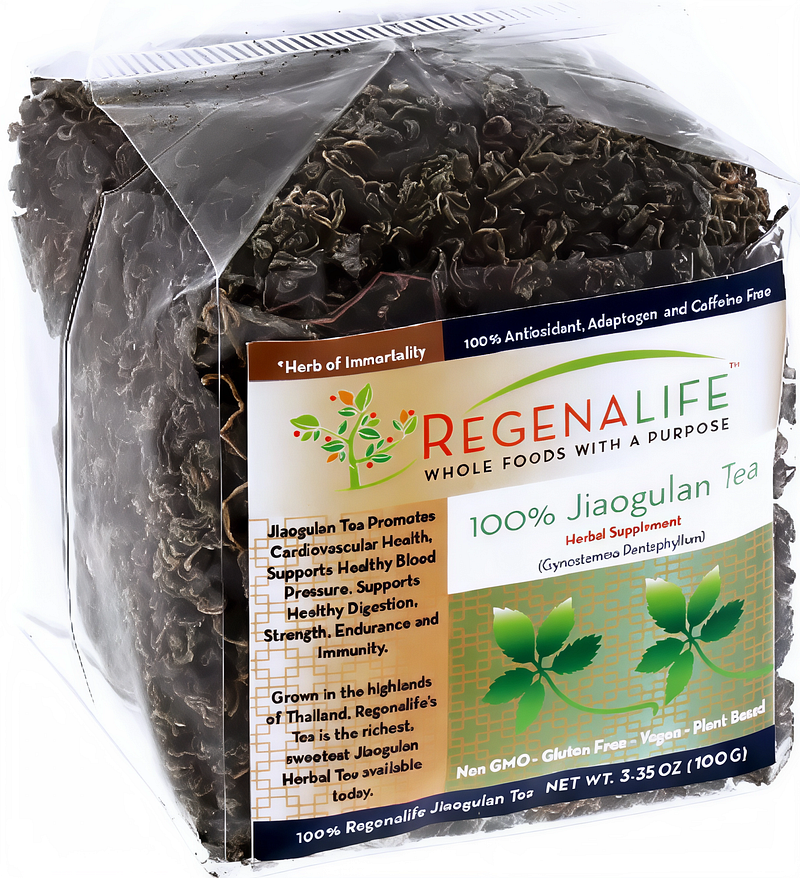
Hidden in the misty highlands of southern China and northern Thailand, a humble climbing vine winds its way across trellises and forest edges. Known to local villagers as jiaogulan (pronounced jee-ow-goo-LAHN) and to scientists as Gynostemma pentaphyllum, this plant carries an almost mythical reputation. For centuries, it has been cherished as the “southern ginseng,” a tonic of resilience and vitality. Its legacy is part botany, part folklore, and part modern science — a rare convergence that makes jiaogulan a bridge between tradition and contemporary wellness.
Taxonomy
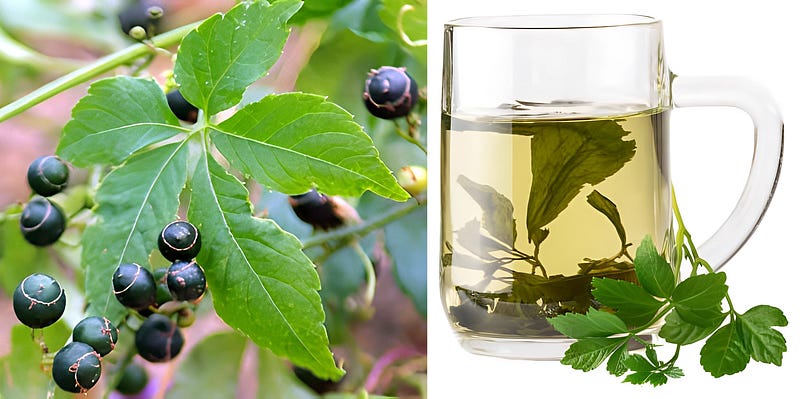
Jiaogulan belongs to the family Cucurbitaceae, the same clan that produces cucumbers, melons, and gourds. Its genus, Gynostemma, encompasses roughly 17 species, but Gynostemma pentaphyllum stands out as the most widely studied and used. The plant’s name itself reflects its unique identity: “pentaphyllum” references its five leaflets, which fan out in a delicate star. Common names are as diverse as its cultural roots — immortality herb, sweet tea vine, southern ginseng, and miracle grass. Unlike ginseng (Panax ginseng), it is not a root tonic but a leafy vine, signaling its divergence in both biology and taste.
Biology
This perennial climbing vine grows with a graceful tenacity. Its stems, slender yet strong, may reach lengths of up to 26 ft (8 m), twining around supports with eager persistence. Its leaves — typically five leaflets, though sometimes seven — shine with a vibrant green gloss. In summer, small greenish-white flowers emerge, followed by modest black berries. Jiaogulan is dioecious, meaning individual plants are either male or female, requiring both sexes for fruiting. What makes it remarkable is its arsenal of gypenosides, saponins structurally similar to those found in ginseng, fueling its reputation as a medicinal powerhouse.
Ecology
Jiaogulan thrives in subtropical and temperate zones, favoring altitudes of 1,600–5,200 ft (500–1,600 m). It grows in rich soils along mountain slopes and forest edges, weaving into ecosystems as both a ground cover and a climbing vine. Beyond its human uses, it provides modest shelter for insects and small wildlife. Wild populations are increasingly pressured by overharvesting, though cultivation in small farms and home gardens has become common in China, Vietnam, and Thailand. Its sustainability hinges on managed harvesting — plucking leaves without uprooting plants ensures regeneration and longevity.

Uses
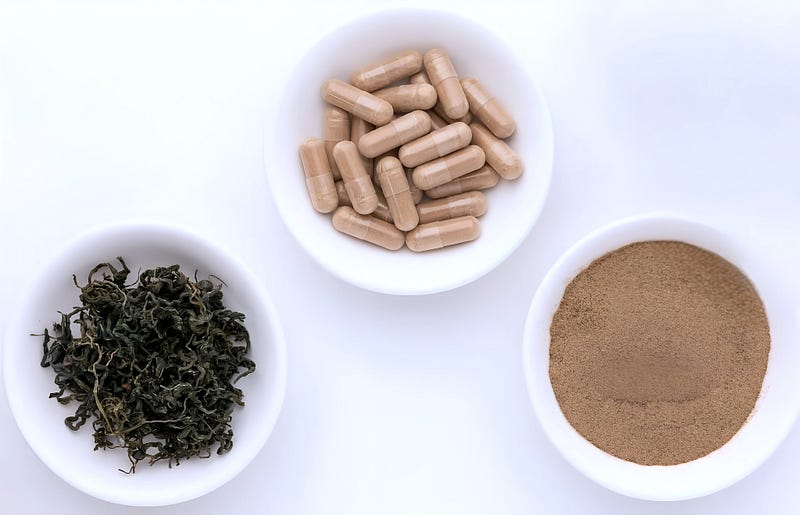
Economically, jiaogulan has become an herbal commodity, exported globally as tea, capsules, and extracts. In Asian villages, its leaves are gathered fresh, steeped in hot water to make a naturally sweet, slightly bitter tisane. Its sustainability profile is favorable: unlike root-based tonics such as ginseng, harvesting the leaves allows the vine to regenerate continuously, reducing ecological strain. In wellness markets, it is branded as an adaptogen — supporting balance and resilience in the body, particularly for stress and cardiovascular health.
Culinary Aspects
Culinarily, jiaogulan is most famous as a tea, but its potential extends further. Fresh leaves can be tossed into salads, lending a faintly bittersweet herbal note. When brewed, the infusion tastes delicately sweet at first sip, followed by a subtle bitterness that lingers — an elegant reminder of its medicinal backbone. In traditional Chinese medicine, villagers would often drink it daily, believing it promoted long life, a belief tied to reports of unusually high longevity in regions where it was consumed regularly. Nutritionally, the leaves provide antioxidants, trace minerals, and saponins linked to cholesterol regulation.
Wine Pairings
Pairing wine with jiaogulan may seem unconventional, yet its taste profile allows intriguing harmonies. A light Riesling, with its crisp acidity and touch of residual sugar, balances the herb’s bittersweet infusion. Alternatively, a sparkling Prosecco complements its freshness, while a Sauvignon Blanc — bright and grassy — mirrors its vegetal undertones. For a more contemplative pairing, a chilled sake or dry Gewürztraminer accentuates its floral and earthy layers, creating an elegant fusion of East and West.
Conclusion
Jiaogulan is more than a plant — it is a cultural emblem, a sustainable crop, and a testament to the ways tradition and modern science intertwine. From mountain villages where it is brewed daily to urban wellness shops across the globe, it embodies humanity’s search for resilience and longevity. Its story is one of survival, sweetness, and balance — a living metaphor for the very health it promises. To sip its tea is to taste centuries of heritage, with a hint of the future steeped in every cup.