The Little Auk: Arctic Jewel of Air, Ice, and Tradition
Introduction Among the vast flocks that darken the northern skies each summer, the Little Auk (Alle alle) — also called the Dovekie —…
Introduction
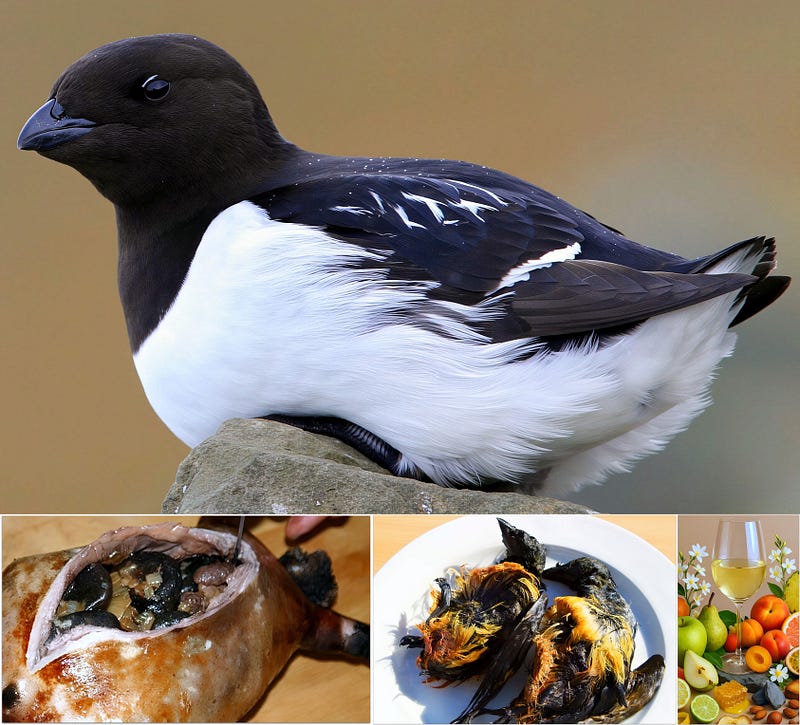
Among the vast flocks that darken the northern skies each summer, the Little Auk (Alle alle) — also called the Dovekie — commands quiet reverence. These compact seabirds, no larger than a man’s hand at about 19 cm (7.5 in) in length and weighing roughly 150 g (5.3 oz), embody the fierce resilience of Arctic life. To the Inuit, Norwegians, and Greenlanders, this bird has long symbolized endurance in a frozen world, sustaining both body and culture across centuries. Its story bridges ornithology, ecology, and culinary heritage — an enduring dialogue between humans and the high latitudes.
Taxonomy
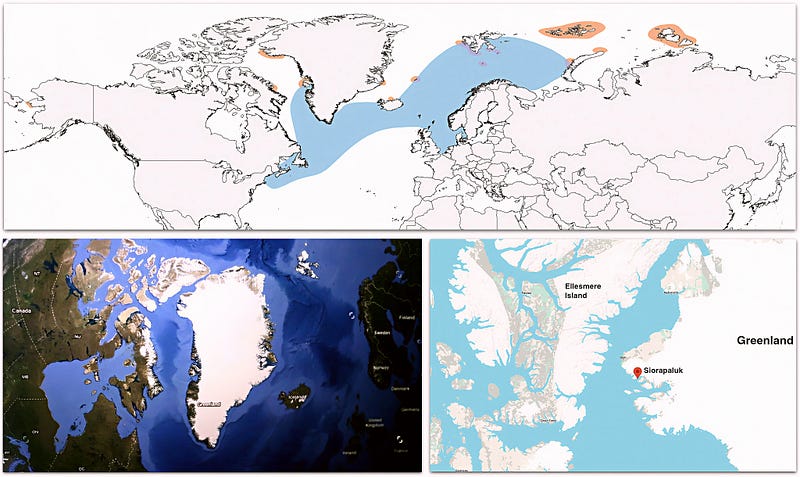
The Little Auk belongs to the family Alcidae, order Charadriiformes, the same group that includes puffins, guillemots, and murres. Its scientific name, Alle alle, is a tautonym — a linguistic reflection of its singular identity within the genus Alle. Two subspecies are recognized: A. a. alle, widespread from Greenland to Franz Josef Land, and A. a. polaris, adapted to higher Arctic zones such as Svalbard. Common names reflect cultural geography. In Greenlandic, it is “Appa,” in Norwegian “Lomvi dverg,” and in Russian “Kaira malen’kaya.” English speakers call it “Little Auk” or “Dovekie.” Each name carries an echo of its environment — short, clipped, and cold, like the wind it rides.
Biology
The Little Auk’s biology is a masterclass in adaptation. Its dense plumage traps heat, allowing it to thrive in temperatures that plunge below 0°C (32°F). Its wings, built for both flight and underwater propulsion, beat rapidly at up to 400 strokes per minute. It dives to depths approaching 30 m (98 ft) to chase copepods and small crustaceans, using its short wings as flippers in an underwater ballet. Breeding occurs on rocky Arctic slopes, where pairs nest in crevices. The female lays one egg per season, weighing about 23 g (0.8 oz). Both parents incubate it for roughly 29 days before the chick emerges, cloaked in insulating down. Lifespans average 15–20 years, a testament to evolutionary precision in the face of brutal climates.
Ecology
The Little Auk is a cornerstone species in Arctic ecosystems. Vast colonies numbering in the millions recycle nutrients between sea and land through guano deposition, enriching tundra soils with nitrogen and phosphorus. This fertilization sustains mosses and vascular plants, indirectly supporting reindeer, lemmings, and predators such as Arctic foxes. The species also functions as a climate indicator. Shifts in sea ice and zooplankton composition directly affect its foraging success, making population trends a biological barometer for Arctic change. Sustainable monitoring in Greenland and Svalbard ensures that traditional harvesting remains balanced with conservation priorities. The IUCN currently lists Alle alle as Least Concern, though climate-driven ecosystem disruptions pose a mounting threat.
Uses
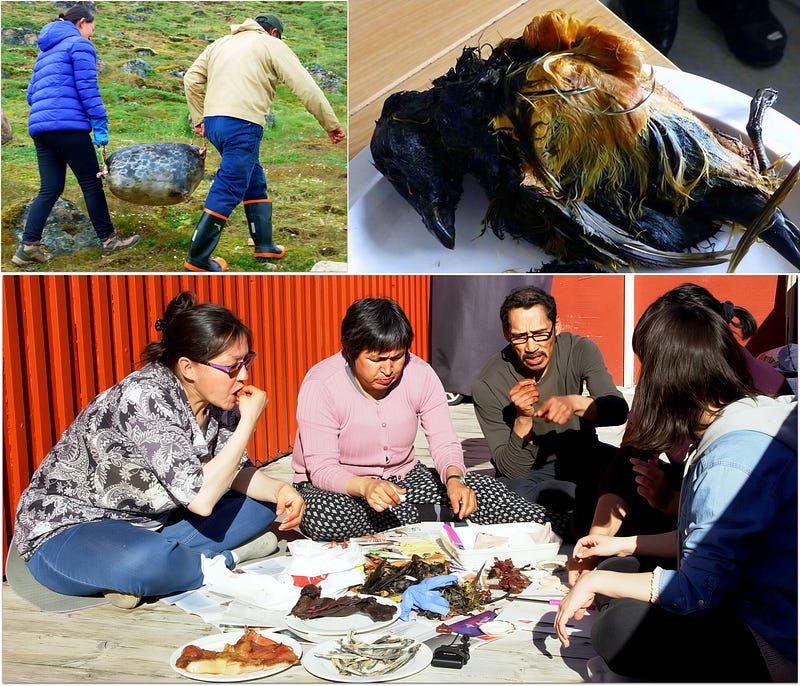
Historically, Arctic communities harvested Little Auks for food, oil, and feathers. Edible parts include the breast, thighs, and liver. Traditional preparation forms include roasting, drying, and fermenting. A famed Greenlandic delicacy, kiviaq, involves fermenting hundreds of whole Little Auks inside a sealskin, sealed with fat, and left under stones for several months at temperatures near 5°C (41°F). The result is a potent, cheese-like flavor with intense umami depth and marine salinity.

Seasonal availability peaks from late summer through early autumn, aligning with molting and migration. Nutritional analysis shows high protein content (about 25 g per 100 g serving) and a caloric value near 200 kcal per 100 g, with dense omega-3 fatty acids — key for cardiovascular and neural health. Modern food safety frameworks now regulate harvest limits and preservation standards, balancing cultural continuity with wildlife protection. Feathers are still used for local crafts, and oils once used as lamp fuel have found niche cosmetic applications for their lipid richness. In carbon accounting, Little Auk colonies contribute indirectly to sequestration by fertilizing tundra vegetation that locks carbon in permafrost soils.
Culinary Aspects
Culinarily, the Little Auk offers a paradox: delicate flesh beneath a life hardened by ice. The meat is dark, aromatic, and mineral-rich, with a flavor often compared to duck crossed with anchovy. Its texture is lean but supple, firming slightly when roasted at 180°C (356°F) for 25 minutes (or 77°F internal temperature for safety). When dried or fermented, the flavor deepens into an earthy musk with briny undertones. Aroma carries notes of kelp and iron, with subtle gamey sweetness. The mouthfeel is compact and oily, coating the palate with marine fat. In traditional contexts, it is served raw, fermented, or briefly seared over seal oil flames. Modern reinterpretations by Nordic chefs pair it with fermented berries, rye crumbs, and sea herbs, echoing its Arctic terroir while aligning with sustainable gastronomy trends.
Wine Pairings
Pairing wine with Little Auk requires balancing salt, oil, and umami. A crisp Assyrtiko from Santorini offers piercing acidity to cut the richness of fermented preparations. For roasted or smoked presentations, a Jura Savagnin — oxidative, nutty, and saline — mirrors the Arctic mineral spectrum. A cool-climate Zweigelt from Austria complements the dark meat’s iron notes without overwhelming it. When served as kiviaq, an off-dry Riesling from the Mosel provides a counterpoint of sweetness and acidity that tames the pungency. For avant-garde pairings, a dry sherry such as Manzanilla aligns beautifully with both sea essence and aged complexity.

Conclusion
The Little Auk stands as a symbol of endurance at the edges of habitability. Its ecological function, cultural resonance, and culinary significance intertwine across centuries of Arctic life. In an era of melting ice and disrupted food webs, honoring this bird means recognizing the fragile equilibrium between tradition and conservation. The Alle alle teaches an enduring lesson: resilience, when paired with respect, can sustain both nature and culture across the world’s coldest frontiers.