
The Mindful Game: Psychology and Philosophy in Go
The psychology of Go, known as Weiqi in Chinese, reaches far beyond the mechanics of placing stones on a grid. It is a profound mental…
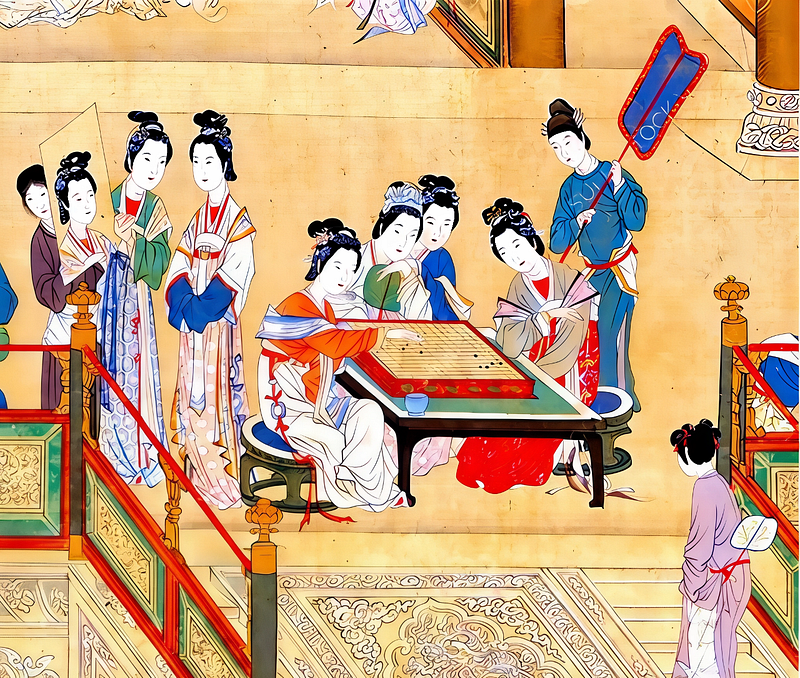
The psychology of Go, known as Weiqi in Chinese, reaches far beyond the mechanics of placing stones on a grid. It is a profound mental engagement that challenges and reveals the deepest facets of human cognition and character. The game demands a unique synthesis of intense calculation and intuitive pattern recognition. Masters do not merely compute variations but learn to read the board through a cultivated sense of shape, developed over years of practice. This mental library allows them to assess complex positions with a glance, sensing strength, weakness, and potential in a way that feels almost instinctual.
Beneath this cognitive surface lies a constant emotional struggle. The board acts as a mirror, reflecting a player’s inner state. A critical psychological battle involves the attachment to one’s own stones. The desire to save a group that has cost significant effort, a manifestation of the sunk cost fallacy, can lead to catastrophic stubbornness and the loss of an entire game. True strength often lies in the humility to sacrifice and let go. Similarly, the frustration of a single mistake can trigger a cascade of poor decisions, a state of tilt where emotion overrules reason. Managing this internal pressure, especially under tournament time constraints, is a skill as vital as any strategic concept.
The very structure of the game enforces a form of psychological warfare. The concept of sente, or the initiative, is not merely a strategic goal but a tool for imposing a psychological burden. The player forcing their opponent into a series of passive responses controls the rhythm and tempo of the game, often creating a sense of oppression and increasing the likelihood of an error. This mental duel is continuous, a silent conversation where each move carries not just strategic intent but also psychological weight.
The journey to mastery in Go is inherently a journey of personal development. It is a discipline built upon a foundation of constant failure and resilience, as players lose nearly half of all their games. This repeated confrontation with one’s own limitations demands a mindset that views each loss not as a defeat but as the most valuable lesson available. The process of improvement requires deliberate and often tedious practice, solving life-and-death problems, and reviewing past games to uncover blind spots. This path gradually erodes the overconfidence of a beginner, replacing it with a deep respect for the game’s complexity and an understanding of how much remains to be learned.
Ultimately, the philosophy of Go is intertwined with its psychology. The game teaches principles of balance between territory and influence, attack and defense, mirroring the Taoist concept of yin and yang. It encourages a perspective that values the whole over its parts, teaching players to sacrifice small battles to win the war. This fosters a mindset of non-attachment and strategic patience. In the end, the most formidable opponent one faces in the game is never truly the person across the board; it is one’s own cognitive biases, emotional triggers, and ego. The silent, stone-by-stone confrontation is a lifelong practice in mastering them.