The Philosophy of Humor of Charlie Sheen
Charlie Sheen’s philosophy of humor is a chaotic yet calculated fusion of unapologetic self-mythologizing, media manipulation, and the…

Charlie Sheen’s philosophy of humor is a chaotic yet calculated fusion of unapologetic self-mythologizing, media manipulation, and the deliberate blurring of personal turmoil and public performance. His approach transformed personal crisis into a spectacle, leveraging viral moments and cultural fascination to craft a comedic persona that thrived on shock value and absurdist grandiosity. At its core, Sheen’s humor weaponized his real-life scandals — drug use, public meltdowns, and professional implosions — as raw material for a performance art project where authenticity became indistinguishable from caricature.
Central to this philosophy is the “winning” paradox, a self-aware embrace of delusion that mocked celebrity narcissism while reveling in it. Phrases like “I have tiger blood” and “I’m a total bitchin’ rock star from Mars” exemplified his satirical take on fame, turning his unraveling into a live commentary on Hollywood excess. This wasn’t merely ranting; it was a strategic amplification of his brand, where every interview, tweet, or public appearance functioned as a meta-joke. As one analysis noted, Sheen hired a “TweetMaster” to curate hashtags like #TigerBlood and #Winning, ensuring his most outlandish declarations became viral memes. He understood that audiences craved the spectacle of his “drug-induced” persona, once quipping, “I am on a drug. It’s called Charlie Sheen. It’s not available. If you try it once, you will die. Your face will melt off and your children will weep over your exploded body.”
His humor also relied on radical self-acceptance as both armor and punchline. During his 2011 Comedy Central roast, he preempted critics by mocking his failures: “I tried marriage. I’m 0 for 3 with the marriage thing. So, being a ballplayer — I believe in numbers. I’m not going 0 for 4. I’m not wearing a golden sombrero.” This defiant ownership of his flaws — gambling, substance abuse, relationship implosions — allowed him to disarm ridicule by embedding it in his persona. Yet beneath the bravado lay a keen awareness of performance dynamics. While his scripted work on Two and a Half Men showcased polished timing and character depth, his unscripted ventures, like the disastrous “My Violent Torpedo of Truth” tour, exposed the limits of his philosophy: without structure, raw chaos often alienated audiences. As one observer noted, Sheen’s stand-up lacked the “saves” professionals use to recover failed jokes, revealing that his brand of humor required an audience complicit in the illusion.
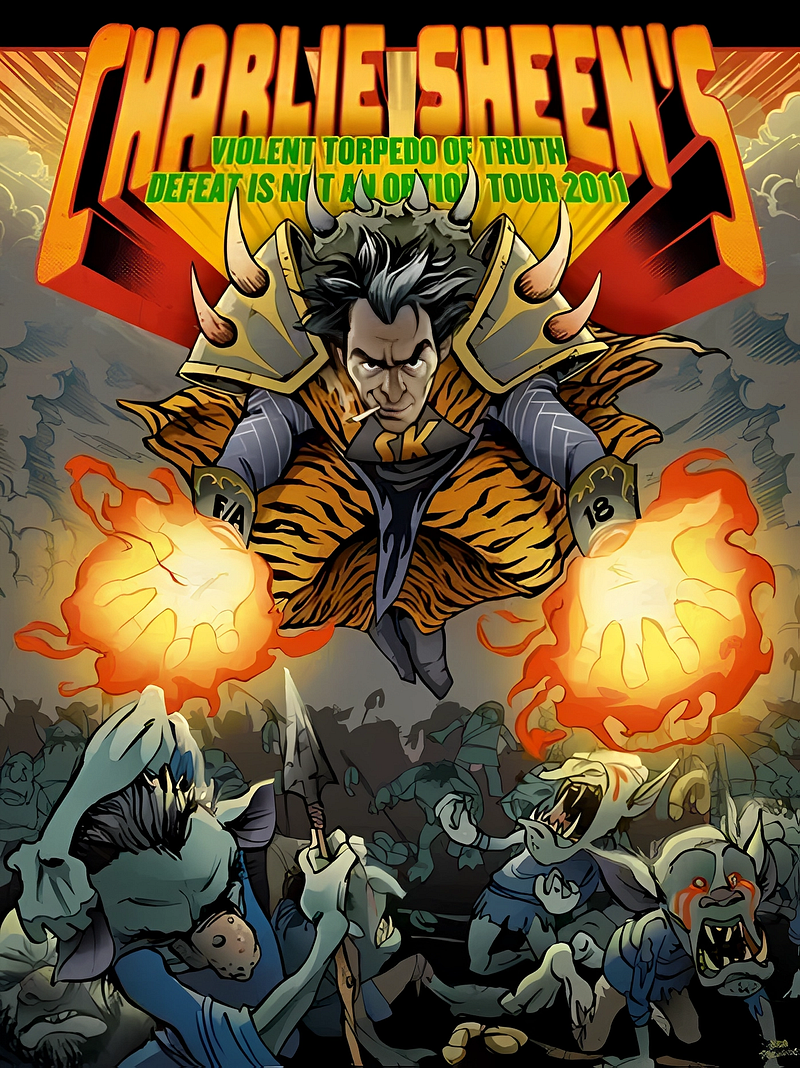
Ultimately, Sheen’s comedic strategy exploited the media’s obsession with celebrity train wrecks, turning his downfall into interactive theater. He framed his meltdowns as a rebellion against “trolls” and “mainstream heretics,” casting himself as a warlock battling conformity. In doing so, he exposed the mechanics of fame — where pain becomes content, and self-destruction fuels entertainment. His legacy is a hall of mirrors: a performance about performance, a joke about the joke of celebrity, and a cautionary tale about the cost of living the bit.