The Ruddy Duck: A Pint-Sized Icon of Resilience and Flavor
Introduction
Introduction
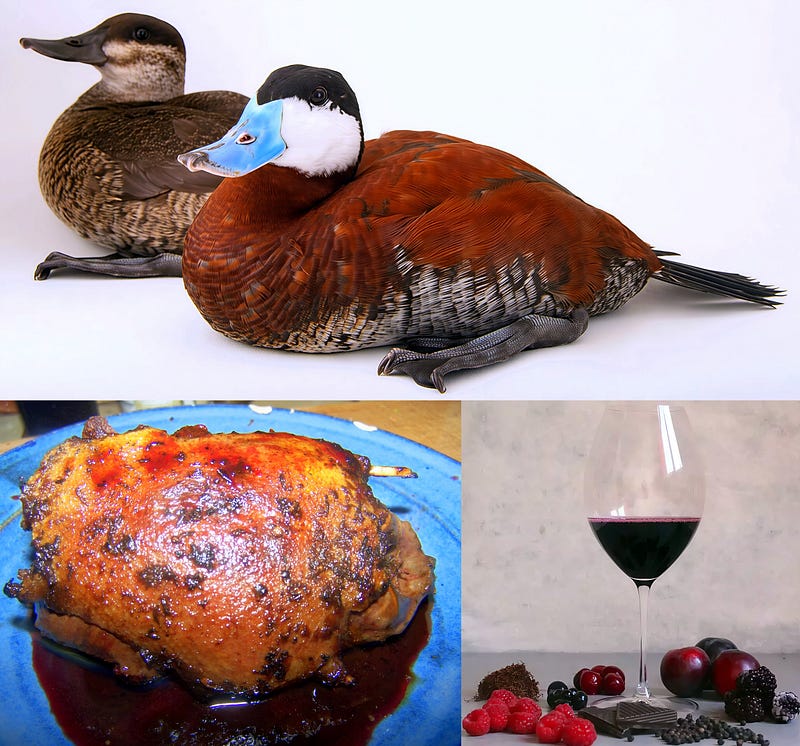
Small, compact, and perpetually underestimated, the ruddy duck (Oxyura jamaicensis) is a bird that punches above its weight in both ecological and cultural narratives. With its bright chestnut body, stiff tail held upright like a flag, and that startlingly blue bill in males during breeding season, it seems designed to defy subtlety. But this species is more than just flamboyant plumage on water. It embodies resilience, adaptability, and an uneasy relationship with human appetites. From marshes across the Americas to European wetlands where it has become a controversial invader, the ruddy duck occupies a space where natural beauty, human taste, and sustainability collide.
Taxonomy
The ruddy duck belongs to the family Anatidae, the vast clan of ducks, geese, and swans. Its genus, Oxyura, encompasses the stiff-tailed ducks — compact diving birds with paddle-like feet placed far back on their bodies, giving them awkward waddles but impressive underwater maneuverability. The species Oxyura jamaicensis is native to North and South America. Within this species, the subspecies O. j. andina once roamed the Andes but is now considered extinct. Other close relatives, like the white-headed duck (Oxyura leucocephala), complicate conservation efforts due to interbreeding.
Common names abound: “stiff-tail,” “butterball,” and in Spanish-speaking regions, “pato zambullidor,” or “diving duck.” These nicknames capture both its physical quirks and its culinary history.
Biology
Ruddy ducks are diminutive yet striking. Males in breeding plumage wear rich chestnut bodies, black heads, and that powder-blue bill that seems like a child’s paintbox mistake. Females and non-breeding males sport a more muted gray-brown with a dark cap and cheek stripe. Adults typically measure 36–43 cm (14–17 in) in length and weigh about 500–800 g (1.1–1.7 lb).
They are champion divers, capable of staying submerged for up to 30 seconds, propelled by strong legs and lobed feet. Nests are built in dense marsh vegetation, often on floating mats, and the females produce impressively large eggs relative to their body size. These eggs, about 70 mm long (2.75 in), are nearly as big as those of geese, many times their size. The species’ life cycle is built on stealth and strategy: courtship displays involve males striking their chests with their bills to create bubbles in the water, a show equal parts comical and mesmerizing.
Ecology
Native across North America, from Canada to Mexico, and introduced to Europe in the 20th century, ruddy ducks thrive in freshwater marshes, ponds, and shallow lakes. Their stiff tails help them maneuver in dense vegetation where they forage on aquatic invertebrates, seeds, and algae.

In their native range, they play a role in controlling insect larvae populations and serve as prey for raptors and mammals. In Europe, however, their introduction has sparked ecological debates. Interbreeding with the endangered white-headed duck threatens the genetic purity of that species, leading to controversial culling programs. Sustainability here becomes a moral balancing act: preserving one species by reducing another.
Uses
While rarely central to modern economies, ruddy ducks have been hunted for both sport and food. Historically, their dense, flavorful meat made them a sought-after game bird. Their small size, however, limited their large-scale commercial value. In conservation terms, they remain a cautionary tale of species introductions gone wrong, shaping policies on invasive waterfowl. Ecotourism and birdwatching now provide their most sustainable “use,” as birders travel far to see their quirky behavior and dazzling breeding colors.
Culinary Aspects
When consumed, the ruddy duck has been described as having a dark, robust flavor, closer to wild goose than domestic duck. The taste profile is earthy and gamey, with a rich aroma that reflects its diet of aquatic plants and insects. The texture tends toward firm, with a mouthfeel more muscular than tender. Properly prepared, the balance leans toward complexity rather than delicacy, offering a lingering aftertaste that pairs well with slow-cooked methods.
Appearance on the plate reveals deep, almost mahogany meat, often finished with crisped skin. Traditional cooking methods involved roasting or braising, sometimes with herbs like sage or juniper berries to temper their intensity. Nutritionally, the meat provides high-quality protein and iron, though modern sustainability concerns advise against culinary exploration outside managed hunting.
Wine Pairings
For those who historically enjoyed ruddy duck as table fare, bold red wines offered the best complement. A Syrah or Shiraz, with its peppery undertones and smoky depth, would match the richness of the bird. Alternatively, a Pinot Noir, lighter yet still earthy, could balance the gaminess without overpowering it. In South America, where waterfowl stews sometimes included similar species, Malbec’s dark fruit character offered harmony. If preparing with fruit-based sauces, a full-bodied Zinfandel provided both contrast and resonance.
Conclusion
The ruddy duck is both a spectacle and a paradox: dazzling in appearance, yet awkward in motion; resilient in its native wetlands, yet problematic abroad; once prized at the table, now more often treasured through binoculars. Its story reminds us that beauty and complexity often come in small, unexpected packages. It also underscores the challenge of balancing human desires — whether culinary, economic, or aesthetic — with ecological stewardship. The ruddy duck may not command headlines, but it continues to spark questions about how we share space, taste, and responsibility with the wild world.