The Second Amendment Reckoning: From a Right to Bear Arms to a Duty to Ensure Domestic Tranquility
A well regulated Militia, being necessary to the security of a free State, the right of the people to keep and bear Arms, shall not be…
A well regulated Militia, being necessary to the security of a free State, the right of the people to keep and bear Arms, shall not be infringed.
The debate surrounding the Second Amendment to the United States Constitution is often a cacophony of modern political certitudes, a battle of soundbites that obscures the profound and unsettling original intent of the Framers. To excavate the meaning of this provision is to journey back to a world shaped by the recent revolution and a deep-seated philosophical fear of consolidated power. The amendment’s twenty-seven words were not penned with an eye toward individual self-defense against common crime or the preservation of a hunting culture. Rather, they were a deliberate, radical, and necessary structural mechanism embedded within the constitutional framework to permanently alter the relationship between the citizen, the government, and the instruments of force. The original intent was singular and profound: to secure the right of the people to maintain a well-regulated militia as the ultimate bulwark against both foreign and domestic governmental tyranny.
The intellectual architecture of the Second Amendment is built upon two interrelated pillars: a profound mistrust of standing armies and a robust conception of popular sovereignty. The generation that ratified the Constitution had just fought a war against a standing army employed by a distant, unresponsive sovereign. To them, a permanent national military under the direct control of the central state was the hallmark of despotism. The citizen militia, by contrast, was envisioned as the legitimate military force of a free republic. Composed of the body of the people — armed with their own private arms and mustered under officers they often elected — the militia was the antithesis of a professional army. It was the people in their martial capacity. The right to keep and bear arms was thus inextricably linked to this civic duty. The arms in question were not for personal recreation or solely for repelling burglars; they were the tools required for the people to fulfill their ultimate political function as the nation’s guarantors of liberty.
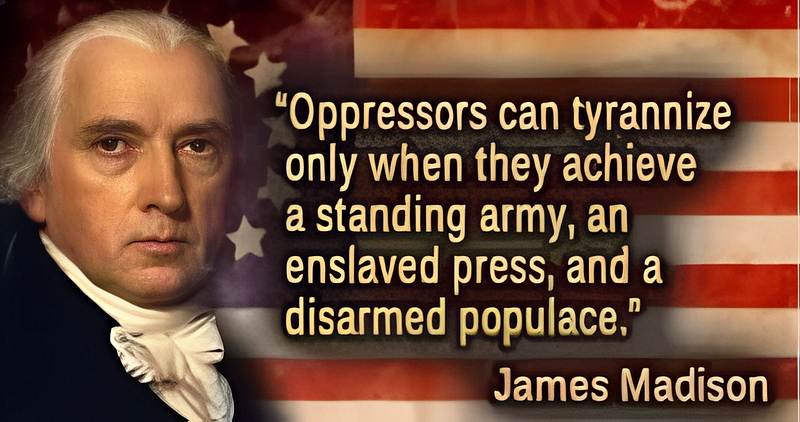
This conception flows directly from the Lockean ideal of the social compact, wherein the people never surrender their ultimate right to alter or abolish a government that becomes destructive of their rights. The Second Amendment operationalizes this right. It ensures that the people, as the final repository of political power, retain a check on the government’s monopoly of violence. James Madison, in Federalist №46, contrasted the immense but ultimately fragile power of a federal army with the formidable prospect of “a militia amounting to near half a million of citizens with arms in their hands.” The amendment was a failsafe, an unblinking sentinel against the potential decay of the republic into autocracy. The fear was not of crime in the streets, but of the state itself. The right was collective in its purpose, though it was exercisable by individuals who would supply their own arms — arms that were the common military equipment of the day.
Applying this original intent to the contemporary crisis of gun violence necessitates a difficult and provocative reconciliation. The Founders’ solution to the problem of state tyranny was to diffuse military-capable power among the populace widely. The tragic, unforeseen consequence is that this very diffusion now facilitates the daily tyranny of random violence and mass murder. The weapons that once served as a check on state power now empower individuals to wield unchecked power over their fellow citizens in schools, supermarkets, and public squares. This creates a fundamental tension: the very instrument chosen to prevent one form of tyranny now enables another.
Therefore, a truly originalist approach to managing gun violence today would not focus on a narrow, abistorical reading of a personal right to any arms, divorced from its civic purpose. Instead, it would engage with the amendment’s prefatory clause concerning a “well-regulated militia.” The original intent was never to create an armed society answerable to no one, but a regulated one, organized for the common defense. The concept of regulation was inherent to the right itself. This opens a significant constitutional avenue for modern policy. If the core of the right is tied to the preservation of liberty through a well-regulated citizen force, then the state possesses a compelling interest — indeed, a duty — to ensure that the proliferation of arms serves, rather than undermines, public safety and domestic tranquility.
This could legitimize a spectrum of regulations that would be consistent with the Founders’ framework. Universal background checks, safe storage laws, and training requirements mirror the musters, readiness, and discipline expected of the eighteenth-century militia. Regulations on weapons that serve no purpose but mass casualty events — weapons that far exceed the common military arms of the Founders’ era in their destructive capacity — could be seen not as an infringement on a personal right, but as a necessary modern “regulation” to ensure the security of a free State. The original intent of the Second Amendment was to prevent the concentration of power that leads to oppression. That same principle can be invoked to argue for reasonable restraints on the instruments of power that currently oppress the American people through a relentless tide of violence. The sentinel must not stand idly by while the republic it was designed to protect bleeds from within.
The Framework for Firearm Responsibility Amendment
The task of drafting a successor amendment requires a delicate balance: it must respect the foundational principles of the original text while explicitly addressing the realities of the 21st century and the failures of the current interpretive paradigm. Such an amendment would not seek to erase the Second Amendment but to refine and redefine its scope in light of modern circumstances, reasserting the Framers’ core concern for public safety and a well-regulated society.
Here is a conceptual draft and explanation of what such an amendment might entail:
The Civic Safety and Security Amendment
Section 1. The security of a free State being dependent upon the safety of its people and the responsible exercise of rights, the right of the people to keep and bear arms shall not be construed to preclude the authority of Congress and the several States to enact comprehensive regulations governing the manufacture, sale, ownership, and use of arms.
Section 2. In exercising this authority, the Congress and the States may consider the nature and capability of any arm, its suitability for legitimate purposes of self-defense, recreation, and civic duty, and its potential to endanger public safety if misused.
Section 3. The right to keep and bear arms shall be tied to civic responsibility. The Congress and the States may therefore establish standards for training, safe storage, liability, and registration to ensure that the exercise of this right does not infringe upon the right of the people to life, liberty, and the pursuit of happiness, free from fear of gun violence.
Section 4. This article shall not be interpreted to authorize the prohibition of categories of arms commonly and traditionally used for lawful purposes, nor to infringe upon the right of individuals to use arms for self-defense within their homes.
Scholarly Explanation of the Draft Amendment
This proposed amendment, which we might title the “Civic Safety and Security Amendment,” is designed not to repeal but to complete the Second Amendment. It addresses its ambiguities and silences by embedding the individual right within an explicit framework of civic responsibility and state regulatory power, thereby reconciling the eighteenth-century text with twenty-first-century necessities.
Section 1 establishes the new foundational principle: the “security of a free State” is inextricably linked to the physical safety of its citizens. It explicitly rejects the modern judicial doctrine that has often treated the Second Amendment as a near-absolute right that preempts meaningful regulation. By affirming the “authority” of federal and state governments to enact “comprehensive regulations,” it clarifies a power that many Framers assumed was inherent but which has been severely circumscribed by contemporary jurisprudence. This section shifts the interpretive lens from a negative right restricting government to a positive grant of power to govern in the interest of public safety.
Section 2 provides a rational standard for regulation, moving away from historical analogies that are ill-suited to modern weapons. It invites legislators to conduct a functional analysis of firearms based on their “nature and capability.” This allows for regulations focused on the most dangerous weapons — those designed for maximum lethal efficiency in military contexts — while protecting access to those “commonly and traditionally used” for the legitimate purposes outlined in Section 4. It creates a constitutional basis for a modern “suitability” test, akin to the original intent of “well-regulated.”
Section 3 is the heart of the amendment’s philosophical shift, explicitly tethering the right to “civic responsibility.” It constitutionalizes the concept that rights entail duties. By authorizing standards for training, safe storage, and registration, it mirrors the Founders’ expectation of a disciplined and organized militia. In the modern context, the “militia” is the body of responsible, trained citizens. This section acknowledges that the unchecked proliferation of arms without responsibility has infringed upon the most fundamental rights of others — the rights to life and personal security — and empowers the government to correct this imbalance.
Finally, Section 4 acts as a limiting principle to assuage concerns of an outright prohibition. It guarantees that the amendment cannot be used to ban entire categories of firearms that have an established history of lawful civilian use (e.g., typical handguns and rifles used for hunting and sport). It also explicitly protects the core self-defense right within the home, which aligns with the most cherished aspect of the individual-rights interpretation.
In essence, this amendment would provide the clear constitutional language needed to break the political and judicial impasse on gun violence. It empowers legislatures to craft nuanced, evidence-based policies tailored to different weapons and contexts, from universal background checks and red flag laws to restrictions on weapons of war. It fulfills the original intent of the Second Amendment by creating a framework for a truly “well-regulated” society, where the right to bear arms is balanced by the paramount right to live free from violence.
The Imperative of Co-Governance: Enforcing the Civic Framework
A constitution, no matter how brilliantly conceived, remains a parchment promise without robust mechanisms for its enforcement. The proposed Civic Safety and Security Amendment, by design, establishes a framework of principles and delegated authorities. Its efficacy, however, is wholly dependent on a system of co-governance — a diffusion of enforcement responsibility across multiple branches and levels of government. The amendment itself does not create a new federal police force to confiscate arms or inspect homes; rather, it empowers and indeed obligates existing institutions to act within their traditional spheres, creating a layered defense against violence.
Primary enforcement authority would rightly reside with the several States, reflecting the amendment’s reaffirmation of federalist principles. State legislatures, being closest to the unique cultural and practical realities of their constituents, would be empowered to craft tailored regulatory regimes within the boundaries set by the amendment. This could range from licensing systems and mandatory training requirements to specific bans on equipment deemed particularly hazardous to public safety. State and local law enforcement agencies would serve as the first line of operational enforcement, integrating these new regulations into their existing duties, from routine traffic stops to community policing initiatives. This localized approach prevents a one-size-fits-all mandate from the federal government and allows for experimentation and adaptation based on what proves most effective in different contexts.
The judicial branch, at both the state and federal levels, would be called upon to perform its quintessential function: adjudication. Courts would become the critical arbiters, interpreting the new amendment’s language — such as “commonly and traditionally used” or “suitability for legitimate purposes” — in specific cases. This would build a body of common law that gives precise meaning to the amendment’s broad principles, ensuring that enforcement does not become arbitrary or capricious. The judiciary would serve as a check, protecting individuals from any state overreach that genuinely infringes upon the protected core of the right, such as the self-defense guarantee within the home.
Finally, the Congress would exercise its authority through its power to tax and spend, and to regulate interstate commerce. It could establish national baseline standards to prevent a patchwork of laws that undermine enforcement in neighboring states, much as it did with the Motor Voter Act. It could condition federal funding on state compliance with certain minimum requirements, such as reporting records to a national background check system. Furthermore, it could enact stringent regulations on the interstate transfer of firearms and the federally licensed manufacturers who produce them, targeting the channels of supply for the most dangerous weapons.
In this model, enforcement is not a singular act but a sustained ecosystem of governance. It leverages the entire structure of American federalism — local, state, and federal — transforming the amendment from a lofty ideal into a working reality. The responsibility is shared, the mechanisms are familiar, and the objective is clear: to balance a contested right with an undeniable and fundamental duty to ensure domestic tranquility.
How does this framework differ from the one currently in place?
The proposed framework represents a fundamental paradigm shift from the current legal and judicial landscape surrounding the Second Amendment. The differences are not merely a matter of degree, but of constitutional structure and first principles.
The current framework, largely shaped by the Supreme Court’s decisions in District of Columbia v. Heller (2008) and McDonald v. City of Chicago (2010), establishes an individual right to keep and bear arms for self-defense, unconnected to service in a militia. This right is treated as a pre-existing, fundamental liberty interest that the government may only infringe upon after clearing a high bar. Judicial scrutiny, often a form of “text, history, and tradition” analysis, is used to assess the constitutionality of any law. This places the judiciary, particularly the Supreme Court, as the primary arbiter of what constitutes a permissible regulation. The burden is on the government to prove that its law is consistent with the nation’s historical tradition of firearm regulation. This has created a restrictive environment where innovative legislative solutions aimed at novel 21st-century problems are often struck down for lacking a precise historical analog from the 18th or 19th centuries.
In stark contrast, the proposed framework inverts this dynamic. It does not deny an individual right but explicitly subordinates it to the government’s affirmative duty and authority to ensure public safety. The key differences are:
- The Burden of Justification Shifts: Under the current framework, the government must justify its regulations. Under the proposed framework, the right itself is conditioned on responsibility, and the government is empowered to define and enforce those conditions. The burden would shift to those challenging a regulation to prove it violates the specific, limited guarantees in the new amendment (e.g., that a weapon is “commonly and traditionally used” and was banned anyway).
- From Judicial to Legislative Primacy: The current system is one of judicial supremacy in Second Amendment matters. The proposed amendment would restore legislative primacy. It explicitly grants Congress and the states the “authority to enact comprehensive regulations,” making them the primary laboratories of policy. The judiciary’s role would change from asking “Is there a historical precedent for this law?” to “Did the legislature act rationally and within the broad boundaries set by the amendment?” This is a profound shift from a historical test to a reasonableness standard.
- From a Negative Right to a Positive Grant of Power: The current Second Amendment is interpreted as a negative right — a restriction on government power. The proposed amendment is structured as a positive grant of power to governments to regulate, alongside a conditional protection of the right. This clarifies a core ambiguity that has plagued the original text and fundamentally alters the starting point for all legal debate.
- Explicit Embrace of Balancing: The current framework often treats the right as a trump card, making it difficult to balance against other societal interests like public safety. The proposed amendment mandates this balancing act. It explicitly ties the right to “civic responsibility” and commands that its exercise must not “infringe upon the right of the people to life, liberty, and the pursuit of happiness, free from fear of gun violence.” This constitutionalizes a utilitarian calculus that is currently absent.
In essence, the current framework is a defensive bulwark against government action. The proposed framework is an enabling document for government action, designed to manage a modern crisis. It seeks to dissolve the judicial logjam by changing the very question the legal system must ask, moving from “Is this regulation historically permitted?” to “Is this regulation a reasonable means of achieving public safety while respecting a defined, limited right?”