The Silver Spear of the Sea: The Garfish (Belone belone)
Introduction
Introduction
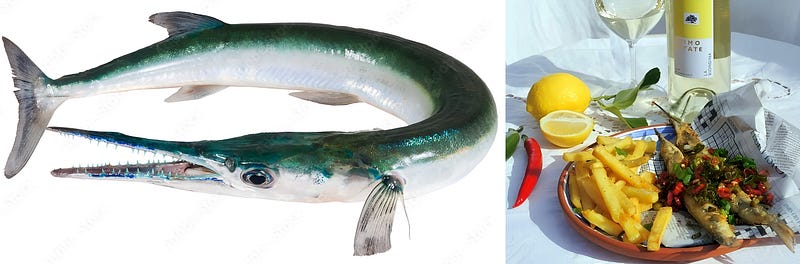
In the gray dawn where ocean meets horizon, the garfish darts like a living spear. With its emerald-green bones and impossibly slender form, Belone belone has long stirred both curiosity and appetite across Europe’s coasts. To fishermen, it is a prize of spring migrations; to gourmets, a subtle delicacy with a taste reminiscent of mackerel and sardine. Yet beneath its culinary allure lies a story of adaptation, ecology, and sustainability — a reminder of how one species can mirror both the beauty and fragility of the seas we depend on.
Taxonomy
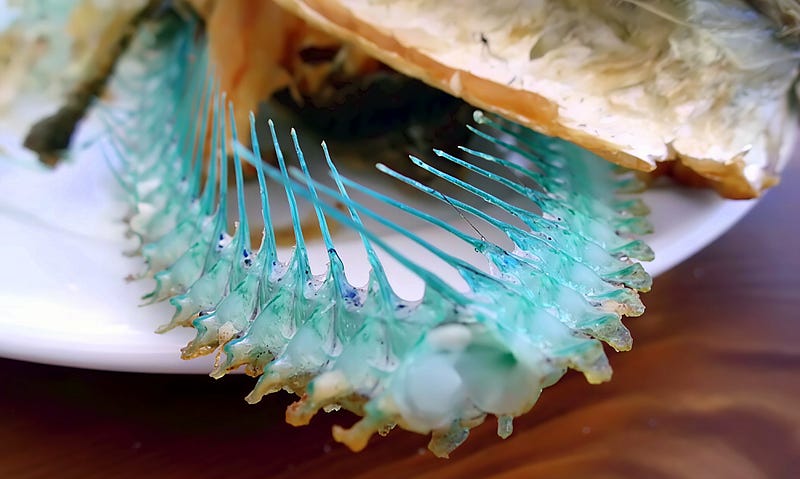
The garfish belongs to the family Belonidae, a group of needlefish recognized for their elongated jaws. Its full classification is: Kingdom Animalia, Phylum Chordata, Class Actinopterygii, Order Beloniformes, Family Belonidae, Genus Belone (pronounced buh-LOH-nee), Species Belone belone. Common names abound, from “needlefish” to “greenbone” (a reference to its striking green skeleton, a result of biliverdin pigments). Subspecies such as Belone belone belone and Belone belone euxini reveal its wide distribution across the Atlantic Ocean, Mediterranean Sea, and Black Sea.

Biology
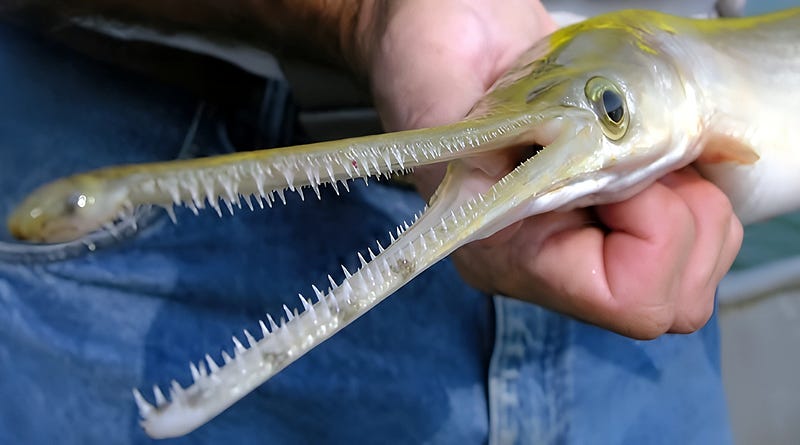
At first glance, the garfish appears improbable, almost architectural: a body so narrow it seems designed by a draftsman, stretching up to 35 in (90 cm) in length, though more commonly 20 in (50 cm). Its long, beak-like jaws bristle with small, sharp teeth, perfectly evolved for catching smaller fish and crustaceans. Garfish migrate seasonally, often spawning in shallow coastal waters between May and July. Females release adhesive eggs that cling to seaweed and eelgrass, ensuring survival in turbulent nearshore environments. Unlike most fish, its bones gleam green, a quirk of physiology that startles the unprepared diner but is entirely harmless.
Ecology
The garfish is a pelagic wanderer, thriving in temperate and subtropical waters. It swims in schools near the surface, where its slender silhouette renders it nearly invisible to predators below. As a mid-level predator, it plays a vital role in controlling populations of smaller fish and invertebrates, while itself serving as prey for tuna, dolphins, and seabirds. Seasonal runs of garfish have historically supported small-scale fisheries from Ireland to Turkey. Yet, like many marine species, it faces pressures: climate change alters its migratory timing, while overfishing in certain regions threatens population stability. Sustainable practices, such as regulating catch sizes and protecting spawning grounds, remain crucial.
Uses
Economically, garfish is modest compared to cod or tuna, but it holds cultural and regional importance. In the Mediterranean, spring festivals mark its arrival, with garfish grilled over open flames in seaside villages. Northern European fisheries market it fresh or smoked, though its unusual green bones often limit wider commercial acceptance. Still, for niche markets, it carries value — sustainable, locally caught, and often overlooked in favor of more commercialized fish, making it a potential “future food” candidate for shifting global diets.
Culinary Aspects
Despite its odd-colored skeleton, the flesh of garfish is delicate, lean, and richly flavored. Its taste lies somewhere between mackerel and sardine — oily enough to be satisfying, yet subtle enough to lend itself to refinement. In southern Europe, it is grilled whole with olive oil, garlic, and lemon. In northern waters, it appears smoked, where its oils deepen into an earthy savor. Fried garfish fillets, battered lightly, yield crispness outside and succulence within. Nutritionally, garfish is high in omega-3 fatty acids, protein, and essential minerals, making it as healthful as it is flavorful.
Wine Pairings
The garfish’s lean yet flavorful flesh demands wines that balance acidity with freshness. A crisp Albariño from Spain complements grilled preparations with citrusy resonance, while a mineral-driven Muscadet from France echoes the fish’s briny subtleties. For smoked garfish, a light German Riesling offers both sweetness and acidity, cutting through the richness while accentuating delicate aromatics. If fried, a dry sparkling wine, such as a brut Prosecco, refreshes the palate between bites.
Conclusion
The garfish is a paradox: a fish both common and extraordinary, both undervalued and invaluable. With its elegant design, peculiar green bones, and role in coastal ecosystems, it embodies the interwoven narratives of biology, culture, and sustainability. In an era where oceans strain under human demand, perhaps the garfish reminds us to look beyond the obvious giants of the seafood market and embrace the hidden treasures that dart beneath the waves. To savor garfish is to taste not just the sea, but the delicate balance upon which its future rests.