The Splendor of the Peafowl: A Living Jewel of Nature and Culture
Introduction
Introduction
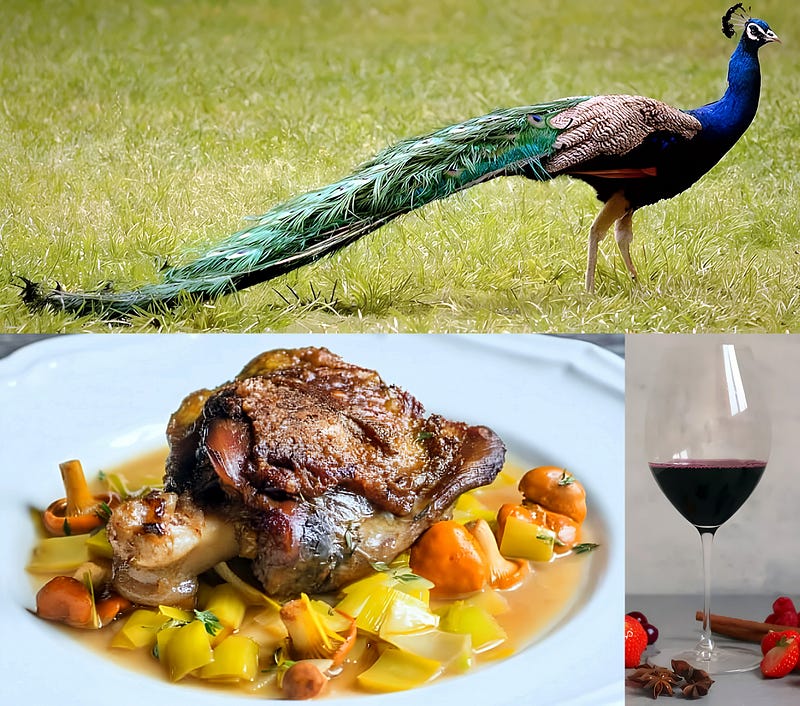
Few creatures embody both majesty and myth quite like the peafowl, Pavo cristatus. Known worldwide for its iridescent train that fans like a living tapestry, this bird has dazzled kings, poets, naturalists, and ordinary onlookers alike. The Indian peafowl, in particular, is not only India’s national bird but also a cultural emblem of beauty, pride, and immortality. Yet behind the dazzling plumage lies a story that intertwines biology, ecology, culinary tradition, and sustainability — an intricate narrative of how humans and peafowl have shared landscapes, myths, and even dining tables for centuries.
Taxonomy
The peafowl belongs to the genus Pavo within the family Phasianidae, making it kin to pheasants, turkeys, and junglefowl. The most recognized species is the Indian or blue peafowl (Pavo cristatus), native to the Indian subcontinent. Its close relative, the green peafowl (Pavo muticus), ranges across Southeast Asia, while the Congo peafowl (Afropavo congensis) represents a unique African lineage. Common names — peacock for males, peahen for females, and peachick for juveniles — reflect the striking sexual dimorphism. Though largely celebrated for its beauty, the bird’s taxonomic kinship with domesticated poultry underscores its historic role in human diets and feasts.
Biology
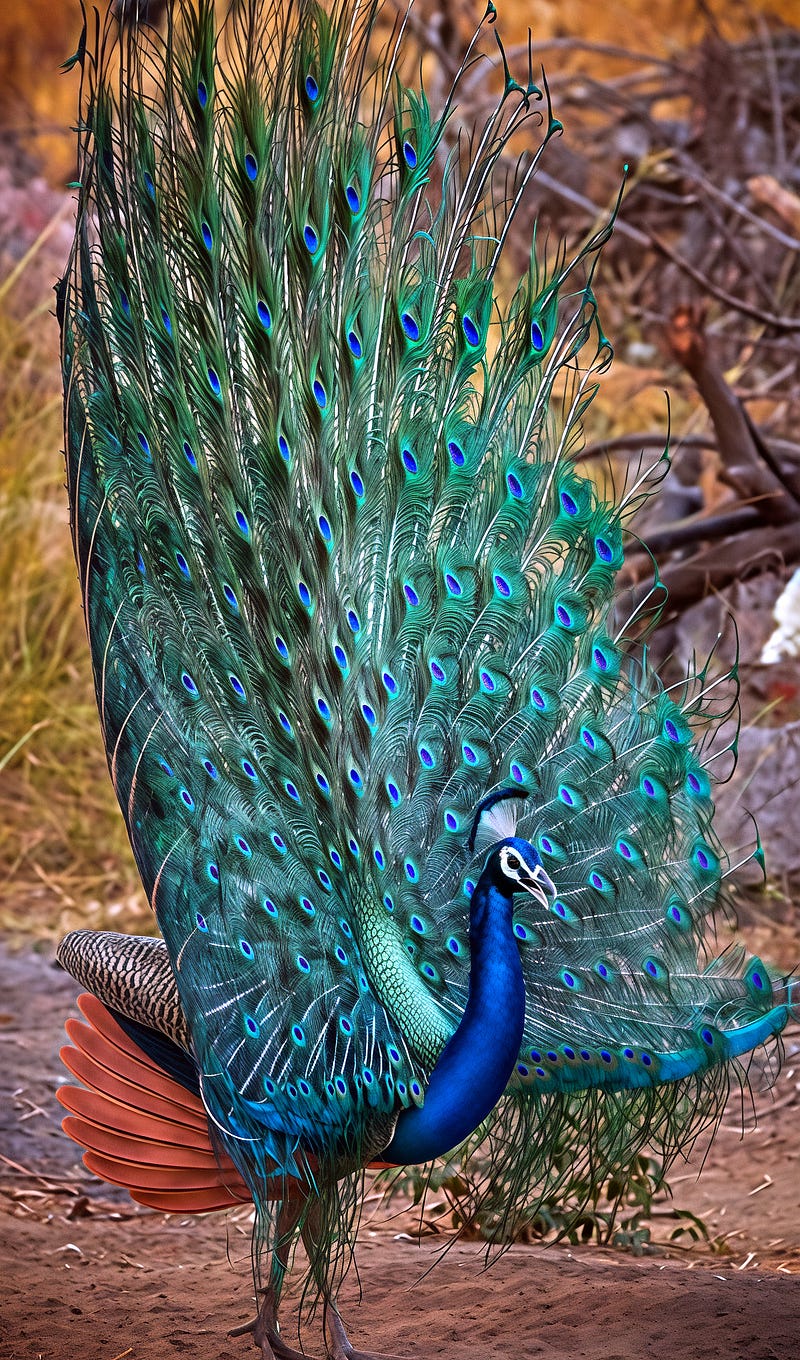
What makes the peafowl unforgettable is, of course, its train. The male’s elongated upper tail coverts, adorned with “eyespot” ocelli, can extend up to 5 ft (1.5 m), shimmering with structural coloration that bends light into blues and greens. In contrast, females are cloaked in earthier browns and greens, an evolutionary adaptation for camouflage while nesting. Courtship rituals center on the dramatic fan display, where the peacock quivers his feathers to produce a low-frequency hum, imperceptible to the human ear but resonant to nearby peahens.
Peafowl live up to 20 years in the wild. They reach sexual maturity at about 2 years of age, with peak breeding between 3 and 6 years. Eggs — usually between 3 and 6 per clutch — are incubated by the female for around 28 days. Chicks can fly short distances at just a few days old, an adaptation against predation.
Ecology
The Indian peafowl thrives in scrub forests, farmlands, and even near villages, adapting to human presence with surprising ease. Native to India, Pakistan, and Sri Lanka, they have been introduced worldwide, from Florida to Australia, where feral populations strut through gardens and estates. Ecologically, peafowl play roles as seed dispersers and insect controllers, but they can also become agricultural pests when populations surge.

Conservation concerns center on the green peafowl (Pavo muticus), whose numbers have plummeted due to habitat destruction and hunting. Unlike its Indian cousin, the green peafowl is listed as Endangered. Sustainable conservation practices — such as maintaining forest corridors and restricting hunting — are essential to ensure that these birds remain more than ornamental echoes of vanished ecosystems.
Uses
Historically, peafowl feathers were symbols of royalty, used in ceremonial fans, military standards, and sacred rituals. In the Mughal courts, jeweled thrones inlaid with peacock motifs embodied sovereignty. Beyond symbolism, peafowl were bred as ornamental birds in European estates, their haunting cries adding a touch of the exotic to manicured gardens.
Economically, the modern market for peafowl centers on ornamental breeding, feather collection (ethically, after natural molt), and tourism — since their beauty attracts visitors to temples and parks. In some rural communities, peafowl meat has also been consumed, though this practice remains rare today due to cultural taboos and conservation laws.
Culinary Aspects
Peafowl has a storied place at the banquet table of antiquity. Roman feasts featured roasted peacocks with gilded feathers reattached for spectacle. In medieval Europe, peafowl meat, though often dry compared to chicken, was prized for its rarity and pageantry. Historical recipes instructed cooks to boil the flesh with spices such as cloves, saffron, and cinnamon to enhance its flavor.
In taste, peafowl is said to resemble lean turkey, with darker, gamier tones. A roasted peafowl might weigh around 9 lb (4 kg), requiring long, slow cooking to retain moisture. In contemporary gastronomy, however, the bird is more admired than eaten — its culinary importance overshadowed by its cultural symbolism and conservation concerns.
Wine Pairings
Should one imagine a historical feast featuring roasted peafowl, the ideal pairing would balance the bird’s lean, game-like meat with structured wines. A bold red, such as a Châteauneuf-du-Pape, with its pepper and dark fruit notes, would match the richness of medieval spice rubs. For a subtler preparation, a dry Riesling offers a counterpoint of acidity to cut through the meat’s gaminess. In regions where peafowl might have graced royal tables, robust Indian red wines from Nashik or spicy Syrahs could provide culturally resonant companions.
Conclusion
The peafowl, shimmering with iridescent beauty, is more than a decorative marvel — it is a living bridge between myth and science, feast and forest, sustainability and spectacle. To preserve its splendor, humanity must recognize not only the allure of its feathers but also the ecological balance it represents. The story of Pavo cristatus reminds us that beauty, once commonplace, can vanish swiftly unless cherished with care. In a world hungry for both wonder and wisdom, perhaps the peafowl teaches us that sustainability itself must be displayed as proudly as a peacock’s fan.