The Spoon Worm of the Tides: Urechis unicinctus and the Hidden Ecology of the Sea’s Most Unlikely…
Introduction Beneath the tidal flats of East Asia lives one of the ocean’s strangest invertebrates — a pink, sausage-shaped worm that has…
The Spoon Worm of the Tides: Urechis unicinctus and the Hidden Ecology of the Sea’s Most Unlikely Delicacy
Introduction
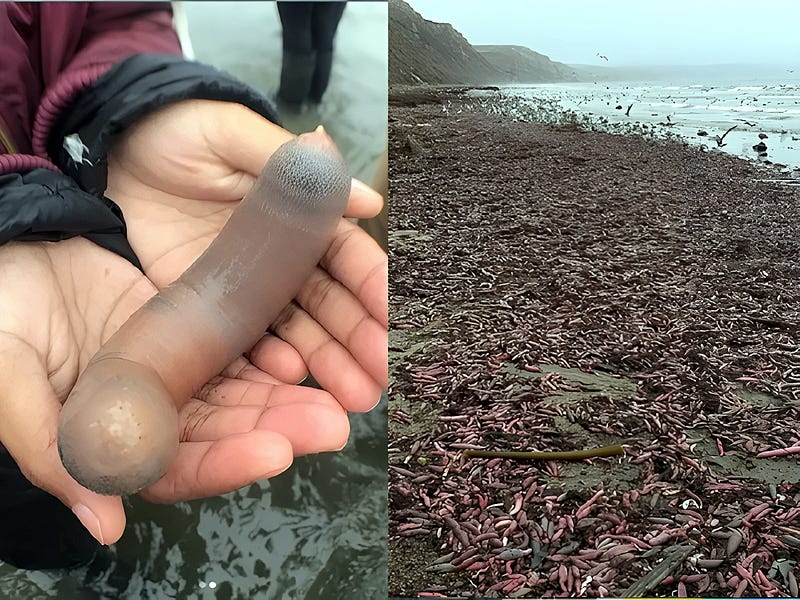
Beneath the tidal flats of East Asia lives one of the ocean’s strangest invertebrates — a pink, sausage-shaped worm that has fascinated biologists and repelled the uninitiated. Urechis unicinctus, known to diners as gaebul or the “fat innkeeper worm,” thrives where sand, silt, and sea meet. Though its appearance provokes amusement, this marine echiuroid plays a vital ecological role and, when prepared skillfully, becomes a prized seafood delicacy across Korea, China, and Japan. Its story bridges evolutionary adaptation, sustainable aquaculture, and cultural identity along the Pacific Rim.
Taxonomy
Urechis unicinctus belongs to the phylum Annelida, class Echiura, and family Urechidae. It is one of four known species in the genus Urechis. Vernacular names include “gaebul” (개불, Korean, South Korea), “hae-chang” (海腸, Mandarin, China), and “yumushi” (ユムシ, Japanese, Japan). In English markets, it is called the “fat innkeeper worm” or “penis fish.” The species has no recognized subspecies but exhibits regional variations in body size, reaching up to 25 cm (about 9.8 in) in length.
Biology
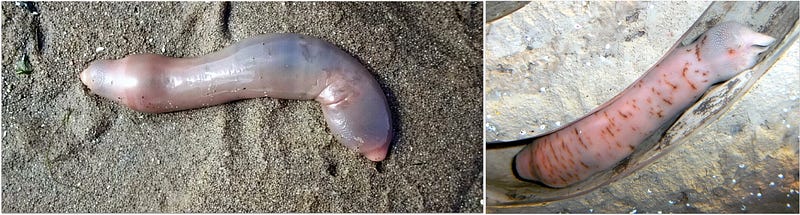
The worm’s cylindrical body, translucent pink in tone, is soft and muscular. It lives in U-shaped burrows in intertidal mudflats, using a mucus net to trap plankton and detritus that drift in with tidal currents. Once feeding ceases, it consumes the net itself, a closed-loop feeding mechanism that minimizes waste. Urechis unicinctus reproduces by broadcast spawning; eggs and sperm are released into the water, where external fertilization occurs. Larvae are planktonic for roughly two weeks before settling to burrow life. It can live up to five years in the wild, showing resilience to salinity changes and hypoxic conditions common in coastal estuaries.
Ecology
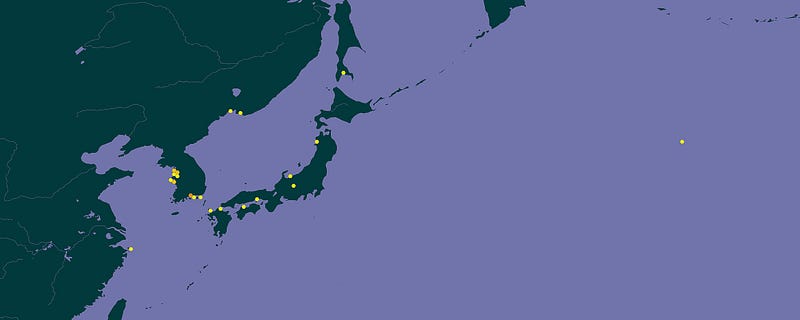
Urechis unicinctus engineers its environment. Its burrows provide shelter for symbiotic species such as small crabs, gobies, and commensal worms that share its tunnels. By circulating seawater through its burrow system, it oxygenates sediment and promotes microbial decomposition — key to nutrient cycling in mudflat ecosystems. Populations extend from Russia’s Far East to the Yellow Sea and the Korean Peninsula. Overharvesting and habitat loss from coastal reclamation threaten localized stocks. Restocking programs in South Korea now use hatchery-bred juveniles to sustain harvest levels while preserving ecological balance.
Uses
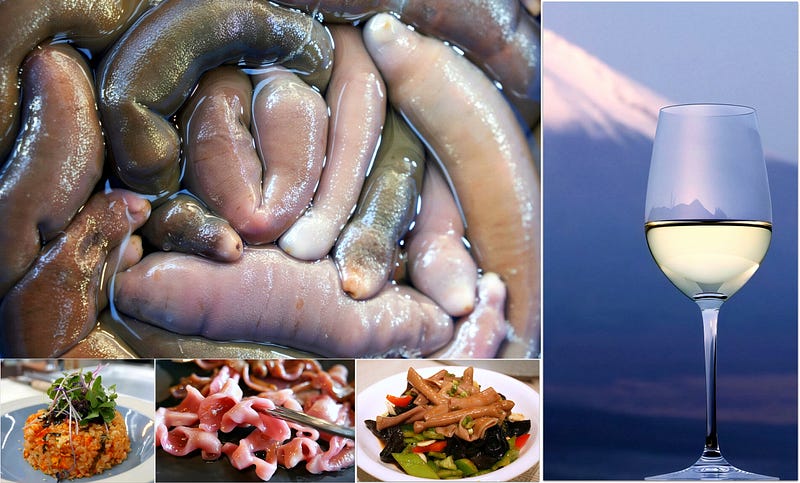
The edible part is the entire muscular body, eaten raw or lightly cooked. Preparation forms include sashimi, grilled, stir-fried, or fermented. Typical dishes feature raw slices seasoned with sesame oil and salt or hot-pot stews combining sliced worm with garlic, chili, and vegetables. Harvest peaks in late winter and early spring, though it is available year-round in aquaculture operations. Yield ranges from 2 to 3 metric tons per hectare (1.8–2.7 short tons per acre). One hundred grams (3.5 oz) provides about 110 kilocalories, 20 g (0.7 oz) of protein, and trace omega-3 fatty acids.
Anti-nutritional factors are minimal, though the worm must be purged of sand and mucus before consumption. No known toxins exist in the flesh. Processing involves degutting, rinsing in seawater, and chilling at 4°C (39°F). Commercial products include frozen fillets and dried snacks. The taste is faintly briny, the aroma marine and clean, the texture crisp yet yielding when chewed. When grilled, its sugars caramelize, producing mild umami and iodine notes. Optimal cooking methods are quick sautéing or flash grilling to preserve elasticity.
Medicinally, traditional Chinese texts describe hae-chang as a restorative tonic for fatigue and fertility, though scientific validation is limited. Extracts have demonstrated mild antioxidant and anti-inflammatory activity in preliminary studies. Safety concerns are minimal apart from general seafood allergies.
Feed use is negligible, but enzymatic hydrolysates from byproducts show potential as aquafeed additives due to high amino acid content. Material applications remain experimental; gelatinous proteins from U. unicinctus exhibit emulsifying and film-forming properties that could interest biomedical or cosmetic industries.
Carbon sequestration potential is indirect: its burrowing promotes sediment stability, aiding organic carbon retention estimated at around 0.3 metric tons per hectare annually (0.13 short tons per acre). Restoration uses include mudflat rehabilitation and biodiversity enhancement projects in Korea’s tidal wetlands.
Market demand remains strong in South Korea, where the live worm retails for $15–25 per kilogram (6.8–11.3 USD per lb). Major producers include South Korea and China, with traceability programs enforced under regional fisheries laws.
Culinary Aspects
Urechis unicinctus has a distinctive taste profile — sweet-saline with a hint of oceanic minerality. When eaten raw, it delivers a snapping crunch followed by subtle sweetness akin to abalone. Its flavor balance favors clean pairings rather than heavy sauces. Texture contrasts — firm exterior, gelatinous interior — define its sensory appeal. Aromatically, it evokes sea air with faint umami undertones. Cooking enhances its complexity: stir-frying intensifies the savory backbone, while grilling produces a smoky sweetness. In Korean culinary culture, gaebul is consumed as a stimulant food, valued for freshness and texture rather than seasoning depth.
Wine Pairings
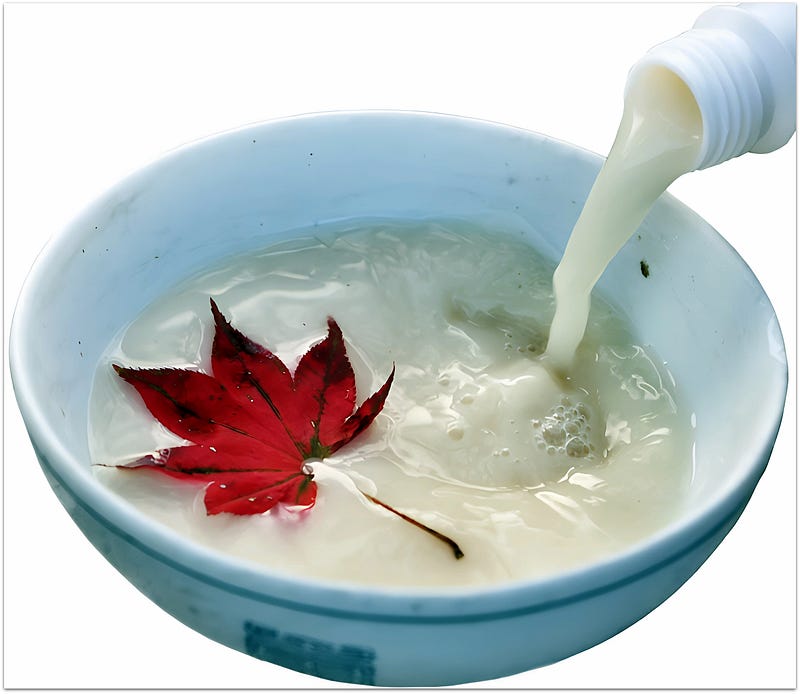
A Muscadet Sèvre-et-Maine from France’s Loire Valley aligns with the worm’s saline profile; its sharp acidity and mineral backbone mirror the oceanic sweetness of raw gaebul. For grilled preparations, an Albariño from Rías Baixas, Spain, with its stone-fruit aroma and brisk acidity, balances the mild caramelized notes. When served with chili and sesame, a dry Gewürztraminer from Alsace, rich in floral and lychee tones, counters spice and amplifies umami. For hot-pot variations, a Japanese Koshu with restrained fruit and gentle phenolics complements the broth’s clarity without masking the marine essence. Finally, for fermented or dried forms, a lightly sparkling Korean makgeolli offers textural resonance and cultural continuity.
Conclusion
Urechis unicinctus stands as a model of ecological efficiency and culinary daring. From its self-cleaning feeding net to its role as a habitat engineer, it epitomizes how evolution turns simplicity into resilience. What once provoked laughter now commands gastronomic respect, linking mudflat ecology to coastal identity. As sustainable aquaculture expands, this unassuming worm may become both an environmental asset and a symbol of culinary ingenuity — a reminder that even the most unconventional species can redefine taste and sustainability in a changing world.