Threads of Silver and Shadow: The Life, Flavor, and Future of the Japanese Eel
Introduction Beneath the lantern glow of summer nights in Tokyo, a smoky haze drifts from hidden alleyways where chefs cradle fillets of…
Introduction
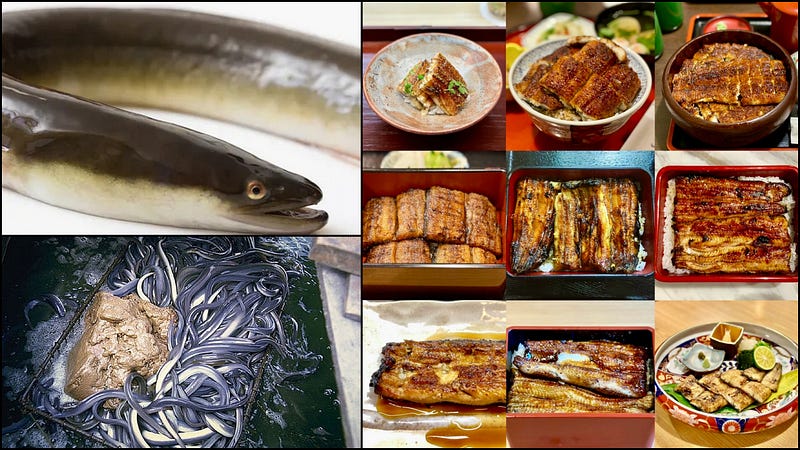
Beneath the lantern glow of summer nights in Tokyo, a smoky haze drifts from hidden alleyways where chefs cradle fillets of gleaming eel over glowing coals. The Japanese eel, known scientifically as Anguilla japonica, is far more than a delicacy served with a glossy glaze of tare sauce. It is a creature of mystery that vanishes into oceanic depths, a keystone of centuries-old culinary tradition, and a species whose survival is balanced on the blade of human appetite and ecological change. To follow the life of the Japanese eel is to trace a story that winds from the western Pacific to your plate, a tale steeped in biology, culture, and urgent calls for sustainability.
Taxonomy
The Japanese eel belongs to the genus Anguilla, within the family Anguillidae. Its full scientific name is Anguilla japonica. It shares this genus with relatives like the European eel (Anguilla anguilla) and the American eel (Anguilla rostrata), yet it remains culturally singular in its significance to East Asia. Locally, it is known as unagi in Japan, and though there are no true subspecies, regional varieties differ slightly in fat content and seasonal availability. These distinctions are celebrated by chefs who seek specific terroirs of river and sea, much as one might pursue a rare vintage wine.
Biology
The Japanese eel is a sinuous, silver-green ribbon of life, growing to an average length of about 60 to 100 centimeters, which translates to roughly 24 to 39 inches. At maturity, it can weigh over 3 kilograms, or about 6.6 pounds. Its life cycle defies easy comprehension: born as transparent leptocephalus larvae in the remote spawning grounds near the Mariana Islands, it drifts thousands of kilometers with the Kuroshio Current before metamorphosing into glass eels and venturing inland. The eel then grows in rivers, lakes, and estuaries for years before, driven by ancestral memory, it journeys back to the sea to spawn and die. Its skin secretes a protective mucus that allows it to travel over damp ground between waterways, a slippery adaptation that has inspired folklore of shape-shifting creatures and river spirits.

Ecology
These eels are a thread between river and sea, feeding on insects, crustaceans, and small fish, and in turn feeding predators like herons and larger marine species. They thrive in habitats from muddy riverbeds to brackish estuaries. Yet they are now classified as endangered, their numbers dwindling due to overfishing, habitat loss, and changes in ocean currents linked to climate variability. Conservation initiatives have begun restocking rivers with captive-bred juveniles and regulating seasonal harvests, but the challenge remains profound. Each eel represents a fragile miracle of survival across two worlds, and every decision to consume one carries an ecological echo.
Uses
The Japanese eel is a cornerstone of East Asian aquaculture and fisheries, driving an industry worth billions of dollars. Its skin, prized for toughness, has even been used in fine leather goods, though this remains a niche market. The economics of eel farming have prompted innovations in sustainable practices, such as closed-cycle breeding programs that attempt to reduce dependence on wild glass eels. Yet demand still far outpaces supply, driving prices upward and creating a shadow market that threatens conservation progress. In 2024, high-quality unagi often fetched over 6,000 yen per kilogram, or roughly 27 dollars per pound, underscoring its status as both luxury and legacy.
Culinary Aspects
On the palate, the Japanese eel is an opulent experience. Its flesh is rich, buttery, and tender, with a depth that seems to whisper of river mud and sea spray. In Japan, the most celebrated preparation is kabayaki, where fillets are butterflied, skewered, grilled over charcoal, and brushed repeatedly with a sweet-savory glaze of soy sauce, mirin, sugar, and sake. Another preparation, shirayaki, forgoes the glaze, allowing the eel’s pure flavor to shine. Nutritionally, eel is high in protein and rich in omega-3 fatty acids, offering heart-healthy benefits that make each bite more than indulgence. Across centuries, unagi has been celebrated as a stamina-boosting dish, particularly during the sweltering Doyo no Ushi no Hi, the midsummer day when tradition prescribes eel to endure the season’s hardships.
Wine Pairings
The deep umami and luscious fat of grilled eel invite thoughtful pairings. A crisp, mineral-driven Riesling from the Mosel Valley enhances the sweet soy glaze, its acidity cutting through the richness. A chilled Junmai Daiginjo sake, with its floral aroma and rounded rice notes, harmonizes with shirayaki’s subtler elegance. For those inclined toward red, a light Pinot Noir, gently chilled to about 13 degrees Celsius or 55 degrees Fahrenheit, offers enough fruit and earth to dance with the eel’s smoky sweetness without overpowering it.

Conclusion
The Japanese eel is a creature of paradox: humble in form yet regal in tradition, threatened yet beloved, ancient in lineage yet urgently in need of modern stewardship. To savor unagi is to taste not only the artistry of chefs and the bounty of rivers but also the weight of responsibility toward a species at the brink. As you encounter the glossy fillet on your plate, remember the silver ribbon that journeyed thousands of kilometers and decades of human lore. In that fleeting, fragrant bite lies a decision — whether our culinary heritage will preserve this creature’s future or consign it to memory.