Ugly Problems. Ugly Solutions.
We are drowning in the consequences of weak policies, sentimental excuses, and a justice system that cares more about coddling criminals…
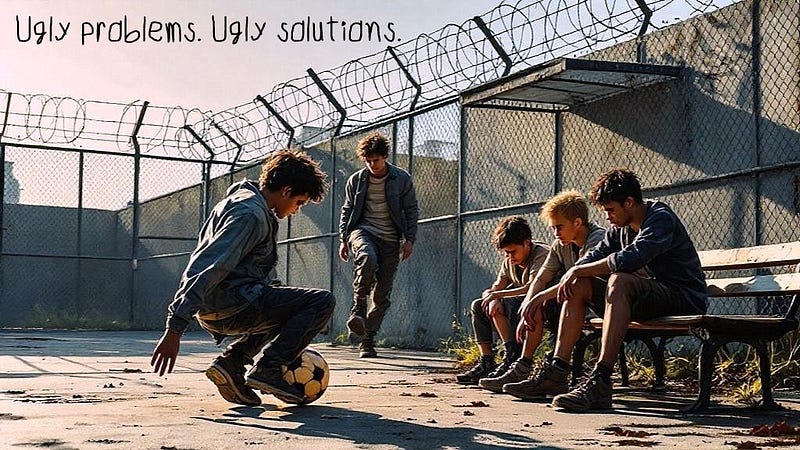
We are drowning in the consequences of weak policies, sentimental excuses, and a justice system that cares more about coddling criminals than protecting the innocent. The facts are undeniable — youth violence is escalating because the system refuses to punish it. Juvenile offenders today are more brazen, more violent, and more calculating than ever before, precisely because they know nothing will happen to them.
This is not speculation. This is not theory. This is what happens when society abandons consequences in favor of empty rhetoric about rehabilitation and second chances. Cities across the country are learning the hard way that soft justice breeds hard criminals. Teenagers carjack with impunity, knowing they’ll be back on the streets before their victims’ insurance claims are processed. Gangs recruit children as shooters because they understand the law will treat them as misguided youths rather than the predators they are. And when a 13-year-old executes someone in cold blood, the system wrings its hands over his “potential” instead of delivering the justice victims deserve.
The truth is simple: evil doesn’t magically disappear at 18. A 15-year-old who commits murder doesn’t wake up on his birthday suddenly fit for society. The idea that violent juveniles can be “fixed” with therapy and community service is a fantasy. Rehabilitation works for minor offenders, not for those who have already demonstrated a capacity for brutality. When a teenager plans, carries out, and shows zero remorse for a heinous crime, that is not a child who made a mistake — that is a criminal who has revealed himself.
And yet, the system persists in its delusion. Juvenile courts operate like revolving doors, releasing violent offenders with slaps on the wrist under the guise of compassion. But where is the compassion for the victims? Where is the justice for the families destroyed by these crimes? The law’s first duty is to protect the innocent, not to gamble on the redemption of those who have already proven themselves dangerous.
The solution is not complicated. It is not nuanced. It is the same solution that has worked for centuries: real consequences for real crimes. If a 14-year-old commits an adult-level offense — murder, rape, armed robbery — then he should face adult-level punishment. No more hiding behind age as an excuse. No more pretending that a violent psychopath is just a kid who needs understanding. The justice system must stop enabling predators and start removing them from society before they can harm again.
This is not about cruelty. It is about honesty. It is about recognizing that some people, regardless of age, are beyond redemption — and that society has no obligation to risk more lives on the faint hope that they might change. The time for excuses is over. The time for consequences is now.
When local governments coddle violent offenders — no matter how young — they abandon their duty to protect the innocent. If a 12-year-old is capable of committing a savage assault or cold-blooded murder, they are capable of facing adult consequences. Age should not shield brutality. It should not excuse terror. And it should never override justice.
If cities and states won’t act, the federal government must. Washington cannot sit idly while communities are gutted by violence and local leaders offer nothing but platitudes and failed reforms. The U.S. government is constitutionally bound to prioritize the safety and security of law-abiding citizens. That obligation comes first — not the rehabilitation fantasies of repeat offenders or the political optics of juvenile leniency. Federal intervention isn’t just justified — it’s overdue. Whether through aggressive legislation, DOJ oversight, or funding leverage, the message must be clear: protect the public, prosecute the violent, and stop pretending that youth is a hall pass for mayhem.
Ugly problems demand ugly solutions. And if the system won’t deliver justice, then it’s time to redesign the system — starting with the myth that violence has an age limit.