Whisperers of the Marsh: The Secret World of Rails
Introduction
Introduction
In the half-light of marshes and wetlands, where reeds whisper against the breeze and water laps in hidden channels, lives a bird most people will never see but often hear — the rail. Belonging to the genera Rallus and Porzana, these elusive birds are masters of concealment, darting like shadows through cattails and sedges. To encounter one in the wild is a rare privilege, for they live at the intersection of secrecy and survival. Yet beyond their cryptic lives, rails carry stories of ecological importance, culinary intrigue, and cultural heritage that stretch across continents.
Taxonomy
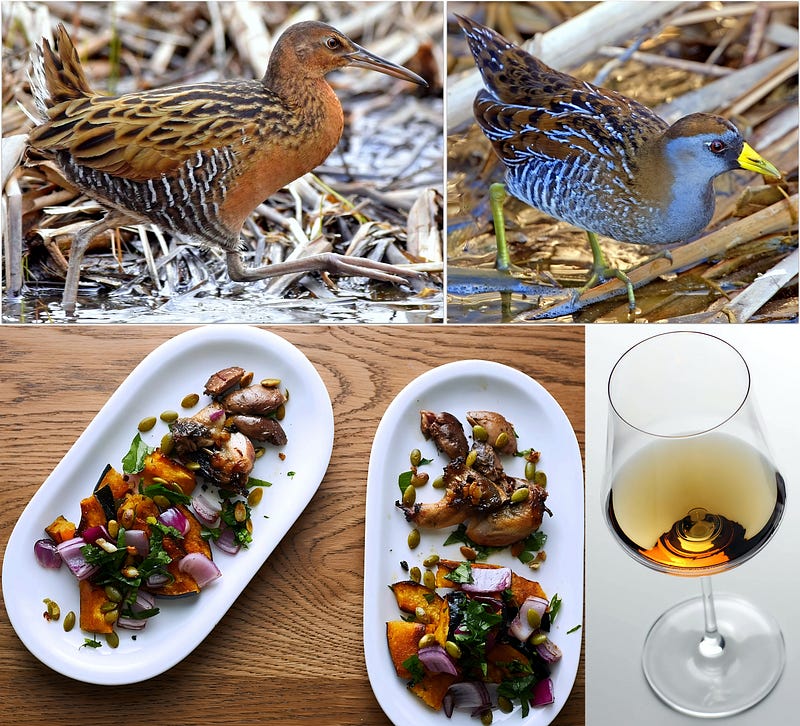
Rails belong to the family Rallidae, an ancient group that has diversified into over 150 species worldwide. The genus Rallus includes the clapper rail (Rallus crepitans), Virginia rail (Rallus limicola), and water rail (Rallus aquaticus), while Porzana encompasses smaller, delicate birds such as the spotted crake (Porzana porzana). These names echo through folklore, often given to birds whose presence was known by their calls rather than their appearance. Some edible varieties, particularly the larger Rallus species, were once sought after in rural hunting traditions.
Biology
Rails are built for stealth. Slender bodies allow them to slip through reeds as if the marsh were a maze designed just for them. Most species measure between 8 in and 14 in (20 cm to 35 cm), with long toes adapted to spreading weight over mud and floating vegetation. Their plumage often takes on streaked browns and grays, a camouflage against predators. Despite their small wings, rails are capable of astonishing flights; some migrate across oceans, their compact 5 oz (140 g) frames carrying them for hundreds of miles at a time. Their life cycle revolves around the water’s edge — nests built in rushes, chicks covered in soft black down within hours of hatching, and a diet of invertebrates, seeds, and small aquatic creatures.
Ecology
Rails are ecological linchpins in wetland habitats. They regulate insect populations and serve as prey for larger marsh predators, knitting together food webs in a delicate balance. Their habitats stretch from North American salt marshes to Eurasian fens, African wetlands, and Pacific islands. Tragically, rails are also among the most extinction-prone bird families. Island rails, stripped of defenses after evolving without predators, have been wiped out in waves by human settlement and invasive species. Sustainable wetland management is now essential to protect the survivors. Conservation programs focus on marsh restoration, for when rails thrive, the entire ecosystem breathes easier.


Uses
Historically, rails held economic and cultural significance in rural communities. Their presence in wetlands signaled seasonal changes and healthy water systems. Hunters once prized larger species like the king rail (Rallus elegans) for meat, a tradition that has dwindled as populations declined. Today, rails are more valuable as indicators of environmental health than as food sources. Birdwatchers and ecotourists travel long distances for a fleeting glimpse or recording of their haunting calls, creating an economy rooted in preservation rather than exploitation.
Culinary Aspects
Though rarely eaten today, rails once graced the tables of Europe and North America. The meat of a Virginia rail was said to be tender, with a flavor falling between wild duck and quail. A roasted rail, weighing around 0.25 lb (110 g), was often wrapped in fat to keep it moist over an open flame. In Mediterranean traditions, spotted crakes were preserved in olive oil, their earthy marshland flavor softened by herbs. While modern conservation rightly restricts such culinary uses, these historical recipes remain part of the cultural memory of wetlands, much like pigeon pies or ortolan feasts do in other traditions.
Wine Pairings
Were rails still a part of the table, their delicate but gamey flavor would call for wines of subtlety. A Burgundy Pinot Noir, light yet earthy, would highlight their woodland undertones. In southern Europe, a chilled Albariño would lift the brininess of marsh-fed meat, much like it pairs with shellfish. For historical curiosity, one might even imagine a pairing with Madeira, as game birds often were in the 18th century, creating a marriage of savory richness and fortified sweetness.
Conclusion
The rail is more than a bird — it is a reminder of what hides in plain sight, of the wildness tucked within wetlands that many overlook. Their survival depends on marshes that must be defended not only for their sake but for the ecological lifelines they represent. Though few today will ever taste their flesh, to hear their calls at dusk is to taste something older and rarer still — the flavor of a world in balance. Preserving rails is not about the plate; it is about the permanence of wild music in our landscapes.