Whispers of the Patagonian Steppe: The Secret Life of the Tinamou
Introduction In the windswept grasslands of southern Argentina and Chile, a shadow moves low against the horizon. The Patagonian tinamou…
Introduction
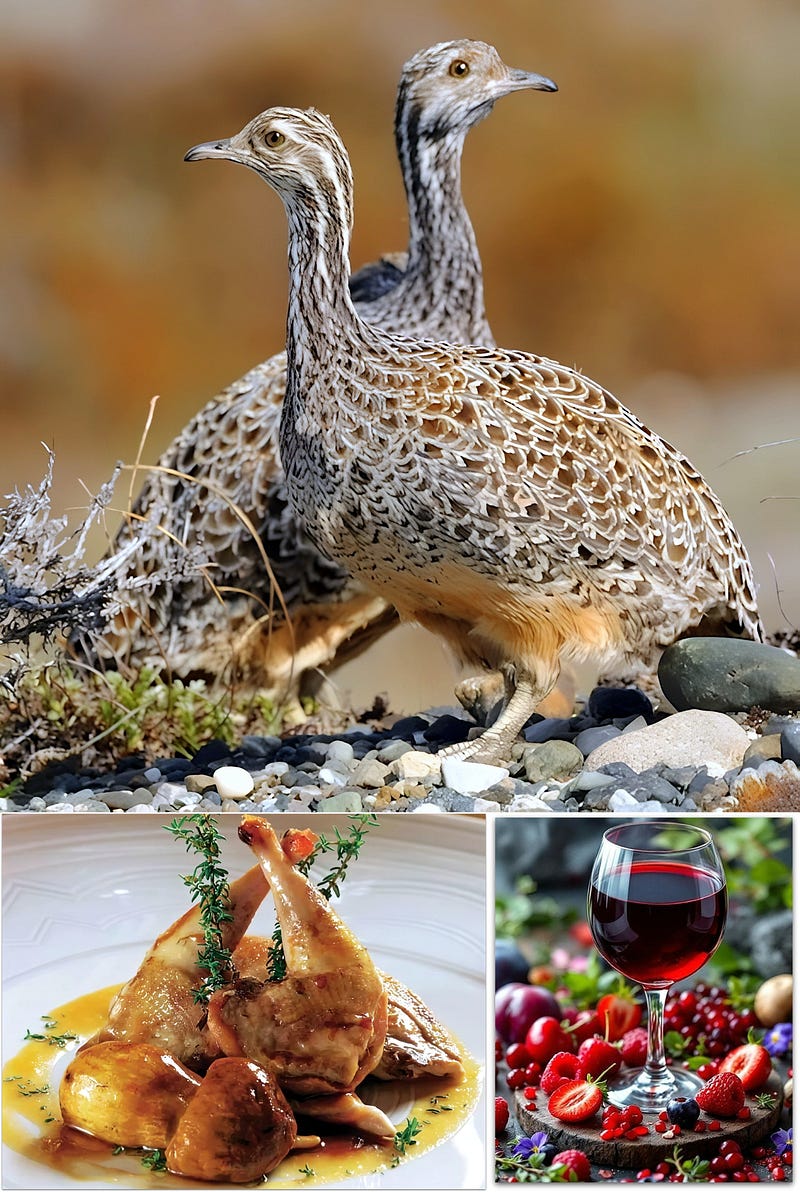
In the windswept grasslands of southern Argentina and Chile, a shadow moves low against the horizon. The Patagonian tinamou, Tinamotis ingoufi, is a relic of an ancient avian lineage that has defied extinction through silence, camouflage, and resilience. It belongs to one of the most primitive groups of birds on Earth, a living bridge between the age of dinosaurs and modern gamebirds. Its muted plumage blends perfectly with the steppe, but those who have heard its haunting dawn call know it as a voice of Patagonia’s wild solitude. Beyond its ecological role, the tinamou has long featured in the region’s subsistence traditions — valued for its rich, dark meat and symbolic presence in local folklore.
Taxonomy
The Patagonian tinamou belongs to the order Tinamiformes and the family Tinamidae, a group endemic to Central and South America. Its valid scientific name is Tinamotis ingoufi Oustalet, 1890. It shares its genus with the Andean tinamou (Tinamotis pentlandii), forming a high-latitude clade adapted to cold steppe ecosystems. Common names include “Patagonian tinamou” (English), “perdiz cordillerana” (Spanish, Argentina and Chile), and “ñanducito” (Spanish, Patagonia). Though rarely domesticated, the species is known locally as a game bird and sometimes traded informally under the name “perdiz patagónica.”
Biology
The Patagonian tinamou is a medium-sized ground bird averaging 35–38 cm (14–15 in) in length and weighing roughly 700–900 g (1.5–2 lb). It has a stocky body, short, rounded wings, and cryptic brown-gray plumage with fine mottling that blends seamlessly with dry steppe vegetation. Unlike most birds, tinamous are weak fliers, relying on stealth and camouflage over speed. They are part of the paleognath lineage, related to flightless birds like ostriches and rheas. Males perform incubation and chick rearing — an evolutionary inversion where females mate with several males who each guard a separate clutch. Chicks hatch precocial and can run within hours, a survival adaptation in open landscapes with avian and terrestrial predators.
Ecology
This species inhabits cold, semi-arid grasslands and scrub across southern Argentina and Chile, from Río Negro to Tierra del Fuego. It thrives in altitudes up to 1,200 m (3,940 ft), preferring open areas with low shrubs and coarse grasses. The tinamou feeds primarily on seeds, shoots, and invertebrates, playing a key role in seed dispersal and insect control. Its nesting strategy — ground scrapes hidden among grass tufts — relies heavily on environmental camouflage, which is increasingly threatened by habitat fragmentation and overgrazing. Though not globally endangered, local populations have declined due to unsustainable hunting and agricultural expansion. Sustainable management programs now promote regulated hunting seasons and community-based monitoring to balance traditional use with conservation.

Uses
The Patagonian tinamou has been part of Patagonian cuisine for centuries. The edible parts include breast and leg meat, yielding roughly 0.6–0.8 kg (1.3–1.8 lb) per bird. The flesh provides approximately 140 calories per 100 g (3.5 oz), rich in protein (24 g/100 g) and low in fat (2 g/100 g). It contains key nutrients like iron, zinc, and vitamin B12. There are no significant antinutrients or toxins reported, but care must be taken to avoid contamination from lead shot in hunted birds. Traditional dishes include roasted tinamou with herbs, tinamou stew (“estofado de perdiz”), and grilled cuts marinated in Patagonian spices. Its flavor is gamier than chicken, resembling quail with a subtle mineral finish. The aroma is earthy with grassy undertones, while the texture remains firm yet tender after slow cooking.
Cooking methods that preserve moisture — such as confit, braising, or sous-vide at 60°C (140°F) for two hours — optimize flavor stability. Pairing the meat with native herbs like paramela (Adesmia boronioides) or wild thyme enhances its complexity. The meat’s moderate fat and umami balance make it compatible with high-acid ingredients such as Calafate berries or Malbec reductions. On the commercial side, tinamou is occasionally sold frozen through regional game distributors, but its trade is tightly controlled under local wildlife permits.
Medicinally, tinamou fat and broth are used in rural traditions as a mild tonic for cold-weather fatigue, though there is no clinical evidence to support pharmacological effects. Ethically, sustainable hunting practices include quotas, seasonal restrictions, and traceability standards to ensure population stability. Conservation status: Least Concern globally, but regionally monitored under Argentina’s Patagonian biodiversity framework.
Culinary Aspects
The sensory profile of Patagonian tinamou meat is defined by balance and depth. The taste is savory, slightly nutty, with a lingering iron-rich finish. Its aroma carries faint notes of sagebrush and dry grass, a direct imprint of its environment. The mouthfeel is dense but juicy when properly rested post-cook. Texturally, it resembles pheasant or guinea fowl. When slow-cooked, collagen softens into a silken texture, while roasting accentuates the skin’s crispness. The flavor complexity is moderate — earthy base, mild gaminess, and a clean aftertaste when served with acidic accompaniments. Cultural importance remains strong in Patagonia, where seasonal hunts and communal roasts mark rural festivals.
Wine Pairings
A Patagonian tinamou roasted over embers pairs harmoniously with an Argentine Bonarda from Mendoza. Its soft tannins and black-fruit depth balance the bird’s mineral notes without overpowering them. For braised tinamou, a cool-climate Syrah from San Patricio del Chañar complements its gamey character through peppery spice and medium acidity. Those preparing it with Calafate berry glaze might prefer a southern Chilean Pinot Noir from Osorno, whose red-berry brightness and light body enhance the dish’s tangy-sweet balance. For white-wine options, an oak-aged Torrontés from Cafayate or a dry Gewürztraminer from Neuquén works well with cream-based sauces, leveraging floral aromatics against the bird’s savory tone. Each pairing emphasizes regional identity while maintaining sensory synergy between structure, acidity, and flavor depth.
Conclusion
The Patagonian tinamou stands as both a biological relic and a cultural symbol — a reminder that Patagonia’s harsh beauty supports a web of life evolved for quiet endurance. Protecting this species requires balancing tradition and ecology, ensuring that hunting, habitat use, and culinary appreciation all converge within sustainable limits. In every mouthful of roasted tinamou or echo of its dawn call lies the continuity of Patagonia’s living history — a story written not in conquest but in coexistence.