Anthony Cumia: Shock, Speech, and the Business of Offense
Anthony Cumia is a shock jock turned platform owner whose brand is characterized by transgressive humor, culture-war combativeness, and an…
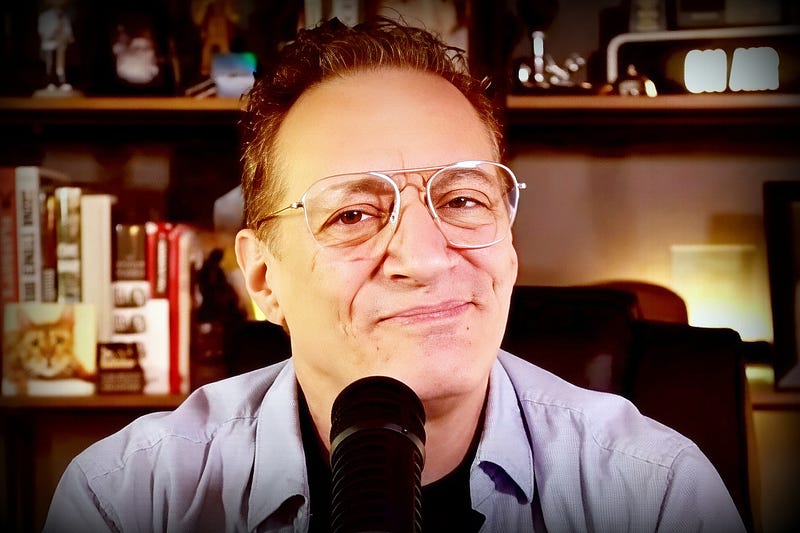
Anthony Cumia is a shock jock turned platform owner whose brand is characterized by transgressive humor, culture-war combativeness, and an absolutist stance on free speech. He co-built Opie & Anthony into one of U.S. radio’s most notorious franchises, was fired by SiriusXM in 2014 over racially charged tweets, and then vertically integrated his audience by launching a subscription video network that later merged with Censored.TV to form Compound Censored. He now hosts The Anthony Cumia Show on 77 WABC and online, positioning himself as a case study in post-cancellation entrepreneurship.
Writings: major works, themes, contributions
Cumia’s first book, Permanently Suspended: The Rise and Fall… and Rise Again of Radio’s Most Notorious Shock Jock (2018), is an insider memoir that frames his career arc, program stunts, firings, platform shifts, and the break with Opie through a “no-holds-barred” lens. As a contribution, it documents the shock-radio production culture, regulatory flashpoints, and the economics of audience cultivation across terrestrial, satellite, and paid streaming platforms.
His 2024 follow-on, Spare Me (Post Hill Press), pivots from memoir to polemic. It packages his core themes — hostility to “cancel culture,” skepticism toward institutional media, sharp critiques of progressive politics, and defense of offensive comedy — as a through-line justifying platform independence. Retail and publisher materials fix the book’s positioning as contemporary cultural commentary rather than biography, and press coverage highlights his explicit anti-cancellation argument as the closing thesis.
As an ongoing corpus, the show archive functions as a serialized “text.” Weekly WABC episodes and Compound Censored streams extend the books’ arguments into real-time commentary on crime, immigration, guns, DEI, and campus speech, reinforcing a consistent stance and giving researchers timestamped primary material.
Arguments: central claims and notable through-lines
Free speech as a non-negotiable value sits at the center. Cumia repeatedly asserts that social and corporate sanctions for speech are illegitimate, that “cancel culture” is asymmetrically enforced by the left, and that public exposure of opposing views is preferable to deplatforming. His own firing is framed as Exhibit A for the broader claim that institutions punish heterodox or offensive speech. These positions are visible across his book promotion and on-air segments.
Crime and policing are treated as policy failures of progressive governance. He argues for aggressive law-and-order postures, often citing New York leadership as emblematic targets, and links permissive rhetoric to public-safety decline.
Gun rights are non-negotiable. He defends civilian carry, criticizes New York restrictions as punishing the lawful while missing “thugs,” and uses his long-standing NYC carry status to argue competence and responsibility among licensed owners.
Immigration is framed as a test of assimilation rather than a humanitarian imperative. He valorizes historical models where newcomers “came to become American,” and criticizes visible dual-loyalty signaling as cultural fragmentation.
Psychology: interpretive profile of the on-air persona
Cumia operates a classic “shock” modality — boundary testing for attention capture — paired with rapid, referential joke-making and an antagonistic stance toward authority. The recurrent pattern is transgression, backlash, and then reframing the backlash as proof of his speech thesis. This cycle is observable across Opie & Anthony controversies, the 2014 termination, and later monologues on cancellation, suggesting an identity tightly coupled to contrarian expression and audience co-ownership. This is an inference from the historical record of stunts and sanctions and from his own framing in media and books.
The show’s format also cultivates in-group bonding: recurring comedians, call-ins, and long-form rants produce para-social reinforcement where listeners adopt the host’s interpretive frames as cultural heuristics. This is evident in the archive descriptions and guest ecosystems that migrated with him to subscription video and then to Compound Censored.
Philosophy: ideas and first principles
The through-line (a consistent theme, idea, or narrative thread that runs throughout a piece of work, conversation, or process — connecting its parts and giving it coherence) is speech maximalism anchored in rugged individualism. Institutions are suspect when they mediate expression; platforms are superior when owned by the creator. Offense is not just tolerated but defended as diagnostic: if a joke triggers outrage, the outrage reveals coercive norms rather than the joke’s illegitimacy. He privileges skepticism toward technocratic narratives, distrusts bureaucratic fixes, and elevates personal responsibility, deterrence, and self-defense. These principles are distilled from his books’ positioning, the MAGA-branded network partnership, and his recurring monologues.
Political ideas: ideology and alignments
Cumia’s alignment is populist-right. He collaborates with Gavin McInnes under a network that explicitly bills itself as “the #1 MAGA network,” and his show content tracks mainstream conservative and nationalist talking points on crime, borders, guns, and anti-DEI messaging. His rhetoric on “the left” emphasizes censorship, elite capture of institutions, and selective enforcement against conservatives. Recent segments and social posts underscore this posture.
He advances a practical federalism in tone if not in white papers: move to jurisdictions that reflect your values, arm yourself where legal, and expect little from blue-state leadership. His critiques of New York leadership and celebration of less restrictive states reflect this operational ideology.
Beliefs: core values and self-conception
He believes offensive speech is a civic good, not a pathology, and that the market and audience sovereignty should decide what survives, not HR departments or advertiser pressure. He believes the right to keep and bear arms is central to personal security and autonomy. He believes assimilationist national identity should be socially prioritized over multicultural signaling. He believes institutional media misrepresent and selectively punish, and he treats creator-owned distribution as the remedy. These are consistent across his books, broadcasts, and posts.
Context and countervailing record
The same record that grounds his speech-absolutist narrative includes episodes critics cite as proof of bigotry or harm. SiriusXM’s termination notice explicitly labeled his tweets “racially-charged and hate-filled.” His 2015 arrest on assault-related charges and subsequent court proceedings became part of the public dossier shaping perceptions of his judgment and character. These incidents form the backdrop against which he argues that punishment regimes for speech and scandal have become overbroad and politicized.
Video Presence: YouTube and Related Platforms
Anthony Cumia publishes video editions of The Anthony Cumia Show and related content on YouTube under channels affiliated with Compound Censored / Compound Media branding. Clips, full segments, and promotional excerpts are regularly uploaded to reach non-subscribers.
Search terms like “Anthony Cumia Compound Censored,” “The Anthony Cumia Show YouTube,” or “Cumia & Gavin McInnes” will locate many results. Examples include:
• “The place is an absolute S*HOLE!” — Anthony Cumia on YouTube
• “What the FK is wrong with them??” — Anthony & Gavin segment on YouTube
• “WHY CAN’T THEY LISTEN?!” — police commentary segment on YouTube
• “Anthony Cumia GOES NUCLEAR on media” — media critique video on YouTube
YouTube also hosts a feed under the #compoundmedia tag, which aggregates videos posted by or about his network. Via that tag or his channel pages, one may browse content by date, series, or theme.
Beyond YouTube, full episodes and “free preview” segments are accessible through the network’s owned platform, Censored.TV / Compound C
Impact
The measurable contribution is twofold. First, he helped define the late-1990s and 2000s shock-radio format, seeding a pipeline for stand-up comedians and irreverent talk that later migrated to podcasts and video networks. Second, he prototyped a cancellation-to-ownership pivot that other controversial creators have followed: build a direct-to-consumer platform, syndicate allies, merge into ideologically aligned distribution, and keep the mic. The Opie & Anthony archive, the 2014 break, and the 2024 Compound-Censored consolidation document that arc.