Behind the Numbers: How Sports Betting Futures Are Determined
Introduction: The Odds Before the Game
Introduction: The Odds Before the Game
Long before the first whistle blows, the stakes have already been set. “Who will win the Super Bowl?” “Is this the year a dark horse takes the NBA title?” These are not just fan debates — they’re multimillion-dollar markets. Sports betting futures invite fans and speculators alike to place long-term wagers on uncertain outcomes. But how are these odds calculated?
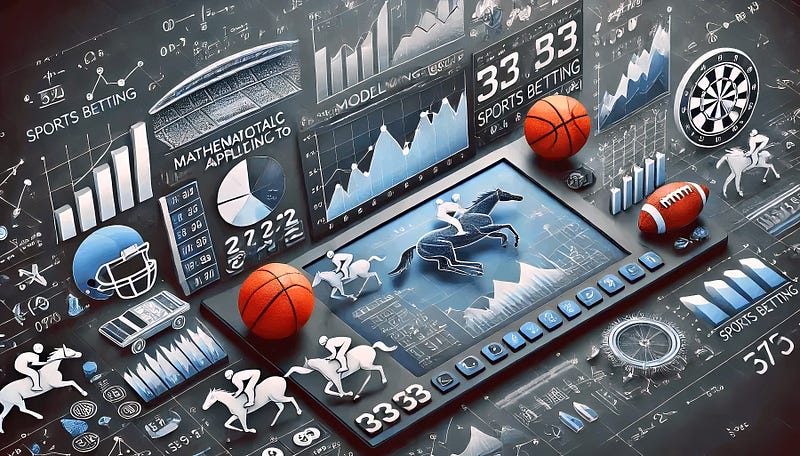
This article explores the hidden machinery behind sports betting futures — from Monte Carlo simulations and Elo ratings to bookmaker psychology and risk-balancing strategies. Whether you’re a bettor looking to outwit the house or just curious about the statistical drama that underlies the games, read on: the math behind the madness might surprise you.
The Math Behind the Markets: Building Futures Odds
Probability Theory and the Language of Odds
Odds are not just numbers — they’re encrypted probabilities. In American format, +400 odds imply a 20% chance of winning, while in decimal terms, 5.00 means the same thing. But these aren’t pure probabilities. Bookmakers insert a margin — known as the “vig” or “juice” — to ensure profitability. This means that the total implied probability across all options exceeds 100%, giving the house its edge.
But it’s not static. Odds move in response to bets placed, injuries reported, and performances played out. Beneath these fluctuations lies the elegant machinery of Bayesian probability, where each new piece of information updates the model: a quarterback injury, a key trade, or a surprise win alters the odds in real-time.
Simulations and Predictive Models
Oddsmakers don’t just guess — they simulate. Thousands of Monte Carlo simulations model entire seasons, game by game, injecting randomness for events like weather conditions or player health. Regression models project outcomes based on historical data, while Elo ratings — a carryover from chess — quantify team strength and momentum with each passing week.
Consider a team that, according to simulations, wins the championship 15% of the time. The resulting odds? Roughly +600. But those odds may shorten or lengthen depending on betting volume or changes on the field.
More Than Numbers: External and Emotional Inputs
The Human Factor: Coaching, Chemistry, and Chaos
Statistical models can’t predict a locker room implosion or a coach losing the team. That’s where expert judgment steps in. Veteran oddsmakers adjust numbers based on intangible factors — team morale, travel fatigue, or even media pressure. These elements aren’t easy to quantify, but they matter.
Then come the true curveballs: black swan events. COVID-19 shutdowns, referee scandals, sudden retirements — none of these were in the playbook, yet all require immediate recalibration of odds. In moments like these, the human eye overrides the machine.
Risk and Reward: How Sportsbooks Protect Themselves
Balancing the Book
Every sportsbook’s nightmare is lopsided action — a flood of bets on one outcome that could bankrupt the house. To prevent this, odds are adjusted not only based on probabilities but also to balance the book. If too many bets come in on one team, odds shorten to discourage more action — or lengthen on a rival to attract counter-bets.
This isn’t just about risk — it’s strategy. Bookmakers aren’t necessarily aiming to “predict” the winner but to guarantee profit regardless of who wins. They do this by creating an imbalance in payout potential that favors the house.
Futures as Financial Strategy
The long timeline of futures markets opens the door to sophisticated strategies. Some sharp bettors use arbitrage, betting on a team at long odds early and then hedging against them as the season progresses and odds shrink. Others rely on tools like the Kelly Criterion to determine how much to wager, maximizing long-term bankroll growth while managing risk.
A Case Study in Chaos: Leicester City, 2016
One of the most dramatic illustrations of futures odds gone awry is Leicester City’s 2016 Premier League title. At +5000 preseason odds, most bookmakers laughed off their chances. But as the team kept winning, models were forced to reprice them mid-season at +1000, then +200, and finally even.
What made Leicester’s run so difficult to price wasn’t just their poor preseason metrics — it was how models failed to capture the human momentum of belief, cohesion, and confidence. It was, in short, a story that beat the math — until the math finally caught up.
The Future of Futures: Tech, Ethics, and Evolution
Machine Learning Takes the Field
Oddsmakers are increasingly turning to machine learning algorithms to scan massive datasets: player biometrics, shot trajectories, even social media sentiment. Random forests, neural networks, and ensemble models give sportsbooks an edge in modeling nonlinear, high-variance outcomes. But even these tools fall short when faced with the chaos of sports.
Betting on Integrity
As betting expands into granular prop bets — Will a quarterback throw three touchdowns? Will a player be ejected? — new ethical questions arise. Are athletes subtly influenced by bettable stats? Is there enough oversight? Regulators and sportsbooks alike are grappling with the fine line between entertainment and exploitation.
Conclusion: Where Data Meets Drama
Futures betting sits at the thrilling intersection of probability, economics, and emotion. It’s where spreadsheets meet storylines, and algorithms compete with adrenaline. Every odds adjustment reflects a shifting reality — a market-based dance between cold calculation and human unpredictability.
For bettors, understanding this machinery isn’t just intellectually satisfying — it’s practical. Whether you’re chasing longshots or hedging favorites, knowing how futures are determined turns you from a fan into a strategist.
So the next time you see +1200 on your favorite underdog, remember: behind that number lies a universe of simulations, math, and maneuvering. And maybe — just maybe — a little magic.