Chasing the Golden Fish: The Story of Mahi Mahi
Mahi mahi embodies the paradox of the ocean: fleeting yet abundant, delicate yet strong, humble yet radiant. Its life is lived at full throttle, and in that urgency lies both beauty and caution for us.
Introduction
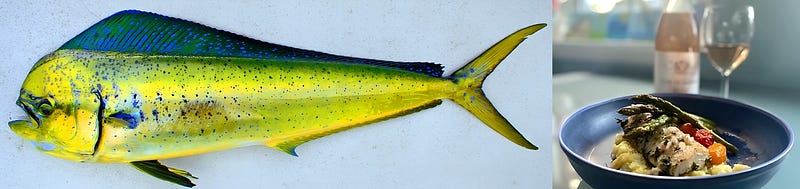
Few creatures of the sea are as dazzling, delicious, and ecologically significant as the mahi mahi. Known for its iridescent hues that shimmer between electric blues, neon greens, and golden yellows, this fish seems to glow like a living jewel in the ocean. But mahi mahi is more than a feast for the eyes — it is a global staple of cuisine, a marvel of biology, and a touchstone in conversations about sustainable fishing. From the azure waters of the tropics to the sizzling heat of a grill, mahi mahi’s journey tells a story of survival, adaptation, and our enduring relationship with the sea.
Taxonomy
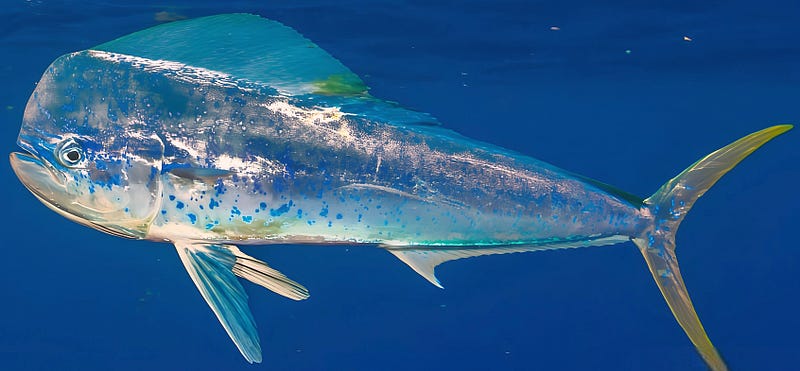
Scientifically, mahi mahi is classified as Coryphaena hippurus, belonging to the family Coryphaenidae. The name “mahi mahi” originates from Hawaiian, meaning “strong strong,” and in Spanish-speaking regions it is often called dorado, referencing its golden coloration. In English markets, it is frequently labeled “dolphinfish” — a name that has caused much confusion, since it is not related to dolphins, the mammals. Its close relative, the pompano dolphinfish (Coryphaena equiselis), shares its family but is smaller and less commercially important. Among edible species, mahi mahi reigns supreme, prized across continents for its firm flesh and versatile flavor.
Biology
Mahi mahi is built for speed and spectacle. Growing up to 6.9 ft (2.1 m) and weighing as much as 88 lb (40 kg), it is among the fastest-growing fish in the ocean, capable of gaining nearly 2.2 lb (1 kg) in a week. With a lifespan of only four to five years, mahi mahi lives in overdrive, maturing sexually within just a few months. Its compressed body, blunt head, and deeply forked tail allow it to slice through water at speeds topping 50 mph (80 km/h). The ever-shifting iridescence on its scales is more than aesthetic; it reflects the fish’s rapid metabolic and behavioral state, fading quickly after capture.
Ecology
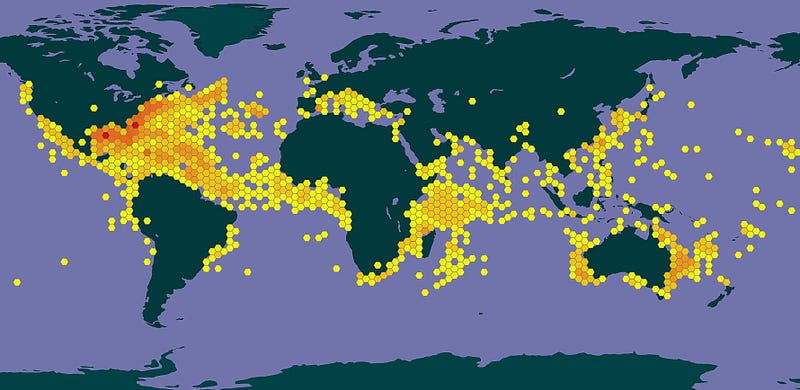
Mahi mahi inhabit tropical and subtropical waters worldwide, from the Gulf of Mexico to the Indian Ocean. They are pelagic, preferring open waters near the surface, where they form loose schools. Their diet consists largely of flying fish, squid, and smaller pelagic species. As predators, they regulate mid-level prey populations, while serving as prey for apex hunters such as sharks, billfish, and humans. Because mahi mahi grow quickly and reproduce prolifically, they are less vulnerable to overfishing than many slower-maturing fish like tuna. Still, bycatch from longline tuna fisheries has historically pressured populations, sparking efforts for more targeted and sustainable harvest methods.
Uses
Economically, mahi mahi is vital for artisanal and industrial fisheries alike. Its high growth rate and broad distribution make it a renewable marine resource when harvested responsibly. The U.S., Caribbean nations, and countries across the Pacific are among the largest suppliers. Sustainability certifications, such as those from the Marine Stewardship Council, increasingly guide buyers toward responsibly managed stocks. For coastal communities, mahi mahi provides not just export revenue but also essential nutrition.
Culinary Aspects
On the plate, mahi mahi offers a balance between delicacy and strength. Its flesh is lean yet moist, with a mild sweetness and firm texture that holds up to grilling, searing, or baking. A 6-oz (170 g) fillet provides about 135 calories, 31 g of protein, and less than 1 g of fat, making it a nutritional powerhouse. In Hawaii, it is often served grilled with tropical salsas of mango and pineapple. In Latin America, it shines in ceviche, where its firmness allows it to “cook” in citrus without breaking down. Its versatility extends across culinary cultures, from Mediterranean herb-crusted preparations to Japanese-style sashimi when ultra-fresh.
Wine Pairings
The mild sweetness and lean profile of mahi mahi pair beautifully with crisp, aromatic whites. A chilled Sauvignon Blanc from New Zealand offers bright acidity and herbal notes that highlight the fish’s freshness. For a more tropical expression, a Viognier from California complements mahi mahi’s sweetness with stone fruit aromas. Sparkling wines, particularly brut Champagne, add texture and cleanse the palate, making them an ideal match for grilled preparations. For adventurous pairings, a chilled rosé from Provence balances citrus-forward ceviche with elegance.
Conclusion
Mahi mahi embodies the paradox of the ocean: fleeting yet abundant, delicate yet strong, humble yet radiant. Its life is lived at full throttle, and in that urgency lies both beauty and caution for us. Harvested wisely, it becomes a symbol of how humanity can feast on the sea without exhausting it. Mismanaged, it risks becoming another cautionary tale of excess. To sit down to a plate of mahi mahi, then, is to participate in a conversation far larger than cuisine — it is to taste the rhythms of tropical seas, to weigh the choices of sustainability, and to honor one of nature’s most dazzling fish.