David Hockney, Painter of Light, Water, and Ways of Seeing
... “one of life’s true originals,” ... a figure who first gained notice through Pop-related work while never surrendering to that movement’s consumerist or media-driven imagery.
David Hockney, the British artist whose swimming pools, portraits, landscapes, and experiments with photography and digital drawing became some of the most recognizable images in modern art, died peacefully at his home in London on June 11, 2026, at the age of 88, according to statements reported by major news outlets and his publicist. His death closes a career that ran from the early 1950s to the present decade and that museums and critics alike have described as one of the most influential in art across both the 20th and 21st centuries.
Biography
Born in Bradford, Yorkshire, on July 9, 1937, Hockney trained first at Bradford School of Art from 1953 to 1957, then at the Royal College of Art in London beginning in 1959. Those years established the two constants that would define his career: fierce draftsmanship and an unwillingness to stay in one lane. His official chronology records early prizes, his first trip to New York in 1961, and his graduation from the Royal College with a gold medal in 1962; by 1963, his first solo exhibition at John Kasmin’s gallery had sold out, confirming that he was no longer simply a promising student but a major young artist with commercial and critical traction.
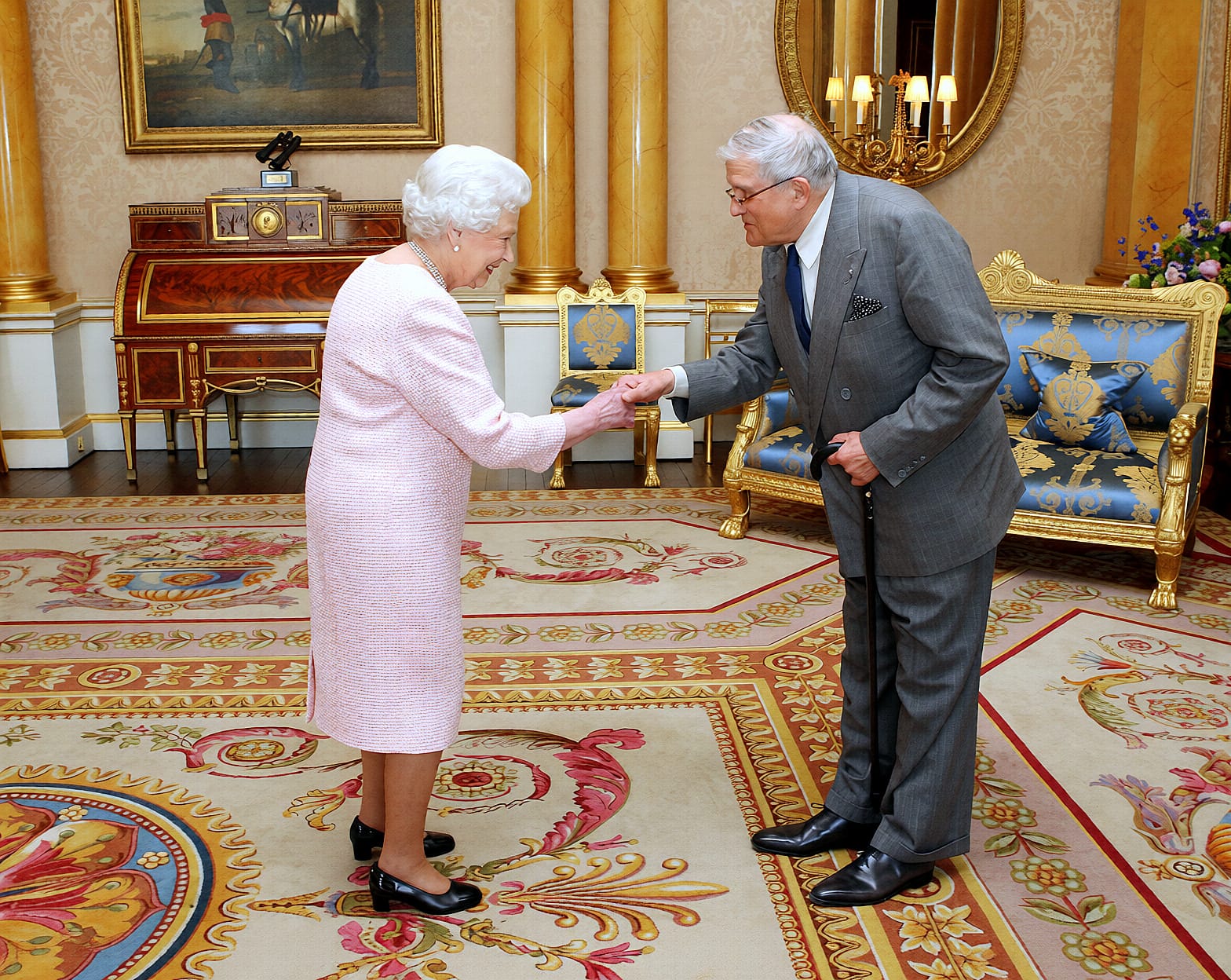
A first visit to Los Angeles in January 1964 changed the trajectory of his art. Hockney’s official chronology notes that he began using acrylic paint there, took up Polaroids, and started the stylized Southern California pictures and early swimming-pool works that made him famous. Over the next decade he developed the double portraits, pool paintings, and psychologically charged depictions of friends and lovers that would become central to his reputation; his first retrospective opened at London’s Whitechapel Art Gallery in 1970, and by 1978 he had decided to make Los Angeles his permanent residence. Later milestones stretched across decades and continents: a major retrospective traveled from LACMA to The Met and Tate in 1988; Queen Elizabeth II appointed him to the Order of Merit in 2012; and in 2025, just a year before his death, Hockney personally helped shape the vast Paris exhibition David Hockney 25, which gathered more than 400 works made between 1955 and 2025.
Artistic Contributions
Hockney was often grouped with British Pop art, but he never fit neatly inside it. The Metropolitan Museum of Art has described him as a figure who first gained notice through Pop-related work while never surrendering to that movement’s consumerist or media-driven imagery, and Britannica similarly emphasizes the economy of technique, preoccupation with light, and frank realism that distinguish his art. What separated Hockney from many of his contemporaries was his ability to make vivid color, flat pattern, and graphic clarity feel intellectually serious rather than merely stylish. He could paint pleasure without triviality, and he could handle realism without academic stiffness.
His subject matter was frequently autobiographical. The Met notes that his choice of sitters and scenes made much of his work read like a personal diary of where he had been and whom he had known, while later museum exhibitions have underscored how central portraiture remained across his long career. Parents, lovers, curators, friends, studio assistants, and cultural figures all entered the work, often with unusual tenderness and psychological precision. Just as important, Hockney’s art made room for openly gay identity and same-sex desire at a time when such directness was still rare. Museum presentations in Palm Springs and elsewhere have highlighted both his early interest in expressing that identity and his lifelong experiments with perspective as inseparable parts of the same artistic project.
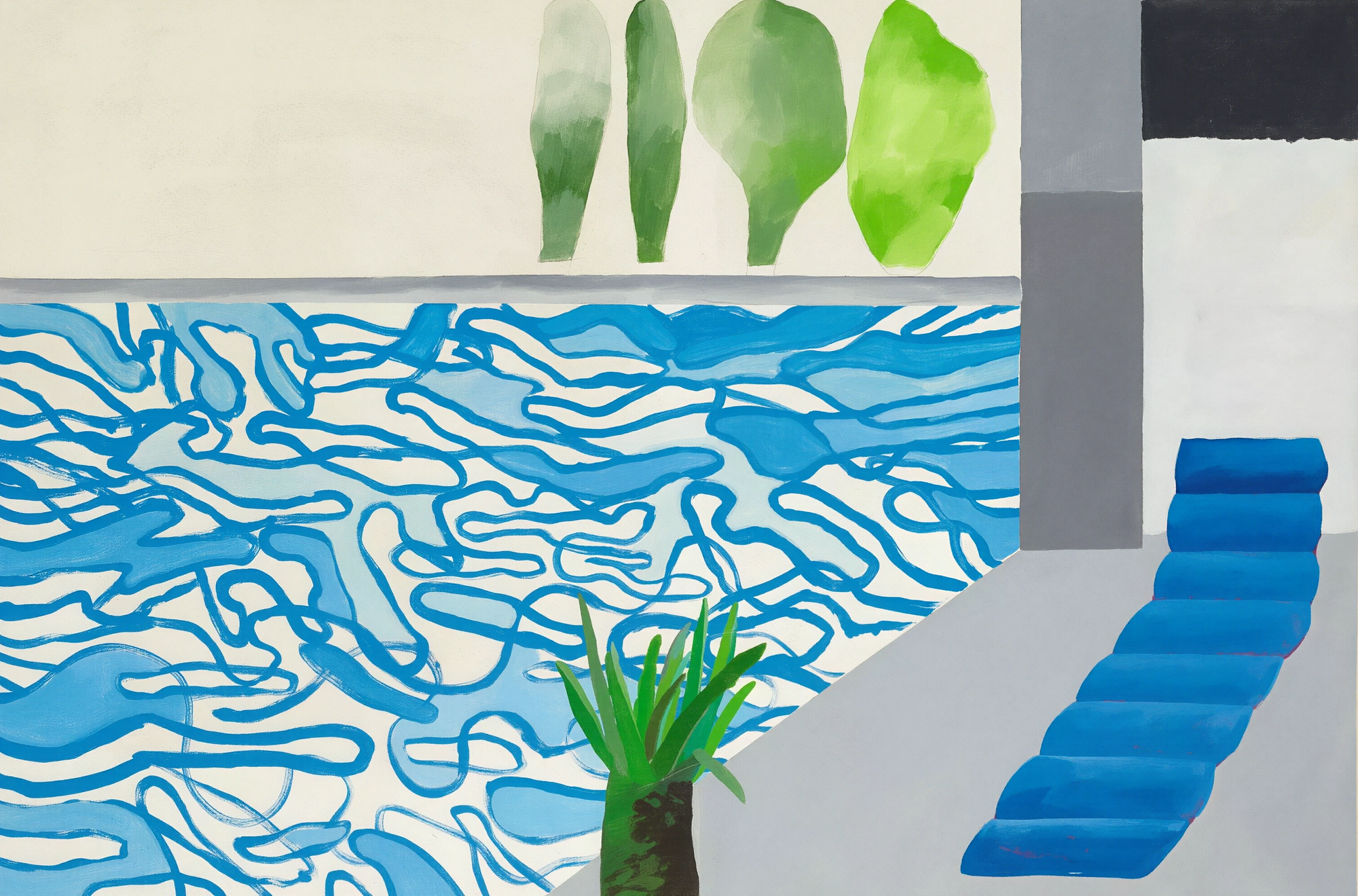
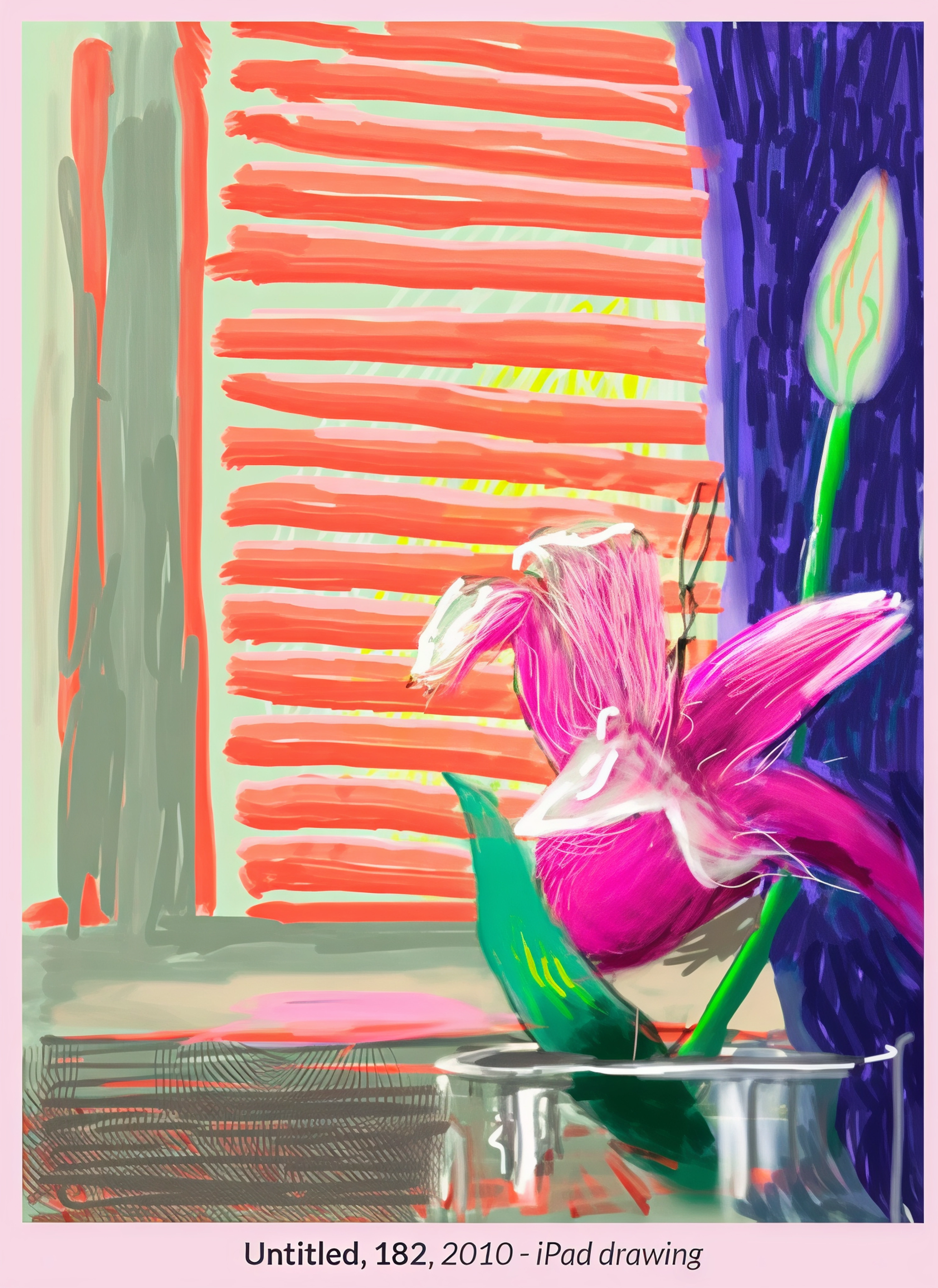
What looked effortless in Hockney was usually hard-won. The pool paintings are the clearest example. Christie’s documentation of his work stresses that these scenes were never only about leisure or California glamour; for Hockney, water was a formal problem, a surface that could turn stable lines into shimmering distortions and force painting to reckon with perception itself. That appetite for visual problems pushed him far beyond canvas. His official chronology tracks the evolution from photo “joiners” in the 1970s and 1980s, to opera and ballet design, to fax drawings, early computer drawings in 1990, digital photography, iPhone and iPad works, and immersive installations. Even late in life, as the Fondation Louis Vuitton exhibition showed, he treated oil painting, drawing, photography, tablet-based pictures, and video as parts of one continuous investigation into how movement, space, and time can be translated into flat images.
His stage work deserves special notice because it was not a side business. Hockney’s official works pages and museum accounts show a sustained design practice that included The Rake’s Progress, The Magic Flute, Turandot, Tristan und Isolde, and Die Frau ohne Schatten. Those productions fed back into the paintings: The Met’s discussion of Large Interior, Los Angeles points to links with Cubism, Chinese scroll painting, and the vivid palette of his opera sets, while other museum sources note that theatrical scale and color later resurfaced in the grand landscapes. In practical terms, Hockney built a rare enterprise model for an artist: every medium became R&D for the next one.
Highlighted Work
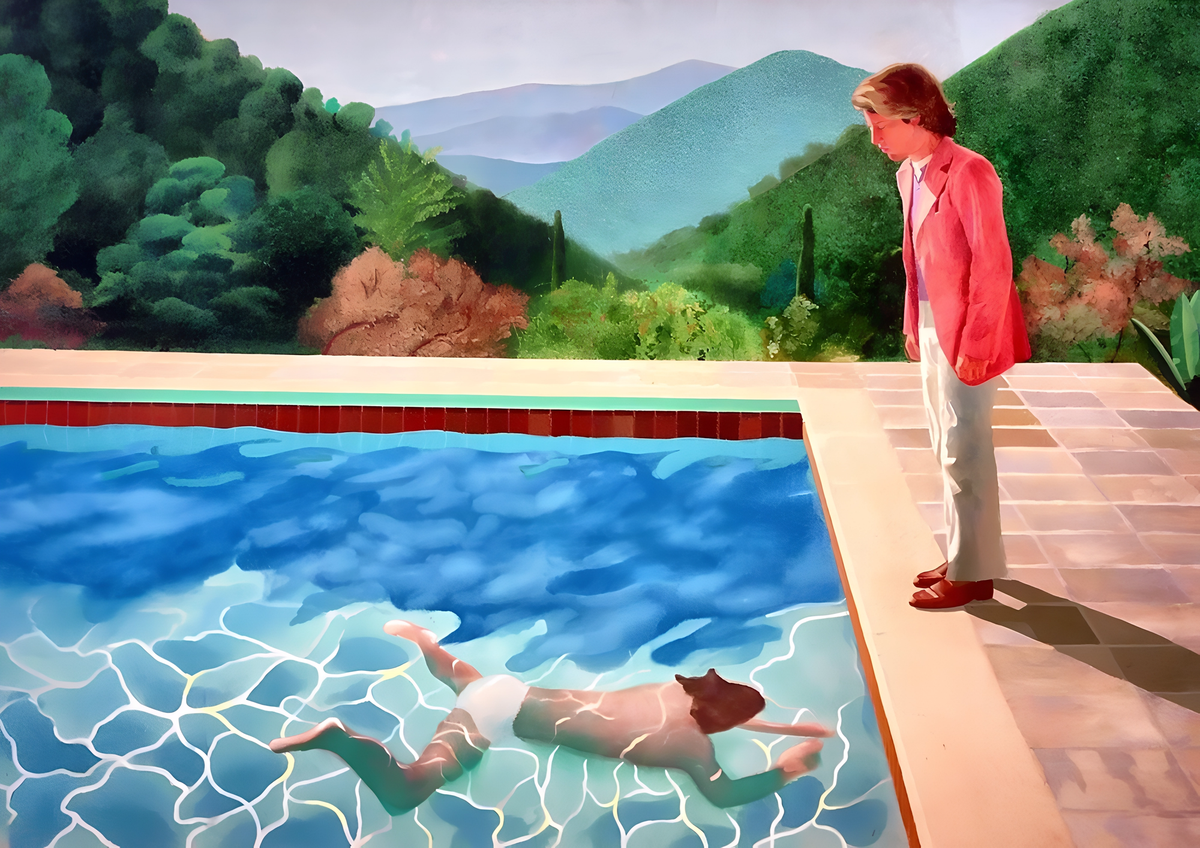
Among Hockney’s many landmarks, Portrait of an Artist (Pool with Two Figures) from 1972 remains the clearest distillation of his mature powers. Christie’s describes it as a culminating union of two of his defining motifs: the swimming pool and the double portrait. The standing figure is Peter Schlesinger, Hockney’s former lover and one of his most important muses; beneath the water is a swimmer moving through a lattice of refracted light. The painting is formally controlled but emotionally unsettled. Christie’s essay argues that the work’s autobiographical charge—its undertow of need, rejection, and intimacy—gives the image its enduring tension, turning an apparently serene poolside scene into a meditation on distance, desire, and loss.
The making of the painting has become part of its legend. Hockney originally conceived it after noticing the accidental juxtaposition of two photographs on his studio floor, then abandoned a first version before beginning again in 1972. To rebuild the image, he traveled to a villa near Saint-Tropez, took hundreds of reference photographs, and then returned to London to complete the final canvas in a burst of concentrated labor, working roughly 18 hours a day for two weeks before shipping it to New York. The result was an acrylic-on-canvas masterpiece measuring 84 by 120 inches. On November 15, 2018, it sold for $90,312,500 at Christie’s in New York, setting, at that moment, the record for the most expensive work sold at auction by a living artist. That sale made headlines, but the deeper point is that the market recognized what art history already had: this was one of Hockney’s signature achievements.
Legacy and Impact
Hockney’s legacy is larger than any one image or auction result. Museums have repeatedly framed his achievement in more structural terms: he kept figurative art ambitious when much of the art world preferred abstraction or concept; he challenged one-point perspective in favor of layered, lived vision; and he embraced new technologies without treating them as gimmicks. The Palm Springs Art Museum, for example, recently highlighted his lifelong experiments with non-traditional perspective and the way those experiments intersected with the expression of gay identity, while The Met’s retrospective emphasized his sustained effort to capture movement, space, and time in two dimensions. In plain terms, Hockney changed how painters, photographers, and viewers think about seeing.
His influence also operated at scale. The 2017–2018 retrospective organized by Tate Britain, the Centre Pompidou, and The Met offered a sweeping survey of more than 200 works across six decades, and both Britannica and Christie’s noted that the Tate stop became the most visited exhibition in that institution’s history. The 2025 Fondation Louis Vuitton exhibition then expanded the case, assembling more than 400 works and underscoring how fully Hockney remained engaged, personally involved in the exhibition’s sequence and layout and still making new pictures for it. This was not the pattern of an artist resting on brand equity; it was the pattern of a working master who kept productively rethinking his core practice.
The reaction to his death makes clear how wide that impact had become. Reuters reported tributes from King Charles III, who called Hockney “one of life’s true originals,” as well as praise from cultural leaders who described British art as having lost a giant. That public response matters because Hockney managed something few major contemporary artists achieve: he was admired by institutions, collected at the top end of the market, and still genuinely loved by broad audiences. Taken together, the retrospectives, the museum scholarship, and the immediate tributes suggest that his deepest legacy lies less in records and rankings than in the habits of attention he taught viewers to practice. He made water harder to paint, rooms harder to flatten, faces harder to overlook, and everyday life more visibly worth the trouble of seeing.