The Right Way to Think About the Karmelo Anthony Verdict of 2026
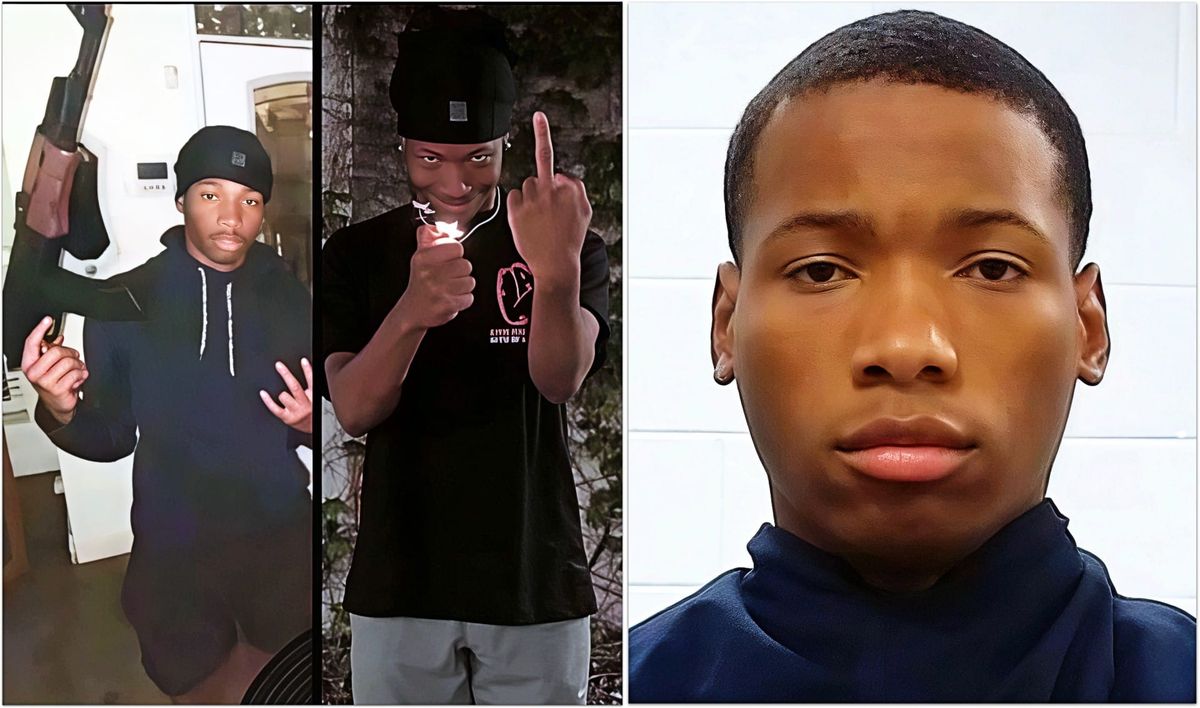
Karmelo Anthony was convicted of murdering Austin Metcalf after a track‑meet confrontation. Evidence showed Anthony initiated the intrusion and used a knife after a push. Matt Walsh used the case to attack post‑verdict innocence claims, racial narratives, and selective self‑defense standards.
Matt Walsh's Unflinching Dissection of the Karmelo Anthony Murder Verdict Exposes the Collapse of Racial Excuses, Selective Self-Defense, and Community Complicity in Fatal Violence
The conviction of nineteen-year-old Karmelo Anthony for the murder of seventeen-year-old Austin Metcalf on June 9, 2026, delivered more than a legal resolution to a stabbing at a Frisco, Texas, high school track meet. It supplied a stark test case for competing narratives about provocation, self-defense, race, and personal responsibility that have long shaped public responses to interracial violence. In the immediate hours after a Collin County jury deliberated for only three hours before finding Anthony guilty of first-degree murder and sentencing him to thirty-five years in prison, conservative commentator Matt Walsh launched a series of pointed statements on the social media platform X. These remarks, later amplified through his podcast and cross-posted discussions, did not merely react to the outcome. They weaponized the facts of the case to challenge what Walsh portrayed as entrenched patterns of denial, hypocrisy, and moral evasion.
The underlying incident occurred on April 2, 2025, at David Kuykendall Stadium during a weather-delayed track meet between rival schools. Anthony, a student at Centennial High School, entered the tent area reserved for Memorial High School athletes. Austin Metcalf, a linebacker and track participant at Memorial, along with his twin brother Hunter, asked Anthony to leave. Witnesses reported that Anthony issued a warning—"Touch me and see what happens"—while reaching into his backpack, where he carried a legal five-inch knife in violation of school policy. When Austin physically pushed or grabbed Anthony to remove him, Anthony drew the knife and stabbed him once in the chest. Metcalf ran down the bleachers, collapsed, and was pronounced dead at the hospital. Anthony fled but surrendered shortly afterward, repeatedly claiming self-defense and asking whether Metcalf would survive.
At trial, which began in early June 2026, prosecutors presented surveillance footage, multiple eyewitness accounts that Anthony had been asked to leave approximately fifteen times, and evidence that he had positioned himself as the aggressor by entering the space and issuing threats. The defense argued that the physical disparity—Metcalf outweighed Anthony by fifty to sixty pounds—combined with the immediate physical contact created a reasonable fear that justified the use of deadly force in a split-second decision. Anthony did not testify. The jury rejected both the self-defense claim and any reduction to sudden passion or manslaughter. The same panel imposed the thirty-five-year sentence the same day, making Anthony eligible for parole after roughly seventeen and a half years.
Walsh's commentary arrived within hours of the verdict and centered on several interlocking themes. One of his most widely circulated posts employed sharp irony drawn from reports about the Anthony family's circumstances during the legal process: "Karmelo Anthony’s parents wanted their son to live in a gated community, and now he will. So it all worked out for them in the end." Earlier coverage had noted the family's relocation to a secure residential area amid threats and the raising of substantial funds—exceeding half a million dollars on platforms such as GiveSendGo—framed as support for legal defense. Walsh's remark transformed those reports into a sardonic observation about unintended consequences, suggesting that the very security the family reportedly sought had been achieved through the son's imprisonment rather than through the legal victory some supporters had anticipated.
A second post directly confronted persistent claims of innocence or justified homicide that continued circulating after the verdict. Walsh wrote: "If you followed this trial and came away convinced that Karmelo is not guilty, you're either so retarded that you should be institutionalized or you're just happy that a white guy was killed and you don't care about the facts. In either case, you have no credibility on this issue or any other issue from now on, for as long as you live." This formulation left no middle ground. It framed denial of the jury's findings either as evidence of severe intellectual impairment or as tacit approval rooted in racial hostility toward the white victim. The language was deliberately crude, intended to strip away euphemisms and force readers to confront what Walsh saw as the evidentiary clarity of the case: Anthony had initiated the intrusion, issued a threat, and responded to a non-lethal push with a concealed weapon.
Walsh extended the critique beyond the individual defendant to broader cultural patterns. In another statement he declared: "Karmelo Anthony is yet another young black male who threw his life away—and more importantly took away an innocent person’s life—for no reason. It’s time for the black community to stop rallying around and defending these sociopath thugs and instead work on raising children who won’t make these kinds of insane, self-destructive choices in the first place." Here the analysis moved from courtroom facts to sociological territory. Walsh positioned the Frisco stabbing as part of a recurring sequence in which trivial disputes escalate to lethal violence because of normalized impulsivity, inadequate socialization, and a surrounding culture that often supplies exculpatory frameworks rather than accountability. He explicitly rejected the notion that external systemic forces primarily explained the outcome, instead locating primary responsibility in individual choices and the community norms that either reinforce or fail to constrain them.
The commentator further highlighted perceived inconsistencies in the treatment of self-defense claims across racial lines. He noted that many of the same voices asserting Anthony's right to stab a teenager over tent space had previously denied Kyle Rittenhouse any right to use force when pursued by an armed group. This comparison served to argue that standards of reasonable fear and proportional response were being applied selectively, contingent on the demographic identities of the actors rather than the objective sequence of aggression and response. In Walsh's framing, the Anthony case exposed the fragility of self-defense doctrine when public sympathy or activist investment aligned against a particular racial configuration.
Walsh also addressed the likely public and political aftermath. He predicted minimal organized protest or sustained media amplification, observing that the facts—an apparently unprovoked escalation by a black defendant resulting in the death of a white athlete—did not lend themselves to easy construction as a narrative of systemic injustice. He suggested that major political and media institutions aligned with progressive causes would prefer quiet omission over attempts to elevate Anthony as a sympathetic figure, in contrast to prior cases where different racial dynamics had produced extended campaigns of outrage and fundraising.
These statements collectively function as a rhetorical intervention that prioritizes direct causal attribution over layered contextual excuses. From the standpoint of discourse analysis, Walsh's approach employs provocation as a tool to disrupt interpretive inertia. Terms such as "sociopath thugs" and the blunt attribution of racial motivation to some deniers of guilt are not incidental; they are calibrated to pierce what he regards as protective euphemisms that have accumulated around certain categories of violent crime. In criminological terms, his emphasis on child-rearing, impulse control, and community-level norms aligns with research traditions that identify family structure, early behavioral patterns, and cultural tolerance for aggression as robust predictors of serious offending, often outweighing or interacting with broader structural variables.
The case itself contained elements that complicated simple racial framing. Both families experienced threats, doxxing, and harassment. Metcalf's father publicly rejected race as a motivating factor and expressed personal forgiveness while insisting on accountability. Some activist responses immediately labeled the conviction racist, while official statements from prosecutors and the Metcalf family maintained that the evidence centered on Anthony's actions as the initiator. Walsh's intervention cut through these cross-currents by insisting that the jury's factual findings should override identity-based reinterpretations.
Public reception of Walsh's posts, as measured by engagement metrics in the tens and hundreds of thousands, revealed deep polarization. Supporters viewed the commentary as a necessary corrective to years of narrative manipulation that had turned fundraising spectacles and grievance claims into substitutes for honest reckoning with individual agency. Critics described the tone—particularly the gated-community irony—as cruel or dehumanizing, arguing that it mocked the human cost to both families rather than advancing constructive analysis. This divide itself illustrates the challenge of public intellectual engagement in emotionally charged cases: blunt language risks alienating those who might otherwise examine the evidence, yet softer phrasing may leave unchallenged the very interpretive frameworks Walsh sought to dismantle.
In the wider context of American debates over criminal justice, self-defense law, and interracial violence, Walsh's post-verdict statements on June 9 and 10, 2026, stand as a case study in how high-profile outcomes can be leveraged to contest dominant explanatory models. By returning repeatedly to the specifics—the tent intrusion, the repeated requests to leave, the warning, the concealed knife, the non-lethal initiating contact—Walsh anchored his broader claims in the trial record rather than abstract theory. His prediction that the story would be quietly de-emphasized rather than weaponized proved consistent with the absence of widespread rioting or sustained political defense of Anthony in the immediate aftermath.
The thirty-five-year sentence imposed on Karmelo Anthony closes one chapter of legal accountability for the death of Austin Metcalf. Matt Walsh's accompanying commentary ensures that the cultural and moral questions surrounding the case remain open. Whether his stark assessments of parental responsibility, community complicity, and selective application of self-defense principles ultimately shift public understanding or simply harden existing divisions will depend on how subsequent discourse engages the evidentiary core he repeatedly highlighted. The gated community of prison may have fulfilled one set of aspirations in the most literal and tragic sense, but the deeper enclosures of narrative protection and excused violence that Walsh identified continue to demand scrutiny if similar losses are to be reduced in frequency or intensity.