Fragrance of the Forgotten Root: The Story of Orris (Iris germanica)
Introduction
Introduction
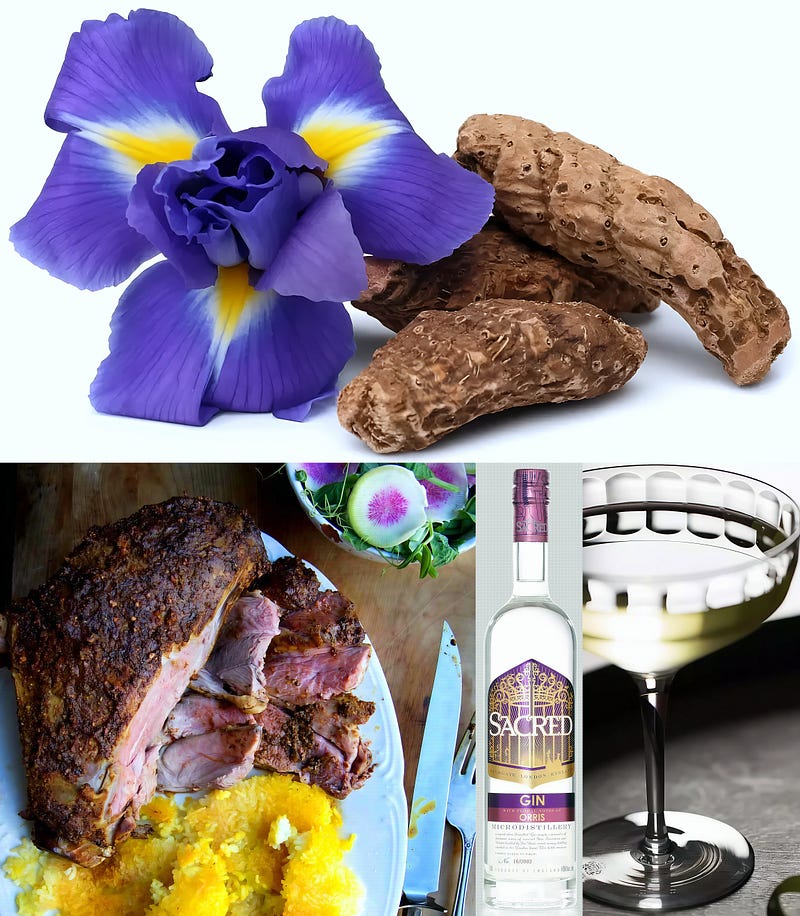
Beneath the flamboyant blooms of the iris, famed for their velvety purple and yellow flags, lies a hidden treasure that has perfumed courts, spiced kitchens, and sustained entire trades. This treasure is orris root, derived from the rhizomes of Iris germanica. For centuries, it has been valued not for its blossoms, but for what lingers long after they fade: a powder with the haunting scent of violets, the taste of history, and the promise of sustainability in a world hungry for natural luxuries.
Taxonomy
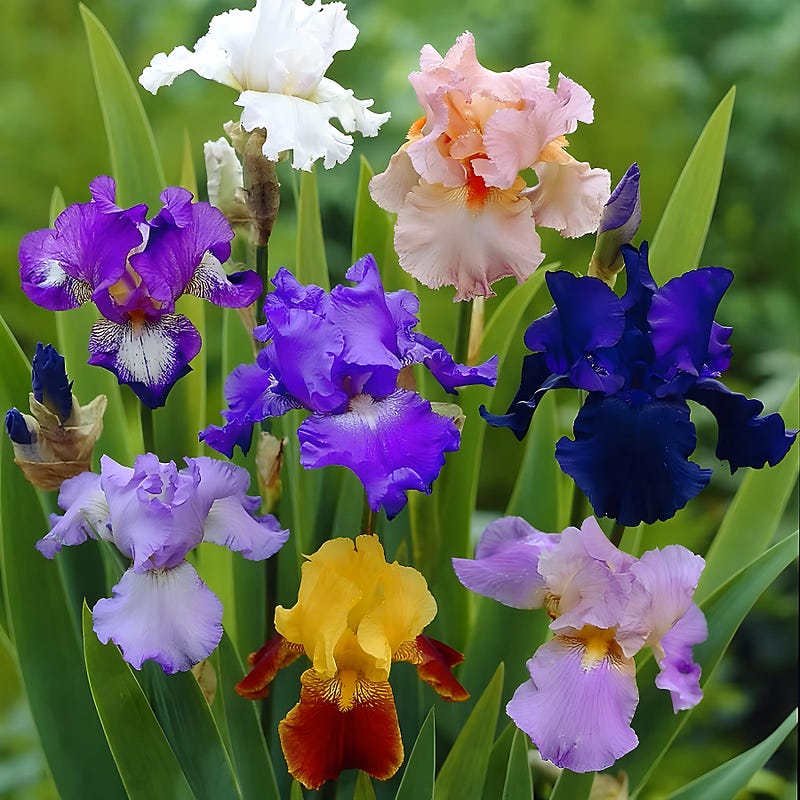
Iris germanica, commonly known as the bearded iris or Orris, belongs to the family Iridaceae. Its Latin name reflects its European roots, though it is now cultivated worldwide. While countless ornamental cultivars exist, only a few varieties are prized for orris root production. These include Iris germanica var. florentina and Iris pallida, which produce rhizomes rich in fragrant irones — the molecules responsible for the prized violet-like aroma. No subspecies are recognized as edible in the everyday sense, yet these select cultivars have long been processed into culinary and medicinal forms.

Biology
Standing tall at 3 ft (about 91 cm), the bearded iris is recognized by its sword-shaped leaves and striking blossoms, which emerge in late spring. But the true story begins underground, in the thick rhizomes that creep horizontally through the soil. Harvest comes only after years of patience — three to five years are required before the roots contain enough aromatic compounds to be worthy of distillation. Once dug, the roots are peeled, dried, and aged, sometimes for as long as five years, until they yield their characteristic fragrance. It is this marriage of patience and biology that makes orris root among the rarest botanical commodities.
Ecology
Native to the Mediterranean basin, Iris germanica thrives in well-drained soils under full sun, tolerating both limestone hillsides and cultivated garden beds. It plays a modest role in local ecosystems, providing nectar for pollinators and stabilizing fragile soils. Yet wild stands are threatened by habitat loss and overcollection, which has elevated the importance of sustainable cultivation. Today, most orris root destined for perfumery comes from controlled farms in Italy, Morocco, and southern France, where practices ensure both quality and conservation.
Uses
Historically, powdered orris root perfumed linens, powdered wigs, and even manuscripts, its sweet scent masking the mustiness of age. Apothecaries prescribed it for coughs, stomach ailments, and as a fixative in potions. In the modern era, its economic importance lies in perfumery, where aged orris commands prices rivaling saffron — sometimes exceeding $100,000 per ton. Its ability to fix scents makes it indispensable to luxury fragrance houses, while natural product advocates prize it as a sustainable alternative to synthetic chemicals. Smaller markets include herbal medicine and artisan distilleries, which revive old recipes calling for orris as a stabilizer.

Culinary Aspects
Though subtle, orris root has left its trace on European kitchens. It has been used to flavor gin, vermouth, and liqueurs, lending a whisper of violet to spirits. In powdered form, it once found its way into gingerbread and spiced wines, where its earthy sweetness balanced sharper flavors. Modern chefs experimenting with botanical cuisine have revived it as a garnish and aromatic — though caution is required, for its potency makes overuse overwhelming. Nutritionally, it contributes little beyond trace minerals, but its sensory power outweighs its caloric absence.
Wine Pairings
Pairing wine with a root that is more perfume than food is no small feat, but thoughtful choices can unlock harmony. Dishes or confections delicately perfumed with orris root find balance in aromatic white wines such as Gewürztraminer or Viognier, whose floral bouquets echo its violet notes. Sparkling wines, particularly brut Champagne, cleanse the palate while allowing orris’ haunting fragrance to linger. For adventurous pairings, dessert wines like Sauternes provide a honeyed counterpoint to their subtle dryness, creating a symphony of aroma that lingers long after the glass is set down.
Conclusion
Orris root stands as a paradox: a botanical luxury born of patience, labor, and the invisible chemistry of aging. It bridges the worlds of botany, perfumery, and gastronomy, carrying with it centuries of history and cultural memory. As sustainability becomes the guiding star of agriculture, orris root reminds us that slow cultivation and reverence for natural cycles can yield treasures no laboratory can replicate. To inhale its fragrance or taste its ghostly sweetness is to brush against the fleeting, fragile poetry of nature itself.