Ice, Iron, and Influence: Why Greenland Anchors America’s Arctic Defense Strategy
Introduction Beneath its glaciers and windswept fjords, Greenland stands as a cold sentinel in a warming world — a remote landmass that…
Introduction
Beneath its glaciers and windswept fjords, Greenland stands as a cold sentinel in a warming world — a remote landmass that now pulses at the heart of 21st-century geopolitics. For decades, the United States has regarded Greenland not merely as frozen terrain but as a strategic linchpin bridging two continents, a military vantage point, and a vault of untapped resources. As great powers compete for dominance in the Arctic, the question is no longer why Greenland matters — but whether America is prepared to defend its stake there in the decades to come.
The Cold Origins of Strategic Partnership
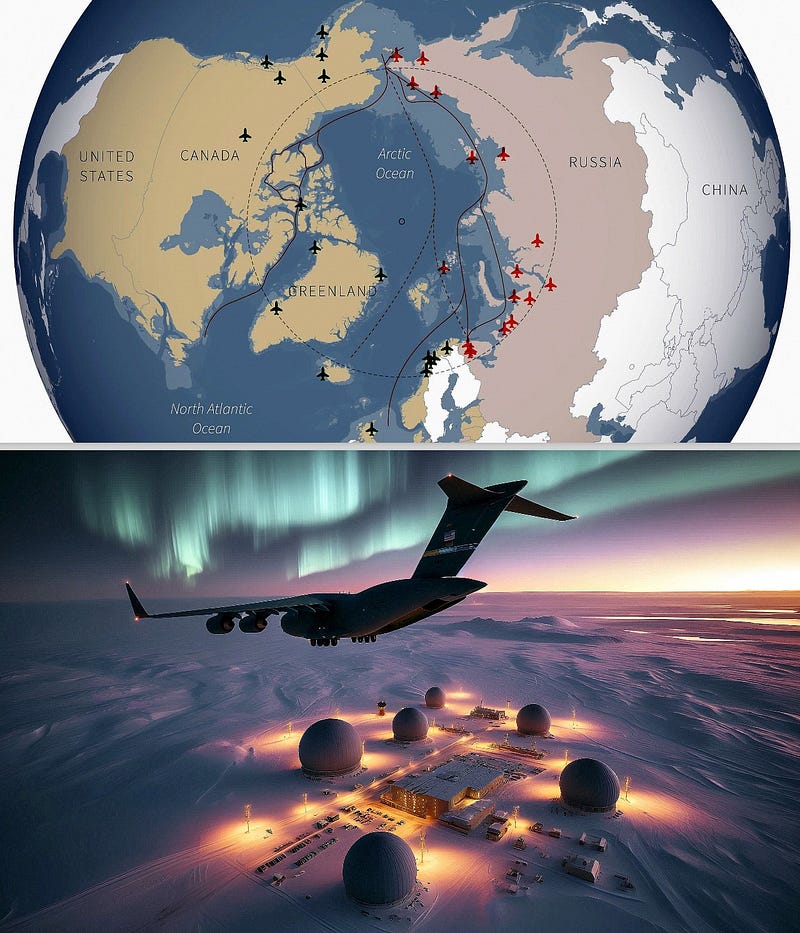
Greenland’s military entanglement with the United States was born in the fires of World War II, when Nazi U-boats prowled the North Atlantic and American planners recognized the island’s importance as a forward base of operations. By 1951, the Thule Air Base — built under the shadow of Cold War paranoia — cemented America’s foothold on the icy frontier. Through radar and early warning systems, Thule became the watchtower of the north, capable of detecting Soviet missile launches long before they reached U.S. soil.
That foundation, laid by the 1951 Defense of Greenland Agreement with Denmark, created not just infrastructure but a durable alliance. It allowed American forces to operate in one of the most logistically challenging environments on Earth — an arrangement still in effect today.
The Geography of Power
What makes Greenland indispensable isn’t merely its history — it’s its geography. Nestled between North America and Europe, the island commands access to the North Atlantic and Arctic oceans, serving as both a choke point and a listening post. With new polar shipping lanes emerging due to climate change, Greenland has become a vital gatekeeper to the future of maritime commerce and military transit.
From Thule’s high-tech radar arrays to its role in America’s missile defense and space monitoring networks, Greenland’s location grants the U.S. a strategic edge that’s difficult to replicate elsewhere. In an era of hypersonic weapons and orbital surveillance, having eyes on the Arctic sky is no longer optional — it’s essential.
Resource Rivalries and the New Cold War
Greenland’s value isn’t only above ground — it’s also buried beneath its ancient ice sheets. The island is believed to contain troves of rare earth elements, oil, and natural gas — resources vital to the manufacture of everything from smartphones to stealth fighters. As global supply chains fracture and China tightens its grip on rare earth exports, Washington is increasingly eyeing Greenland as a strategic alternative.
Both China and Russia have expressed interest in the island’s assets, prompting renewed U.S. attention. In 2020, the United States reopened its consulate in Nuuk for the first time since the 1950s, a symbolic return that signaled a broader intent: to counter adversarial influence and reinforce its presence in the Arctic Circle.
Modern Alliances, Evolving Threats
The 2004 amendment to the original U.S.–Denmark defense agreement refreshed the alliance, adapting it to 21st-century threats including cyberwarfare, satellite surveillance, and climate-driven instability. Greenland is also increasingly central to NATO’s Arctic posture, with American operations on the island supporting allied defense drills and intelligence efforts.
Yet challenges remain. Melting permafrost and erratic weather patterns complicate military logistics. Infrastructure on the island, built for Cold War scenarios, now must be adapted to modern warfare’s demands: unmanned drones, satellite communications, and climate-resilient radar installations.
Looking Ahead: Balancing Defense and Diplomacy
As the Arctic melts, new dangers rise — not just from rival nations, but from environmental degradation. The U.S. faces a dual imperative: to defend its interests without destroying the fragile ecosystems that define the region. This means investing in green military technology, collaborating on environmental research, and involving Indigenous communities in strategic planning.
It also means strengthening partnerships with Denmark, Iceland, Norway, and Canada — Arctic nations with a shared interest in regional stability. Whether through diplomacy or deterrence, Greenland will remain at the heart of America’s northern strategy.
Conclusion
Greenland is no longer just a relic of Cold War geography. It is a living outpost of America’s 21st-century defense network, a site where climate, commerce, and confrontation converge. With global powers circling and the ice receding, the United States cannot afford complacency. The next frontier of security won’t be defined by land or sea — but by ice, iron, and influence.