Mandarin Majesty: The Cultural and Culinary Legacy of Siniperca chuatsi
Introduction The mandarin fish, Siniperca chuatsi, is not merely another freshwater species — it is a symbol of refinement, balance, and…
Introduction
The mandarin fish, Siniperca chuatsi, is not merely another freshwater species — it is a symbol of refinement, balance, and ecological intelligence in East Asia’s aquatic world. Revered for centuries across Chinese rivers and royal kitchens, this fish embodies a living link between artistry and appetite, between the natural world and the culinary imagination. Known in Mandarin as guì yú (桂鱼), the fish’s luminous scales once adorned the silk patterns of imperial robes. Its flesh, delicate yet structured, has long been celebrated in Chinese poetry and banquets as the freshwater equivalent of jade: elegant, pure, and valuable. Today, as sustainability reshapes global food systems, the mandarin fish occupies a unique position at the intersection of heritage and innovation — a creature of beauty, biology, and balance.
Taxonomy
Classified under the family Sinipercidae, Siniperca chuatsi stands as the most commercially and culturally important species of its genus. It belongs to the Kingdom Animalia, Phylum Chordata, Class Actinopterygii, Order Perciformes, Family Sinipercidae, Genus Siniperca, and Species S. chuatsi. Closely related to Siniperca scherzeri, the golden mandarin fish, it can be distinguished by its paler body, heavier build, and stronger flavor. In China, it is called guì yú or mandarin perch, in Japan kumanishiki (クマニシキ), and in Korea gwi-eo (귀어). English-speaking markets label it as “mandarin fish” or “Chinese perch.” The species has been selectively bred in Chinese aquaculture systems for centuries, producing high-yield strains that thrive in the Yangtze and Pearl River basins, as well as in inland farming ponds. Unlike many freshwater species, the mandarin fish feeds exclusively on live prey, a behavior that influences both its taste and its symbolic purity in Chinese gastronomy.
Biology
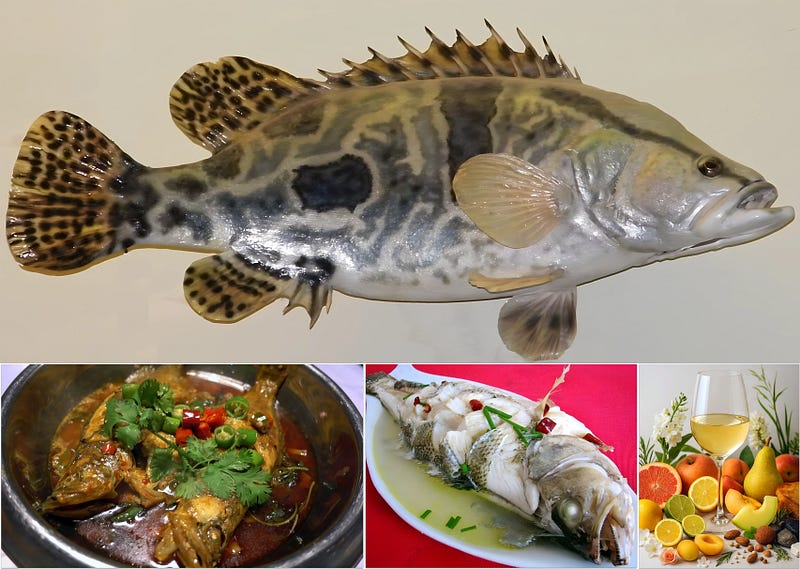
The body of Siniperca chuatsi is a masterpiece of adaptation. It typically measures approximately 40 cm (15.7 in) in length and can weigh up to 2.5 kg (5.5 lb). Its body is slightly compressed, tapering elegantly toward the tail, with large, golden-green scales that shimmer in the sunlight. The mouth is broad, the jaw strong, and the teeth sharp — clear indicators of a predatory nature. It feeds primarily on small fish and aquatic insects, exhibiting rapid strike reflexes that make it a highly efficient hunter. Spawning takes place when water temperatures rise above 20°C (68°F), usually between April and June. Females deposit adhesive eggs on submerged plants, and males guard them until they hatch after three to five days. Growth is steady in natural waters and accelerated in aquaculture, where juveniles can reach market size within 12 months under optimal conditions of temperature, aeration, and feed density. The species’ longevity averages 6–8 years, though exceptional specimens in protected reserves may live longer. Its physiological tolerance for moderate turbidity and variable oxygen levels explains its adaptability to controlled pond environments, making it a stable candidate for intensive farming.
Ecology
In ecological terms, the mandarin fish acts as a regulator of small fish populations, maintaining equilibrium in freshwater systems. Its natural distribution spans the middle and lower Yangtze, the Pearl River, and major lake systems such as Poyang and Dongting.

The species prefers calm, oxygen-rich waters and moderately vegetated habitats that provide both cover and breeding substrate. The mandarin fish’s feed conversion ratio — about 1.1:1, meaning that 1.1 kg (2.4 lb) of live feed yields 1 kg (2.2 lb) of fish flesh — places it among the most efficient freshwater predators in the world. However, industrial pollution and habitat loss have disrupted its native ecosystems, leading to declining wild populations. In response, aquaculture has become the main source of supply, producing more than 400,000 metric tons annually in China. Modern integrated systems recycle water through biofilters and utilize polyculture models, where the mandarin fish coexists with filter-feeding species such as silver carp and bighead carp, reducing waste and improving water clarity. Its ecological role, whether in the wild or in cultivation, remains one of control and harmony: a predator that sustains rather than destabilizes.
Uses
Every part of Siniperca chuatsi is valuable, both nutritionally and industrially. Its edible yield reaches nearly 55 percent of total body weight, with the flesh providing 120 kcal (500 kJ) per 100 g. Protein content is approximately 20 g per 100 g, while lipid levels remain below 3 g, dominated by omega-3 fatty acids — mainly EPA and DHA. The fish is also rich in selenium, lysine, and vitamin D, nutrients that support immunity, muscle repair, and heart health. The traditional dish qingzheng guiyu (清蒸桂鱼), or steamed mandarin fish, highlights the species’ natural sweetness and tenderness. A typical preparation involves a 1.5 kg (3.3 lb) fish steamed for 10 minutes at 100°C (212°F), garnished with ginger, scallions, and Shaoxing wine. The flavor remains pristine, accentuating umami without heaviness. In southern China, chefs may substitute soy sauce with rice vinegar to emphasize brightness and clarity, while in Sichuan cuisine, the same fish transforms into a spicy broth laced with fermented chili. Beyond culinary use, fish bones are processed into collagen and gelatin for biomedical and cosmetic applications, while internal organs are used in animal feed, contributing to a circular economy. Byproducts are converted into high-quality fishmeal with protein levels around 55 percent, enhancing livestock growth and reducing feed waste.
Medicinally, bioactive peptides extracted from mandarin fish skin exhibit antioxidant and anti-inflammatory properties in vitro. Collagen hydrolysates show promise for improving skin elasticity and joint function, though human studies remain limited. The species is safe for consumption, free from natural toxins or antinutrients, and recognized as a safe food ingredient under Chinese and international regulatory frameworks. Its farming yield in intensive pond systems can exceed 12,000 kg per hectare (10,700 lb per acre) annually. Carbon emissions per kilogram of fish are lower than for chicken or pork, positioning it as a sustainable protein for the future.
Culinary Aspects
The sensory character of Siniperca chuatsi is subtle yet memorable. Its flesh presents a fine-grained, ivory-white texture that holds form during steaming or poaching. The aroma is faintly marine, with a hint of sweetness reminiscent of crustacean broth. Taste registers as clean umami, balanced by a lingering silkiness that leaves no trace of oiliness. The mouthfeel is supple, yielding under light pressure without fragmentation. In terms of complexity, the flavor deepens with temperature; mild sweetness dominates at 60°C (140°F), while savory notes intensify beyond 70°C (158°F). The chemesthetic perception is neutral, ideal for pairing with herbs, citrus, or soy-based sauces. In culinary philosophy, the mandarin fish occupies the same space as abalone or sea bream: a medium for purity and restraint rather than spice or excess. Its visual presentation — silver-gold with translucent white flesh — enhances its appeal in banquet settings. When fresh, its flavor stability allows chefs to hold fillets under refrigeration at 4°C (39°F) for up to 48 hours without loss of aroma.
Stinky Mandarin Fish, known as Chou Gui Yu (臭鳜鱼, chòu guì yú) in Chinese, is a traditional dish from Anhui province made from fermented mandarin fish. The preparation involves a unique aging process, not typical fermentation. Fresh fish are lightly salted, then placed in a cool, dark area for about 5 to 10 days. The mild salting helps prevent spoilage while allowing natural enzymes and bacteria, like Bacillus subtilis, to break down proteins, creating a strong, pungent smell similar to some cheeses.
The cooking process involves rinsing the aged fish and then pan-frying or braising it with ingredients such as pork belly, garlic, and chili peppers. The fish’s texture remains tender, and its umami flavor is enhanced despite the strong aroma. The dish is distinguished by its garlic-clove-shaped texture when cooked. Although the raw fish has a strong odor, the final dish is savory and rich in flavor, making it a prized delicacy within Chinese cuisine.
Wine Pairings
Steamed mandarin fish harmonizes with crisp, mineral-driven wines that respect its gentleness. An Austrian Grüner Veltliner offers subtle spice and green apple tones that accentuate its clean profile. A Mosel Riesling Kabinett, with restrained sweetness and sharp acidity, refreshes the palate between bites and highlights the fish’s natural umami. For richer, sauce-based versions, a Loire Chenin Blanc Sec provides body and texture, mirroring the fish’s satin mouthfeel. In Sichuan-style preparations where chili and fermented bean paste dominate, an Alsatian Pinot Gris balances heat through floral aromatics and low tannin. A Japanese Koshu wine, pale and saline, pairs beautifully with soy and ginger, enhancing the broth’s depth without intrusion. Each pairing emphasizes precision over intensity, aligning aromatic nuance with the fish’s delicate architecture rather than masking it.
Conclusion
The mandarin fish is a paradox made flesh: fierce in nature yet serene on the plate. It reflects centuries of human observation and adaptation — an organism shaped by rivers, revered by poets, and refined by farmers. As freshwater ecosystems face mounting pressure, Siniperca chuatsi represents a vision of sustainable abundance. Its continued presence on China’s tables and in its waters reminds us that progress need not erase tradition, and that true luxury is harmony — between the eater and the eaten, between culture and conservation, between appetite and restraint.