Overkill and Obsession: The Neuropsychology of Sadistic Homosexual Serial Killers
Introduction: There exists a chilling subgenre within the annals of serial homicide: the sadistic homosexual killer who engages in…
Introduction:
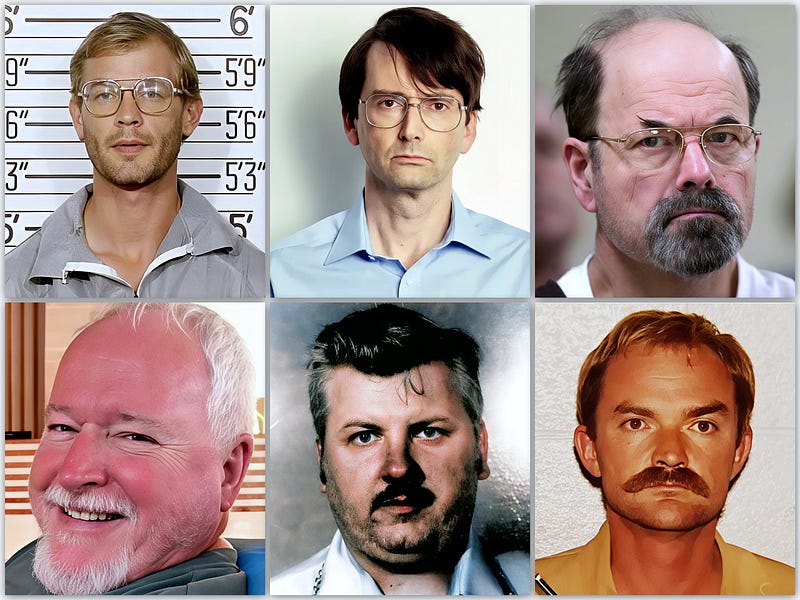
There exists a chilling subgenre within the annals of serial homicide: the sadistic homosexual killer who engages in “overkill” — a form of excessive violence that transcends the bounds of necessity. These are crimes not merely of murder but of ritual, performance, and pathology. From Jeffrey Dahmer’s necrophilic dismemberments to Dennis Nilsen’s bathtub rituals, these killers embody a disturbing convergence of sexual deviancy, psychological disorder, and deeply rooted social alienation. But what drives this level of brutality? And why does it often manifest with such theatrical ferocity?
This article explores the forensic, psychological, and neurobiological landscape of overkill among sadistic homosexual serial killers, peeling back the skin of sensational headlines to expose the mechanisms of dominance, trauma, and dysfunction that fuel such unrelenting violence.
The Anatomy of Overkill: What Forensics Reveal
In the forensic lexicon, “overkill” refers to the infliction of gratuitous injuries far beyond what is necessary to cause death — dozens of stab wounds, post-mortem mutilations, and in many cases, the removal of organs or body parts as “trophies.” Forensic pathologists identify overkill as a signature — a behavioral calling card that reflects not only rage, but arousal.
Such killers often fixate on the genitals, throat, or torso — areas tied to both vulnerability and sexuality. Piquerism, a rare paraphilia involving sexual arousal from stabbing or cutting, frequently emerges in these cases. For example, Bruce McArthur, who killed eight men in Toronto’s gay village, exhibited patterns of post-mortem mutilation that bordered on surgical. In other cases, such as Dahmer’s, the bodies were not only dismembered but partially consumed — acts designed to symbolically absorb and possess the victim indefinitely.
Psychological Engines: Trauma, Fantasy, and Power
Sadistic serial killers are not born in a vacuum. Their emotional blueprints are often forged in the fires of childhood abuse — sexual trauma, abandonment, or violent neglect. This origin story is neither a justification nor a template, but it offers context. Many develop paraphilic disorders that blend sexual gratification with domination, suffering, and control.
Fantasy is the linchpin. Before the first murder, there are often years of elaborate mental rehearsals — autoerotic asphyxiation, voyeurism, or the torture of animals. As tolerance builds, the fantasy demands escalation. Death becomes both the climax and the canvas for their desires.
Some killers, like Dennis Rader, assume their victims’ roles in death — wearing their clothes, posing bodies, or sleeping beside corpses. This phenomenon, termed “becoming the victim,” extends the killer’s control beyond life and into symbolic immortality.
The Neurobiology of Sadism and Overkill
Beneath the surface of this behavioral pathology lies a dysfunctional neurochemical landscape. Neuroimaging studies reveal:
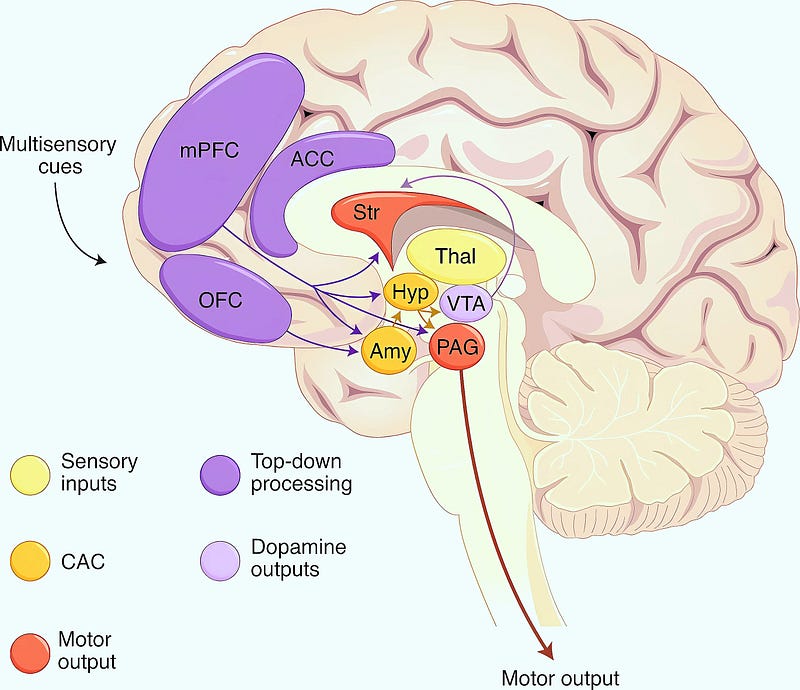
- Striatal hyperactivation during acts of cruelty, especially in the caudate nucleus and putamen, creates a reward circuit where violence is pleasurable.
- Reduced activity in the prefrontal cortex, especially the ventromedial region, impairs empathy and disinhibits aggression.
- Amygdala and superior temporal gyrus abnormalities heighten threat reactivity and enhance emotional salience — making the sight of pain stimulating rather than repulsive.
This fusion of broken empathy and heightened reward creates the perfect storm for what neuroscientists call “appetitive aggression” — violence not as a means, but as an end in itself.
Hormonal and genetic factors also play a role. Elevated testosterone and low cortisol correlate with predatory violence, while polymorphisms in the MAOA and COMT genes affect neurotransmitter metabolism, particularly in individuals with comorbid psychopathy or PTSD.
Systemic Failures: The Role of Homophobia in Law Enforcement
Many of these crimes persisted due to negligence and bias. Police departments have historically dismissed missing gay men as “runaways,” “drifters,” or sex workers — unworthy of serious investigation. Jeffrey Dahmer’s victim Konerak Sinthasomphone was returned to him by officers who laughed off community concerns, allowing the killer to continue his spree.
Bruce McArthur’s crimes unfolded over nearly a decade, with community activists repeatedly warning of a serial predator. Their pleas were ignored. The victims — often racial or sexual minorities — were considered disposable.
This systemic indifference created fertile ground for predators to operate undetected. The silence was not only complicit — it was enabling.
Escalation and Addiction to Violence
Overkill is not static; it intensifies. Much like drug users build tolerance, sadistic killers require escalating brutality to achieve the same level of arousal. Initial fantasies give way to hands-on torture. Each act feeds into a dopamine loop — pain begets pleasure, which begets repetition.
This behavioral sequencing is often linear. What begins as voyeurism or fetishistic behavior moves into strangulation, bondage, mutilation — and ultimately, death.
Killers such as John Wayne Gacy and Dennis Nilsen illustrate this trajectory with chilling precision. Their early crimes were experimental; their later ones, rehearsed rituals performed with clinical efficiency.
Conclusion: Ritual, Violence, and the Unspoken Mirror
Overkill is not merely about death — it’s about message, memory, and meaning. These killers do not just want to extinguish life; they want to transform it into a stage on which they can perform their fantasies of control, rejection, and vengeance.
But perhaps the most disturbing truth is not what lies in their minds — but what allowed them to flourish: a society willing to look away.
Future research must delve deeper into the brain’s reward-aggression circuitry and the traumatic roots of sadism. But equally urgent is a cultural reckoning with the prejudices that have left entire communities vulnerable — and countless lives forgotten.