The Irreducible Burden of Choice: A Philosophy of Psychopathy, Serial‑Killer Formation, and the Signs That Shape Retributive Justice
“All of us make our own decisions. Regardless of background. He chose what he did to these seven innocent people.” This raw statement asserts a profound truth: human agency endures every causal influence. Background explains risk but never erases choice. Moral responsibility is non-negotiable.
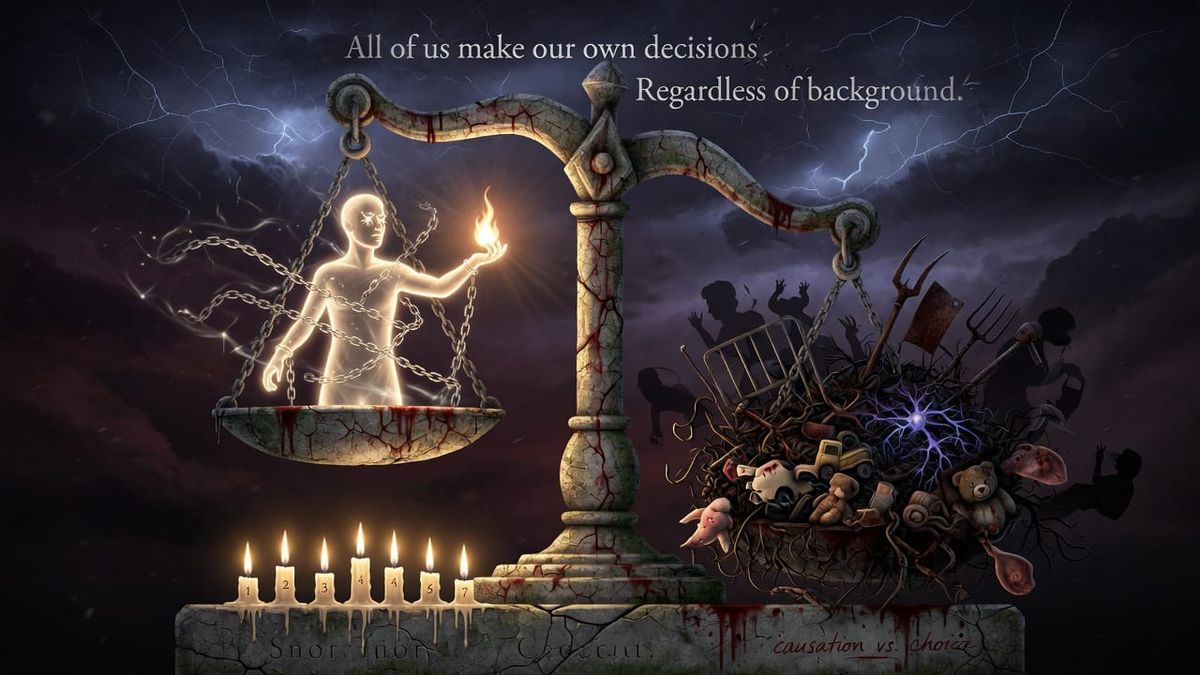
All of us make our own decisions. Regardless of background. You chose to do what you did to these seven innocent people.
This raw declaration, uttered in direct confrontation with a serial killer, stands as a stark philosophical declaration that human agency survives every causal influence. Delivered in the context of William Devin Howell’s conviction for the murders of seven victims in Connecticut, it rejects any deterministic mitigation rooted in trauma, genetics, environment, or neurobiology. The statement insists that choice is the ultimate origin of harm, grounding moral responsibility in the concrete suffering of innocent lives. It embodies a robust libertarian incompatibilism: agents possess the genuine capacity to have done otherwise, and background factors, however potent, do not absolve authorship or desert.
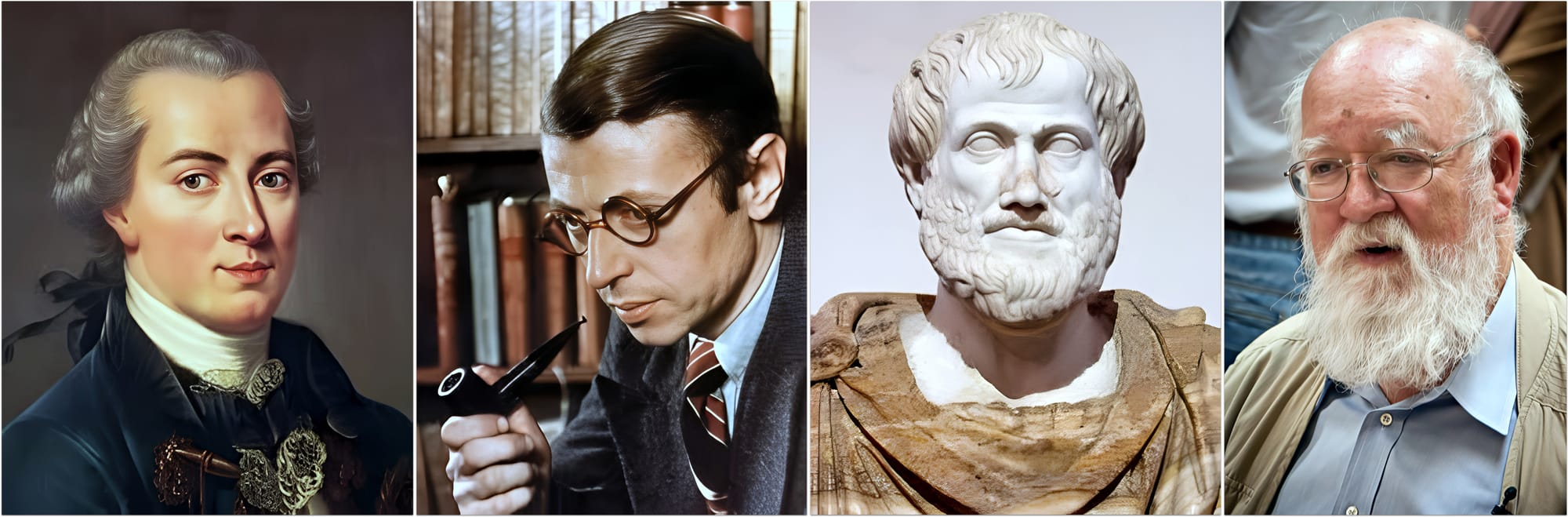
Philosophically, this stance aligns with Immanuel Kant’s concept of autonomy, where the rational will legislates moral law independent of empirical causes, and Jean-Paul Sartre’s existential condemnation to freedom, in which individuals author their essence through successive choices rather than being defined by facticity. Retributivist justice follows naturally: punishment is deserved precisely because the wrongdoer freely chose evil, creating a moral debt to victims that cannot be dissolved by causal explanation. Aristotelian voluntary action reinforces the point—acts originating in the agent with knowledge remain fully attributable. Even compatibilist views, such as Daniel Dennett’s practical intentional stance, acknowledge the necessity of holding individuals responsible to sustain moral life, yet the statement’s edge refuses any softening of the binary between choice and excuse.
Counterarguments from hard determinism are formidable. Galen Strawson’s regress demonstrates the impossibility of ultimate self-causation, while neuroscience (Libet-style experiments) and Sam Harris’s arguments suggest conscious choice lags unconscious processes. Biosocial criminology, exemplified by Terrie Moffitt’s developmental taxonomy, shows how gene-environment interactions shape persistent antisocial behavior, with childhood trauma and genetic predispositions literally wiring impaired impulse control and empathy deficits. In serial homicide, these factors raise legitimate questions about the extent to which “background” undermines the capacity for alternative possibilities. Nevertheless, the statement maintains its force as a necessary bulwark against moral nihilism: if agency dissolves entirely into causation, then condemnation of evil—and recognition of victims—loses its foundation.

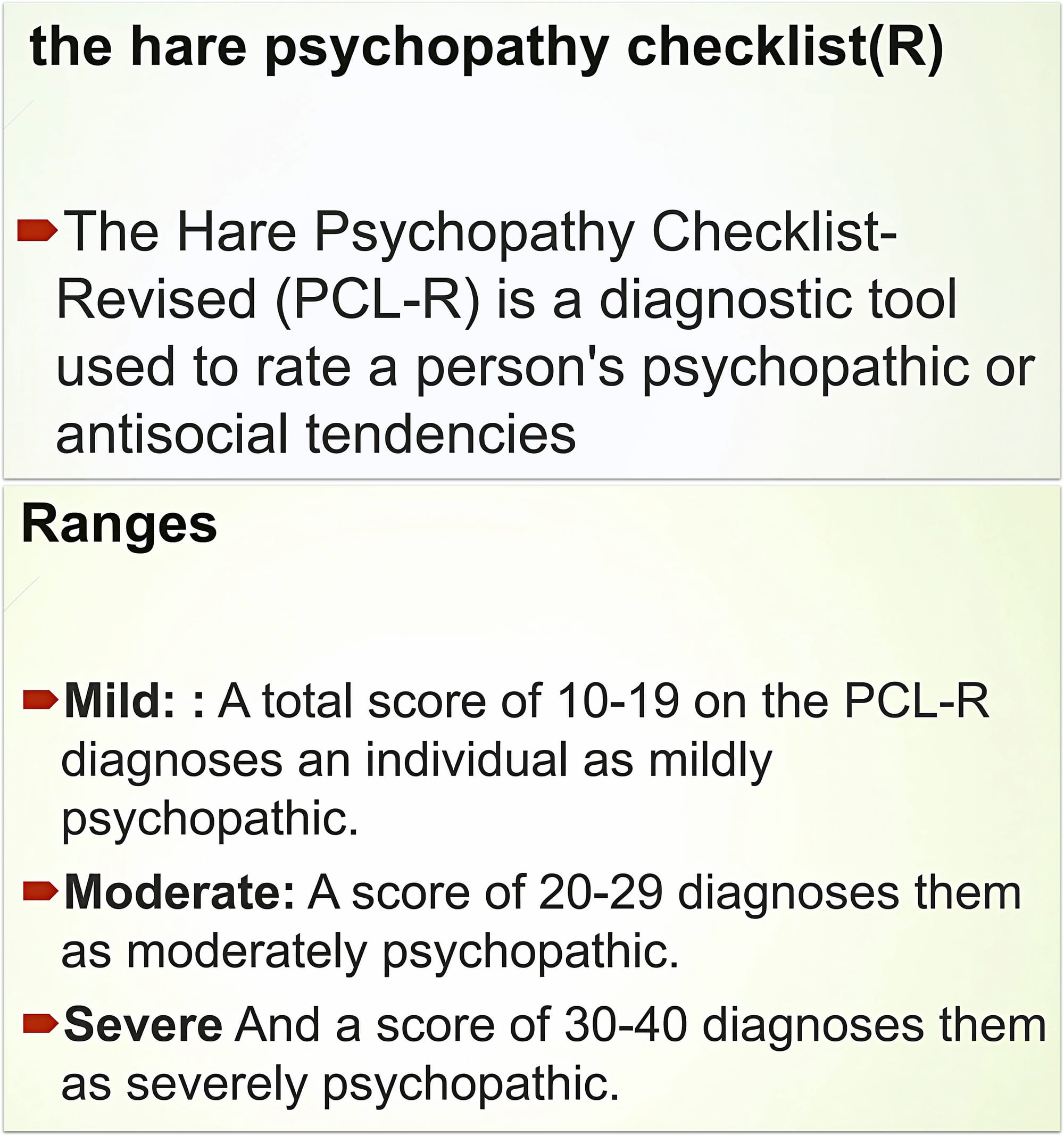
Empirical evidence from psychopathy research underscores the practical stakes. High scores on the Hare Psychopathy Checklist–Revised (PCL-R ≥30) strongly predict violent recidivism and treatment resistance. Systematic reviews confirm that traditional cognitive-behavioral therapy, insight-oriented psychotherapy, and pharmacological interventions produce minimal lasting change in core callous-unemotional traits among adults. Psychopaths often learn manipulative skills without developing genuine empathy or remorse, and some studies indicate that treatment can inadvertently increase violent reoffending in this population. For convicted serial killers, rehabilitation is rarely attempted meaningfully; the justice system defaults to permanent incapacitation through consecutive life sentences or execution, prioritizing public safety and retributive accountability over speculative reform.
Prevention offers the only robust pathway forward. In children and adolescents exhibiting callous-unemotional (CU) traits—the developmental precursors to adult psychopathy—neuroplasticity allows meaningful intervention. Parent-Child Interaction Therapy adapted for CU traits (PCIT-CU) demonstrates this potential. Building on standard PCIT’s structure of enhancing parent-child warmth and consistent discipline, PCIT-CU adds targeted adaptations: heightened parental emotional responsiveness and affection, reward-based token economies to leverage relative strengths in reward sensitivity, and the CARES module that explicitly coaches recognition and response to others’ distress. Randomized controlled trials show that PCIT-CU sustains reductions in conduct problems and CU traits at follow-up, outperforming standard approaches where gains often deteriorate. Complementary programs such as compassion-focused therapy for detained youth further support modest but measurable trait reductions. These findings affirm that while background factors exert powerful influence, targeted environmental changes can strengthen the conditions for prosocial agency before patterns entrench into adult criminality.
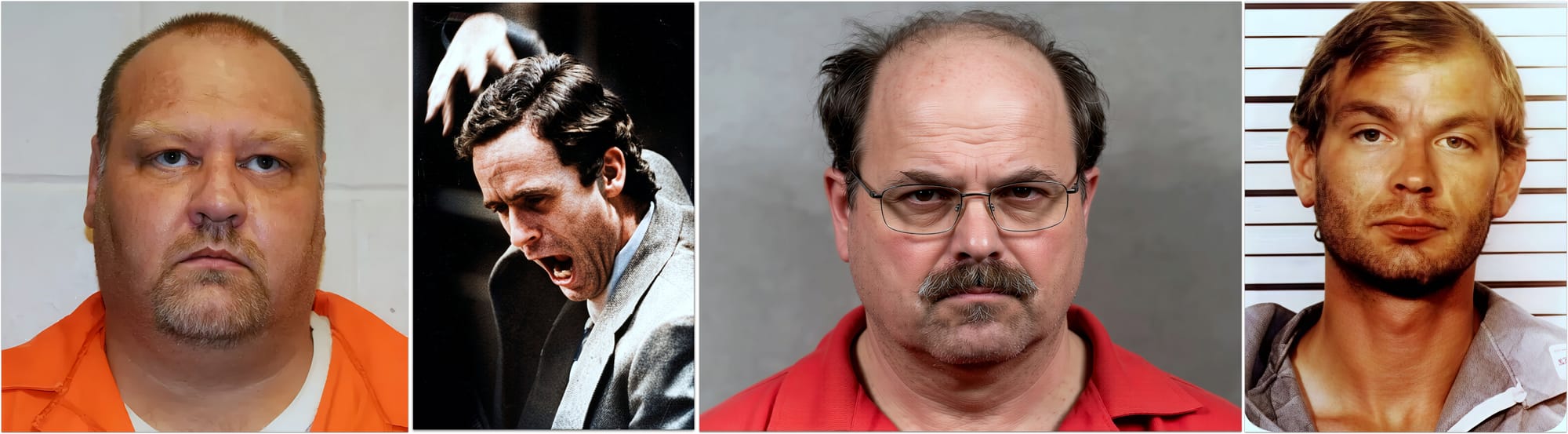
Case studies across genders reveal consistent patterns that test and ultimately affirm the philosophical claim. William Devin Howell’s systematic abduction and disposal of seven victims illustrated organized predation enabled by psychopathic traits yet framed in court as deliberate choice. Ted Bundy’s calculated, high-PCL-R offending (scores 34–39) across multiple states, Dennis Rader’s (BTK) compartmentalized double life, and Jeffrey Dahmer’s compulsive paraphilias all demonstrated that background influences—whether trauma or neurobiology—did not negate authorship.
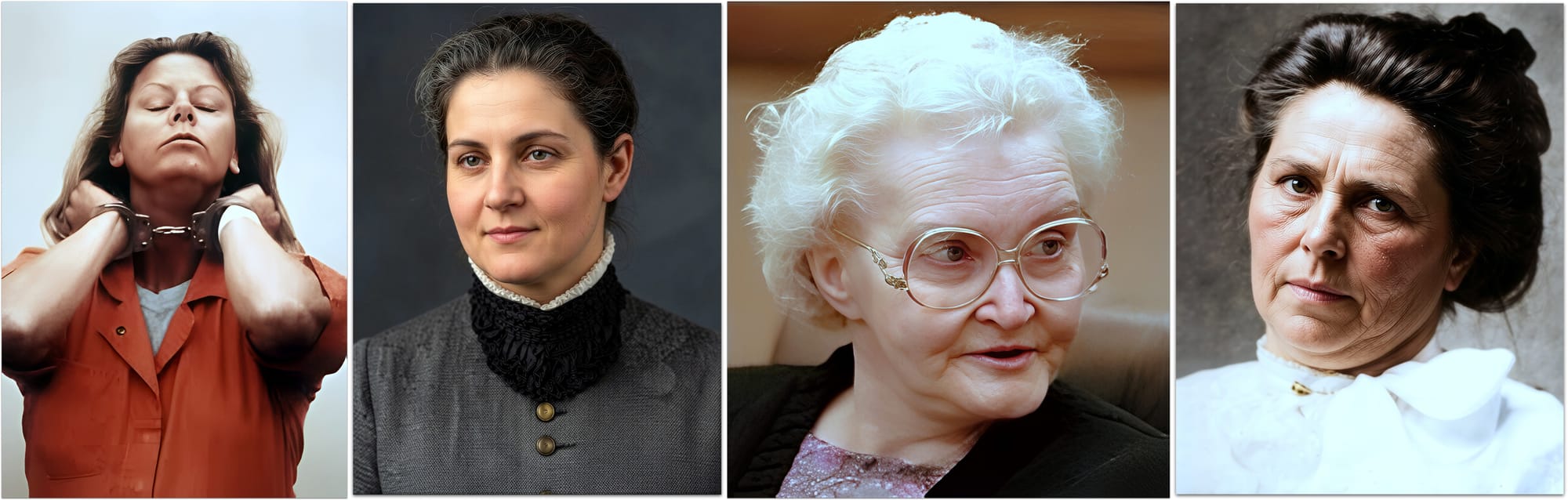
Female serial killers present distinct profiles but the same moral logic: Aileen Wuornos (PCL-R 32) killed seven men in claimed self-defense that escalated into robbery; Jane Toppan’s sadistic poisoning of patients as a nurse; Dorothea Puente’s exploitation and murder of vulnerable tenants for financial gain; and Belle Gunness’s profit-driven elimination of husbands and suitors all involved instrumental choice despite abusive histories or manipulative facades.
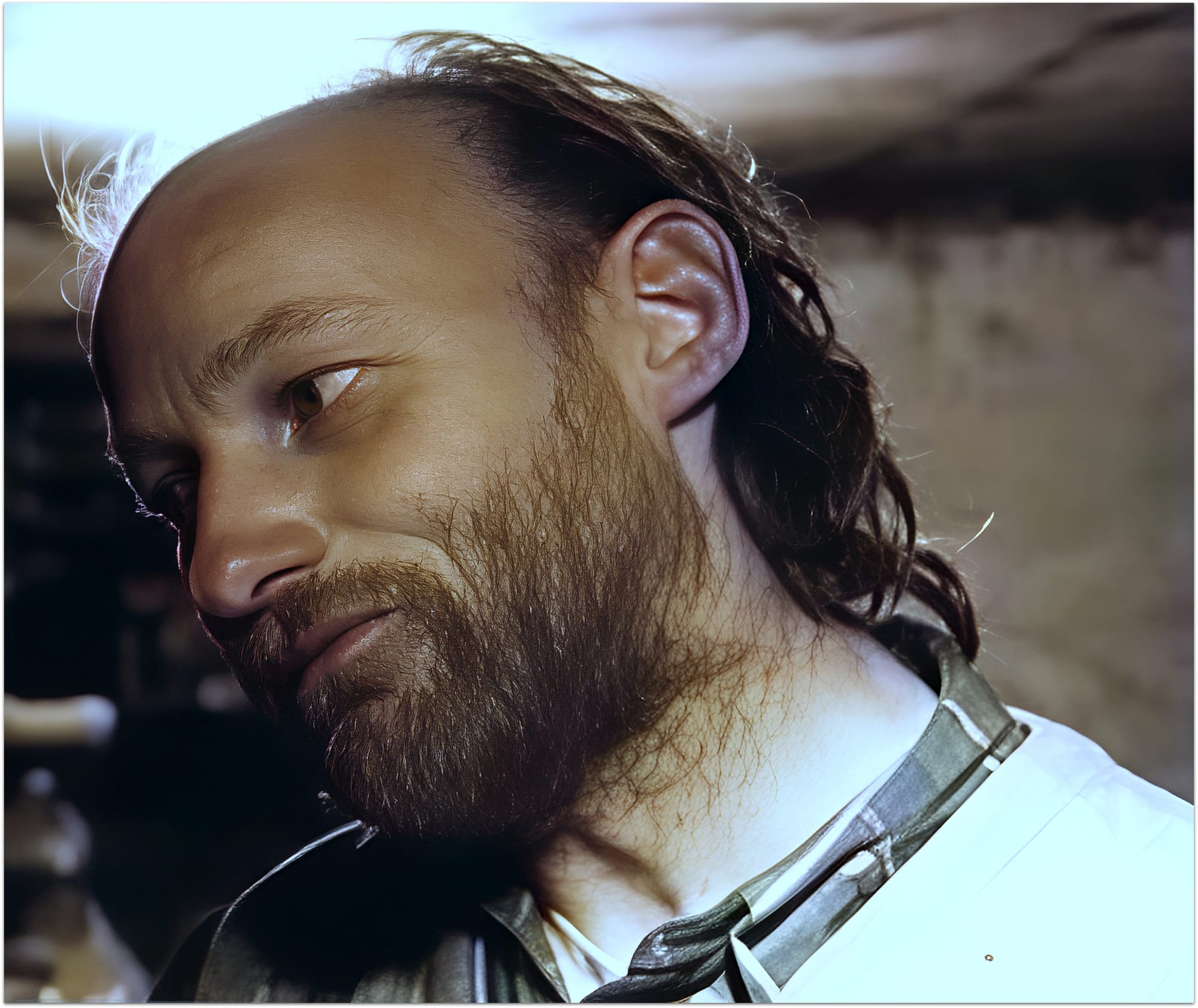
Robert Pickton, Canada’s “Pig Farmer Killer,” murdered at least 33 women from Vancouver’s Downtown Eastside, dismembering and feeding remains to pigs on his family farm. Despite a dysfunctional upbringing, low IQ, and early desensitization to slaughter, his cell-plant confessions revealed chilling detachment and grandiosity. Convicted on six counts in 2007 and sentenced to life with no parole for 25 years, Pickton died in prison in 2024 after an inmate assault.
Victim-impact statements in these cases consistently echoed the original declaration, grounding justice in the innocence of the victims and rejecting any causal dissolution of responsibility.
Across all cases, high psychopathy correlates with poor rehabilitation outcomes, instrumental offending, and societal insistence on incapacitation. “Background” explains elevated risk and developmental pathways but never erases the self-originating nature of the harm. Early CU interventions like PCIT-CU illustrate society’s duty to foster better conditions for choice, yet adult serial homicide demands unwavering retributivism: permanent removal from society to honor the moral ledger owed to the dead.
In the end, the statement’s simplicity proves its profundity. It refuses to permit horror to become explanatory alibi. It upholds human dignity by imposing the irreducible burden of choice. Even amid the darkest chains of causation, moral agency endures—demanding that every perpetrator answer for what he or she chose to do to the innocent. Without this stance, justice collapses into mechanism, and the victims’ suffering loses its claim on our collective conscience. The philosophy forged in grief thus becomes the minimum price of taking evil seriously.
References
da Silva, Diana R., Isabel M. de Carvalho, and Carlo Garofalo. 2024. “Treatment of Youth and Adults with Psychopathic Traits Detained in Forensic Settings: A Systematic Review.” Aggression and Violent Behavior 76: 101922.
Fleming, Georgia E., et al. 2022. “Parent Training Adapted to the Needs of Children with Callous-Unemotional Traits: A Randomized Controlled Trial.” Behavior Therapy 53 (6): 1265–81.
Kant, Immanuel. 1998. Groundwork of the Metaphysics of Morals. Translated by Mary Gregor. Cambridge: Cambridge University Press. Original work published 1785.
Moore, Michael S. 1997. Placing Blame: A Theory of the Criminal Law. Oxford: Oxford University Press.
Sartre, Jean-Paul. 1956. Being and Nothingness. Translated by Hazel E. Barnes. New York: Philosophical Library. Original work published 1943.
Strawson, Galen. 1994. “The Impossibility of Moral Responsibility.” Philosophical Studies 75 (1–2): 5–24.
Woodworth, M., et al. 2012. “The Language of Psychopaths: New Findings and Implications for Law Enforcement.” FBI Law Enforcement Bulletin, July.