Running on Red Earth: The Untamed Majesty and Culinary Renaissance of the Ostrich
Introduction: The ostrich is not merely a creature of dusty savannas and sweeping plains; it is a biological anomaly, a culinary marvel…
Introduction:
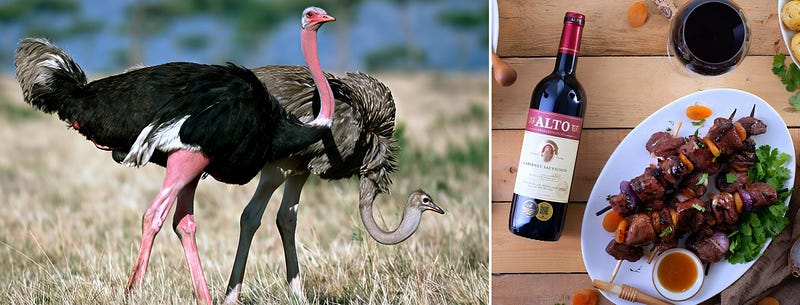
The ostrich is not merely a creature of dusty savannas and sweeping plains; it is a biological anomaly, a culinary marvel, and an ecological opportunity. Towering at up to 9 ft and weighing as much as 320 lb, Struthio camelus embodies a paradox — flightless, yet swift; primitive, yet adapted to the future. Once hunted for plumes and spectacle, today it walks the tightrope between wild legacy and sustainable innovation. This article journeys through the ostrich’s taxonomy, biology, ecological role, and rising stature in global gastronomy, showing why this ancient bird may hold the key to a more sustainable plate.
Taxonomy:
The ostrich belongs to the genus Struthio, within the order Struthioniformes, a lineage of flightless birds called ratites. The species Struthio camelus is native to Africa, with four primary subspecies: the North African ostrich (S. c. camelus), the Somali ostrich (S. c. molybdophanes), the Southern ostrich (S. c. australis), and the extinct Arabian ostrich (S. c. syriacus). All living forms share the characteristic of long legs, featherless thighs, and a reduced keel on the sternum, making powered flight impossible. Although only one species remains in wide commercial use, particularly the Southern ostrich, these birds are increasingly reared worldwide for their meat, hide, and feathers.
Biology:
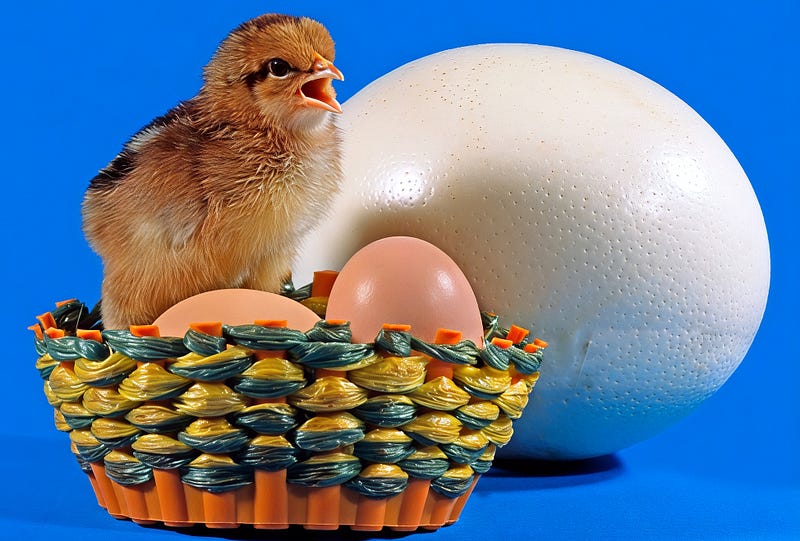
Evolution has gifted the ostrich with astonishing anatomical features. With eyes measuring 2 in across, the largest of any land vertebrate, they scan the horizon for predators while relying on a brain weighing only 1.4 oz. Yet, intelligence blooms in their behavioral adaptations — cooperative breeding, communal defense, and evasive running speeds of up to 43 mph. Their legs, armed with sharp claws and formidable tendons, can deliver a lethal kick. A typical adult consumes up to 7.5 L of water daily in hot climates, but can go days without it due to their efficient renal system. Chicks emerge from eggs weighing 3.1 lb after an incubation of 42 days and grow rapidly, reaching adult size in 18 months.
Ecology:
Ostriches are keystone species in many arid and semi-arid ecosystems across Africa. They regulate seed dispersion, maintain grassland health, and serve as prey for apex predators like lions and leopards. Yet their historical range has contracted drastically. The Arabian ostrich vanished in the mid-20th century, and the North African subspecies now teeters on the edge of extinction. Farming practices offer a double-edged sword: they relieve hunting pressure in the wild but risk diluting genetic diversity and undermining conservation if poorly managed. Sustainable ostrich farming relies on low water use, vast land access, and careful herd rotation, making it a resilient alternative to cattle in water-scarce regions.

Uses:
Ostriches provide a triad of valuable commodities — meat, leather, and feathers. Ostrich leather, with its characteristic quill follicle pattern, fetches high prices in fashion houses. Their feathers, once symbols of colonial opulence, now serve decorative, ceremonial, and industrial uses. Most importantly, ostrich meat has surged in global markets due to its lean composition, low cholesterol, and high protein content. A 3.5 oz portion offers 22 g of protein and just 2 g of fat, outperforming beef and chicken in many nutritional benchmarks. South Africa leads the world in ostrich exports, but countries like the United States, Australia, and China have joined the trade, each building toward a globalized, ethical ostrich industry.
Culinary Aspects:
To the uninitiated, ostrich meat tastes like an elegant cross between beef and venison. Its deep red hue and rich umami lend it well to filet preparations, slow roasts, and tartares. The best cuts — fan filets and tenderloins — require brief searing at 135°F for medium-rare, preserving moisture and delicate flavor. Ground ostrich makes superior meatballs or burgers with a gamey edge. In southern Africa, it appears in stews, sausage casings, and biltong. Because of its lower fat content, cooking ostrich demands mindfulness — high heat but short duration, often accompanied by oil or a marinade to prevent drying.
Wine Pairings:
Ostrich pairs elegantly with medium-bodied reds that balance earthiness with acidity. A Syrah or Grenache from the Rhône Valley enhances the meat’s gaminess, while an Argentinian Malbec adds smoky undertones that echo the African braai tradition. Pinotage from South Africa — a hybrid of Pinot Noir and Cinsaut — creates an evocative terroir harmony when paired with ostrich carpaccio. For spiced preparations or berry reductions, a robust Zinfandel or Cabernet Franc bridges the intensity with ripe fruit and subtle tannins. For the avant-garde, pair ostrich liver pâté with a chilled Sauternes and taste the symphony of opposites.
Conclusion:
The ostrich, with its ancient lineage and forward-looking promise, symbolizes a convergence of ecology, economy, and epicurean delight. It challenges assumptions about what belongs on the farm, the plate, and the future. In a warming world strained by water scarcity, carbon footprints, and protein demands, Struthio camelus strides ahead — not just as a relic of a primordial past but as a herald of culinary and environmental renewal. The next time you savor a seared ostrich steak or admire the quilted ripple of its leather, remember the thunder of its feet across red earth and the stillness of a bird that cannot fly, yet changes the sky.