Sacred Land, Enduring Conflict: Can Identity Wars Be Won by Force?
Introduction

Introduction
In conflicts rooted in national and religious identity, where two peoples lay claim to the same sacred land, history shows that brute force rarely delivers a true resolution. These struggles — whether in Palestine’s holy hills or Kashmir’s valleys — are not simply territorial disputes but battles over identity, faith, and historical memory. Military campaigns can redraw borders and impose temporary calm, yet the core grievances often smolder on. As one United Nations debate observed after repeated Arab–Israeli wars, “military force alone cannot resolve the issues” at stake. The question is not whether one side can defeat the other on the battlefield — it is whether lasting peace and justice can ever be achieved by violence alone. This article examines the nature of identity-based conflicts and the record of forceful “solutions,” contrasting short-term victories with long-term outcomes. It delves into the psychological and cultural dimensions that make these conflicts so intractable, and considers how alternative pathways like negotiation, reconciliation, and mutual recognition might offer more hope. History and scholarship suggest that while armies may win wars, they cannot easily win hearts bound by sacred land. True peace in identity-driven conflicts demands something more nuanced than force — an approach that heals grievances, respects each side’s humanity, and addresses the intangible stakes of identity and memory.
Identity, Sacred Land, and Intractable Conflict
Ethno-religious conflicts over homeland tend to be tenacious and deeply “intractable” because they engage people’s core identities and sacred narratives. In such struggles, land is not merely a resource to be divided; it is imbued with history, holiness, and collective memory. Each side often sees the territory as integral to its very existence — as the site of holy places, ancient glory, or ancestral trauma. For example, Israelis and Palestinians alike elevate their identity narratives upon the same soil, effectively living on “different planets” of meaning even while inhabiting the same space. As one scholar noted, space and landscape in Israel-Palestine serve as “master narratives,” layered with memory and myth to bolster each nation’s sense of belonging. The land becomes sacralized: for one people, it is a God-given Promised Land reborn, for the other a birthplace now lost but eternally remembered in dreams of return. These perceptions make the territory emotionally indivisible.
Collective memory fuels and prolongs the conflict. In protracted struggles, societies develop what Daniel Bar-Tal calls a “culture of conflict” — a whole ethos and emotional orientation that perpetuates hostility. Generations are taught historical grievances and heroism through narratives and rituals. In the Palestinian case, the Nakba (the mass displacement of 1948) is commemorated as the centerpiece of national memory, a living trauma of “lost land” that inspires annual days of mourning and protest. Palestinians hold Land Day each year to remember lands expropriated and assert solidarity across fragmented communities. Through songs, poetry, and oral history, exiles and their descendants keep alive the “idea of a lost paradise” and the “promise of a triumphant return” to their homeland. Such cultural memory ensures that the desire to reclaim sacred ground is not extinguished by time or force. On the Israeli side, collective memory also sacralizes the land: Zionist narratives celebrate ancient ties and modern rebirth, turning sites like Jerusalem and Masada into symbols of survival and national destiny. Each community’s identity is thus intertwined with an exclusive claim to the same territory, making compromise extraordinarily difficult. When adversaries frame a conflict in terms of existential identity and holy ground, it takes on a zero-sum, all-or-nothing character. Concessions feel like betrayals of one’s very being. This is why these conflicts so often resist resolution and become seemingly interminable. As social psychologist Herbert Kelman observes, when groups feel their fundamental identity is at stake, they are likely to reject pragmatic deals that don’t satisfy their need for recognition and dignity. The conflict over “whose land is it?” becomes not just a dispute over maps, but a clash of sacred histories — a battle for collective soul. In such a context, force may overrun cities and villages, but it cannot easily erase the narratives in people’s minds. Each act of violence often hardens identities further, deepening the conviction that the other is an implacable enemy and that one’s own survival is at risk. Thus, identity-based conflicts tend to be self-perpetuating: past traumas and myths of martyrdom become rallying cries for future struggle. Without addressing this cycle at the level of identity and memory, any imposed military solution is likely to be a false dawn.
The Temptation and Limits of Force: Historical Precedents
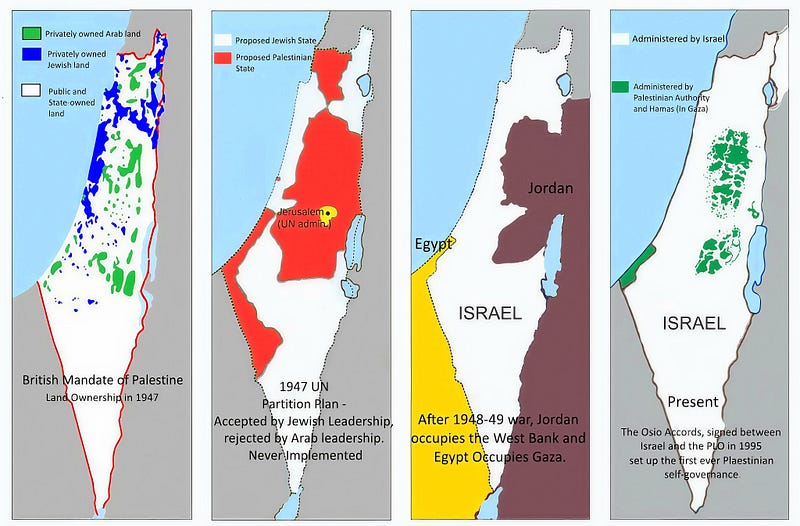
Throughout history, leaders have tried to end identity-driven conflicts by force — through conquests, partitions, and suppressions. Some campaigns did achieve decisive military outcomes, yet few achieved genuine peace. Instead, the usual pattern is that force buys only a pause in the violence or freezes the conflict in place, while the underlying dispute remains unresolved. A stark illustration is the Israeli–Palestinian conflict. Israel won major wars in 1948 and 1967, gaining control over vast territories, including Jerusalem. In a strictly military sense, these victories were definitive. And yet the conflict persisted in new forms — guerrilla attacks, uprisings, and terrorism — as Palestinians refused to accept their dispossession. Each war demonstrated anew that “military force alone cannot resolve the issues” at the heart of the dispute. Indeed, after the 1967 war, Israel found itself ruling over millions of Palestinians in the occupied West Bank and Gaza, facing continual unrest. Force maintained an occupation, but it did not make the Palestinian national cause disappear. To this day, despite Israel’s military supremacy, the cycle of violence and retaliation continues, indicating that the struggle over the Holy Land remains profoundly unsettled. Israeli strategists themselves have acknowledged the dilemma: security measures are necessary to protect citizens, but “military force alone cannot resolve the challenges Israel faces” concerning the Palestinians. Every resort to force has brought temporary “calm” at a high cost, and often spawned new resentment that fuels the next round of conflict.
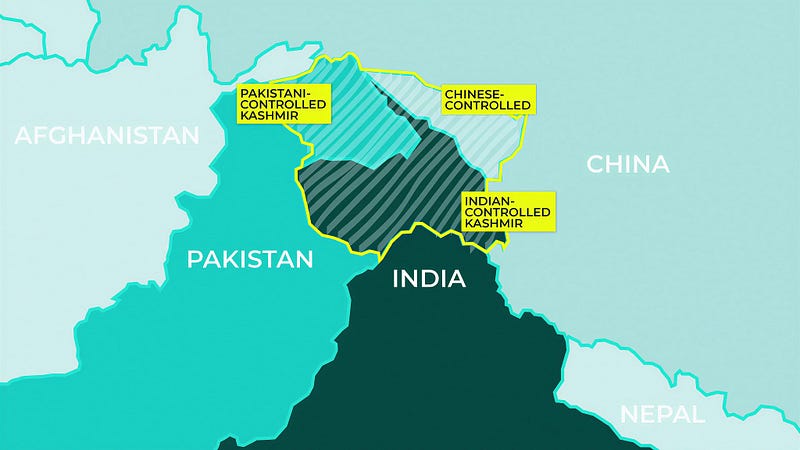
In South Asia, the Kashmir conflict between India and Pakistan (and the Kashmiri people) shows a similar pattern. Since 1947, the Himalayan region of Kashmir — prized for its strategic position and Muslim-majority identity — has been contested in multiple wars. India today holds the larger portion of Kashmir and maintains order there through a massive troop presence and harsh security laws. Yet despite crushing a Pakistan-backed insurgency in the 1990s, India has not won Kashmiri hearts and minds. Periodic uprisings and militant attacks recur, reflecting that local grievances over self-determination remain unaddressed. Pakistani leaders, too, eventually recognized that “there can be no military solution in Kashmir,” as former President Pervez Musharraf admitted, and that trying to redraw borders “with blood” only perpetuates misery. The conflict remains a stalemate — India deterred Pakistan’s forces, but at the price of an ongoing occupation that breeds discontent. International observers agree that further warmongering over Kashmir “will only worsen” the situation and that only political dialogue can break the deadlock. In effect, decades of force by both states have enforced a divide without reconciling the underlying national and religious contest over Kashmir’s identity. The land is partitioned by ceasefire lines and barbed wire, but neither Indians nor Pakistanis (nor Kashmiris themselves) accept the status quo as just or permanent. It is a “frozen conflict” awaiting a real resolution.
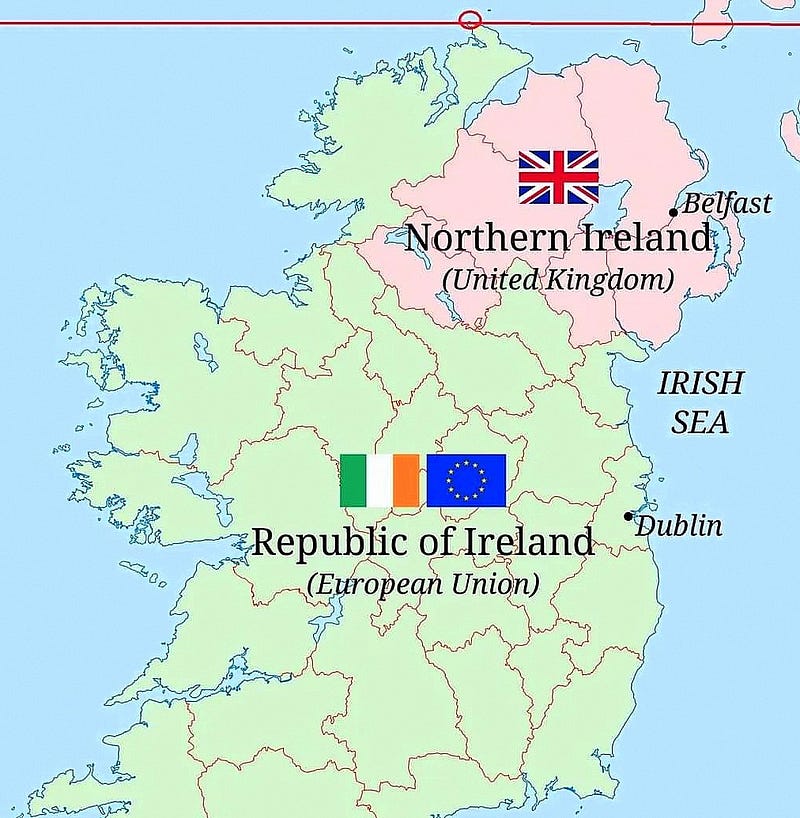
Northern Ireland’s Troubles (late 1960s–1990s) provide a compelling case of force’s limits — and eventual transcendence. For nearly thirty years, the British government tried to contain the violent insurgency by the Irish Republican Army (IRA) through a heavy security presence, counter-insurgency operations, and mass incarceration of suspects. This military-centric approach did prevent the IRA from achieving its aim of uniting Ireland by force. Yet it also failed to eliminate the IRA or end the sectarian strife. As one British security official reflected, there were “no examples anywhere in the world” of such a terrorist problem being simply “policed out” by force. Indeed, so long as the Catholic nationalist minority felt alienated and the IRA believed it could fight on, the conflict ground on in a bloody stalemate. British forces could “contain the IRA indefinitely, but they were never going to wipe them out”. In the early 1990s, all sides came to realize that neither bombs nor counter-terror raids could secure a conclusive victory — the war was unwinnable militarily. This mutual hurting stalemate opened the door to negotiation. The eventual 1998 Good Friday Agreement was a triumph of politics: it addressed identity issues by creating a power-sharing government and affirming the principle of consent (that Northern Ireland’s status can change only if a majority agrees). Crucially, the deal offered both communities symbolic and constitutional recognition — something force could never provide. Once Protestant unionists and Catholic nationalists alike saw their core identities and aspirations acknowledged within a peaceful framework, the rationale for violence ebbed. Northern Ireland demonstrates that even an intractable identity conflict can be transformed — but only after the futility of force is recognized. As negotiator Jonathan Powell noted, the British “security delusion” — the belief that just one more military push would break the IRA — had to be abandoned. Peace came when guns were set aside in favor of inclusive dialogue and creative compromise. The lesson, Powell wrote, is that “if there is a political problem at the root of the conflict then there has to be a political solution”. Force alone was not enough; indeed, relying on force too long merely prolonged the agony.
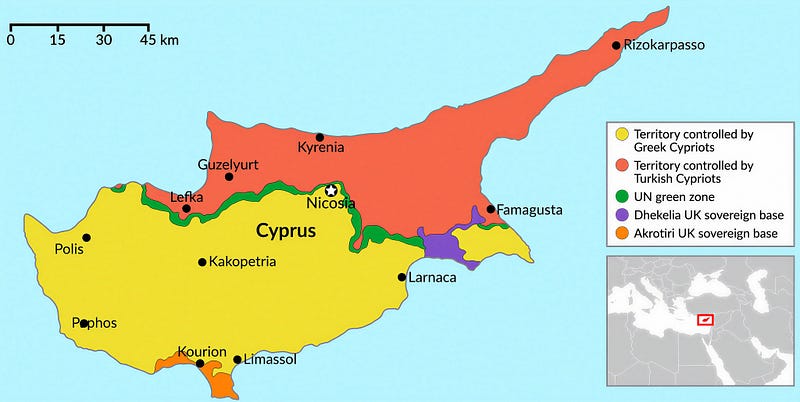
Other historical cases reinforce this insight. The island of Cyprus was wracked by ethnic violence between Greek and Turkish Cypriots in the 1960s. A 1974 Greek-backed coup and subsequent Turkish military invasion led to the island’s partition — essentially a forceful divorce of the communities. Turkey’s army carved out a separate Turkish Cypriot enclave in the north, expelling Greek Cypriots from that area while Turkish Cypriots fled the south. This decisive use of force ended open fighting; Cyprus has been largely peaceful since the ceasefire. Yet the conflict remains anything but solved. Cyprus became a classic “frozen conflict”: a United Nations buffer zone still slices across the capital, Nicosia, and the two communities remain physically and politically apart. Tens of thousands of people never returned to their homes, which were seized and redistributed, leaving deep bitterness. Decades on, unresolved property disputes and the trauma of displacement continue to “stir tensions on the island,” periodically derailing reunification talks. The Turkish Cypriot north is a self-declared state recognized only by Turkey, its legitimacy unaccepted by Greek Cypriots. In short, Turkey’s forceful intervention imposed a new status quo, but not a reconciliation. The absence of war owes much to UN peacekeepers and fatigue, rather than any meeting of minds. As a European diplomat put it recently, “the only way to address” these festering issues “is to solve the Cyprus problem” through a comprehensive settlement, not by clinging indefinitely to the status quo of partition. The use of force created a stalemate, not a solution.
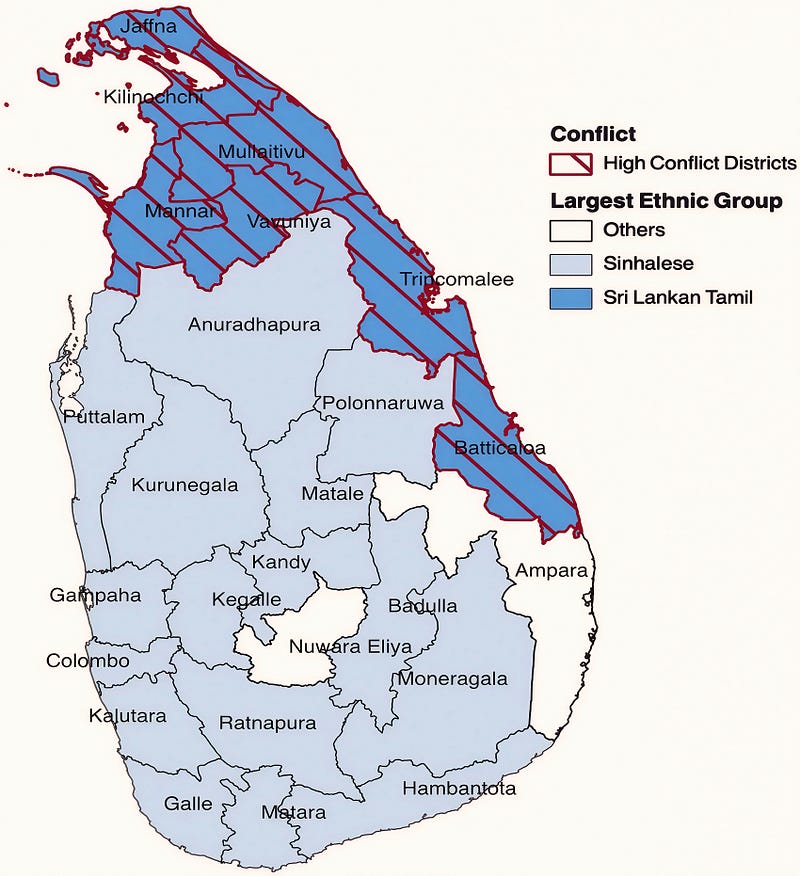
Even cases often cited as “victories” by force underscore the pitfalls. Sri Lanka’s civil war against the Tamil Tigers (LTTE) was one of the few modern ethnic conflicts seemingly ended by outright military victory. In 2009, after 26 years of brutal war for an independent Tamil homeland, the Sri Lankan government launched an all-out offensive that crushed the LTTE leadership. The guns fell silent; the separatist insurgency was extinguished. At first glance, this looks like a conclusive solution by force. The Tamil minority’s armed resistance was eliminated, and the unitary Sri Lankan state prevailed. However, seasoned conflict observers caution that this is not truly the “end of the story”. The root causes — Tamil grievances over discrimination, marginalization, and lost autonomy — still simmer beneath the surface. Enforced peace is not the same as genuine reconciliation. Jonathan Powell warned in 2011 that unless Sri Lanka addressed the political demands of Tamils, “it is probable that [another] terrorist campaign will start all over again” and that any new insurgency would be “impossible to resolve by purely military means”. More than a decade later, Sri Lanka has indeed avoided a return to war, but it remains a deeply divided society. Many Tamils feel like a conquered population under military watch, their war dead unacknowledged, and their regions under heavy security. The government’s triumph brought an end to violence, yet a negative peace prevails — an absence of war rather than a positive, sustainable peace built on justice. International rights groups still urge Sri Lanka to pursue truth and reconciliation measures, fearing that resentments from the war’s bloody climax (which included allegations of war crimes against civilians) could fester into future unrest. Thus, even a rare case of total military defeat of one side does not guarantee that a conflict is “truly solved” in any meaningful sense. It may simply bury the anger until it possibly resurfaces, or institutionalize an apartheid-like situation.
History suggests that the only conflicts completely “solved” by force are those in which one side was effectively annihilated or permanently exiled — outcomes so extreme and morally repugnant that they belong to the darkest chapters of human history (the destruction of Carthage by Rome, for instance, or genocides of indigenous peoples). Even then, the victors often find that the legacy of atrocity haunts them and invites future blowback. In modern times, the international community and norms of human rights serve as a backstop against such “final solutions” by force, making it even less likely that an identity conflict could be permanently settled through violence without global condemnation and isolation. In sum, the record of force in sacred-land conflicts is one of transient victories and protracted impasses. Guns can win ground and quell armies, but they struggle to win legitimacy for the outcome or extinguish an oppressed people’s will. As the next section explores, the fundamental reason is that military might addresses only the symptoms of identity conflicts, not the causes.
Tactical Victory vs. Lasting Peace
The contrast between short-term tactical success and long-term conflict resolution is stark in identity-based wars. Armies can achieve tactical victories — capturing territory, decapitating insurgent leadership, imposing a settlement by sheer might. Yet a lasting peace requires that the defeated side genuinely accepts the outcome and abandons its animosity. In many ethno-national conflicts, that acceptance never occurs under duress. Instead, the vanquished nurse their wounds, teach their children to remember, and wait for fortunes to turn. What looks like “victory” can prove illusory if the conflict resumes years or generations later in a new form. As one military scholar observed, ending a war is not the same as resolving the conflict: a ceasefire or surrender can freeze the hostilities, but unless underlying issues are settled, the peace may not hold. Political scientist Monica Duffy Toft’s study of civil wars found that conflicts ending in decisive military victory are often followed by longer periods of non-violence than those ending in negotiated truces. In purely strategic terms, a rebel force that is thoroughly defeated is unlikely to restart a war immediately — its capacity to fight is gone. Toft argues that a clear victory can create stability, especially if the winning side rebuilds effective institutions to maintain order. This insight helps explain why, for example, the victory of Uganda’s government over northern warlords led to a durable peace, or why Vietnam’s civil war ended definitively once the North won in 1975. From a hard security perspective, a strong victor with a monopoly on force can indeed “secure the peace” in a narrow sense — by deterring any renewal of armed struggle.
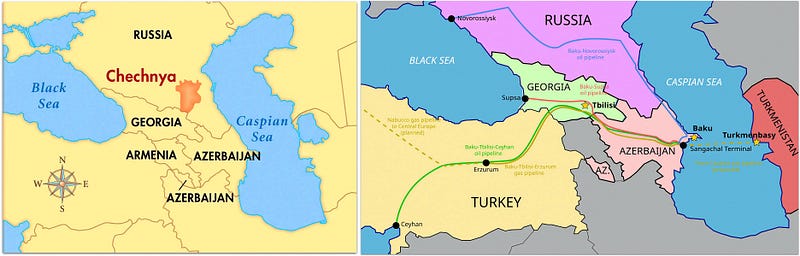
However, stability is not the same as reconciliation. A “durable peace” measured only by the absence of war can mask a seething undercurrent of injustice. Toft’s own research acknowledges that postwar stability hinges on the victor effectively integrating or containing the vanquished population. When the grievances of the defeated are profound (as in most identity conflicts), keeping the peace often entails heavy-handed security measures — in other words, a peace enforced by threat of force. That kind of peace may hold for years, but it resembles a powder keg: the conflict lives on in hearts and minds, even if open violence is suppressed. We see this dynamic in places like Chechnya, a Muslim region in Russia that fought two brutal wars for independence. Russia eventually crushed Chechen resistance by 2009 and installed a local strongman. On the surface, Chechnya is “pacified” today; in reality, Moscow’s victory imposed a sullen peace of the graveyard. The Chechen capital was rebuilt from ruins, but an undercurrent of fear and resentment endures among those who experienced Russia’s onslaught.
The lesson is that force can impose order, but at the cost of legitimacy. A population that surrenders only to overwhelming violence has not been persuaded of the conflict’s resolution — it has merely been coerced. Such a peace can unravel if circumstances change or if the memory of suffering demands redress. As a U.S. Institute of Peace expert warned regarding other insurgencies, “military force alone cannot resolve these long-simmering conflicts” rooted in communal grievances. Without a political settlement addressing core demands, any lull is precarious.
Northern Ireland again provides a useful contrast. By the early 1990s, the British Army had more or less stalemated the IRA — what one might call a tactical success in containing violence. But crucially, the British government did not confuse this with a true solution. They recognized that the Catholic minority’s allegiance could not be won at gunpoint. Lasting peace required drawing the IRA into a political process and offering its supporters a share of power and respect for their Irish identity. In other words, it required transforming the conflict, not merely suppressing it. When negotiations finally took place, both the IRA and their unionist foes had to accept painful compromises, but these were made possible by mutual exhaustion and the realization that victory was unattainable. Indeed, a key precondition for the 1998 accord was that “both sides believed they could not win militarily”. Once that sunk in, they were willing to explore political avenues that force had foreclosed. The Good Friday Agreement, with its intricate balance of consent, disarmament, and new institutions, achieved what thirty years of bombings and blockades could not: it reconciled the two identities under a consensual framework. The violence subsided for good because the underlying political problem — the lack of representation and recognition for Northern Irish Catholics — was finally addressed. This highlights that resolution means resolving the political and emotional issues that started the conflict, something force alone is ill-suited to do.
In conflicts over sacred land, a “tactical victory” by one side can even be counterproductive in the long run. Military triumph often breeds triumphalism in the winner and humiliation in the loser, widening the psychological gap. The vanquished community, smarting under defeat, may embrace an ethos of martyrdom and revenge that ensures the conflict’s narrative stays alive. The victorious side, for its part, may be tempted to impose a victor’s peace that ignores the vanquished’s rights, thereby planting seeds for future resistance. History is rife with examples of heavy-handed victors inadvertently galvanizing the very resistance they sought to eliminate. Israel’s victory in 1967, for instance, led to occupation policies that inadvertently fostered Palestinian unity and gave birth to the intifada (uprising) decades later. The short-term success of conquering the West Bank and Gaza brought long-term strategic and moral dilemmas that Israelis still wrestle with. Every harsh crackdown to deter terror tends to harden Palestinian defiance, a cycle Israeli analysts acknowledge but find hard to escape. As one Israeli officer reflected, each use of force “at a tolerable cost” must be weighed against the reality that it “cannot resolve” the deeper challenge, and that in fact repeated military responses often strengthen the other side’s resolve instead of breaking it. True victory in such conflicts would mean not having to perpetually fight the same battles — it would mean the conflict is transformed so that former enemies live without the urge to kill each other. Force alone has not delivered that kind of victory in any conflict over identity or faith.
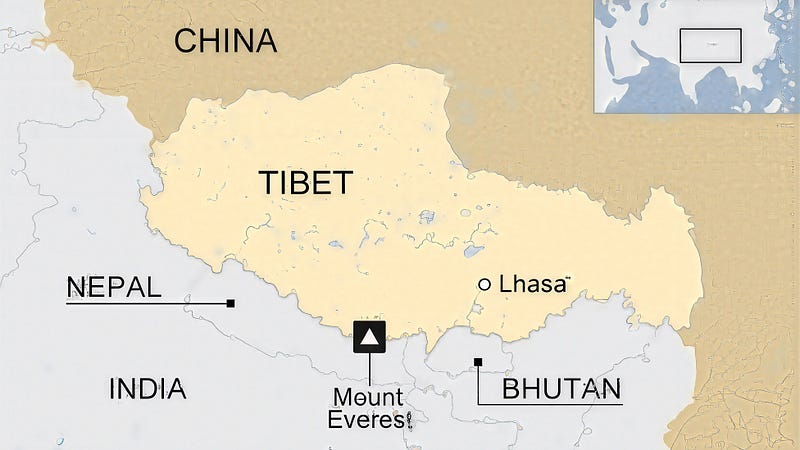
Even the notion of “deterrence” — that overwhelming force can deter further rebellion — has its limits when sacred values are involved. Deterrence assumes rational actors who calculate costs and benefits. But combatants driven by identity and belief do not always behave “rationally” in material terms. They may prefer to suffer or die rather than surrender what they see as a holy cause or fundamental right. In some cases, brutal repression by a state may momentarily deter public activism, yet underground, the flame of dissent burns hotter. For example, China’s forceful takeover of Tibet in the 1950s and the subsequent suppression of Tibetan cultural rights have kept Tibet firmly under Beijing’s control. But it has not won Tibetan hearts — a cultural resistance endures in monasteries and in exile communities, and sporadic protests or self-immolations by monks testify that the conflict is dormant, not dead.
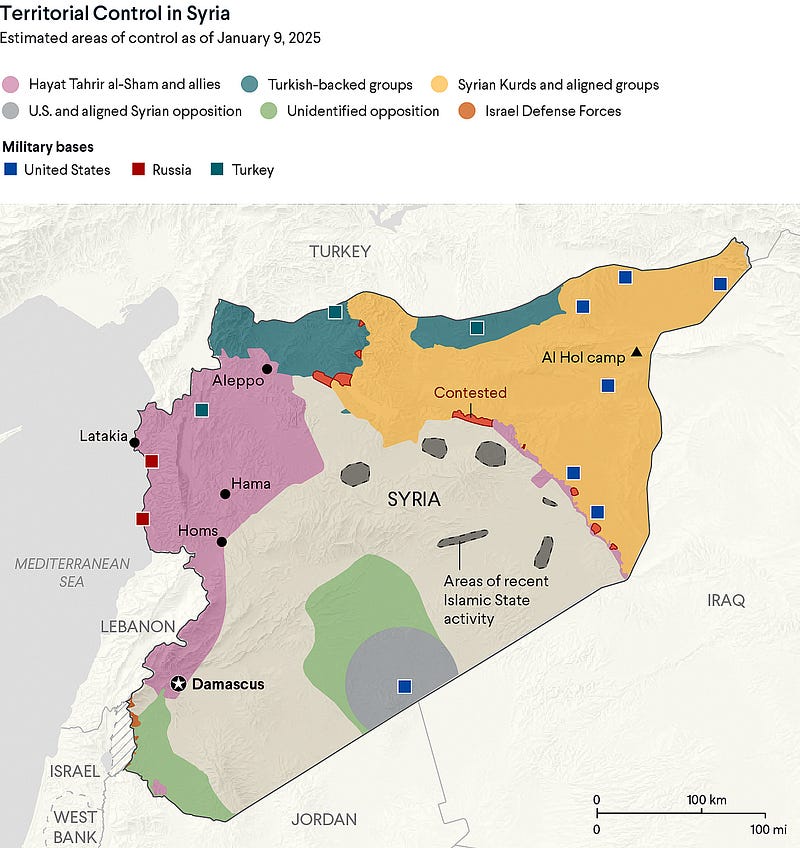
Similarly, after Syria’s regime crushed the uprising in Hama in 1982 with hideous bloodshed, Syria enjoyed decades of sullen stability — until a new generation rose in 2011, reigniting conflict. The memory of past massacres did not frighten them into permanent submission; rather, it fed their outrage.
These cases show that when a conflict taps into people’s identity or moral convictions, coercion can backfire. As a saying goes, you cannot extinguish an idea with a bullet. More formally, research on “sacred values” in conflicts finds that offering material carrots or wielding sticks to force compromise can entrench opposition rather than reduce it. In experiments with Israelis and Palestinians, scholars found that attempts to trade “land for peace” or other deals perceived as betraying sacred land or rights provoked anger — and the greater the incentive offered, the greater the backlash. Conversely, when opposing sides made symbolic concessions acknowledging each other’s core values (for example, an apology or relinquishing a similarly sacred claim), willingness to compromise increased. The implication is profound: moral and identity-driven conflicts require moral and identity-sensitive solutions. Tanks and missiles address none of that. They may force a ceasefire, but they cannot force genuine consent to a peace deal that violates what people hold sacred.
Psychological and Cultural Dimensions of Conflict
Why is it that force fails to “convert” the defeated in identity conflicts? The answer lies in the psychological and cultural dynamics at play. Violence tends to deepen the very identities and hatreds that fuel these struggles. When a community is attacked, its sense of collective victimhood and righteousness often intensifies. Traumatic experiences — massacres, expulsions, desecration of holy sites — lodge in the group’s collective memory and become rallying symbols. For instance, Palestinian society’s consciousness has been profoundly shaped by episodes like the Deir Yassin massacre of 1948 and the brutal battles of subsequent wars. Each tragedy is woven into the narrative of an embattled people whose connection to the land is watered by the blood of martyrs. The psychological impact is that even those who never knew the homeland firsthand (such as young refugees born abroad) feel an almost sacred duty to seek justice and return. Similarly, Israelis carry the searing memory of past persecutions — not only the Holocaust in Europe but also deadly suicide bombings and wars aimed at destroying their state. These memories reinforce a collective determination to never again be vulnerable, which can translate into readiness to use force. Thus, both sides are partly driven by fear and trauma, as well as by passion and pride. Military force applied in such an environment often validates each side’s worst fears of the other. Instead of crushing the will to fight, violence frequently bolsters it by adding new layers of grievance. Psychologically, humans are inclined to defend their group identity more fiercely under threat — a phenomenon social scientists note in conflicts from the Balkans to Rwanda. In Northern Ireland, for example, each British soldier on the streets of Belfast at one point served as a living reminder to Catholics of their marginalization, ironically strengthening the IRA’s recruitment. Only when those soldiers stepped back and the British acknowledged the legitimate rights of the Catholic community did hearts begin to soften.
Another crucial factor is the role of sacred land and holy sites in these conflicts. When territory is tied to religious identity — such as Jerusalem’s Temple Mount/Haram al-Sharif, or the sites of important mosques, churches, or temples — the conflict gains a cosmic dimension.
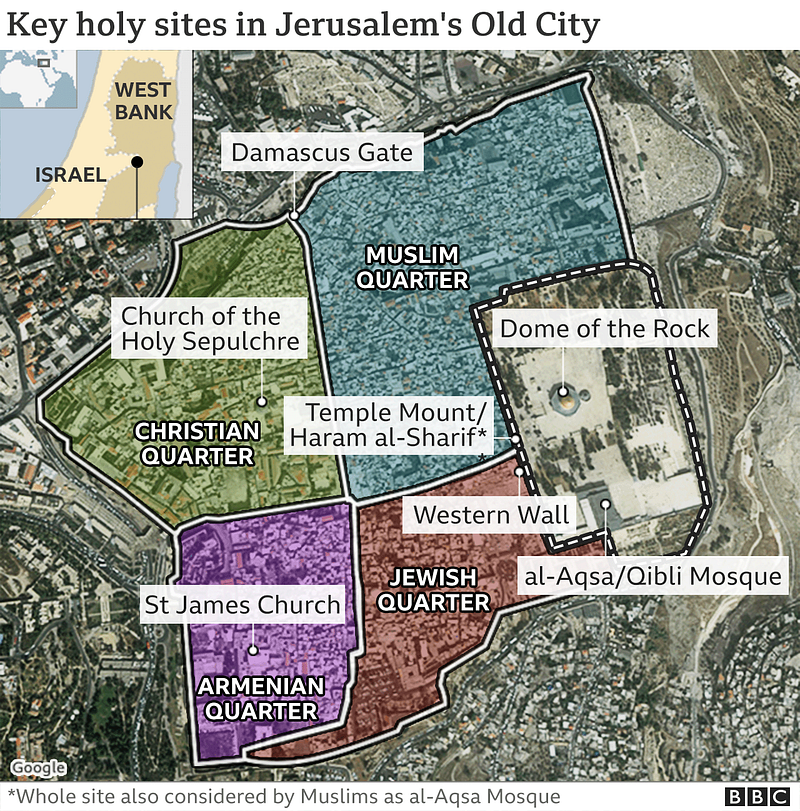
Believers may see the struggle as a test of faith or divine will. Conceding such a site can feel like a sin or apostasy. The cultural power of sacred geography means that compromises that might seem logical (like sharing or internationalizing a holy site) can be deeply painful to those for whom the site’s exclusivity is non-negotiable. Political scientist Ron Hassner, who studied conflicts over sacred places, points out that these disputes tend to be extremely resistant to rational settlement because the usual tools of bargaining (land swaps, sovereignty trade-offs) don’t apply to what is seen as an indivisible holy whole. This is where symbolic gestures become key. An enemy’s show of respect for your sacred values — for instance, a formal acknowledgment of the other side’s historical and spiritual connection to a holy site — can slightly open hearts that brute force only hardens. Indeed, experiments mentioned earlier showed that symbolic recognition of the adversary’s sacred value dramatically reduced violent opposition, whereas purely material deals inflamed it. Culture and psychology intersect here: people need to feel that their identity is respected and their losses are acknowledged. Without that, no amount of coercion or bribery will win a durable peace.
The cycle of revenge is another psychological trap in identity conflicts. When atrocities occur, they imprint a desire for retribution that can persist across generations. Each side carries a mental ledger of historic wrongs — massacres, betrayals, exoduses — which justify new revenge attacks in their eyes. Force-based strategies often inadvertently feed this cycle. A counter-insurgency operation that kills militants but also harms civilians may neutralize immediate threats, yet it also creates new hatred among the victims’ kin. Those survivors or witnesses — often children at the time — become tomorrow’s militants, fueled by trauma. The “collective memory” of a community underlines its future behavior. Israeli scholar Daniel Bar-Tal writes that in protracted conflict, societies develop shared beliefs that glorify their own group’s endurance and demonize the enemy, while justifying continued conflict as necessary and righteous. Such beliefs are reinforced by each round of violence. Hence, heavy-handed military tactics can be self-defeating in the long run: they confer short-term gains at the cost of amplifying the enemy’s resolve through anger and pain. This is not only a moral issue but a strategic one; enlightened militaries recognize that “winning hearts and minds” is crucial. U.S. counterinsurgency doctrine in Iraq and Afghanistan, for example, shifted to emphasize minimizing civilian casualties and culturally insensitive actions, precisely because commanders learned that abuses and collateral damage alienated the local population and fueled insurgencies. Military ethics and strategy thus converge: exercising restraint and seeking nonviolent means to resolve disputes is ultimately more effective than brute force when it comes to conflicts that are as much about narratives as about territory.
Finally, one must consider the geopolitical dimensions that overlay many of these conflicts. Identity-based disputes often attract the involvement of regional or great powers, which can either dampen or inflame the fighting. During the Cold War, superpowers sometimes froze conflicts by propping up client states or insurgencies — for example, the U.S. and USSR each armed allies in the Arab–Israeli conflict, enabling repeated wars without a clear resolution. In the current era, global norms champion self-determination and human rights, making it harder for one side to simply destroy or expel another without international backlash. This outside scrutiny serves as a check on forceful “solutions.” For instance, when Serbia attempted to solve the Kosovo conflict by force in the late 1990s (expelling the Albanian majority), NATO intervened militarily to stop it, effectively siding with the oppressed population. International intervention in Bosnia in 1995 similarly imposed a halt to ethnic cleansing and compelled a negotiated peace (the Dayton Accords) that recognized the identities and rights of all communities in a consociational state. These examples show the international community’s growing intolerance for the idea that might makes right, especially in identity conflicts that could lead to atrocities. The presence of humanitarian law and institutions like the International Criminal Court means that leaders who pursue total war against ethnic or religious groups risk legal and diplomatic repercussions.
Thus, geopolitics can limit the viability of force as a conflict-ending strategy. At the same time, external powers sometimes fuel proxy wars that prolong conflicts — as seen in Syria or Yemen — undercutting local efforts at reconciliation. Geopolitical rivalries can entrench divisions (for instance, Turkey’s guarantor role in Northern Cyprus and Greece’s backing of Greek Cypriots help perpetuate the island’s split). Any durable settlement, therefore, often requires an alignment of international support behind a political solution, not a military one. When the world signals that only a negotiated compromise will be recognized (as the UN has consistently done in resolutions on Israel–Palestine, Kashmir, and Cyprus), it creates pressure on local actors to seek nonviolent solutions. Conversely, when global actors send mixed signals or arm one side, it can encourage illusions of a military win. Hence, resolving identity conflicts by non-violent means is not only a local challenge but an international responsibility. Peace processes in Northern Ireland and Bosnia, for example, succeeded in part because external actors (the U.S., EU, etc.) invested diplomatic capital and incentives in making those deals stick, rather than encouraging continued war.
Beyond Force: Paths to Reconciliation and Justice
If force alone cannot truly solve an identity-driven conflict, what can? The experiences of divided societies suggest that alternative mechanisms — negotiation, power-sharing, transitional justice, and symbolic acts of recognition — offer more promise for a sustainable peace. These approaches directly address the human elements of the conflict: the need for security, dignity, and acknowledgment of each side’s identity and suffering.
Negotiation and Power-Sharing: A negotiated settlement is often the only viable way out of an otherwise endless war. Negotiation does not mean appeasement; it means hammering out a compromise that allows both communities to live with honor. The key is finding arrangements that remove the existential threat each perceives from the other. In practice, this often involves forms of power-sharing or autonomy. The Good Friday Agreement in Northern Ireland set up a power-sharing government where unionists and nationalists jointly govern, and established cross-border institutions with Ireland — thereby satisfying both the desire to remain in the UK and the aspiration for Irish unity in the long run, but only with majority consent. Similarly, proposals to resolve Israel–Palestine center on either a “two-state solution” (each people gets a state, sharing the land) or a binational state with equality — either way, both identities must coexist. In Kashmir, many analysts have suggested joint sovereignty or a soft border allowing autonomy on both sides, so that neither India nor Pakistan “loses,” and Kashmiris gain self-rule. These creative political solutions cannot be implemented unless parties come to the table. And parties usually negotiate seriously only when they conclude that victory is out of reach. This is why facilitating a mutually hurting stalemate is often important — through ceasefires, sanctions, or battlefield balance — to push adversaries into talks. Jonathan Powell’s first lesson from Northern Ireland was precisely that “there are no purely military solutions to insurgencies” and that eventually “there has to be a political solution” for a conflict rooted in political grievances. His second lesson: you must talk to “the men with guns” to get them to put those guns down. That means engaging even bitter foes in dialogue, as distasteful as it may seem, to find out their bottom-line needs. In many conflicts, secret backchannels or mediation by a third party (like Norway in the Oslo Accords for Israel–Palestine, or the U.S. in Bosnia and Northern Ireland) have been crucial to get negotiations started. Once underway, talks can gradually shift parties from maximalist positions to pragmatic compromise, especially if accompanied by confidence-building measures on the ground (ceasefires, prisoner releases, halting provocative actions). The overarching goal is to craft an agreement that each side can present to its people as a win of sorts, or at least not a disgraceful surrender. As Powell notes, insurgents “will not just surrender”; they “need a narrative to explain…why all the sacrifice was worthwhile”. A successful peace deal thus allows each community to feel it has achieved some core aspiration through peace that war could not deliver. This could be statehood for one side, security for the other, mutual recognition, or shared governance — ideally all of the above. In essence, negotiation replaces the zero-sum game with a win-win (or at least a no-lose) proposition.
Transitional Justice and Acknowledgment: When conflicts have been protracted and bloody, wounds do not simply heal with the stroke of a pen on a peace agreement. Justice and reconciliation processes are often needed to address past atrocities and enable communities to move forward without lingering resentment. Transitional justice refers to measures like truth commissions, criminal tribunals, reparations, and institutional reforms that help societies reckon with a violent past. For instance, South Africa’s Truth and Reconciliation Commission in the 1990s provided a platform for victims and perpetrators of apartheid-era political violence to tell their stories, acknowledge guilt, and sometimes receive amnesty in exchange for truth. This process, while imperfect, helped defuse the cycle of revenge by replacing it with a restorative form of justice. In Rwanda, after the 1994 genocide, local gacaca courts enabled a form of community justice and forgiveness that was essential given the sheer scale of involvement in violence. In Northern Ireland, the peace accord did not include a full truth commission (a contentious issue to this day), but it did provide for the release of political prisoners and established commissions to address unsolved murders and the needs of victims’ families. These measures signaled that peace would not simply bury the past, but attempt to humanize and deal with it. A saying in reconciliation work is, “There is no peace without justice, and no justice without truth.” People who have suffered need their pain acknowledged and, where possible, amends made; otherwise, they will feel the peace is built on denial. Scholarly literature suggests that reconciliation — restoring some level of trust between former enemies — is “a necessary requirement for lasting peace” in divided societies. It is a multi-level process: top-down (through official apologies, legal justice, institutional reforms to prevent renewed discrimination) and bottom-up (through inter-community dialogue, joint projects, even simple interpersonal interactions that humanize the other side). Reconciliation does not mean forgetting the past; rather, it means finding a way to remember together constructively. For example, in post-conflict Bosnia, some local initiatives have Serbs, Croats, and Bosniaks jointly commemorating all civilian victims regardless of ethnicity — a powerful recognition of shared suffering that challenges divisive narratives. It is slow and hard work, but such gestures build the social foundations for peace. Without them, a peace agreement can remain a cold contract between elites that fails to translate into genuine coexistence on the ground.
Crucially, reconciliation involves symbolic recognition of each group’s dignity and narrative. This can take many forms: apologies by political leaders for past wrongs, memorials that honor all communities’ losses, revisions of school textbooks to include multiple perspectives, or the repeal of symbols that represent domination (such as flags or anthems that exclude one group). Symbolic acts are not mere tokenism; they carry emotional weight. In deeply divided societies, mutual recognition of each other’s identity and legitimacy is a cornerstone of stability. Political philosopher Axel Honneth emphasizes that human conflicts often boil down to struggles for recognition — the sense that one’s identity is seen and respected. Thus, peace agreements that endure tend to be those “grounded in mutual recognition”. One striking example is the way the Good Friday Agreement recognized both the British and Irish identity of Northern Ireland’s people: it affirmed that citizens could identify as British, Irish, or both and be accepted as such, and it institutionalized this principle by allowing Northern Ireland’s future status (UK or united Ireland) to be decided democratically. This mutual recognition diffused the existential threat each side posed to the other’s identity. We can imagine similar needs in other conflicts — for instance, an Israeli–Palestinian peace would likely require Israel to acknowledge Palestinian nationhood and the injustice of displacement, and Palestinians to acknowledge Jewish historical ties to the land and Israel’s right to security. (As of the writing of this story, 7 October 2025, Support for a two-state solution is at a historic low among both Israelis and Palestinians. Recent polls show opposition outweighs support in both populations, with support levels around or below 30%.) Such acknowledgments cost nothing material, but they hold immense power. Research in conflict resolution shows that apologies and acknowledgments can dramatically improve intergroup attitudes if perceived as sincere. As one study in social psychology notes, reconciliation is facilitated when there is “acceptance of responsibility and steps towards (re)building trust” between former adversaries. Conversely, if the victors simply dictate terms and refuse to admit their own wrongdoings, peace may be cold and brittle. The pride of each community must be satisfied to some extent.
Deterrence with Ethics: None of this is to say that force has no role whatsoever. Security is a basic need; without a sense of safety, peace will collapse. The lesson is rather that force must be coupled with — and eventually subordinated to — political and ethical strategy. In interim periods or post-conflict environments, maintaining a strong deterrent against spoilers (those who attempt to reignite violence) is important. For example, international peacekeepers or robust local security forces are often needed to enforce ceasefires and protect civilians during a fragile peace process. The difference is that this kind of force is used in the service of peace, under the rule of law and with impartiality, rather than to perpetuate dominance. Military forces can also contribute to reconciliation if they are reformed to represent the diversity of society (integrating former rebels or minority groups, as was done in post-apartheid South Africa’s army). The ethics of force become paramount: strict codes to avoid harming civilians, accountability for any abuses, and an emphasis on protecting all communities, not just the majority. When militaries operate with respect for human rights and as neutral peacekeepers, they help build trust rather than fear. This is why many peace agreements incorporate security sector reform and even joint security mechanisms — to signal that guns will no longer be wielded along ethnic lines. Ultimately, the goal is to shift the paradigm from deterrence by threat to deterrence by mutual reassurance: each side feels secure not because it can dominate the other, but because it trusts that the other does not wish it harm (thanks to the new political accord and the rule of law). This is the end-state one strives for — and no amount of combat alone will ever achieve it. It requires a reweaving of relationships.
Conclusion
A conflict rooted in national and religious identity, entwined around the same sacred land, is among the most difficult of human struggles. Such a conflict is not a mere contest of firepower or diplomacy, but a collision of deeply held beliefs, historical narratives, and collective yearnings. As we have seen, force can decide battles and even end wars in a formal sense, but it cannot resolve the fundamental drivers of identity-based conflicts. The bitter truth is that no army can bomb away an ethnicity or shell a set of ideas into surrender. When the fighting stops, ideas of rightful ownership, holy mission, and injustice suffered persist in the hearts of those who lived through the conflict and those born after. The resort to force often entrenches these ideas further. Victory by the sword breeds humiliation and a thirst for revenge in the vanquished, while defeat breeds fear and distrust that can poison any future reconciliation. Thus, a “solution” imposed by force alone is usually a false peace, one maintained by coercion or frozen in unresolved form. History’s message is clear: military force alone cannot resolve an intractable identity conflict. Lasting peace demands addressing the grievances and aspirations that led people to take up arms in the first place.
That does not imply that peace is unattainable — only that it must be built rather than imposed. It must be built on dialogue, on empathy, and on courageous political creativity. It must involve each side making painful compromises but also receiving meaningful validation of their core identity. A just peace may require sharing the land or its governance in novel ways, or sharing sovereignty, or granting autonomy — whatever formula allows both peoples to live with dignity. It certainly requires recognition: each side recognizing the humanity and rights of the other, and the legitimacy of the other’s connection to the land. In the end, this often comes down to narratives. When former enemies can together tell a new story of a shared future — a story in which both have a place — then the conflict can truly end. The sword cannot script that story; only the human conscience and imagination can. As peacebuilders often remind us, conflicts are created by humans and can be ended by humans. Through negotiation, justice, and reconciliation, adversaries can transform their relationship from one of antagonism to coexistence. Symbols of division can give way to symbols of partnership. It is a slow, fraught journey — “a long-term process,” as reconciliation scholars note — but examples from around the world show it is possible. Northern Ireland, once a byword for intractable strife, now has Catholics and Protestants in government together, and young generations growing up without daily violence. The wounds of history are not erased, but people have learned to live with them without hatred. That is as close to “solved” as such conflicts get: not the victory of one identity over another, but the victory of a new, inclusive vision over old enmities.
In the final analysis, force may be able to secure a conflict pause or enforce a separation, but only peace — built on mutual respect and justice — can secure a conflict permanently. The struggle over a sacred land can never be settled by expelling its spirit or its stories. It can only be settled by finding a way for those stories to coexist, for that land to be shared or at least mutually acknowledged. The guns fall silent for good when both sides conclude that living together beats dying together. Achieving that mindset shift is the work of peacemaking, not warmaking. Thus, while military strength can prevent one’s annihilation (and deter aggression, an important ethical right of self-defense), it is not a blueprint for harmony. The sword can defend a life, but it cannot build a life worth living with one’s neighbors. In sum, conflicts born of identity and faith ultimately require solutions rooted in identity and faith — faith in each other’s humanity, and a new identity that encompasses tolerance. War has its limits; peace has its chances. The true holy victory is when former foes embrace a future side by side on their cherished land, each still themselves, neither erased, both free. That is something no bayonet can ever achieve — but human empathy and reason just might.