Spirals of Time: The Nautilus and Its Enduring Mystique
Behind the nautilus’s elegance lies a struggle — between commerce, cuisine, and conservation — that raises timeless questions about how humans engage with the natural world.
Introduction
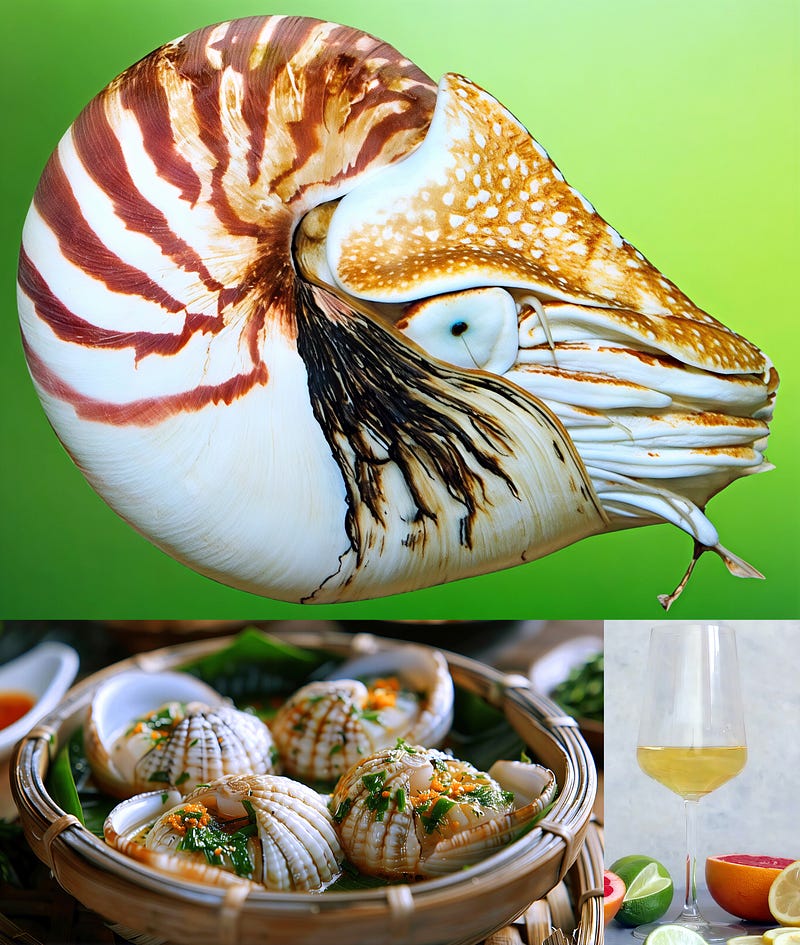
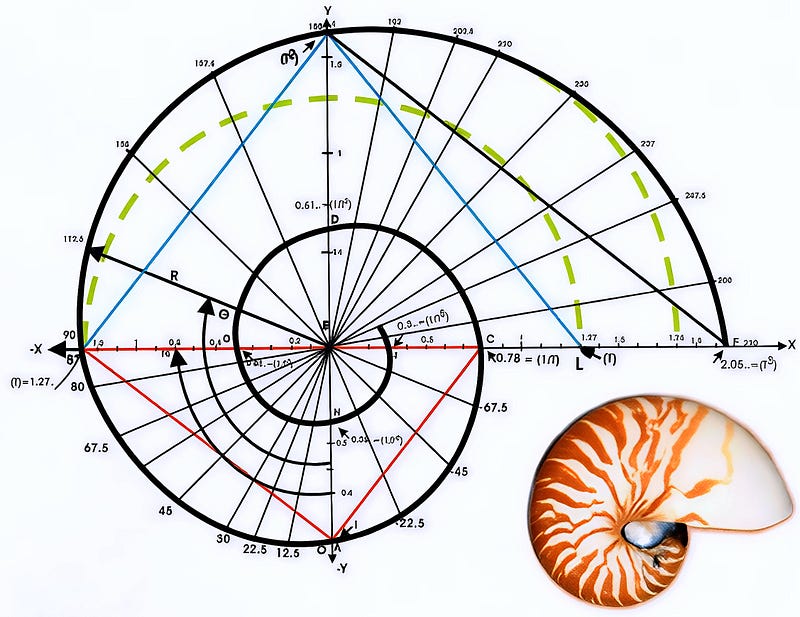
Few creatures embody both ancient mystery and modern relevance like the nautilus. Known as the “living fossil of the sea,” this marine marvel has glided through oceans for more than 500 million years, predating even the first dinosaurs. Its coiled shell has inspired mathematicians with its near-perfect logarithmic spiral, artists with its symmetry, and biologists with its stubborn survival. Yet behind the nautilus’s elegance lies a struggle — between commerce, cuisine, and conservation — that raises timeless questions about how humans engage with the natural world.
Taxonomy
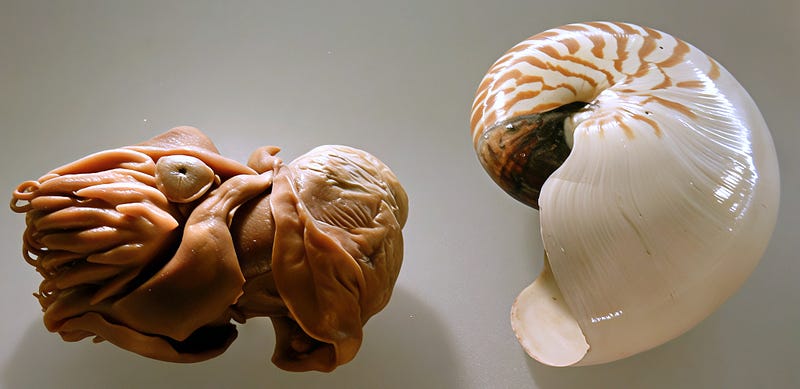
The chambered nautilus, Nautilus pompilius, belongs to the family Nautilidae within the class Cephalopoda. Unlike its cousins — the octopus, squid, and cuttlefish — the nautilus retains an external shell, a trait abandoned by most modern cephalopods. Within Nautilus pompilius, several regional varieties exist, often distinguished by subtle differences in shell coloration and size. The name “chambered nautilus” refers to the internal divisions of its shell, which function like a natural submarine ballast. Unlike squid or octopus, there are no domesticated or selectively bred subspecies. In culinary and artisan markets, however, the species is often grouped broadly with other Nautilus species, though N. pompilius remains the most widely known.
Biology
The nautilus grows up to 25 cm in diameter (about 10 in), its shell expanding outward as it ages, leaving behind sealed chambers filled with gas to regulate buoyancy. Equipped with as many as 90 slender tentacles — without suckers but lined with adhesive ridges — it captures prey such as small crustaceans and carrion. Its primitive pinhole eyes lack lenses, yet serve adequately in the dim twilight of its preferred depths, often between 100 m (328 ft) and 300 m (984 ft). Remarkably, the nautilus can live up to 20 years, a stark contrast to the brief lifespans of squid and octopuses, which rarely exceed two. This longevity makes it not just a biological relic but also a symbol of endurance.
Ecology
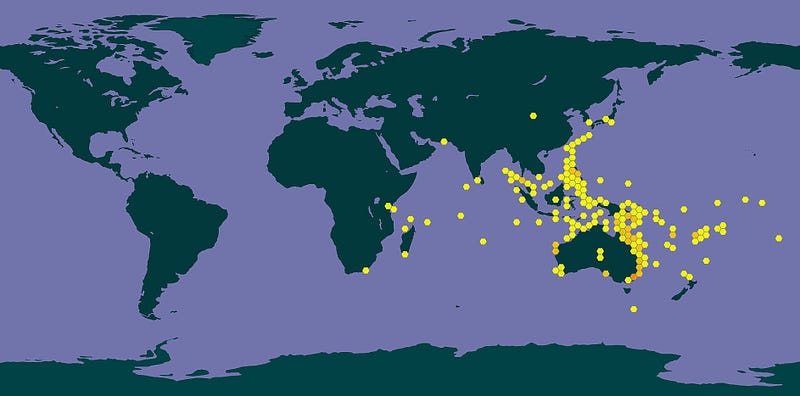
Nautiluses inhabit the steep reef slopes and deep waters of the Indo-Pacific, from the Philippines and Indonesia to Papua New Guinea and northern Australia. They emerge at night to feed in shallower waters before retreating to the cool darkness of the depths during the day. As scavengers, they play a critical ecological role, recycling nutrients from dead matter into the marine food chain. Yet they face existential threats: overharvesting for their shells, bycatch in fisheries, and habitat disruption from warming seas. Their slow reproductive cycle — females lay only a few dozen eggs, which take up to one year to hatch — makes populations especially vulnerable to collapse. This fragility led to Nautilus pompilius being listed under CITES Appendix II, restricting international trade to sustainable levels.
Uses
For centuries, nautilus shells have been prized in art and ornamentation. Renaissance Europe saw them carved into intricate goblets and reliquaries, symbols of wealth and divine order. Today, shells are still traded in curio markets and jewelry, sometimes fetching high prices due to their natural iridescence and spiral geometry. Beyond aesthetics, nautilus studies have advanced fields from biomimicry to submarine engineering, as scientists look to its buoyancy system for inspiration. Economically, the species’ role is dual: cultural artifact and biological model. Sustainability, however, remains precarious, as demand too often outpaces regulation.
Culinary Aspects
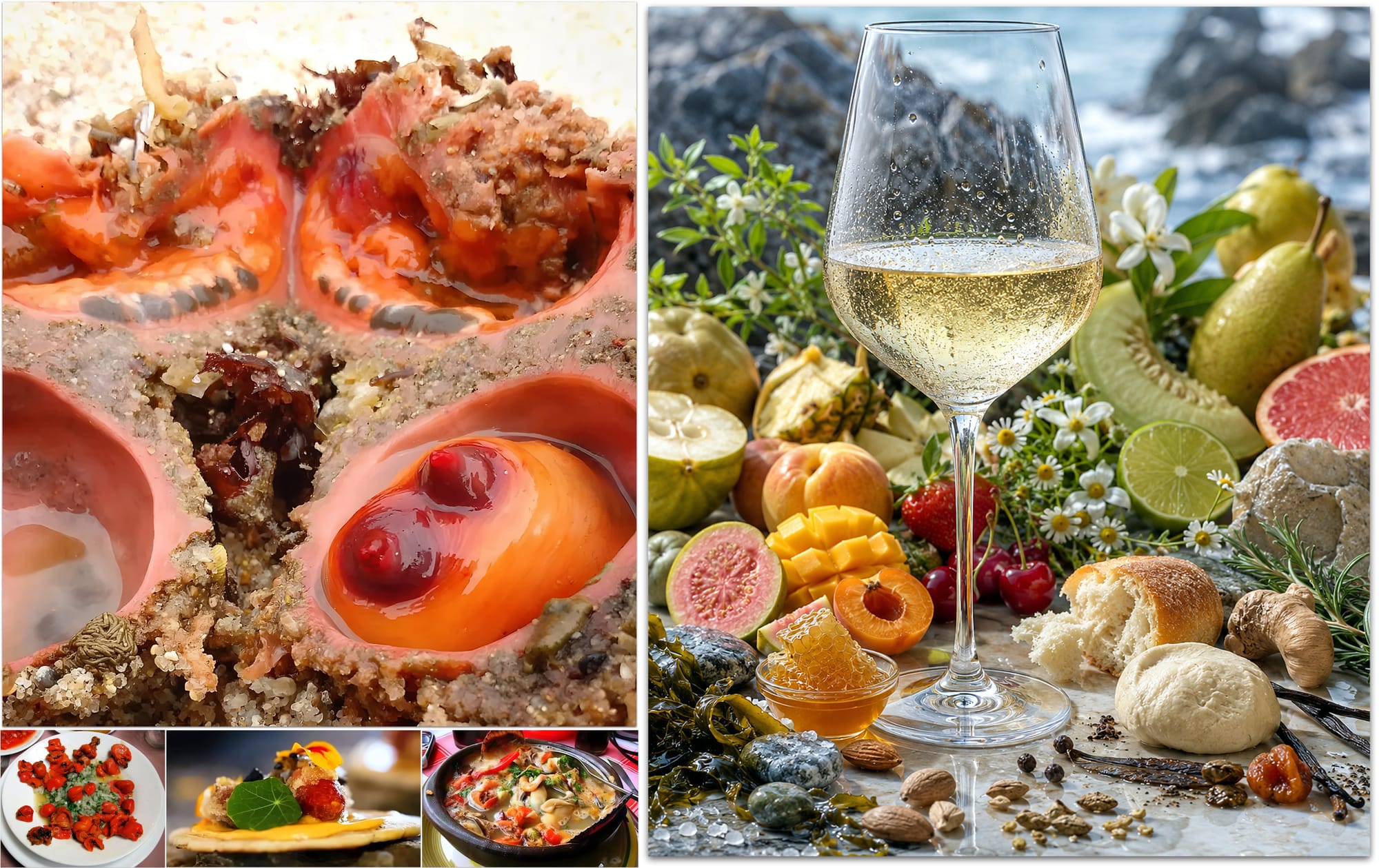
Though rarely encountered in mainstream markets, the nautilus has been consumed locally in parts of the Indo-Pacific. Its flesh, when prepared, resembles that of squid or cuttlefish, with a firm texture and a mild, slightly sweet flavor. It can be grilled, stewed, or sliced thin for raw preparations, though it is far less common than other cephalopods in global gastronomy. A grilled portion of nautilus weighing about 200 g (7 oz) provides a high-protein, low-fat meal rich in trace minerals. Yet ethical debates surround its edibility: many conservationists argue that, given its rarity and slow reproduction, the nautilus belongs more to the realm of cultural preservation than the dinner plate.
Wine Pairings
For those rare occasions when nautilus is served, wines that complement cephalopod dishes are most suitable. A crisp Albariño from Spain, with its saline minerality, underscores the sweetness of the flesh, echoing the sea’s imprint. Alternatively, a Chablis from Burgundy, with its clean acidity, can balance grilled or lightly seasoned preparations. In richer recipes, such as nautilus simmered in coconut milk, an off-dry Riesling’s fruit and acidity can strike the perfect harmony. These pairings, however, remain as rare as the dish itself, often more imagined than experienced outside niche contexts.
Conclusion
The nautilus is more than a biological curiosity. It is a spiral of living history, a creature that connects the Cambrian seas to our present age. Its beauty enchants collectors, its biology inspires scientists, and its taste intrigues adventurous palates. But its survival hinges on restraint and respect. To admire the nautilus is to acknowledge both its fragility and its resilience — and to ask ourselves whether we will allow this living fossil to continue its ancient voyage through the oceans, or whether we will relegate it to memory, like so many other species lost to time.