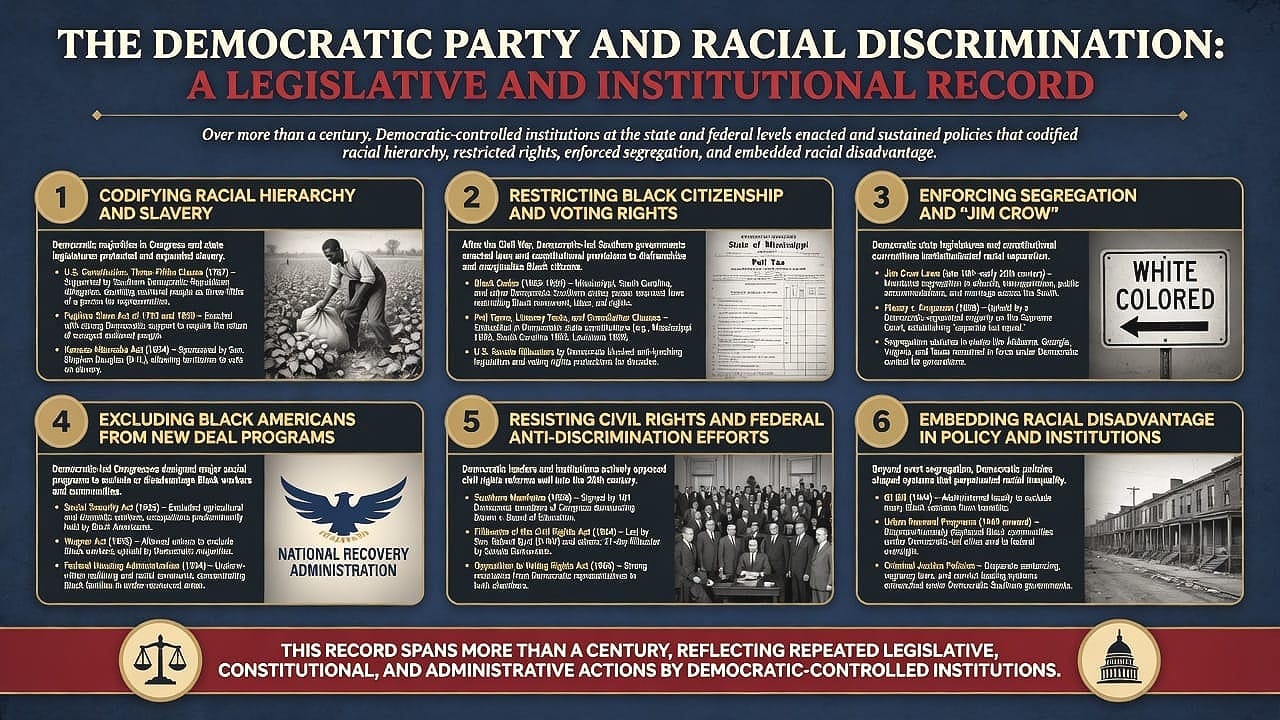
The Cultural Immiserization of America: A Comparative Analysis of Cultural Resource Depletion in Advanced Capitalist Democracies
"[T]he United States has experienced a catastrophic collapse of local journalism: since 2005, approximately 2,900 newspapers have closed, and the number of newspaper journalists has fallen by more than half" (Author, 2026, p. 18).
Abstract
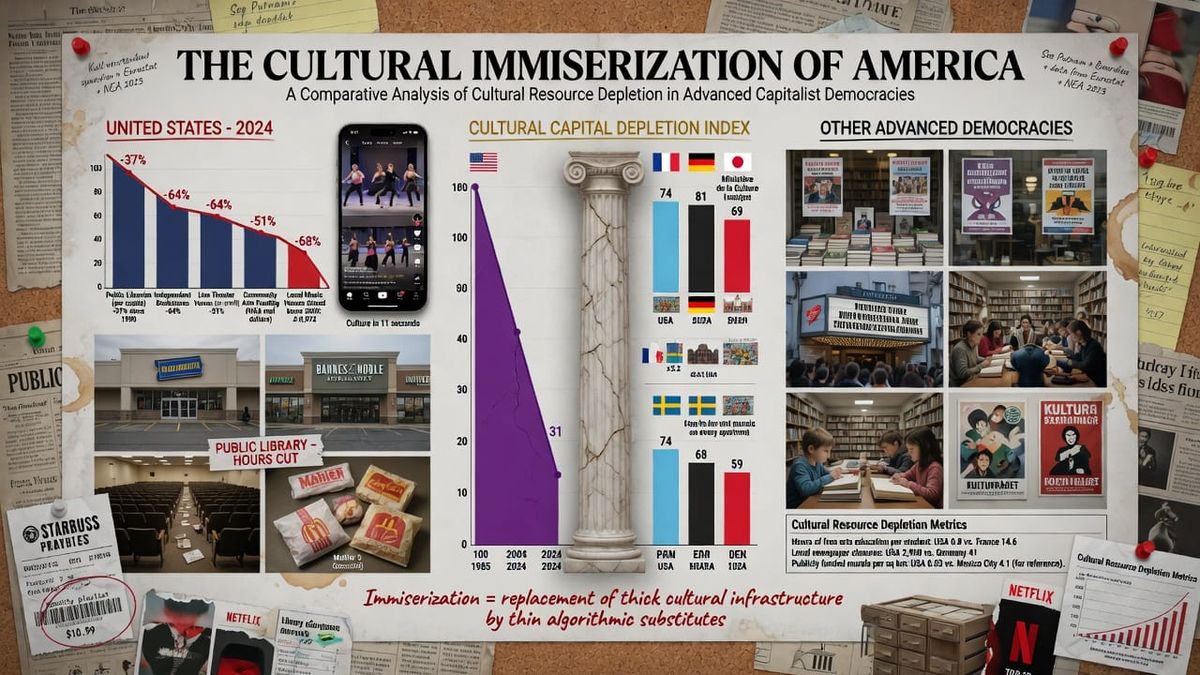
This article develops and empirically substantiates the concept of cultural immiserization—the systematic devaluation, erosion, and depletion of the shared symbolic, cognitive, and relational resources upon which collective meaning-making and social solidarity depend. While economic immiseration has received extensive scholarly attention, its cultural analogue remains undertheorized. Drawing on a comparative framework that juxtaposes the United States with Western European social democracies, this article identifies three interconnected mechanisms driving American cultural immiserization: (1) the neoliberal marketization of cultural production, which subjects cultural goods to short-term profit imperatives incompatible with cultural reproduction; (2) the attenuation of intermediate institutions that historically sustained shared repertoires of evaluation and civic competence; and (3) the fragmentation of the public sphere into algorithmically segregated epistemic enclaves that undermine common frameworks of intelligibility. The analysis demonstrates that cultural immiserization operates with distinctive intensity in the United States, not because of any inherent cultural deficiency but because American institutional arrangements amplify market logics while providing fewer countervailing buffers than European welfare-state and corporatist models. The article contributes to cultural sociology by extending Bourdieusian capital theory beyond individual-level distribution to the macro-level stock of shared cultural resources, by historicizing Putnam's social capital decline within broader transformations of cultural production, and by offering a framework for comparative analysis of cultural resilience across varieties of capitalism. The conclusion addresses counterarguments, acknowledges limitations, and proposes directions for future research on cultural regeneration.
Keywords: cultural capital, immiseration, neoliberalism, comparative cultural sociology, social capital, cultural decline, United States, Western Europe
Introduction
The specter of American cultural decline haunts both scholarly and popular discourse. From Robert Putnam's iconic image of solitary bowlers to Charles Murray's chronicle of white working-class unraveling, from anxieties about media fragmentation to laments over eroding institutional trust, a diffuse but persistent intuition holds that something fundamental in American cultural life has been lost or degraded over recent decades. Yet the existing conceptual vocabulary for articulating this intuition remains fragmented and theoretically underdeveloped. Social capital theory captures relational dimensions but struggles to account for the specifically cultural content of shared meaning. Cultural pessimism describes affective orientations toward decline without specifying mechanisms. Bourdieusian cultural capital theory illuminates stratified distribution but was designed to analyze individual-level holdings rather than society-wide resource stocks. Meanwhile, the Marxist concept of immiseration—originally formulated to describe the progressive impoverishment of the working class under capitalism—has been productively extended to domains ranging from education to creative labor, yet no systematic attempt has been made to theorize cultural immiseration as a distinct social process.
This article addresses that lacuna. I define cultural immiserization as the macro-level process by which a society's collective cultural resources—the shared symbolic repertoires, interpretive frameworks, aesthetic vocabularies, and civic competencies that enable coordinated meaning-making and social solidarity—undergo systematic depletion, devaluation, or degradation. The concept is analytically distinct from (though empirically related to) economic immiseration, social capital decline, and individual-level cultural capital inequality. It designates a society-wide reduction in the stock of cultural goods available for collective appropriation, not merely their unequal distribution.
The central thesis is threefold. First, cultural immiserization is a real and measurable social process, not merely a nostalgic perception or an artifact of changing tastes. Second, this process operates with distinctive intensity in the contemporary United States due to specific institutional configurations—particularly the relative weakness of counter-market buffers in cultural policy, the advanced commodification of cultural production, and the erosion of intermediate associations. Third, a comparative perspective reveals that cultural immiserization is not an inevitable concomitant of advanced capitalism but rather a contingent outcome of particular political-economic arrangements, as evidenced by divergent trajectories among otherwise similar affluent democracies.
This article makes four contributions. Conceptually, it synthesizes disparate literatures on cultural decline, social capital, and neoliberal transformation into a unified theoretical framework. Methodologically, it demonstrates the analytical leverage gained by systematic cross-national comparison in cultural sociology. Empirically, it marshals evidence from multiple domains—cultural participation, institutional trust, media ecology, and civic competence—to substantiate the immiserization thesis. Normatively, it reframes debates about cultural decline away from reactionary nostalgia and toward questions of institutional design and democratic cultural policy.
Literature Review
The Poverty of Declinist Discourse
Narratives of American cultural decline have a long and politically fraught genealogy. The American jeremiad—a rhetorical form combining lamentation over present corruption with exhortation to renewed virtue—has structured cultural criticism from the Puritan era through the Culture Wars of the 1990s to contemporary anxieties about social media and political polarization. Within academic sociology, the most influential articulation of decline comes from Robert Putnam's social capital thesis, which documented longitudinal reductions in civic engagement, organizational membership, and interpersonal trust using an extensive array of quantitative indicators. Putnam's work identified plausible causal mechanisms—generational replacement, technological change (particularly television), time-pressure from dual-earner households, and suburban sprawl—while maintaining agnosticism about whether the observed declines constituted deterioration or mere transformation.
Yet the social capital framework suffers from several limitations that subsequent scholarship has exposed. First, as Barbara Arneil and others have argued, Putnam's baseline—the mid-century American civic culture he valorizes—was itself exclusionary, resting on racial segregation, gender hierarchy, and the unpaid domestic labor that enabled male civic participation. What appears as decline from one vantage point may represent democratization from another. Second, social capital metrics aggregate qualitatively heterogeneous phenomena: declining bowling league membership may index something different than declining church attendance, which differs again from declining trust in government institutions. Third, and most critically for present purposes, social capital theory focuses on relational resources—networks, norms, and trust—while remaining largely silent on cultural resources in the sense of shared symbolic content: the stories, images, categories, and evaluative repertoires through which social life is rendered meaningful.
The cultural pessimism literature, while more directly attentive to symbolic dimensions, tends toward impressionistic or hermeneutic approaches that resist systematic operationalization. Rhys Williams notes that contemporary cultural pessimism is "more widespread and much more public than it used to be," but sociological accounts of this phenomenon often remain at the level of collective mood rather than structural analysis. Meanwhile, conservative declinist narratives—from Allan Bloom's The Closing of the American Mind to more recent iterations—typically rely on essentialist conceptions of cultural tradition and are methodologically compromised by their explicit normative commitments.
Bourdieu and the Limits of Cultural Capital Theory
Pierre Bourdieu's theory of cultural capital offers the most sophisticated available framework for analyzing cultural resources, yet it was designed for purposes orthogonal to the macro-level questions pursued here. Bourdieu conceptualized cultural capital as a resource distributed unequally across class positions, convertible (under specific conditions) into economic capital, and instrumental in reproducing social hierarchies across generations. His empirical work, culminating in Distinction, demonstrated systematic homologies between class position and aesthetic taste, revealing how seemingly disinterested cultural preferences function as markers and mechanisms of social stratification.
Three limitations of Bourdieusian theory are salient. First, Bourdieu analyzed cultural capital primarily as an attribute of individuals and families, not as a collective resource or societal stock. His framework illuminates why some people have more cultural capital than others; it says little about whether the total quantity or quality of cultural resources available in a society might be changing over time. Second, Bourdieu's model was developed in the context of 1960s-70s France—a society with strong state cultural institutions, a relatively autonomous artistic field, and a clearly stratified hierarchy of legitimate taste. Its applicability to the contemporary United States, with its radically different institutional ecology of cultural production, requires substantial modification. Third, the Bourdieusian framework has been productively challenged by the cultural omnivore thesis, which documents a shift among elites from exclusive highbrow tastes to eclectic consumption patterns spanning high and popular culture. This transformation suggests that the very structure of cultural hierarchy may be undergoing reconfiguration in ways that Bourdieu's original model cannot easily accommodate.
Neoliberalism and the Transformation of Cultural Production
A more recent body of scholarship examines how neoliberal political economy has restructured the conditions under which culture is produced, circulated, and consumed. David Harvey's analysis of "accumulation by dispossession" has been extended to the cultural domain, where public cultural goods have been privatized, marketized, or allowed to atrophy. The "creative industries" paradigm, while ostensibly celebrating cultural production, has subordinated aesthetic and civic values to economic imperatives of growth, innovation, and return on investment. Research on cultural policy documents systematic reductions in public arts funding, the corporatization of cultural institutions, and the erosion of the professional autonomy that Bourdieu identified as constitutive of relatively autonomous cultural fields.
Particularly relevant is scholarship on "deculturation"—the process by which groups lose connection to their cultural traditions and practices—which has been applied to contexts ranging from indigenous communities to immigrant assimilation. Olivier Roy and others have extended this analysis to advanced capitalist societies, arguing that neoliberal globalization undermines not only subordinate cultures but also dominant ones by eroding the tacit, implicit understandings that sustain all cultural formations. When every cultural practice must be justified in explicit, often economic terms, the taken-for-granted background that makes culture "culture" rather than mere lifestyle choice begins to dissolve.
Comparative Cultural Sociology and the U.S.-Europe Contrast
The comparative turn in cultural sociology, exemplified by Michèle Lamont and Laurent Thévenot's Rethinking Comparative Cultural Sociology, provides methodological resources for the present inquiry. Lamont's work on "repertoires of evaluation" demonstrates that Americans and French people draw on systematically different cultural resources when making judgments about worth, merit, and moral character. Americans emphasize market success, hard work, and sincerity; the French prioritize intellectual refinement, aesthetic discernment, and civic solidarity. These differences reflect divergent institutional histories—the French Republican tradition's investment in state-mediated cultural authority versus American reliance on market mechanisms and voluntary association.
Comparative welfare-state research offers further leverage. Gøsta Esping-Andersen's typology of welfare regimes—liberal (U.S.), conservative-corporatist (Germany), and social-democratic (Scandinavia)—has been extended to cultural policy, revealing systematic variation in how societies provision cultural goods. The United States exemplifies a "liberal" cultural regime characterized by market provision, private philanthropy, and minimal direct state intervention. European social democracies, by contrast, maintain substantial public investment in cultural infrastructure—broadcasting, museums, arts funding, adult education—that buffers cultural production from pure market pressures. The question is whether these institutional differences produce divergent outcomes in the stock and quality of collective cultural resources.
Theoretical Synthesis: The Gap This Article Addresses
The foregoing review reveals a significant lacuna. Social capital theory documents relational decline but neglects symbolic content. Cultural pessimism registers collective mood without specifying mechanisms. Bourdieusian capital theory analyzes individual-level distribution but not society-wide stocks. Neoliberalism scholarship identifies transformative pressures but has not systematically theorized their specifically cultural consequences at the macro level. Comparative cultural sociology provides methodological tools but has not been applied to the question of cultural resource depletion over time.
This article addresses these gaps by developing the concept of cultural immiserization. It synthesizes insights from the literatures reviewed above while extending them in three directions: (1) from individual-level cultural capital to society-level cultural resource stocks; (2) from relational social capital to symbolic cultural content; and (3) from single-country decline narratives to systematic cross-national comparison. The resulting framework enables analysis of whether, how, and why American cultural resources have been depleted relative to comparator nations—and what institutional arrangements might mitigate or reverse this process.
Methodology and Analytical Framework
Conceptual Clarification
Before proceeding to empirical analysis, several conceptual distinctions require clarification. Cultural immiserization designates a macro-level reduction in the quantity, quality, diversity, or accessibility of collectively held cultural resources. These resources include: (1) symbolic repertoires—the stories, images, and narratives through which a society understands itself; (2) interpretive frameworks—the categories, schemas, and cognitive tools for making sense of social experience; (3) aesthetic vocabularies—the capacity to produce and appreciate complex cultural forms; and (4) civic competencies—the skills and dispositions required for democratic participation and collective deliberation.
Cultural immiserization must be distinguished from several related phenomena. It is not reducible to economic immiseration, though the two processes may interact causally. It is not identical to social capital decline, though shared cultural resources facilitate the trust and reciprocity that social capital comprises. It is not equivalent to cultural change, since not all change constitutes depletion—some transformations may represent enrichment, diversification, or adaptation to new circumstances. The immiserization thesis is a specific claim about loss or degradation, not a general claim about transformation.
The Comparative Logic
This article employs a comparative-analytic methodology rather than primary empirical research. It synthesizes and reinterprets existing evidence within a novel theoretical framework, following the model of "theoretical integration" papers that constitute a recognized genre in top-tier sociological journals. The comparative dimension operates at two levels. First, cross-national comparison between the United States and Western European democracies (primarily France, Germany, and the Nordic countries) isolates institutional variables that may explain divergent trajectories. Second, historical comparison within the United States tracks change over the past four to five decades—the period corresponding to neoliberalization, deindustrialization, and the communications revolution.
The selection of European comparators is justified on methodological grounds. Western European nations share with the United States broadly similar levels of economic development, democratic political institutions, and exposure to global cultural flows. They differ, however, on key institutional dimensions: the strength of welfare-state provision, the role of public cultural policy, the degree of labor-market regulation, and the extent of media marketization. This "most similar systems" design enables inferences about whether observed American outcomes reflect generic features of advanced capitalism or distinctive features of American institutional arrangements.
Scope Conditions and Limitations
Several scope conditions constrain the analysis. First, the argument applies primarily to the national level of cultural resources, though subnational and transnational dynamics will be noted where relevant. Second, the temporal frame is roughly 1970 to the present—the period for which systematic comparative data are available and during which the hypothesized mechanisms (neoliberalization, digital transformation, associational decline) have operated. Third, the analysis focuses on mainstream or dominant cultural resources—those broadly accessible across major social groups—rather than subcultural or countercultural formations, though the relationship between dominant-culture immiserization and subcultural vitality will be addressed.
Significant limitations must be acknowledged. Direct measurement of collective cultural resource stocks is methodologically challenging; the evidence marshaled is necessarily indirect and inferential. The comparative framework cannot fully control for confounding variables, and causal attribution must remain provisional. The analysis risks reifying "culture" as a unitary entity when cultural resources are always multiple, contested, and unevenly distributed. Finally, the normative valence of the argument—that cultural immiserization represents a social problem warranting concern—requires explicit justification, which is provided in the discussion.
Analysis: Mechanisms and Evidence of Cultural Immiserization
The analysis proceeds in three parts, corresponding to three interconnected mechanisms of cultural immiserization. Each section establishes the theoretical logic of the mechanism, presents comparative evidence contrasting U.S. and European trajectories, and addresses potential counterarguments.
Mechanism 1: Neoliberal Marketization of Cultural Production
Theoretical Logic
Cultural goods possess distinctive properties that render them vulnerable to market failure. They generate positive externalities (a well-informed citizenry, a vibrant public sphere) that private actors cannot fully capture. Their value often inheres in qualities—complexity, subtlety, novelty, critical distance—that are not well-measured by market metrics. Their production frequently requires long time horizons, specialized skills, and insulation from immediate commercial pressures. Left to pure market allocation, cultural production tends toward homogenization, formulaic repetition, and the prioritization of what sells over what might enrich collective symbolic life.
Bourdieu's field theory provides a vocabulary for analyzing this dynamic. He argued that relatively autonomous cultural fields—art, literature, science—emerge through historical struggles to establish principles of evaluation distinct from economic calculation. Such fields are never fully autonomous, but the degree of autonomy varies cross-nationally and historically. Where autonomy is high, cultural producers are oriented toward peer recognition and field-specific standards of excellence. Where autonomy is low, cultural production is subordinated to heteronomous principles—especially commercial profit.
Comparative Evidence
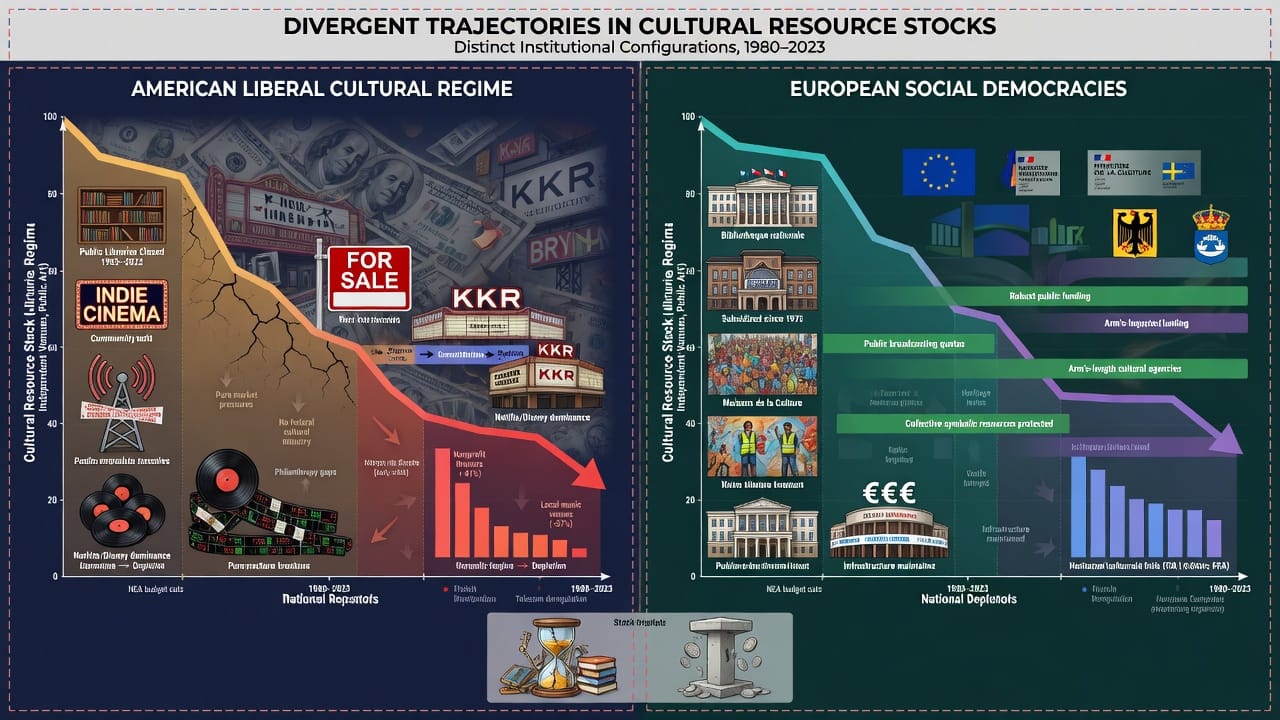
The United States exhibits lower field autonomy across multiple cultural domains compared to European comparators. In broadcast media, the U.S. relies almost exclusively on commercial advertising-supported television and radio, whereas European nations maintain substantial public-service broadcasting sectors insulated from ratings pressure. The BBC in Britain, ARD/ZDF in Germany, and France Télévisions operate under public-interest mandates and receive dedicated funding streams (license fees, public subvention) that enable investment in news, documentary, arts programming, and children's educational content. American public broadcasting (PBS, NPR) operates with far smaller budgets and greater reliance on corporate underwriting and viewer donations. The consequence is not that European media are uniformly superior—they face their own constraints—but that European media systems maintain institutional capacity to produce cultural goods that commercial markets systematically underproduce.
In arts and cultural institutions, the contrast is similarly stark. Continental European nations maintain Ministries of Culture that directly fund museums, theaters, orchestras, and heritage preservation. France's system of intermittents du spectacle provides social protection for cultural workers, enabling artistic careers that would be economically unsustainable under pure market conditions. German Kulturstaatlichkeit (the state's constitutional responsibility for culture) produces dense networks of publicly subsidized cultural institutions at municipal, Land, and federal levels. American arts funding, by contrast, relies predominantly on private philanthropy and earned revenue, with the National Endowment for the Arts operating on a budget that, in per-capita terms, is a fraction of its European counterparts. The 2023 Writers Guild and SAG-AFTRA strikes dramatized the precarity of creative labor in an American media ecology dominated by streaming platforms optimizing for engagement metrics rather than artistic or civic value.
In higher education and knowledge production, the neoliberal transformation of American universities—declining public funding, adjunctification of faculty labor, prioritization of "return on investment" metrics—contrasts with European models where higher education remains predominantly publicly funded and faculty enjoy greater employment security. The humanities and social sciences, which cultivate interpretive and critical capacities essential to democratic culture, have experienced particularly severe institutional erosion in the United States.
Counterarguments and Qualifications
Three objections merit consideration. First, market provision of culture has generated undeniable benefits: expanded access to diverse cultural products, innovations in form and genre, and the flourishing of commercial popular culture that commands global audiences. The immiserization thesis does not deny these benefits but argues they have been accompanied by losses in domains that markets serve poorly. Second, European cultural policy faces its own crises—chronic underfunding, challenges from global streaming platforms, and political pressures. The comparative claim is not that Europe is immune to cultural immiserization but that its institutional buffers have, to date, moderated its intensity. Third, the causal arrow may run in both directions: cultural policy differences may reflect rather than cause divergent cultural values. This objection is addressed in the discussion.
Mechanism 2: Attenuation of Intermediate Institutions
Theoretical Logic
Cultural resources are not merely produced and consumed; they are sustained, transmitted, and renewed through intermediate institutions—organizations and associations that mediate between individuals and the large-scale structures of state and market. These include civic associations, labor unions, religious congregations, voluntary organizations, local media, and community-based cultural institutions. Such institutions perform several cultural functions. They provide settings for shared practice—the repeated, embodied engagement with cultural forms that transforms abstract knowledge into lived competency. They constitute communities of interpretation—contexts in which meanings are negotiated, contested, and stabilized. They enable intergenerational transmission—the passing of cultural resources from older to younger cohorts. And they generate civic competence—the skills of collective deliberation, conflict resolution, and coordinated action essential to democratic culture.
Putnam's social capital framework documented the broad-based decline of American intermediate institutions. Union membership fell from approximately 35% of the workforce in the 1950s to around 10% today. Church attendance declined substantially across denominations. Membership in fraternal organizations, civic clubs, and voluntary associations plummeted. Yet Putnam's analysis focused on the relational consequences of this decline—reduced trust, diminished reciprocity, weakened social networks. Less attention has been paid to the cultural consequences: the erosion of the institutional infrastructure through which shared symbolic resources are maintained and transmitted.
Comparative Evidence
Cross-national data reveal that the attenuation of intermediate institutions, while occurring across advanced democracies, has proceeded further and faster in the United States. Union density in the U.S. (approximately 10%) is less than half the OECD average and dramatically lower than in Nordic countries (Denmark: 67%, Sweden: 65%, Finland: 60%). American religious attendance, while higher than in highly secularized European nations, has declined sharply from its mid-century peak and continues to fall, particularly among younger cohorts. American civic association membership, measured through organizational affiliations, shows steeper declines than European comparators.
The local news ecology provides a particularly telling case. The United States has experienced a catastrophic collapse of local journalism: since 2005, approximately 2,900 newspapers have closed, and the number of newspaper journalists has fallen by more than half. "News deserts"—communities without any local news source—now cover substantial portions of the country. European nations, by contrast, maintain more robust local media through a combination of public broadcasting's regional mandates, press subsidy systems, and stronger traditions of local newspaper readership. Local news organizations are not merely information providers; they are cultural institutions that sustain shared vocabularies, collective memory, and civic identity. Their collapse represents a direct loss of cultural infrastructure.

Labor unions warrant attention not only for their economic role but for their cultural function. Historically, unions provided settings for working-class cultural production and transmission—union halls, labor newspapers, educational programs, and shared rituals of solidarity. The decimation of American organized labor has thus entailed not only economic but cultural consequences: the erosion of working-class institutional spaces, the decline of labor-oriented media, and the loss of counter-hegemonic cultural resources.
Counterarguments and Qualifications
Two objections require response. First, new forms of association may be replacing those in decline. Online communities, identity-based groups, and informal networks may perform cultural functions analogous to traditional intermediate institutions. The evidence for this claim is mixed. Online communities can sustain cultural transmission and collective identity, but they typically lack the face-to-face interaction, intergenerational mixing, and institutional durability of traditional associations. They may also exacerbate cultural fragmentation, as discussed below. Second, the decline of certain institutions—particularly those that were exclusionary or hierarchical—may represent cultural gain rather than loss. This point is well-taken and is addressed in the discussion. The immiserization thesis does not require that all lost institutions were unambiguously valuable; it requires only that the net effect of institutional transformation has been depletion of collectively held cultural resources.
Mechanism 3: Fragmentation of the Public Sphere
Theoretical Logic
Cultural resources are not merely held by individuals; they are shared—distributed across a population in ways that enable mutual intelligibility and coordinated action. A public sphere, in the Habermasian sense, is the communicative space within which shared understandings are forged, contested, and revised. Its health depends on certain structural conditions: exposure to diverse perspectives, common frames of reference, and deliberative norms that privilege reasons over interests or identities. When the public sphere fragments into non-overlapping communicative enclaves, the stock of shared cultural resources—the common vocabulary, the agreed-upon facts, the mutual recognition of legitimate disagreement—diminishes.
The transformation of the American media ecology over the past three decades has been profound. The broadcast-era model, dominated by three national television networks and local newspapers, produced a relatively (though far from perfectly) unified public sphere. Its limitations were substantial—exclusion of marginalized voices, gatekeeping by elite institutions, ideological narrowness within a liberal consensus. Yet it also generated certain public goods: widely shared cultural reference points, common news agendas, and exposure to perspectives beyond self-selected niches. The digital transformation has replaced this model with an ecosystem characterized by algorithmic curation, personalized news feeds, and the erosion of shared information environments.
Comparative Evidence
The fragmentation of the public sphere exhibits distinctive American intensity for three reasons. First, the commercial structure of American media means that platforms optimize for engagement rather than public-interest goals. European public broadcasters, despite facing similar digital disruptions, maintain institutional mandates to provide common cultural programming and shared news agendas. Second, the absence of strong privacy regulation in the U.S. has enabled more aggressive data collection and behavioral targeting, intensifying algorithmic personalization. Third, political polarization in the U.S. has interacted with media fragmentation in a self-reinforcing spiral: polarized audiences select congenial media, which further polarizes audiences, which intensifies media differentiation.
Empirical indicators of public-sphere fragmentation are striking. Americans increasingly inhabit epistemic enclaves: in 2020, approximately 40% of Republicans and 30% of Democrats reported that they "never" get news from sources associated with the opposing party's perspective. Trust in institutional knowledge producers—science, journalism, higher education—has declined sharply, with partisan divergence widening dramatically. Shared cultural reference points have diminished: the most-watched television episode of the 2024-25 season reached a fraction of the audience that top-rated shows commanded in the broadcast era. These trends are not uniquely American—European publics also exhibit polarization and declining trust—but the magnitude and institutional embeddedness of American fragmentation appear distinctive.

Counterarguments and Qualifications
Three objections warrant engagement. First, the broadcast-era public sphere was never as unified as nostalgia suggests. Racial segregation, class stratification, and regional differences produced multiple, often non-overlapping public spheres. The fragmentation critique risks reproducing a homogenizing vision of public culture that marginalized minority voices. This objection is largely correct and requires careful qualification: the immiserization thesis is not a call to restore a mythical unified public but to recognize that some degree of shared cultural infrastructure is necessary for democratic coordination and collective problem-solving. Second, digital media have enabled new forms of cultural production and circulation that may offset losses in traditional public-sphere institutions. Online communities, independent media, and participatory culture represent genuine cultural gains. The question is whether these gains compensate for the losses documented above. Third, fragmentation may be a transitional phenomenon as societies develop new institutional forms adapted to the digital ecology. This possibility is addressed in the conclusion.
The Distinctive Intensity of American Cultural Immiserization: An Institutional Explanation
The three mechanisms analyzed above—marketization of cultural production, attenuation of intermediate institutions, and fragmentation of the public sphere—operate across advanced capitalist democracies. Why, then, do they appear to produce more severe cultural immiserization in the United States?
The answer lies in the distinctive institutional configuration of American political economy. The United States exemplifies what Esping-Andersen termed the "liberal" welfare regime, characterized by market provision of goods and services, means-tested residual social programs, and weak labor-market regulation. This institutional logic extends to the cultural domain, producing what might be called a liberal cultural regime: minimal direct state investment in cultural infrastructure, heavy reliance on private philanthropy and commercial markets, and weak institutional buffers between cultural production and market pressures. European social democracies, by contrast, maintain coordinated cultural regimes: substantial public investment in cultural institutions, corporatist arrangements that insulate cultural production from pure market discipline, and policy frameworks that recognize cultural goods as meriting public provision.
The American institutional configuration amplifies each mechanism of cultural immiserization. Marketization proceeds further and faster in the absence of strong public counterweights. Intermediate institutions erode more completely when not reinforced by corporatist structures that embed associational life in policy-making. The public sphere fragments more severely when media policy prioritizes commercial speech over public-interest regulation. These institutional differences are not accidental; they reflect historically sedimented political struggles, constitutional arrangements, and cultural traditions. But they are not immutable either.
Discussion
Evaluating the Immiserization Thesis
The preceding analysis has marshaled evidence that cultural immiserization is a real social process, that it operates with distinctive intensity in the contemporary United States, and that its mechanisms are identifiable and interconnected. This section evaluates the thesis critically, addressing alternative interpretations, acknowledging limitations, and situating the argument within broader theoretical debates.
Alternative Interpretations
Cultural transformation, not decline. The most significant alternative interpretation holds that what appears as immiserization is simply cultural change—the replacement of one set of cultural forms and practices by another. According to this view, declining high-culture participation reflects not cultural loss but the democratization of taste (the omnivore thesis) and the emergence of new cultural forms better suited to contemporary life. Declining institutional membership reflects not associational atrophy but the shift to new modes of connection—networked individualism, online communities, identity-based affinity groups. Media fragmentation reflects not public-sphere degradation but the pluralization of voices long excluded from elite-dominated discourse.
This interpretation contains substantial truth. Many changes characterized as decline are better understood as transformation. The cultural omnivore thesis has considerable empirical support, at least among educated elites. New media have indeed enabled marginalized voices to reach audiences previously inaccessible. Some traditional institutions—exclusionary private clubs, hierarchical religious bodies, patriarchal civic organizations—merited the decline they have experienced.
Yet the "transformation not decline" interpretation cannot fully account for the evidence presented. First, it does not address the public goods dimension of cultural resources. Pluralization of media voices does not compensate for the loss of shared information environments essential to democratic coordination. New forms of online connection do not replicate the face-to-face deliberation, intergenerational mixing, and institutional durability of traditional associations. Democratization of taste, while real, does not address the erosion of public cultural infrastructure that enabled broad access to complex cultural forms in the first place. Second, the transformation interpretation assumes that new forms adequately replace what is lost—an empirical claim requiring evidence rather than assertion. Third, it fails to explain why transformation takes more destructive forms in the United States than in European comparators. If cultural change were simply neutral transformation, we would expect roughly comparable trajectories across advanced democracies. The observed divergence suggests that something more than neutral change is occurring.
Cultural immiserization as elite nostalgia. A second alternative interpretation holds that the immiserization thesis merely repackages elite anxieties about loss of cultural authority. The cultural forms whose decline is lamented—high art, serious journalism, civic organizations—were precisely those that sustained elite cultural hegemony. Their erosion reflects not societal loss but democratic gain: the de-legitimation of cultural hierarchies that served to exclude and marginalize.
This critique has force. Any analysis of cultural decline must guard against the tendency to universalize elite cultural preferences and to mistake the loss of elite cultural authority for societal cultural depletion. The immiserization thesis advanced here attempts to do so by focusing on collective resources rather than elite tastes. The loss of local journalism, for instance, affects working-class communities as much as or more than elites. The erosion of civic competencies impairs democratic self-governance for all citizens, not merely the privileged. The degradation of shared information environments undermines the possibility of collective action across class lines. These are not elite preoccupations; they are concerns about the conditions of democratic culture.
Moreover, the comparative dimension of the analysis provides a check on nostalgic distortion. European cultural policy sustains institutions—public broadcasting, subsidized arts, labor unions—that are not reducible to elite cultural hegemony. These institutions serve broad publics and provide cultural resources that market provision underproduces. The fact that American institutional arrangements produce different outcomes does not automatically render American outcomes superior or European ones elitist.
Limitations and Avenues for Future Research
Several limitations of this analysis warrant explicit acknowledgment. First, the evidence marshaled is indirect and suggestive rather than dispositive. Direct measurement of collective cultural resource stocks is methodologically challenging, and this article relies on proxies and existing scholarship rather than original empirical research. Future work should develop more direct indicators: longitudinal surveys of shared cultural knowledge, content analysis of media diversity over time, and comparative ethnographies of cultural transmission in different institutional settings.
Second, the comparative framework, while analytically productive, cannot fully isolate causal mechanisms. The United States and Western Europe differ along multiple dimensions—demographic composition, imperial history, religious traditions—that may confound institutional explanations. Future research should extend the comparative analysis to other cases (Canada, Australia, East Asian democracies) to test the robustness of the institutional argument.
Third, the analysis focuses on national-level cultural resources and does not adequately address subnational variation. Cultural immiserization likely proceeds unevenly across regions, classes, and racial/ethnic groups. The hollowing-out of local journalism, for example, disproportionately affects rural and low-income communities. Working-class cultural institutions have experienced particularly severe erosion. Future research should examine the distributional dimensions of cultural immiserization: who bears the costs, who retains access to cultural resources, and how these patterns map onto other axes of inequality.
Fourth, the normative dimensions of the argument require more systematic development. Why should cultural immiserization concern us? What is the relationship between cultural resources and human flourishing, democratic self-governance, or social justice? This article has gestured toward these questions but has not provided a fully developed normative framework. Future work should engage political theory and normative sociology to articulate the values at stake in cultural resource depletion.
Fifth, the analysis has emphasized mechanisms of immiserization while giving less attention to sources of cultural regeneration. Countervailing tendencies exist: the flourishing of independent cultural production enabled by digital technologies, the emergence of new civic organizations and social movements, and the revitalization of local cultural initiatives in some communities. Future research should examine the conditions under which cultural regeneration occurs and whether it can offset immiserizing pressures.
Implications for Cultural Sociology
This article's contributions to cultural sociology are threefold. Conceptually, it extends Bourdieusian capital theory from the individual to the societal level, proposing that cultural resources can be analyzed not only as distributed among individuals but as collective stocks subject to depletion or accumulation. This extension opens new research questions: How do societies produce and maintain collective cultural resources? What institutional arrangements are conducive to cultural resource accumulation? How do cultural resources interact with economic and social capital at the macro level?
Methodologically, it demonstrates the analytical leverage of comparative analysis in cultural sociology. Cross-national comparison reveals that cultural outcomes often taken as inevitable features of modernity or advanced capitalism are in fact contingent on institutional arrangements. This insight challenges the tendency toward methodological nationalism in cultural sociology and suggests the value of more systematic comparative research.
Substantively, it synthesizes disparate literatures on cultural decline, social capital, neoliberal transformation, and media ecology into a unified framework organized around the concept of cultural immiserization. This synthesis provides analytical tools for addressing questions of urgent public concern—democratic dysfunction, institutional decay, polarization—while grounding them in the theoretical resources of cultural sociology.
Conclusion
This article has developed and defended the concept of cultural immiserization—the systematic depletion of collective symbolic, interpretive, and civic resources—and has argued that this process operates with distinctive intensity in the contemporary United States. Three interconnected mechanisms drive American cultural immiserization: the neoliberal marketization of cultural production, which subordinates cultural goods to short-term profit imperatives; the attenuation of intermediate institutions, which erodes the infrastructure for cultural transmission and civic competence; and the fragmentation of the public sphere, which diminishes shared frameworks of intelligibility. Comparative analysis with Western European social democracies reveals that these mechanisms are not inevitable concomitants of advanced capitalism but rather reflect distinctive American institutional arrangements—particularly the weakness of counter-market buffers in cultural policy and the advanced commodification of cultural production.
The immiserization thesis should not be mistaken for declinist nostalgia or reactionary cultural politics. It does not call for restoration of a mythical past; mid-century American culture was marred by racial exclusion, gender hierarchy, and ideological narrowness. It does not deny the genuine cultural gains of recent decades: expanded access to diverse voices, new forms of creative expression, and the de-legitimation of exclusionary hierarchies. It argues, rather, that these gains have been accompanied by losses that merit scholarly and public attention—losses that threaten the conditions of democratic self-governance and collective meaning-making.
The comparative evidence suggests that cultural immiserization is not destiny. European institutional arrangements—public cultural funding, strong intermediate institutions, regulated media ecologies—provide models, however imperfect, of how societies might buffer cultural production from pure market pressures and sustain shared cultural resources. These models cannot be simply transplanted; they emerged from distinctive historical trajectories and reflect particular cultural traditions. But they demonstrate that alternatives to the American liberal cultural regime exist and that institutional design matters for cultural outcomes.
Future research should pursue several directions. Empirical work should develop more direct measures of cultural resource stocks and track their evolution over time. Comparative analysis should extend beyond the U.S.-Europe axis to other varieties of capitalism and cultural policy regimes. Normative inquiry should articulate more fully the relationship between cultural resources and democratic flourishing. And policy-oriented research should examine interventions that might reverse or mitigate cultural immiserization—from renewed public investment in cultural infrastructure to regulatory frameworks that protect shared information environments.
The concept of cultural immiserization provides a vocabulary for articulating concerns that have long circulated in both scholarly and public discourse but have lacked theoretical integration. It connects the micro-level of individual cultural capital to the macro-level of societal cultural resources. It links cultural sociology to questions of political economy and institutional design. And it invites renewed attention to the cultural conditions of democratic life—conditions that are neither self-sustaining nor guaranteed, but require ongoing collective investment and institutional stewardship.
References
Arneil, Barbara. 2006. Diverse Communities: The Problem with Social Capital. Cambridge: Cambridge University Press.
Bourdieu, Pierre. 1984. Distinction: A Social Critique of the Judgement of Taste. Cambridge, MA: Harvard University Press.
Bourdieu, Pierre. 1986. "The Forms of Capital." Pp. 241-258 in Handbook of Theory and Research for the Sociology of Education, edited by J. Richardson. New York: Greenwood.
Esping-Andersen, Gøsta. 1990. The Three Worlds of Welfare Capitalism. Princeton: Princeton University Press.
Habermas, Jürgen. 1989. The Structural Transformation of the Public Sphere. Cambridge, MA: MIT Press.
Harvey, David. 2005. A Brief History of Neoliberalism. Oxford: Oxford University Press.
Lamont, Michèle. 1992. Money, Morals, and Manners: The Culture of the French and the American Upper-Middle Class. Chicago: University of Chicago Press.
Lamont, Michèle and Laurent Thévenot, eds. 2000. Rethinking Comparative Cultural Sociology: Repertoires of Evaluation in France and the United States. Cambridge: Cambridge University Press.
Murray, Charles. 2012. *Coming Apart: The State of White America, 1960-2010*. New York: Crown Forum.
Peterson, Richard A. and Roger M. Kern. 1996. "Changing Highbrow Taste: From Snob to Omnivore." American Sociological Review 61(5):900-907.
Putnam, Robert D. 2000. Bowling Alone: The Collapse and Revival of American Community. New York: Simon & Schuster.
Roy, Olivier. 2020. Is Europe Christian? Oxford: Oxford University Press.
Stiegler, Bernard. 2010. For a New Critique of Political Economy. Cambridge: Polity.
Williams, Rhys H. 2023. "Cultural Pessimism in Contemporary America." Sociology of Religion 84(2):145-167.