The Ghost of the “Jewish Question” and the Modern Scourge of the “Palestinian Problem”
The phrase “the Jewish question” stands as a chilling artifact of 19th-century Europe, a term weaponized by anti-Semitic thinkers to frame…
The phrase “the Jewish question” stands as a chilling artifact of 19th-century Europe, a term weaponized by anti-Semitic thinkers to frame Jewish people as a societal problem in need of a solution. This rhetorical device, which reduces a diverse population to a monolithic issue, reached its horrific culmination in the Nazi regime’s “Final Solution,” a euphemism for the systematic genocide of the Jewish people. This history has irrevocably poisoned the term, rendering it a modern-day emblem of antisemitic ideology and a stark warning of where dehumanizing language can lead.
This dark historical precedent invites a disturbing, if flawed, parallel to the modern framing of a “Palestinian problem.” On the surface, the structural similarities are striking. Both constructs rely on the collective guilt and monolithization of an entire people, treating them as a single entity defined by the actions of a subset. Both frame a complex geopolitical reality as a simple question of what to “do” with a population perceived as disruptive or unassimilable. This framing inevitably leads to a crisis of “unwantedness,” where the people in question are seen as a burden no nation is willing to accept, a dynamic faced by Jewish refugees in the 1930s and one that impacts Palestinian refugees today.
However, a deeper analysis reveals critical divergences that prevent a direct equivalence. The historical “Jewish question” was rooted in racial antisemitism and conspiracy theories alleging a secret plot for global domination. In contrast, the situation of the Palestinians is a 20th and 21st-century national conflict born from dispossession, statelessness, and a prolonged military occupation. The primary allegations are not of racial contamination but of being a political and security threat emanating from a displaced national group. The proposed “solutions” also differ fundamentally; while the spectrum includes transfer or ethnic cleansing, it does not include a widely articulated, industrial-scale program of genocide akin to the Holocaust.
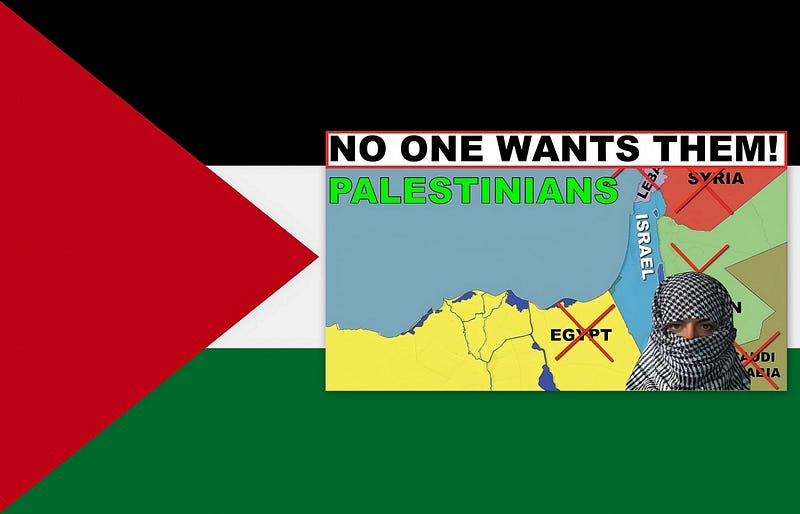
The refusal of countries to accept Palestinian refugees, even during periods of intense violence, is a potent illustration of this modern predicament. This stance is not a reflection on the Palestinian people themselves, but a result of profound geopolitical calculations. For Palestinians and Arab nations, accepting permanent refugee resettlement is seen as undermining the sacred political principle of the “right of return” and facilitating a potential permanent ethnic cleansing. For potential host countries, the history of Palestinian refugees contributing to destabilization in Jordan and Lebanon, combined with acute security concerns and immense economic burdens, creates a powerful deterrent. Nations like Egypt keep their border firmly closed, fearing the spillover of militancy. This creates a tragic catch-22 where providing immediate humanitarian refuge is viewed as enabling a permanent political disaster.
Isolating an entire civilian population under these conditions is a form of collective punishment, a practice prohibited under international humanitarian law. It is morally reprehensible because it punishes the most vulnerable — children, the elderly, and the sick — for the actions of their leadership. It conflates a diverse people with their governing authority and precludes a political solution by fueling the cycles of resentment and despair that perpetuate conflict. Asserting that this leadership is recalcitrant by virtue of its religion is a further oversimplification, a form of religious determinism that ignores the primacy of political grievances like occupation and statelessness. The conflict is driven by competing national aspirations, not immutable theological mandates.
Solving the Palestinian predicament requires moving beyond this dehumanizing “problem” framework. The leading proposed solutions each present immense challenges. The two-state solution, based on sovereign states side-by-side, is hobbled by Israeli settlements and a divided Palestinian leadership. The one-state solution, offering equal rights for all in a single state, is rejected by Israeli Jews as it would end the Jewish-majority character of their state. A confederation model presents a complex middle ground. The current trajectory, however, is not a solution at all but an unsustainable status quo of domination and conflict. Any viable path forward demands irreversible commitment from both leaderships, a massive and sustained international intervention to guarantee security and broker a deal, and a definitive resolution to core issues like borders, Jerusalem, and refugees. The world is faced with a definitive moral choice: either work toward a just partition or a shared future with equal rights, or continue to enable a reality of isolation and suffering that betrays the very principles of human rights it claims to uphold.