The Goose That Gave Us Domestication: Anser anser and Its Lasting Legacy
To explore the greylag goose is to glimpse an animal that shaped civilizations, nourished communities, and continues to remind us of the delicate balance between nature and culture.
Introduction
Long before the farmyard chicken or the turkey became table staples, it was the greylag goose — Anser anser — that humans first welcomed into the fold of domestication. Native to Europe and Asia, this wild bird is the ancestor of nearly every domestic goose that honks across barnyards today. Its story is not only about biology and ecology but also about the intertwining of human culture, cuisine, and sustainability. To explore the greylag goose is to glimpse an animal that shaped civilizations, nourished communities, and continues to remind us of the delicate balance between nature and culture.
Taxonomy
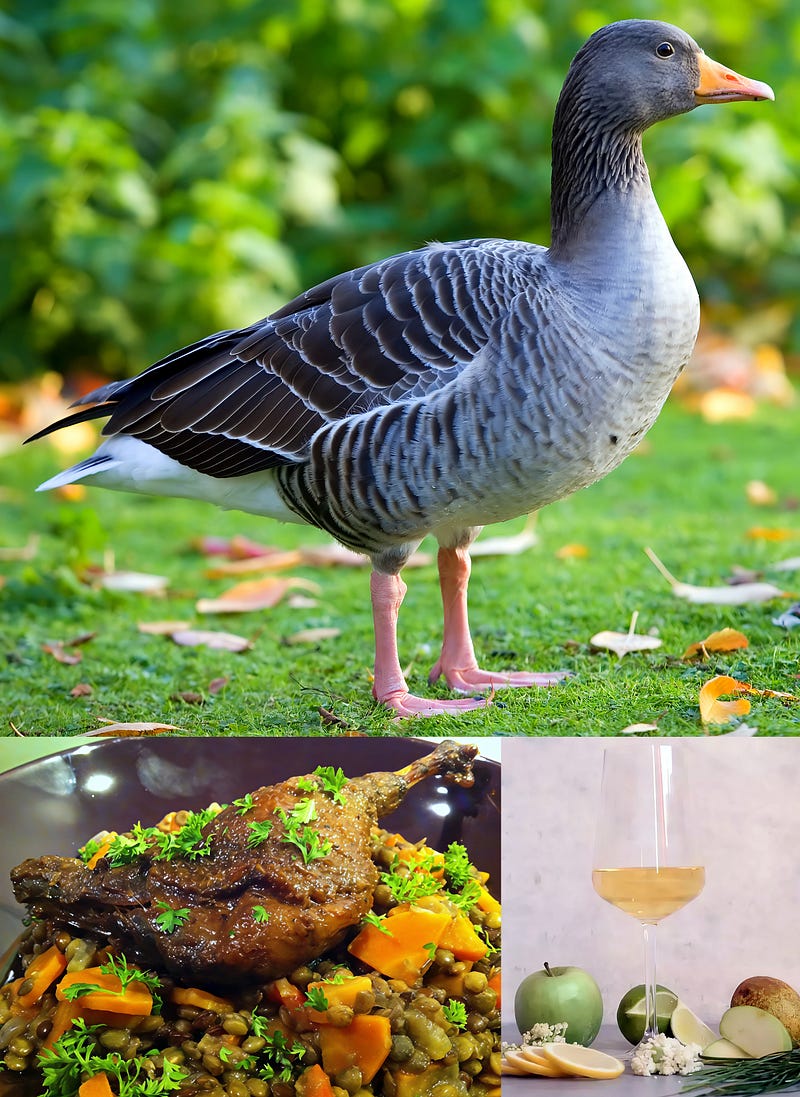
The greylag goose belongs to the genus Anser within the family Anatidae, the same clan that includes swans and ducks. Its scientific name, Anser anser, reads almost redundantly as “goose goose,” a nod to its status as the archetypal goose. While wild greylags roam freely, their descendants — the domestic goose (Anser anser domesticus) — vary in size, color, and temperament depending on breed. Subspecies include A. a. anser, widespread across northern and western Europe, and A. a. rubrirostris, which inhabits eastern Europe and Asia and is recognizable by its pink bill.
Biology
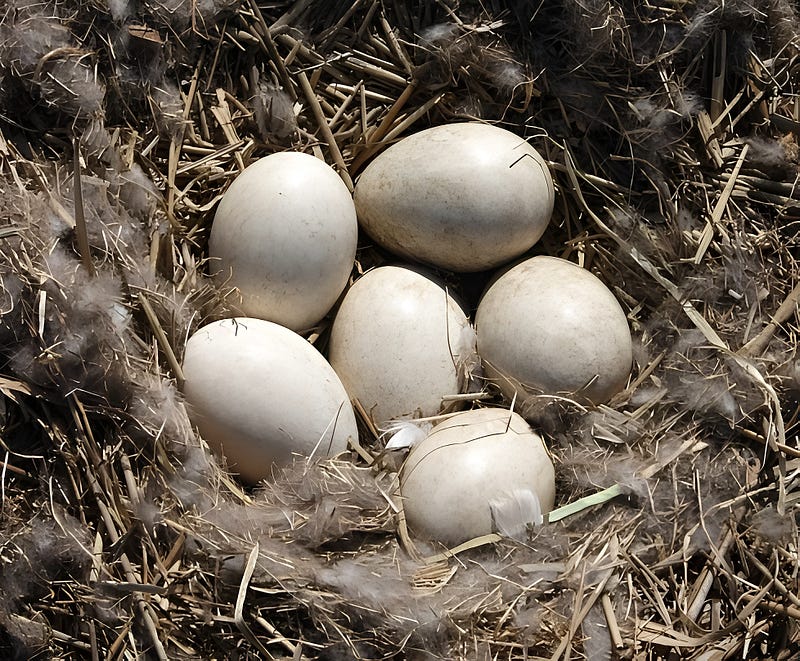
Greylag geese are sturdy birds, with males reaching up to 14 lb (6.3 kg) and females slightly lighter. Their wingspan can stretch as wide as 67 in (170 cm), making them impressive fliers during migration. The plumage is gray-brown, streaked and mottled for camouflage, with a striking orange or pink bill. Monogamous by nature, greylags often mate for life, returning to the same breeding grounds each spring. They build nests in tall grasses or reedbeds, with clutches ranging from four to six creamy-white eggs. Goslings, covered in yellow down, can walk and swim within hours of hatching, a testament to their evolutionary resilience.
Ecology
Greylags thrive in wetlands, marshes, and farmlands, playing an important ecological role as grazers. By feeding on grasses and grains, they help shape plant communities and recycle nutrients back into the soil. Their migration — stretching thousands of miles from breeding grounds in northern Europe to wintering areas in Spain, North Africa, and South Asia — makes them ambassadors of ecological connectivity. Yet their populations are not without pressure: habitat loss, hunting, and agricultural conflict pose threats. Sustainable management, including designated wetlands and hunting quotas, has been crucial in stabilizing populations.

Uses
The greylag’s relationship with humans spans millennia. Ancient Egyptians depicted geese in tomb art, and the Romans prized them as sacred guardians — the geese of Juno famously alerted Rome to a Gallic attack with their honking. Economically, the greylag and its domestic kin provide meat, eggs, and down feathers. Goose down, prized for its warmth-to-weight ratio, fills comforters and winter jackets. Today, small-scale goose farming emphasizes pasture-raised methods, aligning with sustainability by reducing reliance on industrial feed and promoting biodiversity in farm landscapes.

Culinary Aspects
Roast goose has long been a centerpiece of European feasts, particularly at Christmas in Germany and St. Martin’s Day in central Europe. Its meat is darker, richer, and more flavorful than chicken, often described as sitting between duck and beef. A mature goose can yield around 9 lb (4 kg) of meat, along with a generous supply of rendered fat. Goose fat, once dismissed in the age of vegetable oils, is being rediscovered for its high smoke point and savory depth in dishes from roasted potatoes to confit. Nutritionally, goose meat provides protein, iron, and vitamin B12, while its fat — though rich — offers a more balanced fatty acid profile than lard.
Wine Pairings
Pairing wine with goose demands a careful balance to match its robust, fatty meat. A classic choice is a German Riesling, its acidity cutting through the richness while complementing traditional accompaniments like apples and cabbage. For red wine enthusiasts, a Pinot Noir from Burgundy or Oregon provides enough structure without overpowering the dish. In colder settings, an Austrian Grüner Veltliner, with its peppery notes, resonates with roasted herbs and garlic often used in goose preparations. These wines bring not just flavor harmony but also a cultural echo of the regions where geese have long been cherished.
Based on traditional Hebridean culture and modern flavor-pairing principles, it is highly plausible that someone from the Hebrides would choose Islay whisky over wine to accompany a greylag goose, especially if it were smoked or prepared as wild game.

Conclusion
The greylag goose is more than a bird — it is a thread woven through the human story of domestication, sustenance, and ritual. As wild flocks migrate across continents and domestic breeds continue to serve our tables, the species embodies both resilience and interdependence. To honor the greylag is to remember that sustainability in food and ecology is not new — it is an ancient partnership, honked out across the skies each autumn and spring.